Award-Winning Pre-Calculus Tutors
serving Spring Valley, NV
Pre-Calculus
Tutors in Spring Valley
Private 1-on-1 tutoring, weekly live classes for academic support, test prep & enrichment, practice tests and diagnostics, and more to elevate grades and test scores.
Based on 3.4M Learner Ratings
UniversitiesSchools & Universities
DeliveredHours Delivered
ProficiencyGrowth in Proficiency
Who needs tutoring?
No obligation. Takes ~1 minute.
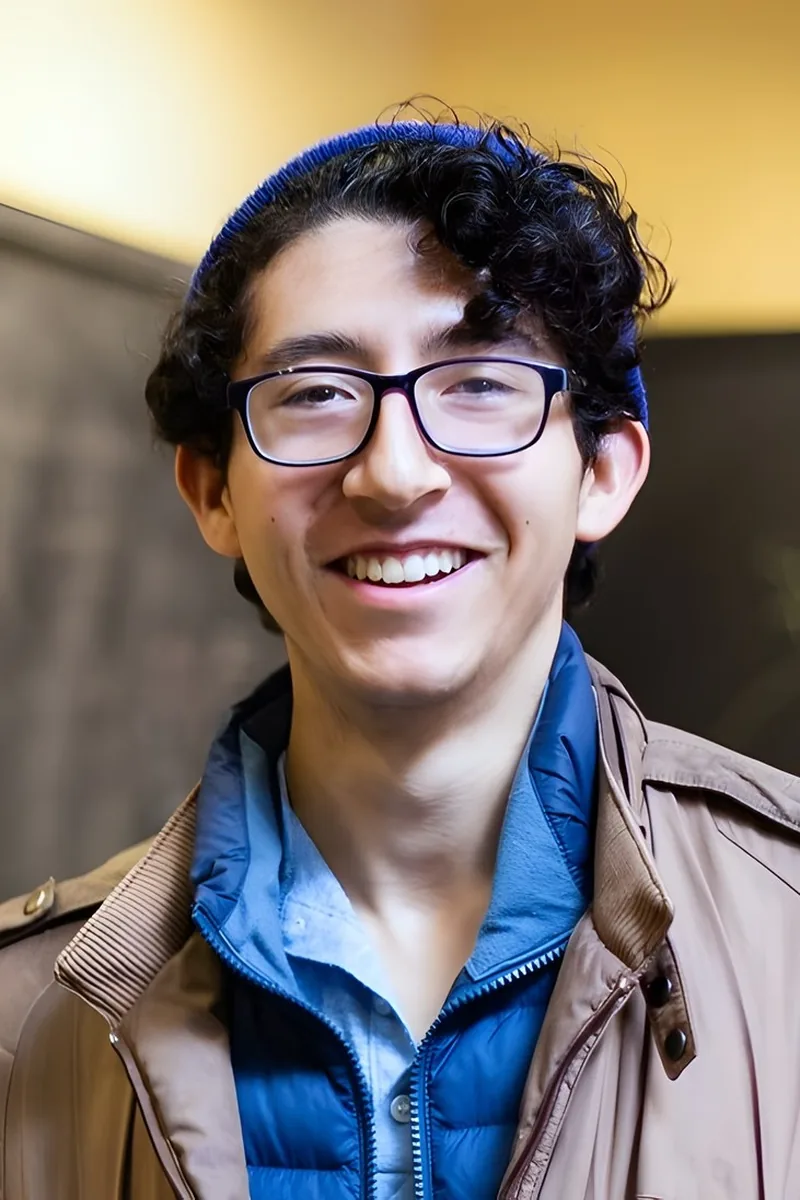
Tim's computational neuroscience work at MIT sits right at the intersection where pre-calculus stops being abstract — he uses trigonometric models for neural oscillations, exponential decay for signal processing, and function composition to build the simulations his research depends on. That daily fluency means he can trace a topic like polar coordinates or logarithmic properties back to the intuition underneath it, not just the procedure on the page. His 34 ACT and 4.9 rating reflect the precision he brings to each session.
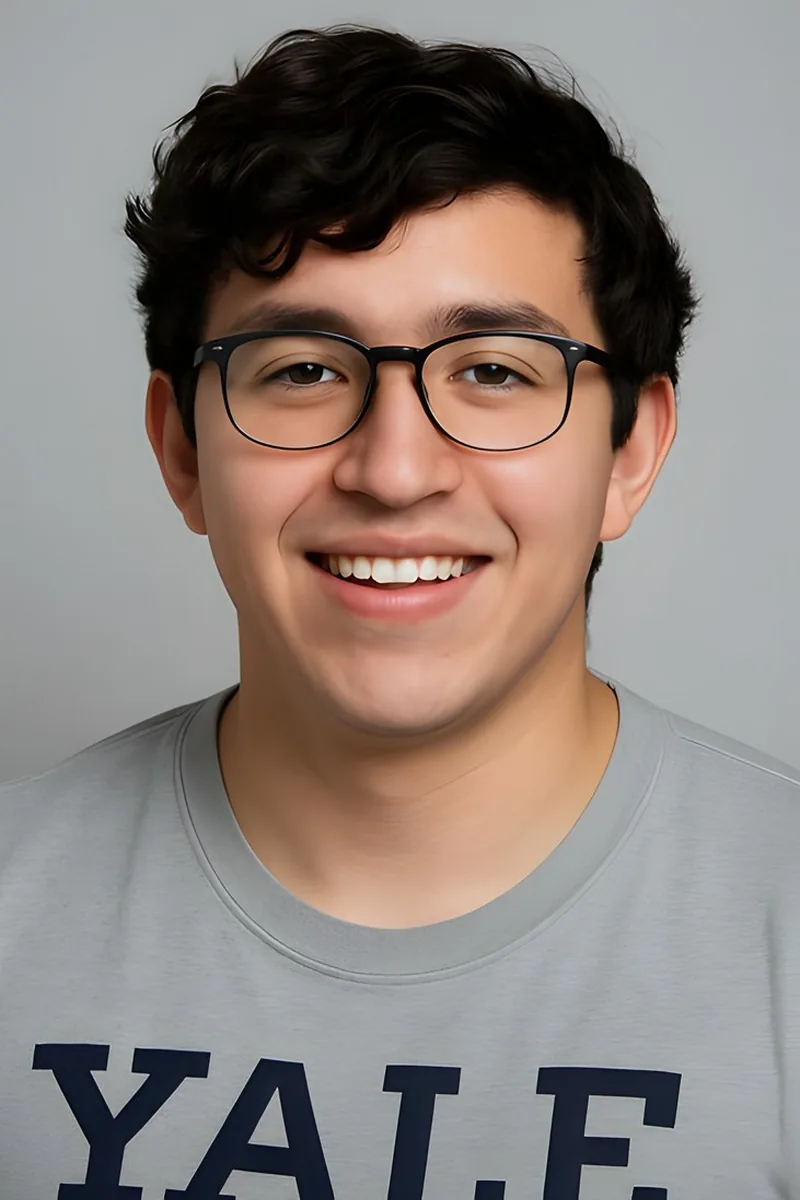
What separates students who survive pre-calculus from those who actually understand it is whether they've internalized the *why* behind each technique — and Daniel, as an applied mathematics major, learned every concept the hard way, by sitting down and working through the logic piece by piece. That deliberate approach makes him especially effective at breaking down topics like rational functions and graph transformations, since he teaches the reasoning he had to build for himself rather than skipping steps that feel obvious. Rated 4.7 by students.
Shawn's master's in chemistry meant years of mathematical modeling before ever tutoring — rate laws follow polynomial behavior, titration curves demand logarithmic reasoning, and spectroscopy leans on trigonometric decomposition, so he internalized pre-calculus tools through constant applied use. He teaches the course by zeroing in on how limits of rational functions and composite function behavior actually work under the hood, not just what the answer looks like. Rated 4.9 by students.
I'm trying to work on personal projects. I really enjoy snowboarding, and have been doing that since the third grade. I also enjoy playing sports and video games.
Electrical engineering at UNLV means Serena uses piecewise functions, trig identities, and exponential models in her coursework constantly — so she teaches pre-calculus as a set of tools she actually reaches for, not abstract formulas to memorize for a test. She's especially sharp at walking through the unit circle and function composition, two areas where her engineering intuition gives students a concrete sense of what the math is doing. Her 1510 SAT confirms the quantitative strength behind her explanations.
Pre-Calculus is really two courses stitched together — advanced function analysis and trigonometry — and students often struggle because they treat each topic in isolation. Michael connects the threads: how transformations apply to every function family, why end behavior matters for rational and polynomial functions alike, and how trig ties into the coordinate plane. His math teaching spans from pre-algebra through differential equations, so he knows precisely which pre-calc skills students will lean on hardest.
Three years teaching Algebra I through college-prep math at Chaparral High School means Zelalem has watched hundreds of students hit the same stumbling blocks in pre-calculus — the shift from manipulating expressions to reasoning about function behavior, especially when trigonometric and logarithmic families enter the picture. His chemical engineering background gives him a practical read on which concepts deserve extra time and which ones students can build confidence with through targeted problem sets. Rated 4.9 by students.
The jump to Pre-Calculus trips students up because it demands fluency with trigonometric identities, composite functions, and limits — all at once. Deepal approaches each of these topics with alternative methods he's collected and refined, giving students options beyond whatever their classroom teacher presented. His engineering background at USC means he can show exactly where these skills pay off later.
I'm a 2016 graduate of Pepperdine University with my Bachelor of Arts in Chemistry. Currently I'm preparing to apply to optometry school; I hope to be accepted for the 2018-19 academic year. During my time in college, I was involved as a teaching assistant for General Chemistry I and II laboratory, as a tutor for General Chemistry I, as a member of the Regents Scholar Student Board, and as a "small group" leader through multiple organizations. I am a member of the sorority Pi Beta Phi and held the positions of Historian, Senior Transition Leader, and member of the Leadership and Nominating Committee during my undergraduate years. As far as tutoring goes, I offer my services to students of all ages and in numerous subjects. I particularly enjoy tutoring the STEM subjects. I also thoroughly enjoy working with female STEM students, which allows me to serve as a role model and to offer additional encouragement for my female students to not lose interest in STEM subjects. A large part of my tutoring style focuses on logical thinking for how to tackle new and difficult problems using previous knoledge and educated hypotheses; I have found that my students find both success and a boost in confidence using my methodology. Aside from my academic interests, I love cooking and baking, my cat, photography, and National Parks.
Trained specifically to teach high school math — not repurposing an engineering or science background — Justin earned his degree in Secondary Math Education, which means he studied how students actually learn topics like rational functions, trigonometric identities, and polynomial end behavior. He catches the exact algebra weak spots that cause students to stall in pre-calculus and rebuilds those pieces before pushing forward. That deliberate, classroom-tested approach makes the jump from algebraic manipulation to functional thinking far less intimidating.
Katherine teaches across the full math ladder from pre-algebra through calculus 3, which means she knows exactly which pre-calculus skills — like mastering rational functions or internalizing the behavior of exponentials and logs — will make or break a student's transition into calculus. She also coaches competition math, so she's comfortable pushing beyond standard curriculum when a student needs to see a concept from an unexpected angle. Rated 5.0 by students.
Switching from biology to computer science at UNLV means Samuel has taken pre-calculus concepts like function composition, polynomial behavior, and trigonometric reasoning and applied them across two very different disciplines — giving him a practical sense of which ideas students need to truly internalize versus which ones just need repeated exposure. He tackles the course by bridging the gap between algebraic mechanics and the functional thinking that calculus will demand, especially when it comes to graphing rational expressions and interpreting transformations. Holds a 5.0 rating.
Having completed through Calculus 2 in his forensic science program, Kyle knows exactly which pre-calculus skills actually carry weight later — and which ones trip students up when they're glossed over. He digs into the mechanics of trigonometric graphs, rational function behavior, and logarithmic properties with a focus on building real understanding before the pace picks up in calculus. Rated 4.6 by students.
Pre-calculus is really two courses stitched together — advanced function analysis and trigonometry — and the students who struggle usually lose the thread between them. Adriana connects topics like limits of rational functions, polar coordinates, and parametric equations back to a single throughline: how different representations describe the same behavior.
Having taken calculus through BC and earned a math minor at UNLV, Henry knows exactly which pre-calculus skills carry the most weight later — and which ones trip students up if they're only half-understood. He digs into the mechanics of rational functions and sequence behavior with the kind of detail that turns shaky algebra into genuine readiness for calculus. Rated 5.0 by students.
After studying economics and computer science at Caltech, Brian developed a habit of thinking about functions as machines — inputs transform into outputs through a chain of operations, and pre-calculus is where that mechanical intuition gets built. He digs into the transition points that trip students up most, like moving from polynomial behavior to rational functions where asymptotes and holes suddenly matter. His 1580 SAT reflects the kind of precision he brings to breaking down each concept.
A year as a course assistant in Harvard's math department teaching introductory calculus gave Richard a sharp sense of exactly which pre-calculus skills — polynomial end behavior, composite functions, rate-of-change intuition — students need locked down before day one of calc. He teaches those topics with that forward view, connecting each piece to where it's actually headed so nothing feels like busywork. His 36 ACT and 1600 SAT confirm the quantitative range behind that perspective.
Jeffrey's mechanical engineering PhD work at Rice means he's spent years relying on the exact toolkit pre-calculus introduces — function composition, trigonometric modeling, and exponential behavior all show up constantly in dynamics and thermodynamics problems. He teaches these topics by walking through the engineering contexts where they actually matter, which gives students a concrete reason to care about each concept. His 34 ACT and 4.9 rating speak to the clarity he brings to quantitative subjects.
Biomedical engineering at Northwestern throws Ingrid into differential equations and signal processing that all trace back to pre-calculus fundamentals — so she knows exactly which skills in trigonometric manipulation, function composition, and exponential modeling need to be rock-solid before calculus arrives. She zeroes in on the conceptual gaps that trip students up, particularly around graph transformations and the behavior of rational and piecewise functions, building each idea from the algebra underneath it. Her 1540 SAT and 33 ACT reflect the quantitative grounding she brings to every session.
Having scored 5s on both AP Calculus BC and AP Physics C while at a Harvard-track pace of 16 AP courses, Derek built the kind of deep pre-calculus fluency — limits of rational expressions, trigonometric manipulation, composite function analysis — that only comes from leaning on those tools constantly across multiple disciplines. His computer science major adds a distinctive angle: he teaches sequences, recursive definitions, and function behavior through the algorithmic thinking that makes those concepts precise rather than fuzzy. A 1550 SAT and 4.9 rating round out the picture.
The jump into pre-calculus — trigonometric identities, limits intuition, complex rational functions — is where many students realize they can't rely on memorized shortcuts anymore. Benjamin's economics coursework at the University of Chicago keeps him immersed in the kind of rigorous mathematical thinking that pre-calc demands. He connects each new concept back to its underlying logic so students actually retain it.
Kevin's competition math background gives him an unusual edge in Pre-Calculus — he's used to attacking problems involving sequences, series, and trigonometric manipulations from angles most textbooks never cover. That depth, combined with a 35 ACT and Stanford CS coursework heavy in mathematical foundations, means he can explain why a parametric equation behaves the way it does, not just how to graph it.
Tutoring calculus students at Penn's Tutoring Center taught Brittany exactly which pre-calculus skills matter most — she saw firsthand where gaps in trigonometric reasoning or shaky function manipulation derailed students in Gen Chem and Physics. Her psychology training also gives her a sharp read on how students get stuck, letting her adjust explanations of topics like polynomial end behavior or composite functions on the fly. She's been teaching math since her Mu Alpha Theta days in high school and hasn't stopped since.
The jump into pre-calculus — trigonometric identities, limits, and complex functions — trips up even strong math students who breezed through earlier courses. Julia breaks these topics into logical building blocks, connecting each new idea back to the algebra and geometry students already know. Her Stanford coursework in economics and quantitative methods keeps her sharp on exactly the kind of function analysis pre-calc demands.
Fred's aerospace engineering degree from Princeton meant living inside the math that pre-calculus students are just meeting — parametric equations describing flight paths, trigonometric models for oscillating systems, and the limit-adjacent thinking that bridges algebra to calculus. He teaches the course knowing exactly which concepts will matter most once students cross into derivatives and integrals, and he builds that forward-looking intuition into every session. His 1550 SAT confirms the quantitative depth behind the approach.
Philosophy trained Keenan to construct rigorous logical arguments; computer science at Penn trained him to think in functions, recursion, and formal systems — and pre-calculus sits right at that intersection, where algebraic intuition has to become precise functional reasoning. He's especially sharp on the discrete math side of things like sequences and series, and he connects topics like composite and inverse functions to the programming concepts that make them feel less abstract. Holds a 5.0 rating from students.
Doing research in Spectral Graph Theory at MIT means Enrico encounters the full toolkit of pre-calculus — eigenvalue behavior, polynomial roots, matrix transformations — at a level where shaky fundamentals would be immediately exposed. He teaches the course by making definitions click intuitively, so that concepts like composite functions or rational expressions feel like natural extensions of algebra rather than arbitrary new rules. His 36 ACT, 1570 SAT, and 5.0 rating confirm the depth behind that intuition.
Testimonials
Because the right Pre-Calculus tutor makes all the difference.
Average Session Rating – Based on 3.4M Learner Ratings
Practice Pre-Calculus
Free practice tests, flashcards, and AI tutoring for Pre-Calculus
Other Spring Valley Tutors
Related Math Tutors in Spring Valley
Frequently Asked Questions
Varsity Tutors matches Spring Valley students with expert Pre-Calculus tutors for 1-on-1 instruction. We pair each student with a tutor based on their specific needs, learning style, and goals.
Whether you need homework help, exam prep, or want to get ahead, our Pre-Calculus tutors are ready to help.
Common challenges include gaps from earlier material, difficulty with specific concepts, and trouble applying learning to new problems. These issues can snowball quickly in Pre-Calculus.
A tutor identifies where you're stuck, fills in gaps, and provides targeted practice. The 1-on-1 format means you get help exactly where you need it.
Tutors work with your student's actual coursework—homework assignments, class notes, and upcoming tests. This keeps tutoring directly relevant to what's happening in the classroom.
When you share information about your student's school and curriculum, we can match you with a tutor who has relevant experience.
All tutors complete background checks, credential verification, and teaching evaluation. Many of our Pre-Calculus tutors hold advanced degrees or have years of teaching experience.
You can review tutor profiles to find someone with the right background for your student's level and needs.
Many students see improved grades within a few weeks, along with better understanding of Pre-Calculus concepts and more confidence tackling challenging material.
Tutors track progress and adjust their approach to ensure continued improvement.
Most students benefit from 1-2 sessions per week. More frequent sessions help if your student is significantly behind or has an important exam coming up.
Your tutor can recommend a schedule based on your student's specific situation and goals.
Tutoring is purchased in packages of hours, with rates varying by tutor experience. Varsity Tutors offers several options to fit different budgets and needs.
You can discuss pricing during your consultation to find what works best.
Your tutor will assess where your student is, discuss goals, and start working on priority areas. Most students bring current homework or upcoming test material to focus on.
By the end, you'll have a clear sense of how the tutor can help and a plan for moving forward.
Let’s find your perfect tutor
Answer a few quick questions. We’ll recommend the right plan and match you with a top 5% tutor.