Award-Winning Spanish Tutors
serving Las Vegas, NV
Spanish
Tutors in Las Vegas
Private 1-on-1 tutoring, weekly live classes for academic support, test prep & enrichment, practice tests and diagnostics, and more to elevate grades and test scores.
Based on 3.4M Learner Ratings
UniversitiesSchools & Universities
DeliveredHours Delivered
ProficiencyGrowth in Proficiency
Who needs tutoring?
No obligation. Takes ~1 minute.
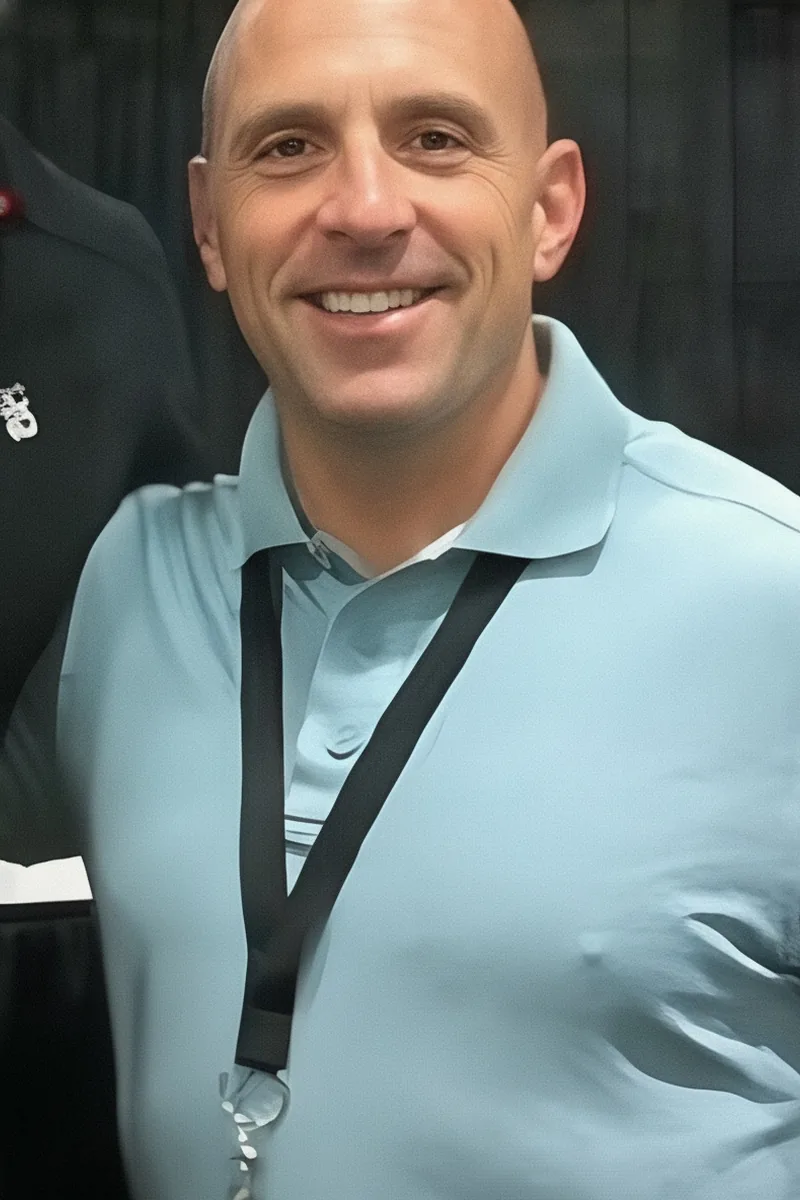
Tony earned his bachelor's degree in Spanish and continued using the language throughout his Latin American Studies master's program, so his command of the language spans academic writing, literary analysis, and everyday conversation. He tackles tricky grammar concepts like the subjunctive mood and ser-versus-estar distinctions by grounding them in real usage patterns rather than rote conjugation charts. Rated 5.0 by students.
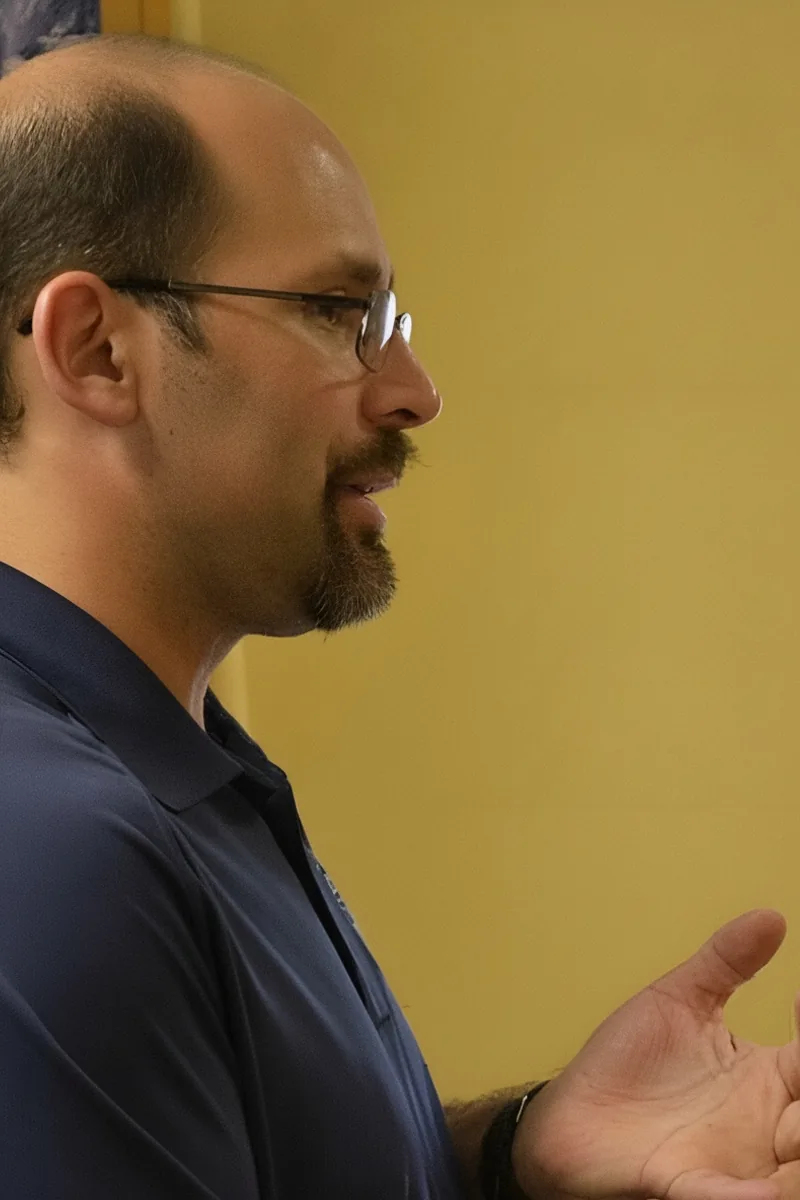
Chemistry trained Shawn to memorize complex nomenclature systems and spot structural patterns — skills that transfer surprisingly well to learning Spanish vocabulary roots and conjugation frameworks. He approaches the language analytically, breaking down verb endings and grammatical rules into repeatable patterns the same way he'd teach students to balance equations. Rated 4.9 by students.
Martina learned Spanish as a second language herself before teaching it professionally in British schools, so she understands exactly where English speakers stumble — subjunctive triggers, ser versus estar, preterite versus imperfect. She builds lessons around active use of the language, pushing students to produce sentences and think in Spanish from the very first session. Rated 4.8 by students.
Gabriela is a native Spanish speaker who has taught math entirely in Spanish across multiple grade levels, giving her a practical command of academic vocabulary, verb conjugation in context, and sentence structure. Her Master's in Math Education means she understands how to break down complex grammar rules the same way she'd scaffold a tough equation — step by step, building on what a student already knows.
Sam treats Spanish grammar the way he approaches any structured system: by identifying the underlying patterns — verb conjugation families, pronoun placement rules, subjunctive triggers — so students can generate correct sentences instead of relying on memorized phrases. His analytical mindset, sharpened through pre-law study, translates surprisingly well to untangling tricky constructions like the difference between por and para.
Elizabeth teaches Spanish across multiple levels, from foundational verb conjugations in the present tense through subjunctive mood and complex sentence structures. Her engineering background gives her a systematic way of breaking down grammar rules into logical patterns that stick, making the jump from translating word-by-word to thinking in Spanish feel manageable.
Andrea's Spanish instruction covers everything from conjugation patterns in the preterite and imperfect tenses to building the vocabulary needed for reading comprehension and composition. Having studied Spanish through advanced levels herself, she explains grammar rules by showing how they function in real sentences rather than drilling isolated verb charts. Students rated her 4.9 out of 5.0.
Two awards from the National Spanish Exam and a passing score on the AP Spanish Language and Culture exam back up Samuel's command of the language. He tackles everything from verb conjugation patterns to reading comprehension, connecting grammar rules to how Spanish is actually spoken so the structures make intuitive sense. Rated 5.0 by students.
Learning Spanish means internalizing verb conjugations, gendered nouns, and sentence structures that don't map neatly onto English — and that's just the grammar side. Alma teaches across all four levels of Spanish coursework, so she understands the progression from present-tense basics to subjunctive mood and beyond. She adapts each session to whether a student needs drilling on preterite vs. imperfect or practice constructing longer spoken responses.
I'm 18 years old and I am a sophomore at Fordham University. I promise I won't disappoint!
I am passionate about helping students because I've been a student my whole life! Even though I'm a professor now, I love to learn. And now that I have experience, I love to help others along the learning journey. I have degrees in English and education from Rice University, UT Austin, Texas State, and Texas A&M. I also studied abroad in England at the University of East Anglia and have traveled to many countries. I tutor English and Spanish (my family is from Mexico City). My favorite thing to tutor is writing, and I have taught writing from the Kindergarten-graduate school (Ph.D.) level (what I currently do). I am here to share tools and tips to help you succeed in your learning journey.
Teaching Spanish across four proficiency levels — from introductory grammar through advanced conversation — gives Orestes a clear picture of where each student's comprehension actually sits. He digs into verb conjugation patterns, pronoun placement, and sentence construction with enough repetition and context that students internalize the rules instead of just translating word by word from English.
Paul picked up conversational and reading-level Spanish while traveling through South America, which gives his tutoring a practical edge — he knows what it's like to need the subjunctive tense in an actual conversation, not just on a worksheet. He's strongest with students working on verb conjugation, reading comprehension in Spanish, and building everyday vocabulary.
Moriah teaches Spanish at the intermediate and advanced levels, tackling tricky areas like subjunctive mood, preterite-vs-imperfect distinctions, and complex sentence construction. Her analytical approach — developed through a Cornell education and years of teaching — translates well to breaking down grammar rules that often feel arbitrary to English speakers. She connects new structures to patterns students already recognize, making conjugation tables and vocabulary retention far less painful.
Simon teaches Spanish across four levels, from foundational conjugation patterns in the present tense to navigating subjunctive mood and complex reading passages at the advanced level. His approach treats grammar as a logical system — once a student sees why irregular preterite verbs follow certain patterns, retention improves dramatically.
Kate teaches Spanish at multiple levels, from verb conjugation fundamentals in Spanish 2 through the subjunctive mood and complex sentence structures in Spanish 4. Her engineering background gives her a systematic way of breaking down grammar rules that clicks for students who think analytically.
Natalie minors in Spanish at Penn and has studied through advanced-level coursework, giving her a strong command of grammar, verb tenses, and conversational fluency. She tackles tricky concepts like the subjunctive mood and ser-versus-estar distinctions by connecting them to patterns students already recognize in English. Her approach keeps vocabulary and grammar practice grounded in real usage rather than rote conjugation charts.
Public policy work in Washington, DC means Noel reads, writes, and communicates across cultural contexts daily — a professional habit that translates naturally into language instruction. He approaches Spanish as a communication tool first, connecting vocabulary and grammar concepts like direct object pronouns and verb tenses to practical reading and writing tasks rather than rote drills. Rated 4.9 by students.
Diana's TESOL training gave her deep expertise in how languages are structured and acquired, which she applies directly to Spanish instruction. She breaks down verb conjugation patterns, pronoun placement, and sentence-building in ways that make the grammar feel logical rather than arbitrary. Students in Spanish 1 or 2 especially benefit from her ability to explain why the language works the way it does.
Alessia approaches Spanish with the structural mindset of someone trained across multiple Romance languages, including Italian, French, and Latin. That cross-linguistic perspective is especially useful for breaking down tricky concepts like ser vs. estar, subjunctive mood triggers, and preterite-imperfect distinctions — areas where English speakers tend to stall.
Matt minored in Spanish during his undergraduate studies and has carried the language through multiple levels of coursework, from foundational grammar to advanced composition. He tackles tricky areas like subjunctive mood, ser versus estar distinctions, and preterite-imperfect contrasts by linking each rule to real usage patterns rather than rote conjugation charts. Rated 5.0 by students.
Having studied Spanish formally at Columbia University and earned a degree in the subject, Molly approaches the language through both grammar mechanics and real-world usage. Whether a student is working through verb conjugation patterns, navigating subjunctive mood, or building reading comprehension skills, she connects each concept to practical communication so the rules actually stick.
Vivian's background is in music performance and standardized test prep, not Spanish — but her Juilliard training means she's wired to hear and reproduce precise patterns, a skill that transfers directly to mastering pronunciation, accent marks, and the rhythmic flow of spoken Spanish. She applies the same disciplined, repetition-based practice she uses in the practice room to lock in conjugation patterns and vocabulary retention.
Learning Spanish as a cognitive science student gave Adam an unusual advantage: he understands how the brain acquires a second language and uses that knowledge to make vocabulary and grammar stick faster. His Spanish minor at Rice covered everything from verb conjugation patterns to conversational fluency. Whether a student is wrestling with the subjunctive mood or building everyday speaking confidence, Adam tailors the approach to how they learn best.
Testimonials
Because the right Spanish tutor makes all the difference.
Average Session Rating – Based on 3.4M Learner Ratings
Other Las Vegas Tutors
Related Languages Tutors in Las Vegas
Frequently Asked Questions
Speaking fluency develops best through consistent conversation practice with immediate feedback—something that's difficult to get in a classroom setting with a 22:1 student-teacher ratio. Personalized 1-on-1 instruction allows you to practice speaking without the pressure of classmates, make mistakes safely, and get real-time correction on pronunciation and natural phrasing. Regular practice sessions build confidence and help you develop the muscle memory needed for spontaneous conversation.
Spanish has multiple tenses (present, preterite, imperfect, subjunctive, and more) with different conjugation patterns for regular and irregular verbs, which is why many students find it overwhelming. Rather than memorizing endless rules, effective tutoring focuses on pattern recognition and contextual usage—helping you understand *when* and *why* you use each tense. With targeted practice and exposure to verbs in real sentences, conjugation becomes intuitive rather than mechanical.
Vocabulary sticks when you encounter words in meaningful contexts and use them repeatedly in conversation—not through isolated flashcard drills. Personalized tutoring incorporates vocabulary into discussions about topics you care about, which creates stronger memory connections. Spaced repetition and retrieval practice (using words in different contexts over time) are proven learning techniques that tutors can strategically build into your lessons.
Accent and pronunciation improve through listening to native speakers and getting direct feedback on your own speech—both of which are central to 1-on-1 tutoring. A tutor can identify specific sounds you struggle with (like the rolled 'r' or the Spanish 'j'), model correct pronunciation, and give you targeted practice. Over time, your ear becomes attuned to Spanish speech patterns, and your mouth develops the muscle memory to produce them naturally.
The most effective approach combines both: understanding grammar rules gives you a framework, but natural usage—how native speakers actually speak—is what makes you sound fluent. Personalized tutoring balances explicit grammar instruction with conversational practice, so you learn the rules but also internalize how they work in real dialogue. This approach helps you move beyond textbook Spanish to speak with authenticity and confidence.
While travel or immersion programs are wonderful, they're not necessary for fluency—personalized tutoring can provide meaningful cultural context right here in Las Vegas. Tutors can incorporate discussions about Spanish-speaking cultures, media, literature, and current events into lessons, which deepens both language skills and cultural understanding. This contextual learning makes Spanish feel more relevant and helps you communicate with cultural awareness, not just grammatical accuracy.
Reading and writing are essential skills that reinforce grammar, vocabulary, and comprehension—and they're often neglected in classroom settings where speaking time is limited. Personalized tutoring can emphasize whichever skills you need most, whether that's reading literature, writing essays, or building academic Spanish for AP exams. A balanced approach across all four skills (reading, writing, speaking, listening) ensures you develop well-rounded proficiency.
Look for tutors with native or near-native fluency, ideally combined with teaching experience and knowledge of Spanish grammar and pedagogy. Varsity Tutors connects you with expert tutors who have demonstrated mastery of the language and the ability to explain concepts clearly to learners at all levels. Whether you need help with conversational Spanish, test prep for AP Spanish, or academic writing, you can find a tutor matched to your specific goals.
Let’s find your perfect tutor
Answer a few quick questions. We’ll recommend the right plan and match you with a top 5% tutor.