Award-Winning College Physics Tutors
serving Las Vegas, NV
College Physics
Tutors in Las Vegas
Private 1-on-1 tutoring, weekly live classes for academic support, test prep & enrichment, practice tests and diagnostics, and more to elevate grades and test scores.
Based on 3.4M Learner Ratings
UniversitiesSchools & Universities
DeliveredHours Delivered
ProficiencyGrowth in Proficiency
Who needs tutoring?
No obligation. Takes ~1 minute.
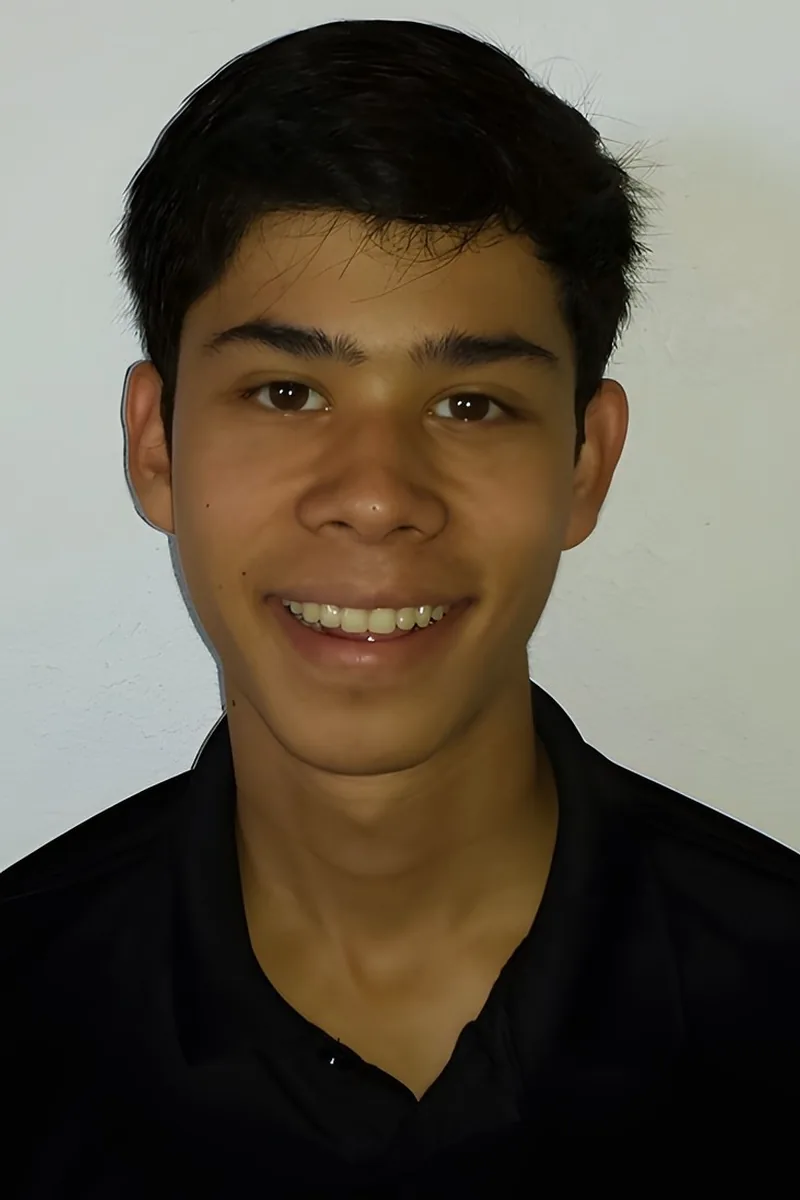
Dylan has taken both college mechanics and electricity/magnetism at Northwestern's engineering school, so he's worked through the exact problem sets — free-body diagrams, circuit analysis, wave optics — that trip up most college physics students. His computer science background also means he's comfortable walking through the math-heavy derivations that make physics click rather than feel like guesswork. Rated 5.0 by students.
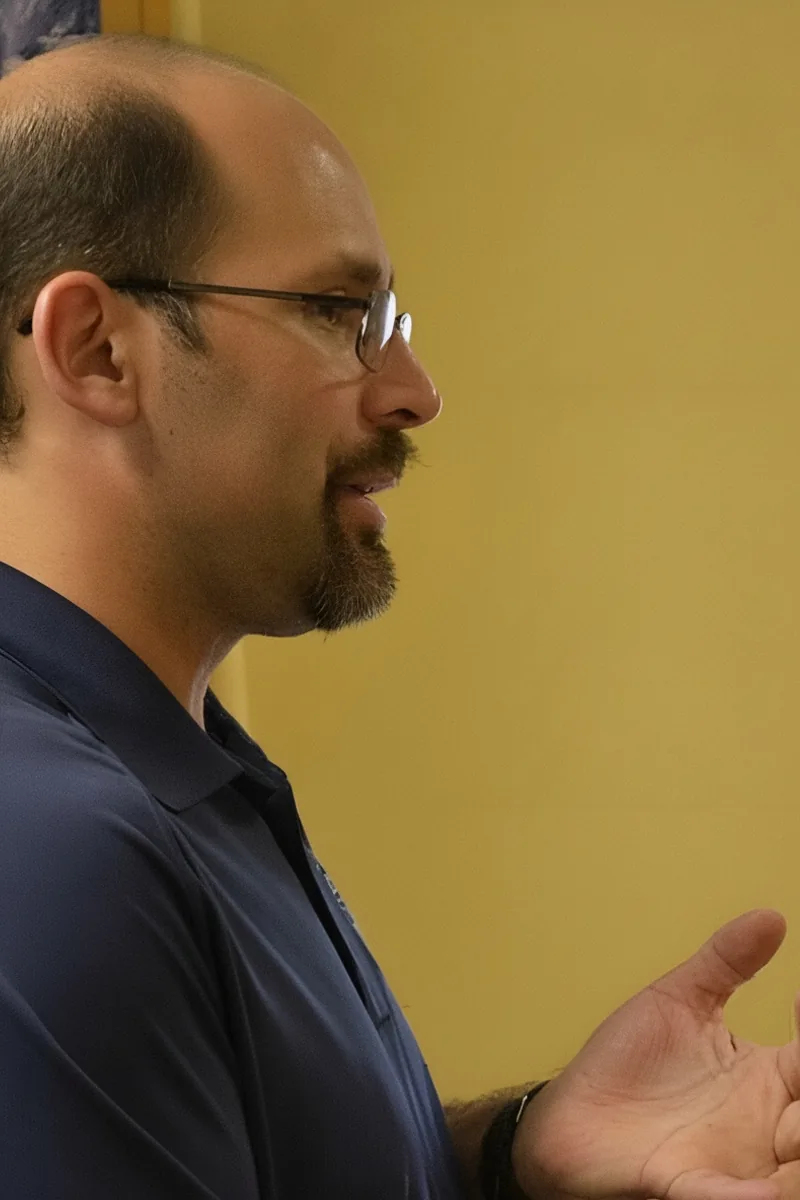
Shawn's master's in chemistry means he's already internalized the physics that chemistry leans on — thermodynamics, kinetics, electrostatics, and wave behavior — so he explains these topics with the fluency of someone who uses them daily rather than someone reciting definitions. He's particularly sharp at teaching students to set up problems from scratch, identifying which physical principles apply before plugging anything into an equation. Rated 4.9 by students.
College physics ramps up the mathematical demands significantly, especially once integration enters the picture for topics like work-energy problems or electric flux calculations. Michael's coursework through multivariable calculus and differential equations means he can bridge the gap between the physics concepts and the calculus tools students need to solve them. He's particularly effective at teaching students to translate a physical scenario into a mathematical setup — the skill that separates students who understand from those who just memorize.
Forensic science coursework is surprisingly physics-heavy — ballistics relies on projectile motion and energy transfer, blood spatter analysis is fluid dynamics in action, and accident reconstruction demands a working command of kinematics and Newton's laws. Kyle brings that applied context into college physics tutoring, connecting textbook problems to scenarios where the physics actually determines real outcomes. Rated 4.6 by students.
Engineering coursework put Aaron through the full sequence of calculus-based physics — mechanics, E&M, waves, thermodynamics — and he still remembers which concepts made him struggle before they clicked. He breaks down problem-solving into concrete steps: sketch the system, identify the governing principle, then translate to math, so students stop guessing which equation to use. Rated 4.8 by students.
Three years of tutoring introductory physics while completing dual bachelor's degrees in physics and mathematics gave Justin a detailed map of exactly where students lose the thread — the jump from one-dimensional kinematics to rotational analogs, the shift from intuitive force reasoning to formal energy methods. His PhD in Computational Mathematics at the University of Chicago deepened that foundation, adding fluency with the differential equations and vector calculus that make the leap from algebra-based to calculus-based physics so steep. Rated 5.0 by students.
A dual BS in physics and math from Yale means Anthony didn't just take college physics — he took the honors sequence and then kept going through differential equations, multivariable calculus, and upper-division mechanics. His PhD work in economics at Yale still draws on that training daily, since building economic models requires the same setup-and-solve discipline as a multi-step Newton's law problem. Rated 5.0 by students.
College-level physics layers calculus and more rigorous problem-solving onto the conceptual foundations from high school, and Samantha's Cornell science background means she's fluent in both the math and the theory. She breaks down topics like rotational dynamics, electric fields, and thermodynamic cycles using visual models and step-by-step dimensional analysis that keep the problem-solving process clear.
College-level physics demands comfort with calculus-based reasoning — deriving equations of motion, integrating force over a path for work, or applying differential equations to oscillations. Kathleen's math degree from Washington University and her experience teaching through multivariable calculus mean she can unpack both the physics intuition and the mathematical machinery simultaneously.
Biomedical engineering at Duke means Eric solves physics problems daily — modeling forces on prosthetic joints, analyzing fluid flow through artificial vessels, calculating electrical signals in biosensors — so the mechanics and electromagnetism in a college physics course map directly onto work he's already doing. He breaks multi-step problems into their physical components first, making sure the reasoning is solid before any math hits the page. Holds a 5.0 rating.
College-level physics ramps up fast, especially when courses introduce calculus-based mechanics or electromagnetism for the first time. Charles works through these topics as part of his mechanical engineering curriculum at Yale, so he can walk through derivations of torque, moment of inertia, or Gauss's law with the fluency of someone who applies them in lab and design projects regularly.
A PhD in biomedical engineering means Andrew has spent years applying physics to biological systems — modeling forces on joints, analyzing fluid flow through tissues, understanding how electromagnetic fields interact with the body. That depth in mechanics, thermodynamics, and E&M carries directly into the calculus-based problem solving college physics courses demand. Rated 4.9 by students.
Neuroscience gave Julie a deep working knowledge of the physics that governs biological systems — membrane capacitance, electrical potentials across ion channels, fluid dynamics in neural vasculature — so she brings a concrete, applied lens to college physics topics that other tutors treat purely abstractly. Her strong quantitative background (1480 SAT, dual B.S. in Neuroscience) means she's comfortable walking through the calculus-based derivations in mechanics and E&M without losing sight of what the physics actually describes. Rated 5.0 by students.
A computer science degree from UCLA means Michael spent semesters deep in the physics that underpins simulation and graphics — kinematics, force modeling, energy systems — and his 1560 SAT confirms the quantitative chops to handle calculus-based problem solving. He teaches students to treat each physics problem like debugging code: isolate what you know, identify the governing principle, then execute step by step until the answer falls out.
Three science-focused bachelor's degrees — including biology — meant Garrett sat through the full calculus-based physics sequence and kept coming back to it in physiology and physical chemistry, where concepts like fluid dynamics, pressure gradients, and energy transfer show up again and again. That repeated exposure across disciplines gives him an intuitive feel for when to apply conservation of energy versus momentum, or how to reason through a thermodynamics problem without getting lost in the formalism. His 1530 SAT speaks to the quantitative sharpness he brings to each session.
Biomedical engineering at Brown means Phillip solves physics problems with real biological stakes — modeling fluid flow through vessels, analyzing stress on implant materials, calculating electrical signals in tissue. That daily overlap with mechanics, thermodynamics, and electromagnetism gives him a practical fluency that makes college physics problem sets feel less abstract and more like puzzles with actual answers. Rated 5.0 by students.
Chemical engineering at Georgia Tech means Aimee's spent years solving problems that blend thermodynamics, fluid mechanics, and energy balances — the same physics concepts that make college-level courses demanding, except she's applied them to reactor design and process optimization. Her biosystems engineering graduate work adds another layer, connecting classical mechanics and heat transfer to biological systems in ways that make abstract problem sets feel more concrete. Rated 4.9 by students.
Testimonials
Because the right College Physics tutor makes all the difference.
Average Session Rating – Based on 3.4M Learner Ratings
Other Las Vegas Tutors
Related Science Tutors in Las Vegas
Frequently Asked Questions
College Physics requires both conceptual understanding and problem-solving skills—many students struggle with translating theoretical concepts like force, energy, and motion into real-world applications. Common pain points include mastering unit conversions, balancing equations, and visualizing abstract phenomena like electromagnetic fields or quantum behavior. Personalized tutoring helps bridge the gap between memorizing formulas and truly understanding the physics principles behind them.
During your first session, a tutor will assess your current understanding of College Physics concepts, identify specific areas where you're struggling, and learn about your learning style and goals. This might involve reviewing recent exams, problem sets, or particular topics that are challenging. From there, the tutor creates a personalized plan to help you build conceptual understanding and problem-solving confidence.
Absolutely. Tutors help students understand the scientific method, design experiments properly, and analyze lab data meaningfully. Beyond just getting through the lab report, personalized instruction helps you grasp why experiments are structured the way they are and how they connect to the physics concepts you're learning in lecture. This deeper understanding improves both your lab performance and your overall comprehension of the material.
Expert tutors teach you a systematic approach to problem-solving: identifying what you know, visualizing the situation, selecting the right equations, and checking whether your answer makes physical sense. Rather than just showing you the steps, tutors guide you through the reasoning process so you can tackle unfamiliar problems independently. This builds both confidence and the critical thinking skills that College Physics demands.
Many College Physics concepts—like vector fields, wave behavior, or relativity—are inherently abstract. Tutors use diagrams, analogies, real-world examples, and interactive explanations to make these ideas concrete and understandable. For instance, explaining electromagnetic induction through rotating coils or using everyday motion to illustrate Newton's laws helps concepts click in ways that textbooks alone often can't achieve.
This depends on your current grasp of the material, but starting 2-3 weeks before an exam allows time to work through problem sets, clarify misconceptions, and build confidence. If you're struggling significantly, beginning earlier in the semester is ideal so you can build a strong foundation rather than cramming. Personalized tutoring focuses on your specific weak areas, making study time more efficient than solo review.
Varsity Tutors connects you with tutors who have strong backgrounds in physics—many hold degrees in physics, engineering, or related fields and have teaching or tutoring experience. Tutors are matched based on your specific needs and learning style, ensuring you work with someone who can explain concepts clearly and help you develop genuine understanding, not just memorization.
Pricing varies based on the tutor's expertise and your specific needs. Varsity Tutors works with you to find a tutoring arrangement that fits your schedule and budget—whether that's weekly sessions leading up to an exam or intensive help during a particularly challenging unit. You can discuss your goals and timeline when connecting with a tutor to find an approach that works for you.
Let’s find your perfect tutor
Answer a few quick questions. We’ll recommend the right plan and match you with a top 5% tutor.