Award-Winning Math Tutors
serving Las Vegas, NV
Math
Tutors in Las Vegas
Private 1-on-1 tutoring, weekly live classes for academic support, test prep & enrichment, practice tests and diagnostics, and more to elevate grades and test scores.
Based on 3.4M Learner Ratings
UniversitiesSchools & Universities
DeliveredHours Delivered
ProficiencyGrowth in Proficiency
Who needs tutoring?
No obligation. Takes ~1 minute.
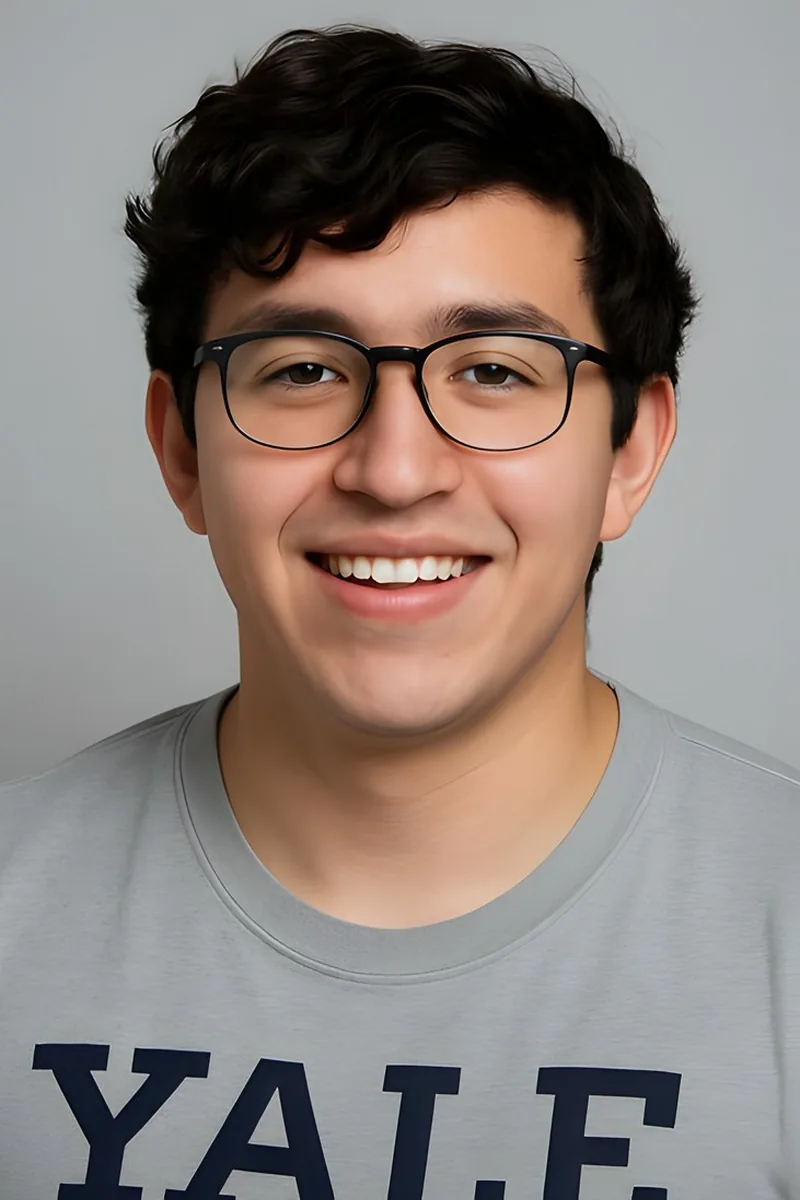
Some tutors just "get" math instantly and can't explain why a step works — Daniel isn't that person, and that's exactly what makes him effective. He learned applied mathematics by breaking every concept down piece by piece, so he knows how to explain everything from fraction operations to function transformations in plain language. That deliberate approach pays off whether a student is catching up or pushing ahead.
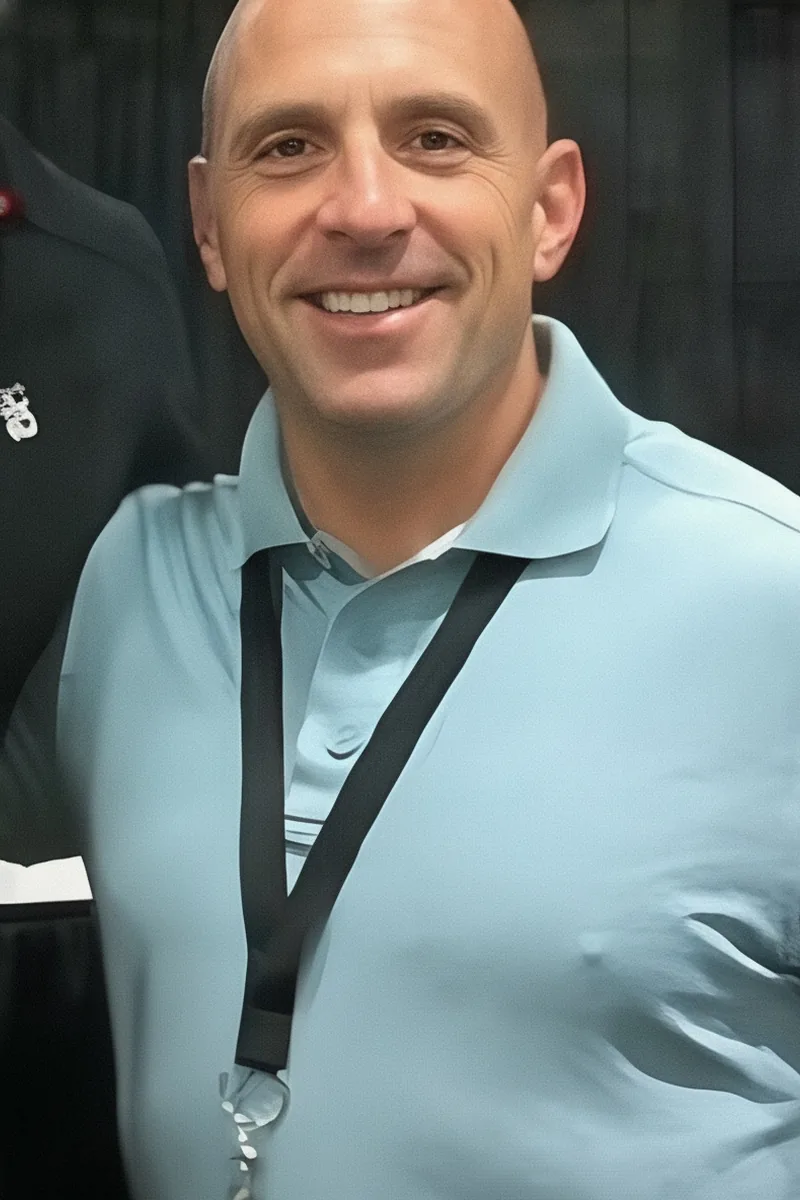
Tony's subject range spans from algebra through calculus, and he approaches math by anchoring abstract procedures in concrete reasoning — why cross-multiplication works, what a negative slope actually describes on a graph, how order of operations prevents ambiguity. Students who feel lost in math class often just need someone to slow down and rebuild the logic behind each step, which is exactly where he starts.
From pre-algebra fundamentals through multivariable calculus, Dylan has both taken and tutored math at every level — giving him a clear picture of where gaps form and compound. His engineering training at Northwestern means he connects abstract procedures to tangible applications, whether that's showing a middle schooler why fractions matter or walking a high schooler through function transformations. He holds a 5.0 rating across his students.
Cassandra covers math from pre-algebra through calculus, which means she knows exactly where foundational gaps tend to hide and how they snowball into bigger problems later. When a student struggles with, say, fraction operations in a rational expressions problem, she traces the confusion back to its root rather than just patching the surface-level mistake.
From 6th-grade fractions to college-level calculus, Shawn has taught math across nearly every level, which means he can pinpoint exactly where a concept broke down and rebuild from there. His chemistry background keeps the instruction grounded in real applications — students see why slope matters in rate problems or how logarithms show up in pH calculations, not just how to solve for x.
From fraction operations in elementary school to limits and derivatives in calculus, Gabriela has taught the full arc of math and knows exactly where conceptual gaps tend to hide. Her Master's in Math Education means she doesn't just solve problems — she unpacks the reasoning behind each step so students actually internalize methods like proportional thinking, equation-solving strategies, and function analysis. Rated 5.0 by students.
Martina's economics background means she's comfortable with the quantitative reasoning that underpins algebra, graphing, and applied problem-solving at the K–12 level. She breaks word problems into smaller logical steps so students can see the structure underneath the numbers rather than freezing at a wall of text.
Whether it's fractions tripping up a middle schooler or word problems stumping a high schooler, the fix usually comes down to understanding what the math is actually asking. Emily connects abstract procedures to concrete reasoning, an approach rooted in her economics and science background where every formula has a real-world meaning.
From elementary arithmetic through pre-algebra and beyond, Michelle zeroes in on the logical reasoning behind each step so students stop second-guessing themselves on problems they technically know how to solve. Her experience as a teaching assistant at an SAT prep center sharpened her ability to spot exactly where a student's process breaks down and correct it in real time.
Electrical engineering at UNLV means Serena uses math every day — not as an abstract exercise, but as the language behind circuit analysis, signal processing, and system design. That applied perspective sharpens the way she teaches everything from algebraic manipulation to calculus, because she can show a student exactly where a concept like rate of change or trigonometric identity actually goes. She scored a 1510 on the SAT and tutors across the full K-through-college range.
Three years teaching Algebra I, Algebra II, and Pre-Calculus in a high school classroom gave Zelalem a sharp eye for the exact moments students lose the thread — a sign error that cascades through a system of equations, or a shaky grasp of function notation that derails everything from graphing to calculus readiness. His chemical engineering background means he learned math as a tool for solving real problems, and he brings that applied mindset into every session. Rated 4.9 by students.
Michael's math teaching spans everything from pre-algebra through multivariable calculus and differential equations, so he understands exactly where foundational gaps cause problems later. When a student struggles with, say, rational expressions, he can trace the issue back to fraction fluency or order of operations and rebuild from there. His biology program at UNLV keeps him applying math daily in statistics and quantitative analysis.
A peer tutor for statistics in college, Sam is comfortable translating abstract math concepts — from algebraic manipulation to data interpretation — into step-by-step reasoning a student can actually follow. He emphasizes setting up problems correctly before calculating, which tends to be where younger math students lose the most points.
From pre-algebra through multivariable calculus and differential equations, Deepal covers an unusually wide range of math — and his core philosophy stays the same: if one method feels confusing, find another that clicks. He picked up that mindset tutoring peers in Mu Alpha Theta and sharpened it through USC's engineering curriculum, where seeing multiple solution paths to the same problem is a daily requirement.
Having attended math- and science-focused schools for most of her education, Megan built the kind of number sense that lets her explain concepts multiple ways until one clicks. She's comfortable across a wide range — from fraction operations and proportional reasoning up through algebraic thinking — and zeroes in on the specific gaps holding a student back.
While history is Lauryn's primary academic focus, her 32 ACT demonstrates solid quantitative reasoning across algebra, geometry, and data interpretation. She's particularly effective with students who think of themselves as "not math people" — her encouraging style breaks problems into logical steps that feel less intimidating.
Working daily with high schoolers as a case manager, Phonemany sees firsthand which math concepts trip students up most — and more importantly, which gaps in earlier skills are quietly causing the trouble. She uses that insight to zero in on the arithmetic or algebraic misstep hiding underneath a student's frustration, then walks through problems in a way that makes the logic visible. Rated 5.0 by students.
From basic operations through calculus, Elizabeth covers the full math pipeline and knows exactly where the common stumbling blocks sit — fractions turning into decimals, variables appearing for the first time, or functions suddenly becoming abstract. Her mechanical engineering degree means she's applied every one of these concepts in real problem-solving contexts, which gives her a practical way of explaining why each skill matters.
Million approaches math problems by connecting abstract procedures to the logic underneath them — whether that's visualizing why the distributive property works or tracing how a function's equation maps to its graph. His computer science training built a habit of breaking complex problems into smaller, solvable steps, which translates directly to algebra, pre-calc, and beyond.
From fraction operations in elementary school to derivatives in calculus, Karen has spent years teaching math across every level — and her approach centers on getting students to reason through each step rather than memorize procedures. Her finance background means she's especially good at showing where math concepts like percentages, rates, and exponential growth actually show up in the real world. Rated 4.5 by students.
While Justin's primary expertise lives in the humanities, his subject range extends through algebra and calculus, and his 33 ACT composite confirms solid quantitative chops. He's especially useful for students who need someone to explain math concepts in plain language rather than pure notation — translating word problems into equations, for instance, or clarifying what a derivative actually represents.
A biology major with deep coursework in calculus, algebra, and applied math, Samuel sees the subject as a connected web rather than isolated chapters. Whether a student is stuck on fraction operations in pre-algebra or working through function transformations in pre-calc, he traces each concept back to the reasoning behind it so the next topic feels like a natural extension. Rated 5.0 by students.
Katherine's math teaching spans everything from pre-algebra through multivariable calculus and competition math, so she knows precisely where foundational gaps tend to hide and how they snowball into bigger problems. She zeroes in on the underlying reasoning — why you flip an inequality when multiplying by a negative, or how fractions and ratios connect — so that each new topic clicks faster than the last.
Whether a student is working through fraction operations in pre-algebra or tackling derivatives in calculus, Andrea pinpoints the specific concept causing confusion rather than re-teaching an entire chapter. Her science background at UCLA required heavy quantitative coursework, so she's comfortable across the full range of K-12 math topics — from solving linear equations to applying the chain rule. She also emphasizes showing work in an organized way, which prevents careless errors on tests.
Kendra's 35 ACT score came partly from treating math problems like puzzles with internal logic rather than procedures to memorize — an approach shaped by her sociology training at Fordham, where interpreting data and spotting patterns in quantitative research is a daily requirement. She teaches pre-algebra through calculus and is especially effective at helping students slow down on multi-step problems to figure out what's actually being asked before jumping to a formula.
Sanda covers the building blocks that everything else in math depends on — skip counting, multiplication tables, fractions, and early word problems. She pays close attention to whether a student truly grasps what division means versus just following a memorized procedure. Her current graduate work in ESOL also makes her especially effective with students whose math difficulties are tangled up with language barriers.
Kyle's coursework through Calculus 2 and university-level sciences means he's tackled everything from fraction operations and proportions to quadratic equations and beyond. He breaks problems into smaller, logical steps — the same methodical thinking his forensic science program demands daily.
Alexis's International Relations degree from Tulane required more quantitative reasoning than most people expect — trade policy analysis, demographic modeling, interpreting economic data — which built a practical comfort with the kind of applied math that makes abstract formulas feel purposeful. She's especially effective at breaking down word problems, since her background is essentially built on translating real-world scenarios into structured analysis. Rated 4.9 by students.
From fraction operations in middle school to function transformations in high school, math builds on itself — and one shaky concept can quietly sabotage everything that follows. Henry's math minor means he sees the full arc of the subject and can pinpoint exactly where a gap opened up. He's rated 5.0 across his tutoring sessions, largely because he makes the "why" behind each step click before moving on.
While math sits outside his primary training in languages and linguistics, Chris tutored across subjects in Manhattan classrooms through NYU's America Reads program and is comfortable with foundational math concepts. He's particularly effective with students who need patient, structured explanations of arithmetic, pre-algebra, and basic problem-solving strategies.
From fraction operations in elementary school to derivatives in calculus, Elizabeth has taught across the full math spectrum, which means she can pinpoint exactly where a gap started — not just where it's showing up now. Her typical approach is to rebuild one foundational concept, like proportional reasoning or variable manipulation, and then show how it unlocks the harder material a student is currently stuck on.
From arithmetic fundamentals through calculus, Aaron's engineering background means he sees math as one connected system rather than a series of unrelated topics. He teaches students to recognize how fractions lead to proportions, which lead to algebraic reasoning — so each new concept clicks into place instead of feeling like a fresh struggle.
From basic arithmetic through calculus, Vishaal's broad math background means he can pinpoint exactly where a gap formed and address it before moving forward. He unpacks each problem step by step, making sure students understand the reasoning behind every operation rather than just mimicking a procedure.
From fraction operations to basic equation solving, Mackenzie pinpoints exactly where a student's understanding breaks down and rebuilds from that spot. She uses step-by-step modeling to make abstract procedures concrete, then gradually removes scaffolding so students can work through problems independently.
As an English major at UNLV, Brandon isn't steeped in advanced mathematics — but his subject list includes algebra and calculus alongside study skills and test prep, which means he's built a practical toolkit for tackling the kind of foundational math that trips students up in homework and exams. His strength is in organized, step-by-step problem breakdowns, approaching each equation the way a writer outlines an argument: one clear move at a time.
Some students struggle with math not because it's too hard, but because earlier gaps — in fractions, negative numbers, or place value — quietly compound over time. Lennon teaches from elementary math through pre-algebra and statistics, and he's skilled at spotting exactly where a concept broke down and rebuilding from that point.
Years of working with international pricing models, unit economics, and retail margins keep Silvana's math sharp and grounded in real-world application. She's particularly effective at connecting arithmetic, percentages, and basic algebra to tangible scenarios — the kind of context that makes abstract operations click for students who wonder when they'll ever use this stuff.
Nathaniel's doctorate in Biomedical Engineering from Cornell meant years of applied mathematics — differential equations modeling biological systems, statistical analysis of experimental data, linear algebra underpinning computational simulations — so he teaches math as something that actually does work in the world. That engineering lens is especially useful for students who struggle with abstract procedures: he can ground a concept like slope or rate of change in a physical process that makes the math feel inevitable rather than arbitrary.
From pre-algebra through multivariable calculus, Tim has taught every rung of the math ladder — first as a high school tutor, then through STEM camp instruction for middle schoolers. His approach zeroes in on the reasoning behind each step so that when a problem looks unfamiliar, students have tools beyond pattern-matching to fall back on. A 1560 SAT and 34 ACT back up the depth of his own mathematical fluency.
Yasmeen covers math from arithmetic fundamentals through pre-algebra and into algebra, making her a strong fit for students who need to shore up skills before moving into higher-level coursework. She zeroes in on the specific operation or concept causing confusion — whether that's fraction division, order of operations, or translating word problems into equations — and builds fluency from there.
Testimonials
Because the right Math tutor makes all the difference.
Average Session Rating – Based on 3.4M Learner Ratings
Practice Math
Free practice tests, flashcards, and AI tutoring for Math
Other Las Vegas Tutors
Related Math Tutors in Las Vegas
Frequently Asked Questions
Varsity Tutors connects you with expert math tutors through a personalized matching process that considers your specific needs, learning style, and math goals. Once matched, you'll work with your tutor on a flexible schedule that fits your life in Las Vegas, receiving customized instruction tailored to your exact curriculum and pace.
Many students in Las Vegas struggle with the transition from memorizing procedures to truly understanding the 'why' behind math concepts. Expert tutors help you see patterns and connections between ideas, building deeper conceptual understanding so you can apply what you learn to new problems rather than just repeating steps you've memorized.
Word problems require you to translate real-world situations into mathematical language—a skill that's separate from solving equations. Tutors work with you to develop problem-solving strategies like identifying key information, breaking problems into steps, and checking whether your answer makes sense in context, building confidence with this challenging skill.
Yes—math anxiety is common and very treatable with the right support. Expert tutors create a judgment-free environment where you can ask questions, make mistakes, and learn at your own pace. As you experience success with personalized instruction and see patterns you previously missed, confidence naturally builds and anxiety decreases.
Expert math tutors are familiar with all major curriculum approaches and textbooks used in Las Vegas schools. During your first session, your tutor will learn exactly what curriculum you're using and align instruction to match your class, ensuring the strategies and explanations you learn transfer directly to your homework and tests.
Showing work isn't just about getting credit—it's a tool for thinking clearly and catching mistakes. Tutors teach you how to organize your steps logically, explain your reasoning, and present solutions in a way that demonstrates understanding. This skill helps you on tests, in class discussions, and when solving complex multi-step problems.
Your first session is focused on understanding where you are now. Your tutor will assess your current skills, discuss what math topics are most challenging, and learn about your goals—whether that's improving grades, preparing for a test, or building confidence. Together, you'll create a personalized plan for moving forward.
Absolutely. Proofs and graphing are visual and logical skills that many students find intimidating, but they respond really well to personalized instruction. Tutors break down the underlying logic of proofs and teach you how to visualize relationships through graphing, turning these abstract concepts into concrete skills you can master.
Let’s find your perfect tutor
Answer a few quick questions. We’ll recommend the right plan and match you with a top 5% tutor.