Award-Winning Math Tutors
serving Lincoln, NE
Math
Tutors in Lincoln
Private 1-on-1 tutoring, weekly live classes for academic support, test prep & enrichment, practice tests and diagnostics, and more to elevate grades and test scores.
Based on 3.4M Learner Ratings
UniversitiesSchools & Universities
DeliveredHours Delivered
ProficiencyGrowth in Proficiency
Who needs tutoring?
No obligation. Takes ~1 minute.
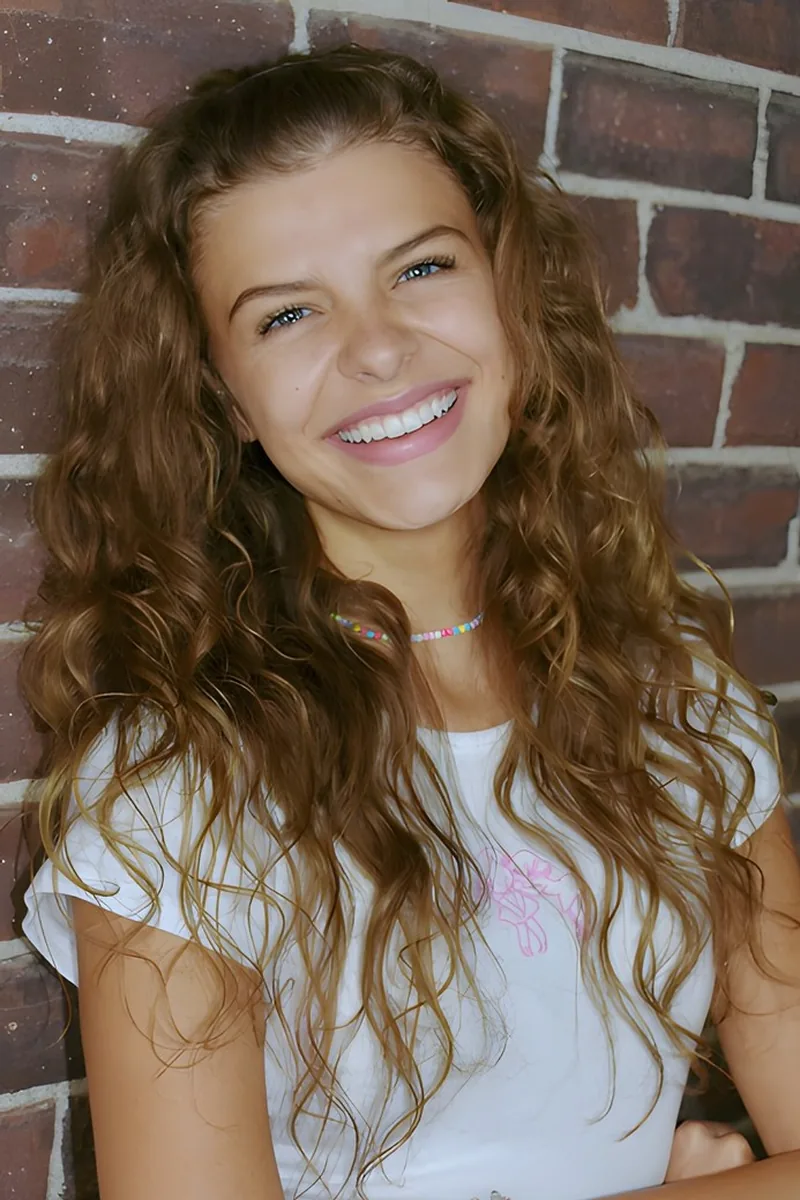
Between scoring a 35 ACT composite and tutoring math through National Honor Society, Ingrid has spent a lot of time figuring out where students actually get stuck — whether it's setting up word problems, working with fractions, or making sense of variables for the first time. She explains concepts using concrete examples before moving to abstract notation, which keeps younger or less confident students from shutting down.

Every frame of a 3D animation runs on math — coordinate geometry, transformations, proportional reasoning, even trigonometry for lighting and camera angles. Michaela connects arithmetic and pre-algebra concepts to real applications students can actually picture, making problem-solving feel less like rote procedure and more like a tool they know how to use.
Rachel's strongest suit is English, not math — but her work as a writing tutor for a general education curriculum means she regularly untangles the kind of logical sequencing and structural thinking that math problems demand. She's a solid choice for students who struggle less with computation and more with understanding what a problem is asking, since her English training makes her especially sharp at decoding word problems and organizing multi-step solutions.
As a dedicated tutor with a strong background in Biology and Mathematics from Baylor University, I am passionate about helping students excel in their ACT preparation after receiving a 36 on the test myself. With meaningful tutoring experience, I strive to create a supportive learning environment that fosters confidence and curiosity. My approach emphasizes personalized strategies that cater to each student's unique learning style, ensuring they grasp complex concepts and feel empowered in their abilities. I like to set goals and have a tentative plan for each session while also being flexible to pivot to maximize student experience. I find great joy in witnessing my students achieve their goals, and I am committed to guiding them through their academic journey.
Makabe's background in cognitive neuroscience gives him a unique lens on math — he understands how the brain processes numerical reasoning and uses that to break down problems in ways that actually click. Whether it's working through proportional relationships, interpreting graphs, or tackling word problems, he builds each session around how a student thinks, not just what they're getting wrong.
From fraction operations in elementary school to limits in calculus, Avi covers math across a wide range and zeroes in on the conceptual gaps that create confusion later. His approach is to make sure a student actually understands why a method works — like the logic behind cross-multiplication or distributing negatives — so each new topic builds on solid reasoning.
Studying both geology and biochemistry means Aaron constantly translates between mathematical tools — unit conversions in the lab, trigonometric relationships in field mapping, statistical analysis of data sets. He brings that applied perspective to math tutoring, connecting arithmetic, fractions, ratios, and problem-solving strategies to contexts that make the concepts click. Rated 5.0 by students.
From arithmetic fundamentals through multivariable calculus, Edward has tutored nearly every level of math on the map. His chemical engineering coursework at the University of Michigan means he doesn't just know procedures — he understands why a technique works and when to reach for it. He's especially skilled at re-explaining a concept from a completely different angle when the textbook version isn't landing.
I am my strongest and best self when helping others. As an enthusiastic, passionate, and dependable teacher, I am consistently working to share and engage with the material I love.
An electrical engineering degree requires surviving the full gauntlet of university math — from linear algebra and differential equations to discrete structures and probability. Oluwatosin draws on that depth to teach math at every level, whether a student is working on fraction operations or tackling multivariable integration. His 4.8 rating speaks to how clearly he breaks down even the trickiest problems.
Engineering and pre-med at Nebraska–Lincoln means Guillermo lives in math daily — from calculus-heavy physics problem sets to the quantitative reasoning baked into his science coursework. That constant exposure keeps him sharp across the full spectrum, but he's especially good at breaking down algebraic structures and showing students the connective tissue between topics they thought were unrelated. Rated 5.0 by students, with a 32 ACT to back it up.
Erika covers math from pre-algebra through calculus, and her 34 ACT score reflects comfort across the full range. She's particularly effective at translating word problems into equations — that critical step where many students freeze — by teaching a consistent setup process that works whether the topic is linear systems or integration.
Jeremy treats math as a chain where every link matters — if a student is struggling with fractions in a word problem, he traces the gap back to whatever foundational concept got skipped or rushed. His engineering background means he's worked through everything from basic arithmetic to calculus under real deadline pressure, and he brings that practical, no-nonsense approach to every session.
Classical language study is surprisingly math-adjacent — it demands the same pattern recognition and logical sequencing that algebra and pre-calculus require. Zachary teaches math by emphasizing how to read a problem carefully, identify what's actually being asked, and map out a solution step by step before reaching for a formula. He covers subjects from pre-algebra through calculus and scored a 1480 SAT, which speaks to his quantitative chops.
Someone who nearly switched his major from computer science to mathematics purely out of love for the subject, Matthew brings genuine enthusiasm to everything from fractions and ratios to quadratic equations. He breaks problems into logical steps — a habit built from writing code — so students see the reasoning behind each operation instead of just following a procedure. Rated 4.9 by students.
From basic operations through early algebra, Erika pinpoints exactly where a student's understanding breaks down and rebuilds from that spot rather than re-teaching everything from scratch. Her lighthearted, high-energy style keeps younger and math-anxious learners engaged through problems that might otherwise feel intimidating. She holds a 33 ACT composite, reflecting sharp quantitative instincts across math topics.
James teaches math across levels from foundational algebra through calculus, and his approach leans heavily on making abstract concepts concrete before moving to procedural steps. His statistics expertise — developed through graduate-level research in psychology — means he's especially sharp at connecting mathematical reasoning to real data and practical problem-solving.
Oen's 32 ACT composite reflects genuine comfort with quantitative reasoning, and his computer science coursework at Grinnell keeps him immersed in math daily — from algebraic manipulation to applied problem-solving. He breaks down word problems and multi-step equations by identifying what's actually being asked before jumping into calculations.
From arithmetic foundations through algebra and geometry to early calculus concepts, Natalie covers the full math spectrum and looks for the specific point where a student's understanding breaks down. Her chemistry training means she's used to applying math as a tool — unit conversions, proportional reasoning, graphing relationships — which gives her a practical angle that makes abstract concepts feel purposeful.
Logic is the backbone of both philosophy and mathematics, and Justin leans on that connection when tackling everything from algebraic manipulation to introductory calculus concepts. He's especially effective at translating word problems into mathematical expressions — a skill sharpened by years of breaking down complex arguments into formal structures at the University of Chicago.
A triple Bachelor of Science holder, Sung has spent years working through math at every level — from proportional reasoning and equation-solving in middle school to the limit definitions and derivative rules of calculus. He breaks problems into smaller logical steps so students can see the reasoning behind each move, not just follow a memorized procedure.
Kathy's economics degree from Duke required heavy quantitative coursework, giving her a practical grip on everything from fraction operations and proportional reasoning to introductory functions. She breaks problems into visual steps — sketching number lines, drawing diagrams — so that abstract procedures actually click rather than just get memorized.
Valerie scored a 1540 on the SAT and has tutored math from pre-algebra through calculus, so she's comfortable across the full K-12 sequence. She's especially good at translating word problems into equations — a skill her writing background sharpens, since parsing a math problem is really an exercise in precise reading.
Medical school at Northwestern means Anna lives in quantitative reasoning daily — biostatistics, pharmacokinetics, interpreting clinical data — which keeps her math instincts sharp well beyond what she first developed earning a 36 ACT and 1590 SAT. She's particularly effective at teaching students how to set up a problem before solving it, the organizational step that separates students who get lost mid-calculation from those who move through confidently. Rated 5.0 by students.
Jennifer's tutoring background spans algebra through calculus, but her real strength in math is translating word-heavy problems into clear steps — a natural extension of her language arts training. She's especially effective with students who understand concepts in class but freeze when facing unfamiliar problem formats on their own.
Years of teaching middle school math at a Boston charter school gave Liz a toolbox of ways to break down fractions, ratios, proportions, and early algebraic thinking so they actually click. She's especially skilled at identifying where a student's understanding breaks down and rebuilding from that exact point — a strength sharpened by her special education training. Rated 4.7 by students and families.
Between competition math experience and a Stanford cognitive science degree that included heavy quantitative coursework, David approaches math problems by teaching the reasoning behind each step — whether that's factoring polynomials or setting up related rates in calculus. His 1570 SAT speaks to the precision he brings to mathematical thinking at every level.
Four years of volunteer SAT tutoring for high schoolers gave Renee a sharp sense of where students lose the thread in multi-step problems — and her own 1530 SAT score confirms she knows the math cold. Her PhD training in literary analysis might seem unrelated, but it built the kind of careful, systematic reasoning that makes untangling a tricky word problem or setting up an equation from scratch feel methodical rather than chaotic.
Kevin treats math as a language that rewards understanding over memorization, whether a student is working through fractions or tackling introductory calculus concepts. His 34 ACT composite reflects strong quantitative reasoning, and his economics coursework at Penn keeps him applying mathematical thinking to real problems every day.
From basic operations through pre-algebra and into calculus, Daniel covers a wide math range and adjusts his explanations to wherever a student currently stands. He emphasizes translating word problems into equations — a skill that trips up students at every level — because once that click happens, the mechanics become far less intimidating.
When math stops making sense, it's usually because a key earlier concept — fractions, proportional reasoning, or how variables actually work — didn't fully land. Yu is skilled at pinpointing exactly where that gap is and rebuilding understanding from there. Her Harvard education background means she doesn't just re-explain the same way louder; she finds a different angle that matches how each student thinks.
Testimonials
Because the right Math tutor makes all the difference.
Average Session Rating – Based on 3.4M Learner Ratings
Practice Math
Free practice tests, flashcards, and AI tutoring for Math
Nearby Math Tutors
Other Lincoln Tutors
Related Math Tutors in Lincoln
Frequently Asked Questions
Varsity Tutors matches Lincoln students with expert Math tutors for 1-on-1 instruction. We pair each student with a tutor based on their specific needs, learning style, and goals.
Whether you need homework help, exam prep, or want to get ahead, our Math tutors are ready to help.
Common challenges include gaps from earlier material, difficulty with specific concepts, and trouble applying learning to new problems. These issues can snowball quickly in Math.
A tutor identifies where you're stuck, fills in gaps, and provides targeted practice. The 1-on-1 format means you get help exactly where you need it.
Tutors work with your student's actual coursework—homework assignments, class notes, and upcoming tests. This keeps tutoring directly relevant to what's happening in the classroom.
When you share information about your student's school and curriculum, we can match you with a tutor who has relevant experience.
All tutors complete background checks, credential verification, and teaching evaluation. Many of our Math tutors hold advanced degrees or have years of teaching experience.
You can review tutor profiles to find someone with the right background for your student's level and needs.
Many students see improved grades within a few weeks, along with better understanding of Math concepts and more confidence tackling challenging material.
Tutors track progress and adjust their approach to ensure continued improvement.
Most students benefit from 1-2 sessions per week. More frequent sessions help if your student is significantly behind or has an important exam coming up.
Your tutor can recommend a schedule based on your student's specific situation and goals.
Tutoring is purchased in packages of hours, with rates varying by tutor experience. Varsity Tutors offers several options to fit different budgets and needs.
You can discuss pricing during your consultation to find what works best.
Your tutor will assess where your student is, discuss goals, and start working on priority areas. Most students bring current homework or upcoming test material to focus on.
By the end, you'll have a clear sense of how the tutor can help and a plan for moving forward.
Let’s find your perfect tutor
Answer a few quick questions. We’ll recommend the right plan and match you with a top 5% tutor.