Award-Winning Algebra Tutors
serving St. Louis, MO
Algebra
Tutors in St. Louis
Private 1-on-1 tutoring, weekly live classes for academic support, test prep & enrichment, practice tests and diagnostics, and more to elevate grades and test scores.
Based on 3.4M Learner Ratings
UniversitiesSchools & Universities
DeliveredHours Delivered
ProficiencyGrowth in Proficiency
Who needs tutoring?
No obligation. Takes ~1 minute.
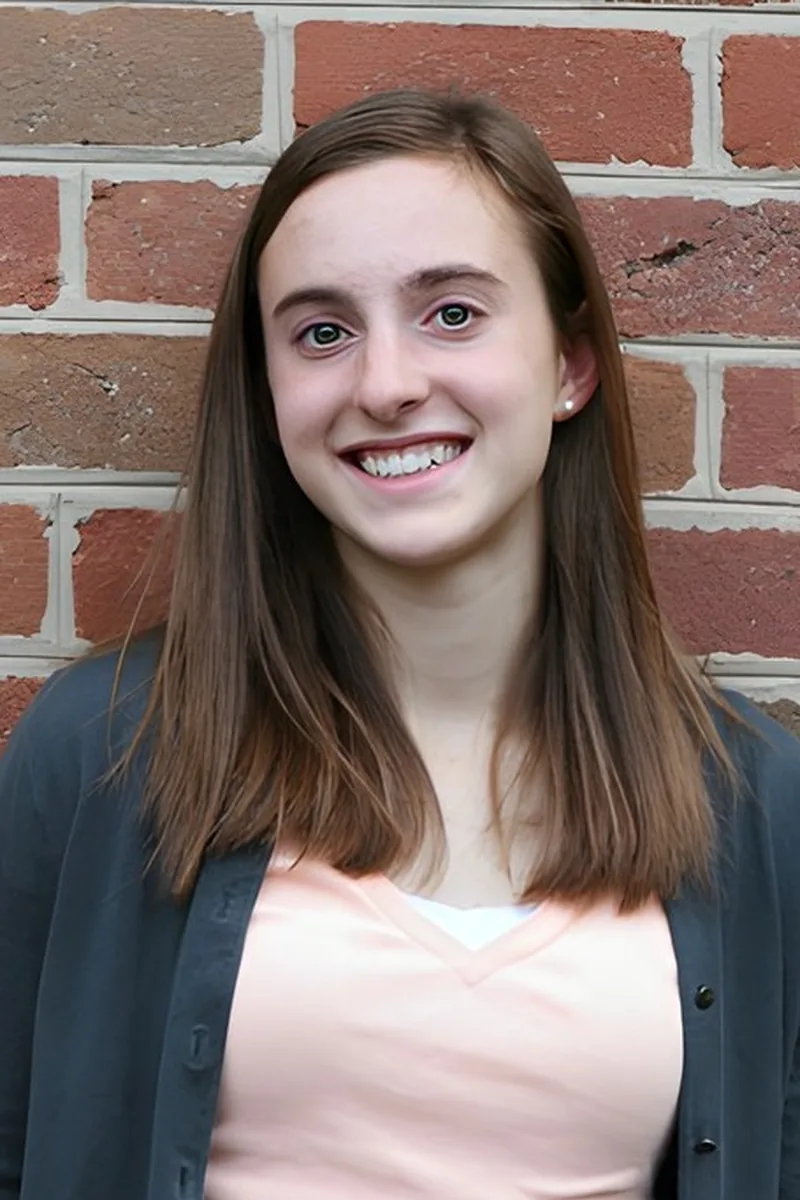
Most algebra frustration comes from one place: students learn procedures without understanding what the symbols actually represent. Kathleen zeroes in on that gap, making sure a student knows what it means to solve an equation — not just how to move terms around — before tackling systems, inequalities, or quadratic factoring. She's a math major at WashU who has tutored algebra to students of all ages for about four years.

When a student says they're "bad at algebra," Rachel usually finds the real issue is one or two foundational gaps — distributing negatives, handling fractions in equations, or translating word problems into expressions. She pinpoints those gaps early and rebuilds confidence around them, which makes everything from solving systems to factoring quadratics dramatically less stressful.
Before students can tackle the computational modeling Sean does at Columbia, they need algebra to feel automatic — manipulating expressions, solving systems, and thinking fluently about functions. He breaks down each topic by building intuition for what variables and equations actually represent, so the mechanics stick instead of feeling like arbitrary symbol-shuffling.
Most algebra frustration comes from one place: students can follow a procedure in class but freeze when a problem looks slightly different on the test. Shreya tackles that gap directly, teaching how to recognize problem types — whether it's factoring trinomials, solving systems, or simplifying radicals — so students build real flexibility with the material.
Breaking algebraic problems into logical steps comes naturally to Parag, who applies the same analytical rigor to math that he uses in his political science research at Northwestern. He's particularly effective at teaching students to set up and solve word problems — translating real-world scenarios into equations and inequalities.
A biology and pre-dental track meant Nik spent years relying on algebra as the backbone of chemistry stoichiometry, dosage calculations, and data analysis. He teaches students to see equations, inequalities, and systems not as abstract exercises but as tools that unlock the quantitative reasoning they'll need in every science course ahead.
When a variable suddenly replaces a number, many students lose their footing — Victoria zeroes in on that transition, especially around translating word problems into equations. Her background in anthropology taught her to find patterns in messy information, a skill she brings directly to topics like systems of equations and inequalities.
When a student stares at a word problem and doesn't know where to start, the issue usually isn't algebra — it's translating English into equations. Mubariz spends real time on that translation step, teaching students to identify unknowns and relationships before touching any symbols. Once the setup makes sense, solving systems or factoring quadratics becomes the straightforward part.
Ten years of middle school teaching gave Ruth deep experience with the algebra fundamentals students struggle with most: solving multi-step equations, working with variables on both sides, and translating word problems into expressions. Her linguistics background makes her especially precise when explaining the "grammar" of algebraic notation — why order and structure matter.
A certified K-12 teacher who has tutored across subjects since her undergraduate years at Rockhurst, Ann approaches Algebra by connecting each new concept — solving linear equations, graphing inequalities, working with systems — back to the arithmetic reasoning students already trust. She's especially effective at slowing down the jump from numerical thinking to symbolic thinking, which is where most Algebra students lose confidence.
The jump from arithmetic to algebra trips up a lot of students because variables suddenly make familiar operations feel abstract. Derrick tackles that transition head-on, walking through how to set up equations from word problems and why techniques like factoring or completing the square actually make sense. He builds each lesson around the specific spots where a student is getting stuck rather than running through generic problem sets.
Every equation in Samuel's chemistry and biology classes depends on algebra, so he knows exactly where students' algebraic reasoning tends to break down — solving for unknowns in stoichiometry, manipulating formulas, interpreting slope in data analysis. He teaches algebra as a toolkit with immediate real-world payoff, not just symbol shuffling. Rated 4.9 by students.
Madison tackles algebra by anchoring abstract variables and expressions in real scenarios — translating word problems into equations, graphing linear relationships, and building intuition for why the distributive property or factoring actually works. Her background in mentoring young learners means she's skilled at identifying exactly where a concept breaks down and rebuilding understanding from that point.
When students get stuck on algebra, it's usually not the mechanics — it's losing track of what the variable actually represents. Drew tackles that head-on by connecting expressions and equations to tangible scenarios from science and engineering, so that factoring a quadratic or solving a system feels like answering a real question rather than shuffling symbols.
I am interested in Physics and Mathematics and working out practical problems from plumbing to electronics. I will someday go back for my Ph.D. in Physics but until then I am looking to grow as an engineer or computer programmer.
Most algebra frustration comes from one place: students learn procedures without understanding why they work, so each new topic feels like starting over. Mason's approach is to connect the logic behind factoring, systems of equations, or quadratic formulas so that skills build on each other instead of piling up. His experience tutoring math at TCU's university level means he knows exactly which foundational gaps cause trouble later.
A lot of algebra struggles come down to students not understanding what a problem is actually asking them to do before they start solving. Anthony, a certified teacher and school administrator, tackles that disconnect head-on — walking through how to translate word problems into equations, interpret variable relationships, and build confidence with systems and inequalities.
A common stumbling block in algebra is the jump from arithmetic thinking to algebraic thinking — understanding what a variable represents and why manipulating equations works. John's mathematics background means he can pinpoint exactly where that conceptual gap is and address it, whether a student is struggling with factoring quadratics or setting up word problems from scratch.
Solving equations is mechanical — understanding why you can add the same quantity to both sides, or what a graph's slope really communicates, is where algebra becomes powerful. Jacob connects topics like systems of equations and quadratic factoring back to the scientific problems he solved daily as a chemistry major, giving students a reason to care about each technique.
The jump from arithmetic thinking to algebraic thinking trips up a lot of students, especially around variables, expressions, and solving multi-step equations. Evan approaches algebra by teaching students to read an equation like a sentence — figuring out what it's asking before reaching for a procedure. His engineering training at CU Boulder means algebraic fluency is second nature to him.
I am excited to help anyone who might need it!
The jump into algebra trips up a lot of students because suddenly letters replace numbers and equations require strategic thinking instead of just computation. Kristen tackles this by connecting each new concept — variables, linear equations, inequalities — back to the concrete reasoning students already know. Her elementary and middle school teaching background means she's skilled at bridging that gap between arithmetic confidence and algebraic fluency.
When variables and equations stop making sense, it's usually because a key earlier concept — like balancing operations or interpreting slope — didn't fully land. Anna diagnoses exactly where the gap is and rebuilds understanding from that point, connecting algebraic techniques like factoring and systems of equations to the logical problem-solving she uses in her own research.
Most algebra struggles come down to one thing: students learn procedures without understanding the structure underneath. Mayuri tackles this by showing how manipulating equations is really about maintaining balance — a principle she reinforces whether the topic is factoring quadratics, solving systems, or simplifying rational expressions. Her undergraduate degrees in math and statistics mean she can connect algebraic thinking to patterns students will use for years.
Katherine treats algebra as the language students need before anything else in science or math makes sense. She zeros in on the transition points that trip people up — moving from linear equations to systems, or from basic factoring to manipulating rational expressions — and builds fluency through practice that actually connects to problem-solving.
The leap from arithmetic to algebra is really a leap into abstract thinking, and that's where most students stall out. Jacob tackles this by anchoring variables, inequalities, and linear equations to concrete problems first, then gradually building toward the symbolic fluency students need for more advanced math.
Word problems are where algebra clicks or falls apart, and Anatoliy spends real time teaching students how to translate a sentence into an equation before ever solving it. His approach to factoring, inequalities, and linear systems emphasizes understanding the structure behind each technique so students can adapt when a problem looks slightly unfamiliar.
Most algebra struggles aren't really about algebra — they're about a shaky transition from arithmetic thinking to variable thinking. Megan teaches students to interpret expressions and equations as relationships, not just symbols to manipulate, which makes topics like systems of equations and inequalities click naturally. Her 5.0 client rating speaks to how well that approach lands.
The jump from solving simple equations to manipulating systems, factoring polynomials, and interpreting quadratic behavior trips up a lot of students who were fine in earlier math. Taylor tackles algebra by making sure each new skill connects logically to the last, so students aren't just memorizing procedures in isolation. Her 4.9 rating speaks to how well that structured approach clicks.
Most algebra frustration comes from one place: students learn procedures without understanding what variables and equations actually represent. Austin teaches algebra as a language for describing relationships, so that solving a system of equations or factoring a quadratic feels like translating a real situation rather than shuffling symbols. His engineering training means every algebraic tool he teaches comes with a clear reason for existing.
Most algebra struggles come down to one thing: students learn procedures without understanding why they work, so every new problem feels like a brand-new puzzle. Jessica digs into the reasoning behind factoring, systems of equations, and quadratic behavior so that students can adapt when problems look unfamiliar. She's been tutoring algebra for over five years and knows exactly which misconceptions to look for.
The moment algebra introduces variables into equations, some students lose their footing because they never fully owned the 'why' behind arithmetic. Brianna's background in elementary education means she's trained to spot exactly where foundational gaps — in fractions, negative numbers, or order of operations — are quietly causing algebra mistakes. She rebuilds those connections so that solving for x actually makes sense.
One sticking point in algebra is that students memorize steps for solving equations without understanding why those steps work — and then freeze when a problem looks slightly different. Anita teaches the logic behind techniques like factoring, distributing, and isolating variables so students can adapt their approach to unfamiliar problems on their own.
A lot of algebra frustration comes down to not understanding what a variable actually represents — it's treated as a puzzle piece instead of a meaningful quantity. Bri tackles this head-on by teaching students to translate word problems into equations, a skill her English background makes second nature. Once the language of algebra clicks, solving systems and simplifying expressions starts to feel logical instead of random.
A structured, patient approach to algebra is what Meaghan brings from her experience as a K-12 substitute teacher who has worked across grade levels. She's particularly effective at walking students through the transition from arithmetic thinking to variable-based reasoning — solving linear equations, graphing inequalities, and interpreting word problems.
Getting comfortable with variables and equations early on shapes how a student handles every math course that follows. Jordan zeroes in on translating word problems into algebraic expressions — a skill most students find harder than the actual solving — and uses his engineering mindset to show that setting up an equation is really just building a model of a situation.
While Sarah's degree is in English rather than math, her analytical background and comfort with symbolic logic make her a solid fit for students working through foundational algebra concepts like solving equations and graphing linear functions. She's particularly effective at translating word problems into algebraic expressions — a skill that draws directly on her strength with language and precision.
The jump from arithmetic to algebra trips students up when they can't see what a variable actually represents. Laura tackles that head-on, teaching students to translate word problems into equations and build intuition around concepts like slope, factoring, and systems of equations. Her 5.0 rating speaks to how well that approach lands.
Before calculus, before engineering, algebra is where Sidney learned to think in variables — and she's good at pinpointing exactly where a student's understanding breaks down, whether it's distributing negatives, solving multi-step equations, or translating word problems into expressions. Her chemical and biomolecular engineering degree from CU Boulder means algebraic manipulation is second nature.
Building fluency with variables, equations, and graphing is where algebra either clicks or becomes a source of frustration for years. Hatsuki's economics background means she's spent decades working with algebraic relationships — solving systems, manipulating expressions, and translating word problems into solvable equations.
Testimonials
Because the right Algebra tutor makes all the difference.
Average Session Rating – Based on 3.4M Learner Ratings
Practice Algebra
Free practice tests, flashcards, and AI tutoring for Algebra
Nearby Algebra Tutors
Other St. Louis Tutors
Related Math Tutors in St. Louis
Frequently Asked Questions
Students often struggle with the transition from arithmetic to abstract thinking—especially multi-step equations, word problems, and graphing. Many students can follow procedures but don't understand the underlying concepts, which makes it harder to apply algebra to new problems. Math anxiety is also common, but personalized 1-on-1 instruction helps students build confidence by breaking concepts into manageable pieces and connecting them to real-world applications.
Tutors start by assessing your current understanding—not just what you know, but how you think about algebra problems. They'll identify specific gaps, whether that's foundational skills or conceptual misunderstandings, and create a personalized plan tailored to your learning style. The first session sets the foundation for building confidence and momentum.
Showing work isn't just for your teacher—it's how you catch your own mistakes and see patterns in problem-solving. Expert tutors teach you strategies for organizing your steps, explaining your reasoning, and checking your work. This approach transforms showing work from a chore into a tool that deepens your understanding and improves your accuracy.
Word problems require you to translate real-world situations into equations—a skill that combines reading comprehension, mathematical thinking, and problem-solving strategy. Tutors teach you a systematic approach: identifying what you know, what you're looking for, and how to set up the equation. With practice and guidance, word problems become less intimidating and more manageable.
Yes. St. Louis schools use different curricula, and tutors are experienced working with various textbooks and teaching methods. Whether your school emphasizes graphing-first approaches, traditional equation-solving, or integrated problem-solving, Varsity Tutors connects you with tutors who understand your specific curriculum and can bridge any gaps between how concepts are taught in class and how you learn best.
Graphing requires connecting visual, algebraic, and conceptual understanding—which is why many students find it challenging. Tutors help you see the relationship between equations and graphs, practice plotting points, and understand what slopes, intercepts, and transformations actually mean. This visual-algebraic connection often clicks when you work through problems with someone who can explain the 'why' behind each step.
Math anxiety often comes from feeling lost or falling behind. Personalized instruction lets you work at your own pace, ask questions without judgment, and experience small wins that build momentum. Tutors celebrate progress, help you see patterns you've mastered, and frame challenges as opportunities to learn—not failures. This shift in mindset is often as important as the algebra skills themselves.
Results vary based on starting point and consistency, but most students see improved grades, stronger problem-solving skills, and increased confidence within a few weeks of regular tutoring. Many students move from barely passing to earning B's and A's, and more importantly, they develop the conceptual understanding that makes algebra feel less like memorization and more like problem-solving they can actually do.
Let’s find your perfect tutor
Answer a few quick questions. We’ll recommend the right plan and match you with a top 5% tutor.