Award-Winning Science Tutors
serving Jackson, MS
Science
Tutors in Jackson
Private 1-on-1 tutoring, weekly live classes for academic support, test prep & enrichment, practice tests and diagnostics, and more to elevate grades and test scores.
Based on 3.4M Learner Ratings
UniversitiesSchools & Universities
DeliveredHours Delivered
ProficiencyGrowth in Proficiency
Who needs tutoring?
No obligation. Takes ~1 minute.

A Latin degree might not scream 'science tutor,' but John's training in systematic classification and root-word analysis is exactly what students need when they hit a wall of terms like 'photosynthesis,' 'mitochondria,' or 'endothermic' — nearly all built from the Latin and Greek he studied at Mississippi State. He also scored a 35 on the ACT, which required strong performance on the Science section's data interpretation and experimental reasoning passages. Rated 5.0 by students.
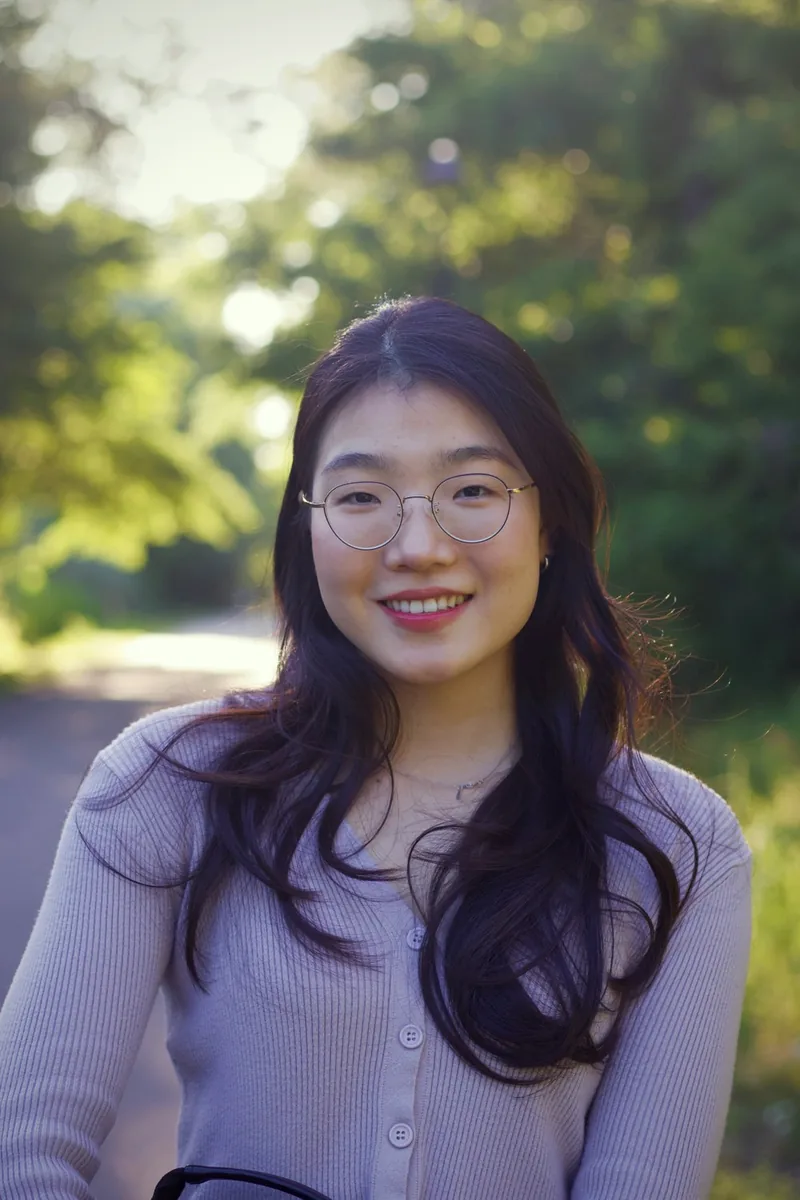
Between biology, chemistry, and physics, Yeseul has the rare ability to teach science as an interconnected system rather than three separate textbooks. Her MCAT preparation demanded mastery across all three disciplines simultaneously — understanding how chemical bonding principles explain protein folding, or how physics concepts like pressure and flow apply to the circulatory system. That cross-disciplinary perspective makes her especially effective at showing students how one concept illuminates another.
Doctoral work in clinical psychology at Duke means Shelley designs and analyzes research studies regularly — controlling variables, interpreting statistical output, and defending conclusions in front of faculty who pick apart every methodological choice. That daily practice with the scientific method gives her a practical fluency she brings to teaching concepts like experimental design, data analysis, and hypothesis testing. Her 5.0 rating suggests she makes that rigor accessible rather than intimidating.
A mechanical engineering grad student who builds things, breaks things, and troubleshoots what went wrong — Aaron brings that same hands-on diagnostic process to science topics like forces, energy, properties of matter, and experimental design. His 1530 SAT confirms the analytical horsepower, and his 5.0 rating suggests he explains the reasoning behind results in a way that actually lands.
Between a Caltech degree spanning economics and computer science, coursework that ranged from AP Chemistry to physics and engineering, and a 1580 SAT, Brian has unusually deep firsthand experience with the scientific disciplines most tutors only teach from a textbook. He's especially strong on the quantitative backbone of science — setting up equations from word problems, interpreting data sets, and connecting mathematical models to physical phenomena like thermodynamics or mechanics.
David's cognitive science training at Stanford sat squarely at the intersection of biology, psychology, and computational modeling, giving him a cross-disciplinary lens on science that most tutors don't have. He's particularly strong at explaining how to design experiments, interpret data, and connect scientific concepts back to underlying mechanisms.
Law school at the University of Chicago drills a specific kind of reasoning — isolating what the evidence actually proves versus what you assume it proves — and Elena applies that same discipline when walking students through scientific concepts like experimental design, variable control, and data interpretation. Her government and Spanish double major means she's used to synthesizing dense, unfamiliar material quickly, which is exactly the skill students need when a science unit throws new terminology and complex diagrams at them simultaneously.
Henry's Harvard thesis on John Dewey's philosophy of education was fundamentally about how people learn through inquiry and experimentation — the same cycle of questioning, testing, and revising that sits at the heart of the scientific method. He teaches science by grounding abstract concepts in that inquiry process, pushing students to ask why an experiment is designed a certain way before worrying about memorizing the outcome. His 1530 SAT confirms he can handle the quantitative and analytical reasoning science coursework demands.
As a medical student at Northwestern's Feinberg School of Medicine, Anna lives inside scientific reasoning every day — forming hypotheses, interpreting data, and connecting biological systems to real outcomes. She brings that same structured thinking to general science topics like the scientific method, ecosystems, and basic chemistry, making each concept feel purposeful rather than random.
As a mechanical engineering student at Harvard, Christopher lives at the intersection of physics and chemistry daily — calculating forces, analyzing material properties, and modeling energy systems. That applied perspective makes him especially effective at showing students why scientific concepts matter beyond the textbook, turning abstract formulas into concrete, intuitive ideas.
Journalism is fundamentally about investigation — gathering evidence, verifying claims, and explaining complex topics to a general audience — and Meghan applies that same discipline when walking students through scientific concepts like experimental design and data interpretation. Her Northwestern training emphasized rigorous sourcing and logical structure, which translates naturally to teaching students how to read a graph, evaluate a hypothesis, or write up lab results that actually say something clear. Rated 5.0 by students.
Jennifer's ELA training at NYU's accelerated MAT program might seem distant from science, but teaching students to read dense nonfiction closely — pulling claims from evidence, evaluating an author's reasoning, spotting unsupported conclusions — is exactly what science coursework demands when students face lab reports, textbook passages, and data-heavy questions. She's especially useful for students who understand the concepts but struggle to articulate their thinking in written explanations or short-answer responses.
Sociology research at Harvard meant Solange spent years designing surveys, analyzing datasets, and defending conclusions in front of professors who demanded airtight reasoning — all of which is applied scientific method, even if the subject matter was social rather than physical. She's especially effective at teaching students to distinguish correlation from causation and to read charts and graphs with a critical eye, since those skills were daily requirements in her coursework. Her 34 ACT confirms she can handle the quantitative side of science just as comfortably as the conceptual.
Legal training is essentially argument construction from evidence — and Emily applies that same framework when teaching students to work through hypotheses, evaluate experimental outcomes, and explain what data actually supports versus what it doesn't. Her philosophy degree from Northwestern also built the formal logic skills that underpin scientific reasoning, from identifying control variables to spotting flawed conclusions in a lab report.
Testimonials
Because the right Science tutor makes all the difference.
Average Session Rating – Based on 3.4M Learner Ratings
Practice Science
Free practice tests, flashcards, and AI tutoring for Science
Nearby Science Tutors
Other Jackson Tutors
Related Science Tutors in Jackson
Frequently Asked Questions
Varsity Tutors matches Jackson students with expert Science tutors for 1-on-1 instruction. We pair each student with a tutor based on their specific needs, learning style, and goals.
Whether you need homework help, exam prep, or want to get ahead, our Science tutors are ready to help.
Common challenges include gaps from earlier material, difficulty with specific concepts, and trouble applying learning to new problems. These issues can snowball quickly in Science.
A tutor identifies where you're stuck, fills in gaps, and provides targeted practice. The 1-on-1 format means you get help exactly where you need it.
Tutors work with your student's actual coursework—homework assignments, class notes, and upcoming tests. This keeps tutoring directly relevant to what's happening in the classroom.
When you share information about your student's school and curriculum, we can match you with a tutor who has relevant experience.
All tutors complete background checks, credential verification, and teaching evaluation. Many of our Science tutors hold advanced degrees or have years of teaching experience.
You can review tutor profiles to find someone with the right background for your student's level and needs.
Many students see improved grades within a few weeks, along with better understanding of Science concepts and more confidence tackling challenging material.
Tutors track progress and adjust their approach to ensure continued improvement.
Most students benefit from 1-2 sessions per week. More frequent sessions help if your student is significantly behind or has an important exam coming up.
Your tutor can recommend a schedule based on your student's specific situation and goals.
Tutoring is purchased in packages of hours, with rates varying by tutor experience. Varsity Tutors offers several options to fit different budgets and needs.
You can discuss pricing during your consultation to find what works best.
Your tutor will assess where your student is, discuss goals, and start working on priority areas. Most students bring current homework or upcoming test material to focus on.
By the end, you'll have a clear sense of how the tutor can help and a plan for moving forward.
Let’s find your perfect tutor
Answer a few quick questions. We’ll recommend the right plan and match you with a top 5% tutor.