Award-Winning AP Calculus AB Tutors
serving Jackson, MS
AP Calculus AB
Tutors in Jackson
Private 1-on-1 tutoring, weekly live classes for academic support, test prep & enrichment, practice tests and diagnostics, and more to elevate grades and test scores.
Based on 3.4M Learner Ratings
UniversitiesSchools & Universities
DeliveredHours Delivered
ProficiencyGrowth in Proficiency
Who needs tutoring?
No obligation. Takes ~1 minute.
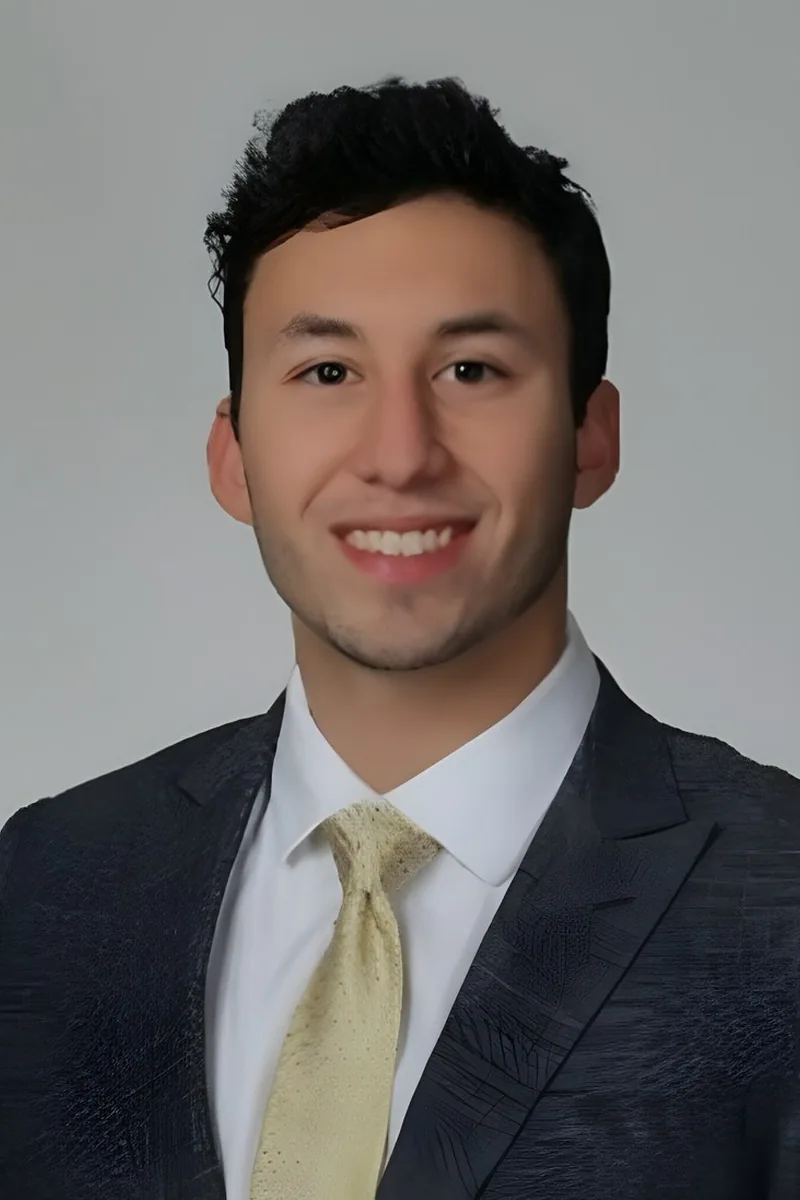
Three engineering degrees mean Andrea has spent years where calculus isn't a course but a daily language — computing derivatives to analyze mechanical stress, integrating to find volumes and energy transfers across systems. That fluency shows up most when she teaches limits and continuity, building the conceptual scaffolding that keeps students from hitting a wall once the AB curriculum reaches the Fundamental Theorem. Her 32 ACT and 4.8 rating back up an approach grounded in genuine mechanical intuition.

Studying neuroscience at Vanderbilt meant Benjamin couldn't escape calculus — modeling membrane potentials, analyzing signal decay curves, computing rates of neurotransmitter diffusion — so the AB curriculum's core concepts aren't textbook abstractions for him but tools he's actually used. His 34 ACT reflects the quantitative precision he brings to teaching limits and the chain rule, two topics where small conceptual gaps snowball into free-response mistakes. He's especially good at slowing down the problem-setup phase so students learn to read what a question is really asking before jumping into computation.
The jump from memorizing derivative rules to applying them on AP free-response questions is where most Calc AB students lose points. Adam breaks down each problem type — related rates, accumulation functions, slope fields — by teaching the reasoning behind setups so students can handle unfamiliar prompts on exam day.
Princeton's aerospace engineering program throws you into differential equations and multivariable calculus early, which means Fred had to master the AB fundamentals — limits, derivatives, integration techniques — so thoroughly that they became second nature before the harder material piled on. That depth shows when he teaches topics like the chain rule or area between curves, where he can explain not just the procedure but the reasoning that makes it transferable to unfamiliar exam questions. His 1550 SAT speaks to the same precision he brings to breaking down free-response setups.
Teaching calculus at Harvard as a Course Assistant gives Sanjana a front-row seat to the mistakes students make most often — and the explanations that actually click. She breaks down AB topics like related rates, the Fundamental Theorem, and integration techniques by connecting each one back to the graphical intuition behind it.
Mechanical engineering at Yale means Charles builds things using calculus every week — computing moments of inertia, modeling fluid pressures, sizing structural loads — so when an AB student asks 'when will I ever use this,' he has actual answers. He's especially strong on optimization and related rates because those are engineering bread-and-butter problems where setting up the equation from a physical scenario is the whole challenge. His 34 ACT and varsity-athlete discipline keep his teaching sharp and structured.
Limits, derivatives, and the Fundamental Theorem of Calculus all require a shift in mathematical thinking that trips up even strong algebra students. Jake's quantitative training at Northwestern gives him a clear framework for walking through each concept step by step, connecting the graphical intuition to the formal rules. His 5.0 rating speaks to how well that approach lands.
Mechanical and aerospace engineering at Princeton means Matthew builds on calculus daily — computing trajectories, analyzing forces, optimizing structural loads — so the AB curriculum's core techniques are second nature to him. He teaches each new concept by working through a few problems step by step, then hands students progressively harder variations, asking targeted questions that expose gaps before they become exam-day surprises. His 34 ACT underscores the quantitative precision behind that approach.
The jump from memorizing derivative rules to actually understanding limits, the chain rule, and the Fundamental Theorem is where most AB students struggle. Anthony approaches calculus the way he learned it as a Yale physics and math major: every rule has a reason, and once students see that reason, problem-solving becomes intuitive rather than mechanical. He holds a 5.0 client rating.
The jump from Pre-Calc to AP Calculus AB trips up students who never fully grasped limits or the logic behind the chain rule. Daniel's approach is to rebuild each concept from scratch when needed — he's an applied math major who got where he is by sitting with hard material until it clicked, not by breezing through it. That means he knows exactly where the confusion usually lives in topics like related rates, Riemann sums, and the Fundamental Theorem.
A PhD in statistics built on a biomedical engineering foundation means Sam has spent years where calculus isn't a course — it's the machinery underneath everything, from deriving probability distributions to modeling biological systems. That depth shows when teaching limits and the Fundamental Theorem, where he can trace each concept forward into the math students will actually use in college. Rated 4.9 by students.
Kate breaks AB Calculus into two core skills: understanding what derivatives and integrals actually represent, and learning the mechanical techniques to compute them quickly. Her environmental engineering training required heavy use of related rates, optimization, and area-under-the-curve problems, so she can show students exactly how these concepts connect to real applications.
Testimonials
Because the right AP Calculus AB tutor makes all the difference.
Average Session Rating – Based on 3.4M Learner Ratings
Practice AP Calculus AB
Free practice tests, flashcards, and AI tutoring for AP Calculus AB
Nearby AP Calculus AB Tutors
Other Jackson Tutors
Related Math Tutors in Jackson
Frequently Asked Questions
Varsity Tutors matches Jackson students with expert AP Calculus AB tutors for 1-on-1 instruction. We pair each student with a tutor based on their specific needs, learning style, and goals.
Whether you need homework help, exam prep, or want to get ahead, our AP Calculus AB tutors are ready to help.
Common challenges include gaps from earlier material, difficulty with specific concepts, and trouble applying learning to new problems. These issues can snowball quickly in AP Calculus AB.
A tutor identifies where you're stuck, fills in gaps, and provides targeted practice. The 1-on-1 format means you get help exactly where you need it.
Tutors work with your student's actual coursework—homework assignments, class notes, and upcoming tests. This keeps tutoring directly relevant to what's happening in the classroom.
When you share information about your student's school and curriculum, we can match you with a tutor who has relevant experience.
All tutors complete background checks, credential verification, and teaching evaluation. Many of our AP Calculus AB tutors hold advanced degrees or have years of teaching experience.
You can review tutor profiles to find someone with the right background for your student's level and needs.
Many students see improved grades within a few weeks, along with better understanding of AP Calculus AB concepts and more confidence tackling challenging material.
Tutors track progress and adjust their approach to ensure continued improvement.
Most students benefit from 1-2 sessions per week. More frequent sessions help if your student is significantly behind or has an important exam coming up.
Your tutor can recommend a schedule based on your student's specific situation and goals.
Tutoring is purchased in packages of hours, with rates varying by tutor experience. Varsity Tutors offers several options to fit different budgets and needs.
You can discuss pricing during your consultation to find what works best.
Your tutor will assess where your student is, discuss goals, and start working on priority areas. Most students bring current homework or upcoming test material to focus on.
By the end, you'll have a clear sense of how the tutor can help and a plan for moving forward.
Let’s find your perfect tutor
Answer a few quick questions. We’ll recommend the right plan and match you with a top 5% tutor.