Award-Winning Calculus Tutors
serving Jackson, MS
Calculus
Tutors in Jackson
Private 1-on-1 tutoring, weekly live classes for academic support, test prep & enrichment, practice tests and diagnostics, and more to elevate grades and test scores.
Based on 3.4M Learner Ratings
UniversitiesSchools & Universities
DeliveredHours Delivered
ProficiencyGrowth in Proficiency
Who needs tutoring?
No obligation. Takes ~1 minute.

John's Latin degree isn't a math credential, but parsing complex grammatical structures in a highly inflected language builds the same kind of systematic, rule-based reasoning that calculus demands — identifying patterns, applying transformations, and tracking how small changes propagate through a larger expression. His 35 ACT composite confirms he can back that up quantitatively, and he brings that analytical precision to unpacking derivatives and limit definitions where careful step-by-step logic matters most.
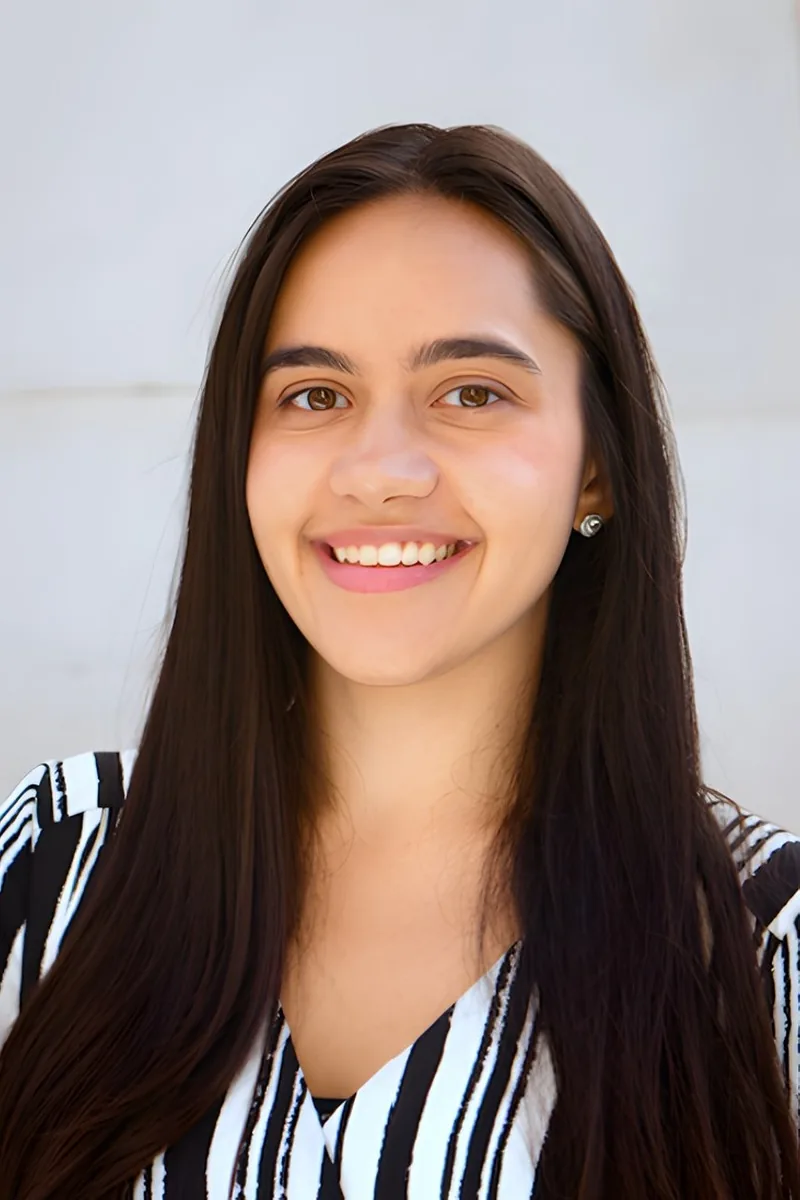
Maya's Yale degree is in the arts and religious studies, not mathematics, so she's straightforward that calculus isn't her deepest subject. That said, her 34 ACT composite shows real quantitative ability, and her approach to tutoring — slowing down, finding what motivates each learner, and building from there — translates well to demystifying early concepts like limits and the intuition behind what a derivative actually represents.
Limits, derivatives, and integrals each demand a shift in how students think about change and accumulation. Sugi's biochemistry background means she regularly used calculus to model reaction kinetics and enzyme behavior, so she can show students what these tools actually do beyond textbook exercises. She walks through each concept with concrete examples that make the abstraction tangible.
Doctoral-level research in clinical psychology demands constant fluency with statistical modeling, derivatives, and rates of change — concepts that sit at the heart of calculus. Shelley breaks down problems like related rates and integration by connecting each step to a concrete, real-world scenario so the logic behind the math clicks. Rated 5.0 by students.
Dual-degree work in Applied Mathematics and Computer Science at Johns Hopkins means Sabira isn't just familiar with calculus — she uses it daily, from optimization algorithms to the linear algebra and multivariable calc that underpin machine learning models. That depth lets her trace a concept like the chain rule or integration by parts back to why it was invented in the first place, turning mechanical steps into intuition. Rated 5.0 by students.
Between pharmacokinetics in medical school and the quantitative modeling baked into her MBA coursework at Kellogg, Anna has used calculus as a working tool — not just a classroom exercise. She teaches derivatives and integrals by connecting them to the rate-of-change problems she actually solves, like how drug concentrations shift over time or how marginal cost curves drive business decisions. A 36 ACT composite and 5.0 tutoring rating back up the quantitative chops.
Yu's political science degree and education policy work involve more quantitative analysis than people expect — regression models, rate-of-change interpretations in policy data, and the kind of mathematical reasoning that underpins early calculus concepts like derivatives and accumulation. His Master's from Harvard's Graduate School of Education also means he knows how to break down the conceptual leap from algebra to calculus in a way that builds genuine understanding, not just procedural shortcuts.
Keith's academic path runs through political science and law, not mathematics, so he's upfront that calculus is well outside his core expertise. His tutoring experience across multiple math levels means he can support students navigating early concepts like limits and basic derivatives, bringing the same structured, logical thinking that earned him a 1560 SAT and admission to Cornell Law.
Both of Matthew's parents are university math professors, so calculus was dinner-table conversation long before it was a college course. That upbringing gave him an intuitive way of explaining limits, derivatives, and integration techniques that connects the visual logic of a graph to the formal notation students struggle with. Rated 4.9 by students, he's especially sharp at walking through related rates and optimization problems step by step.
Four years of volunteering as an SAT tutor sharpened Renee's quantitative skills — her 1530 SAT confirms that — but her real strength is translating abstract notation into language that clicks, a skill she built as a Writing Consultant breaking down complex ideas for diverse learners. She applies that same clarity to early calculus concepts like limits and continuity, walking through the reasoning behind each step so the logic holds up long after the session ends.
Curriculum development — Elena's day job — is essentially about sequencing ideas so each one builds logically on the last, which is exactly what early calculus demands when students move from limits to derivatives to integration. Her McGill and Edinburgh training is in the humanities, not math, so she's transparent about the boundaries of her calculus expertise, but her knack for making abstract concepts click through analogy and structured explanation (she was named Scotland's International Young Thinker of the Year for that skill) carries over well to unpacking the reasoning behind rules like the chain rule or the fundamental theorem.
Frances's psychology background at Duke involved statistical modeling and data analysis — work that builds directly on the calculus concepts of rates of change and area under a curve. She teaches early calculus by connecting derivatives and integrals to the kind of quantitative reasoning she used in research, making notation feel purposeful rather than arbitrary. Rated 4.6 by students.
Having completed AP Calculus BC and continued into college-level coursework at Princeton, Julie tackles everything from limit definitions and derivative rules through integration techniques and series convergence. She's especially sharp at explaining the conceptual "why" behind procedures like the chain rule or u-substitution, drawing on the same logical rigor her philosophy training demands.
Testimonials
Because the right Calculus tutor makes all the difference.
Average Session Rating – Based on 3.4M Learner Ratings
Nearby Calculus Tutors
Other Jackson Tutors
Related Math Tutors in Jackson
Frequently Asked Questions
Varsity Tutors matches Jackson students with expert Calculus tutors for 1-on-1 instruction. We pair each student with a tutor based on their specific needs, learning style, and goals.
Whether you need homework help, exam prep, or want to get ahead, our Calculus tutors are ready to help.
Common challenges include gaps from earlier material, difficulty with specific concepts, and trouble applying learning to new problems. These issues can snowball quickly in Calculus.
A tutor identifies where you're stuck, fills in gaps, and provides targeted practice. The 1-on-1 format means you get help exactly where you need it.
Tutors work with your student's actual coursework—homework assignments, class notes, and upcoming tests. This keeps tutoring directly relevant to what's happening in the classroom.
When you share information about your student's school and curriculum, we can match you with a tutor who has relevant experience.
All tutors complete background checks, credential verification, and teaching evaluation. Many of our Calculus tutors hold advanced degrees or have years of teaching experience.
You can review tutor profiles to find someone with the right background for your student's level and needs.
Many students see improved grades within a few weeks, along with better understanding of Calculus concepts and more confidence tackling challenging material.
Tutors track progress and adjust their approach to ensure continued improvement.
Most students benefit from 1-2 sessions per week. More frequent sessions help if your student is significantly behind or has an important exam coming up.
Your tutor can recommend a schedule based on your student's specific situation and goals.
Tutoring is purchased in packages of hours, with rates varying by tutor experience. Varsity Tutors offers several options to fit different budgets and needs.
You can discuss pricing during your consultation to find what works best.
Your tutor will assess where your student is, discuss goals, and start working on priority areas. Most students bring current homework or upcoming test material to focus on.
By the end, you'll have a clear sense of how the tutor can help and a plan for moving forward.
Let’s find your perfect tutor
Answer a few quick questions. We’ll recommend the right plan and match you with a top 5% tutor.