Award-Winning Science Tutors
serving Gulfport, MS
Science
Tutors in Gulfport
Private 1-on-1 tutoring, weekly live classes for academic support, test prep & enrichment, practice tests and diagnostics, and more to elevate grades and test scores.
Based on 3.4M Learner Ratings
UniversitiesSchools & Universities
DeliveredHours Delivered
ProficiencyGrowth in Proficiency
Who needs tutoring?
No obligation. Takes ~1 minute.
A Latin degree might not scream 'science tutor,' but John's training in systematic classification and root-word analysis is exactly what students need when they hit a wall of terms like 'photosynthesis,' 'mitochondria,' or 'endothermic' — nearly all built from the Latin and Greek he studied at Mississippi State. He also scored a 35 on the ACT, which required strong performance on the Science section's data interpretation and experimental reasoning passages. Rated 5.0 by students.
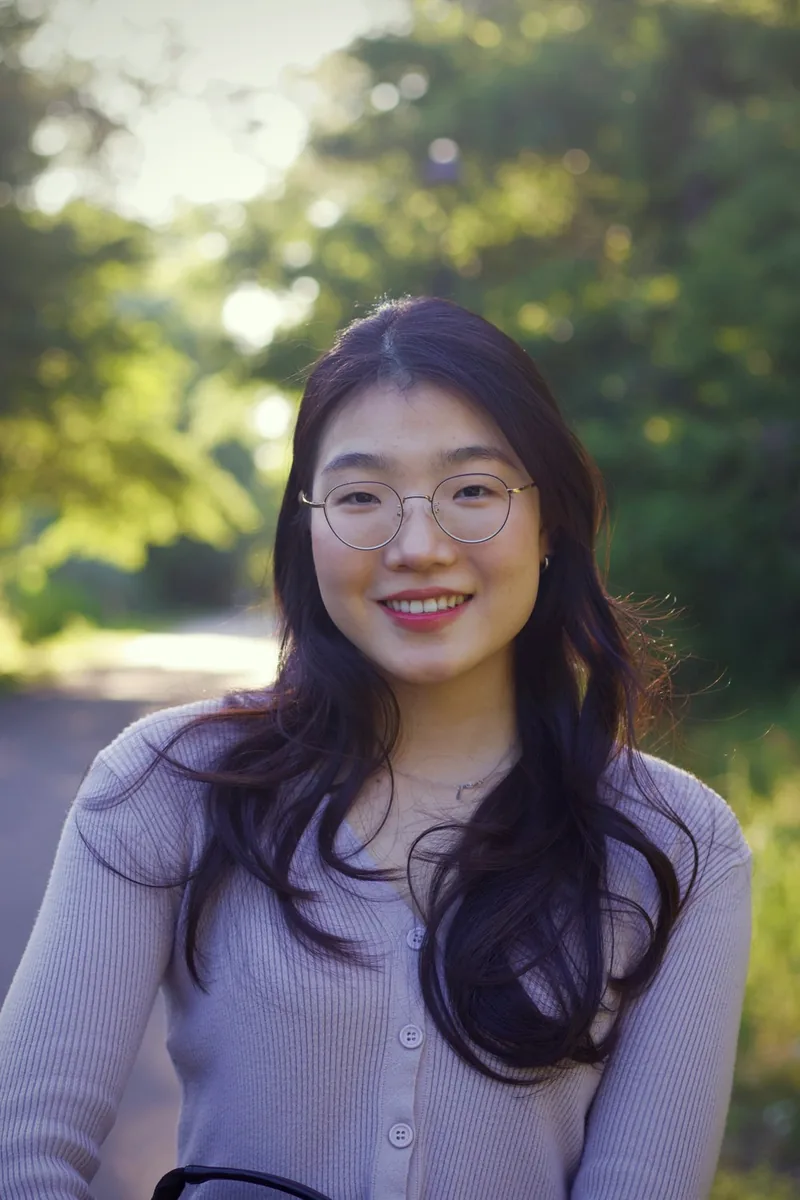
Between biology, chemistry, and physics, Yeseul has the rare ability to teach science as an interconnected system rather than three separate textbooks. Her MCAT preparation demanded mastery across all three disciplines simultaneously — understanding how chemical bonding principles explain protein folding, or how physics concepts like pressure and flow apply to the circulatory system. That cross-disciplinary perspective makes her especially effective at showing students how one concept illuminates another.
Henry's Harvard thesis on John Dewey's philosophy of education was fundamentally about how people learn through inquiry and experimentation — the same cycle of questioning, testing, and revising that sits at the heart of the scientific method. He teaches science by grounding abstract concepts in that inquiry process, pushing students to ask why an experiment is designed a certain way before worrying about memorizing the outcome. His 1530 SAT confirms he can handle the quantitative and analytical reasoning science coursework demands.
A medical student at Jefferson, Nishad has spent years immersed in biology, chemistry, and anatomy — the core disciplines that make up most K-12 and introductory college science coursework. He excels at translating abstract concepts like cellular respiration or chemical bonding into concrete, visual explanations that click on the first try. Students walk away understanding the "why" behind each process, which makes exam questions far more predictable.
Law school at the University of Chicago drills a specific kind of reasoning — isolating what the evidence actually proves versus what you assume it proves — and Elena applies that same discipline when walking students through scientific concepts like experimental design, variable control, and data interpretation. Her government and Spanish double major means she's used to synthesizing dense, unfamiliar material quickly, which is exactly the skill students need when a science unit throws new terminology and complex diagrams at them simultaneously.
Running a tutoring program at a charter middle school meant Liz wasn't just teaching science content — she was figuring out how to make vocabulary-heavy units on cells, ecosystems, and states of matter land for students with dyslexia, ADHD, and other learning differences. Her special education master's gave her a toolkit of concrete strategies for breaking down dense nonfiction text and multi-step processes, which is where most science students actually get stuck. She holds a 4.7 rating across her subjects.
While science isn't Keith's primary academic background, his analytical training in political science and law makes him effective at teaching students how to read data, interpret experiments, and reason through cause-and-effect relationships. He's particularly useful for students who struggle with the reading-heavy side of science — understanding what a question is really asking and pulling the right information from charts and passages.
Legal training is essentially argument construction from evidence — and Emily applies that same framework when teaching students to work through hypotheses, evaluate experimental outcomes, and explain what data actually supports versus what it doesn't. Her philosophy degree from Northwestern also built the formal logic skills that underpin scientific reasoning, from identifying control variables to spotting flawed conclusions in a lab report.
A master's in environmental engineering means Kate didn't just study biology, chemistry, and physics — she used all three together to solve real problems like modeling water contamination or analyzing energy systems. That cross-disciplinary perspective makes her especially effective at showing students how scientific concepts connect rather than treating each unit as isolated material. Rated 4.9 by students.
Studying human evolutionary biology gave Victoria a working knowledge of natural selection, genetics, anatomy, and ecological systems that most humanities-trained tutors simply don't have. She connects scientific concepts to real-world examples — like how archaeological site stratigraphy illustrates geological principles — making abstract ideas tangible for students who struggle with textbook explanations.
Sociology research at Harvard meant Solange spent years designing surveys, analyzing datasets, and defending conclusions in front of professors who demanded airtight reasoning — all of which is applied scientific method, even if the subject matter was social rather than physical. She's especially effective at teaching students to distinguish correlation from causation and to read charts and graphs with a critical eye, since those skills were daily requirements in her coursework. Her 34 ACT confirms she can handle the quantitative side of science just as comfortably as the conceptual.
Biochemistry, cell biology, neuroscience, physical chemistry — Sugi didn't just take these courses, she built a medical career on top of them. When a student struggles with something like cellular respiration or chemical equilibrium, she connects the textbook version to the larger story of why that process matters, which turns rote memorization into genuine understanding.
As someone who also teaches GED Science, Frances approaches science by treating it as a reading and reasoning exercise first. She teaches students to interpret data tables, understand experimental design, and connect vocabulary to the underlying concepts in biology, earth science, or physical science.
Journalism is fundamentally about investigation — gathering evidence, verifying claims, and explaining complex topics to a general audience — and Meghan applies that same discipline when walking students through scientific concepts like experimental design and data interpretation. Her Northwestern training emphasized rigorous sourcing and logical structure, which translates naturally to teaching students how to read a graph, evaluate a hypothesis, or write up lab results that actually say something clear. Rated 5.0 by students.
Testimonials
Because the right Science tutor makes all the difference.
Average Session Rating – Based on 3.4M Learner Ratings
Practice Science
Free practice tests, flashcards, and AI tutoring for Science
Nearby Science Tutors
Other Gulfport Tutors
Related Science Tutors in Gulfport
Frequently Asked Questions
Varsity Tutors matches Gulfport students with expert Science tutors for 1-on-1 instruction. We pair each student with a tutor based on their specific needs, learning style, and goals.
Whether you need homework help, exam prep, or want to get ahead, our Science tutors are ready to help.
Common challenges include gaps from earlier material, difficulty with specific concepts, and trouble applying learning to new problems. These issues can snowball quickly in Science.
A tutor identifies where you're stuck, fills in gaps, and provides targeted practice. The 1-on-1 format means you get help exactly where you need it.
Tutors work with your student's actual coursework—homework assignments, class notes, and upcoming tests. This keeps tutoring directly relevant to what's happening in the classroom.
When you share information about your student's school and curriculum, we can match you with a tutor who has relevant experience.
All tutors complete background checks, credential verification, and teaching evaluation. Many of our Science tutors hold advanced degrees or have years of teaching experience.
You can review tutor profiles to find someone with the right background for your student's level and needs.
Many students see improved grades within a few weeks, along with better understanding of Science concepts and more confidence tackling challenging material.
Tutors track progress and adjust their approach to ensure continued improvement.
Most students benefit from 1-2 sessions per week. More frequent sessions help if your student is significantly behind or has an important exam coming up.
Your tutor can recommend a schedule based on your student's specific situation and goals.
Tutoring is purchased in packages of hours, with rates varying by tutor experience. Varsity Tutors offers several options to fit different budgets and needs.
You can discuss pricing during your consultation to find what works best.
Your tutor will assess where your student is, discuss goals, and start working on priority areas. Most students bring current homework or upcoming test material to focus on.
By the end, you'll have a clear sense of how the tutor can help and a plan for moving forward.
Let’s find your perfect tutor
Answer a few quick questions. We’ll recommend the right plan and match you with a top 5% tutor.