Award-Winning Pre-Calculus Tutors
serving Jackson, MS
Pre-Calculus
Tutors in Jackson
Private 1-on-1 tutoring, weekly live classes for academic support, test prep & enrichment, practice tests and diagnostics, and more to elevate grades and test scores.
Based on 3.4M Learner Ratings
UniversitiesSchools & Universities
DeliveredHours Delivered
ProficiencyGrowth in Proficiency
Who needs tutoring?
No obligation. Takes ~1 minute.

Fred's aerospace engineering degree from Princeton meant living inside the math that pre-calculus students are just meeting — parametric equations describing flight paths, trigonometric models for oscillating systems, and the limit-adjacent thinking that bridges algebra to calculus. He teaches the course knowing exactly which concepts will matter most once students cross into derivatives and integrals, and he builds that forward-looking intuition into every session. His 1550 SAT confirms the quantitative depth behind the approach.
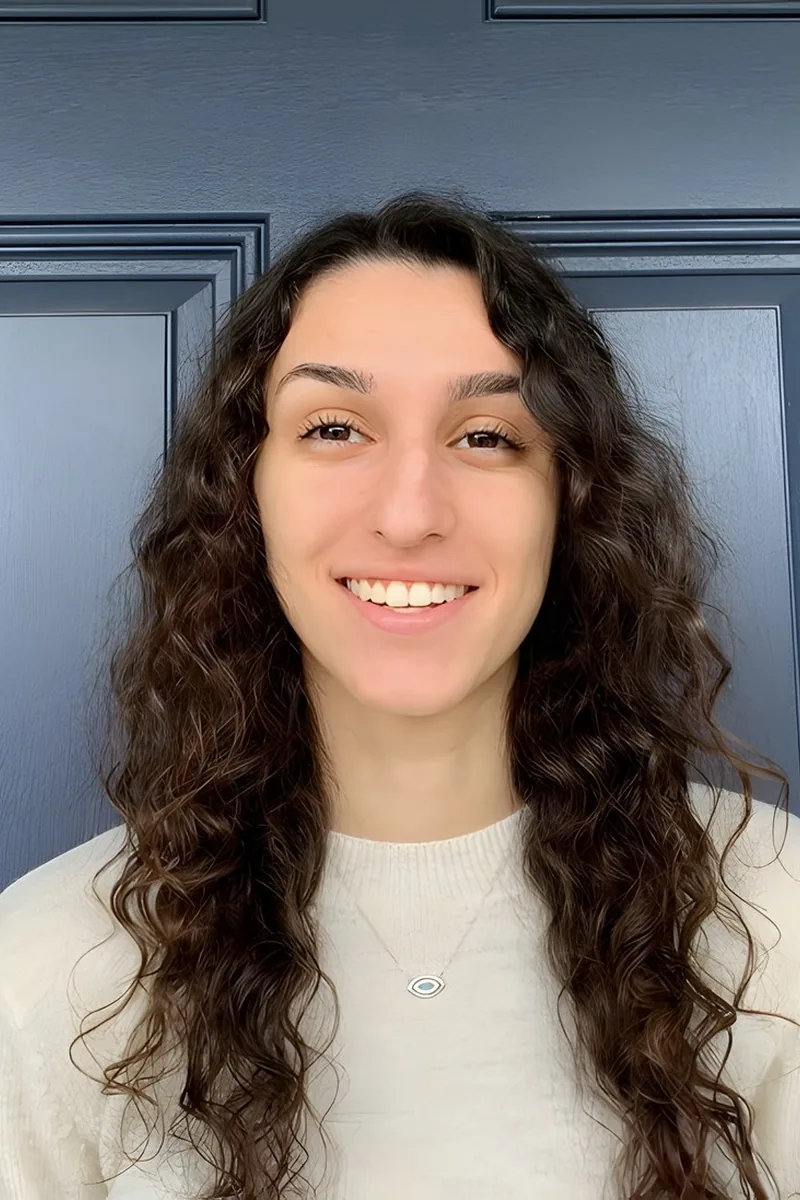
Running a genetics lab section at Brown taught Jessica how to break complex processes into sequential steps — the same skill that makes her effective at teaching pre-calculus topics like rational function analysis and trigonometric graphing, where students often lose track of which transformation happens in what order. Her biology training means she naturally connects mathematical models to real phenomena, turning abstract concepts like exponential growth into something students can visualize. She holds a 5.0 rating and a 1500 SAT.
A year as a course assistant in Harvard's math department teaching introductory calculus gave Richard a sharp sense of exactly which pre-calculus skills — polynomial end behavior, composite functions, rate-of-change intuition — students need locked down before day one of calc. He teaches those topics with that forward view, connecting each piece to where it's actually headed so nothing feels like busywork. His 36 ACT and 1600 SAT confirm the quantitative range behind that perspective.
Todd's biology degree from UIUC built the quantitative reasoning that pre-calculus demands — modeling population dynamics with exponential and logarithmic functions, analyzing periodic phenomena with trig, interpreting rate-of-change problems that preview calculus. He draws on that science background to give function families a concrete meaning, so topics like transformations and composite functions feel like tools with a purpose rather than abstract exercises. His 33 ACT and 5.0 rating back that up.
Neuroscience at Vanderbilt meant Benjamin spent semesters immersed in the mathematical models that pre-calculus introduces — exponential decay in synaptic signaling, logarithmic dose-response curves, sinusoidal patterns in EEG data. He teaches these function families by connecting them to the biological phenomena that made them intuitive for him, turning abstract transformations and compositions into something students can visualize. His 34 ACT confirms the quantitative grounding behind that approach.
Eric's ecology and evolutionary biology background means he's modeled population dynamics with logistic curves, analyzed species distributions using exponential and logarithmic functions, and applied periodic models to seasonal data — all core pre-calculus material in a research context. He zeroes in on how function families actually behave, teaching students to read a graph's story through its asymptotes, end behavior, and transformations rather than treating each topic as an isolated formula to memorize. His 1520 SAT and 32 ACT confirm the quantitative range behind that approach.
As a Course Assistant for Harvard's introductory calculus sequence, Sanjana sees exactly where pre-calculus gaps — shaky grasp of limits intuition, weak trigonometric identities, or incomplete understanding of function transformations — trip students up once the pace accelerates. She teaches those topics with that forward view, building each concept so it holds weight in the calculus course that's coming next. Holds a 5.0 rating and a 1560 SAT.
I've been working with students for over seven years, from middle school all the way through college, across subjects like math, calculus, statistics, linear algebra, chemistry, and physics, with a lot of SAT and ACT prep mixed in. My background is perhaps a little unconventional. I have two bachelor's degrees, one in Engineering and one in Communication Studies, plus a Master's in Design. That combination means I can guide you through challenging technical material and communicate it in a way that is easy to grasp. What I care most about is helping students get to a place where they don't need me anymore. I know that sounds like a strange thing for a tutor to say, but I think it's the right goal. I'm not here to walk you through steps to copy down. I want you to understand why something works, because that's what holds up under pressure, on a test you haven't seen before. If you're ready to ace that test or prove that theorem that's been bugging you, reach out and let's work together
Differential equations, calculus, and physics all live on Bidyut's teaching roster — which means he knows exactly which pre-calculus skills (and which specific weak spots) will matter most once students move forward. His biomedical engineering training at Johns Hopkins keeps him fluent in the trigonometric, exponential, and composite function reasoning that pre-calc demands, and he teaches those topics by connecting them to the applied problems where sloppy understanding actually costs you. A 36 ACT and 5.0 rating back up the depth he brings.
The moment pre-calculus shifts from familiar algebra into rational functions, sequences, and trigonometric identities, many students lose their footing — Vansh tackles that transition by making each new concept feel like a natural extension of what came before. His finance background at WashU means he thinks in terms of models and projections built on the same exponential and logarithmic frameworks students are learning to navigate. A 1550 SAT and 4.8 rating confirm he delivers on that approach.
What separates students who survive pre-calculus from those who actually understand it is whether they've internalized the *why* behind each technique — and Daniel, as an applied mathematics major, learned every concept the hard way, by sitting down and working through the logic piece by piece. That deliberate approach makes him especially effective at breaking down topics like rational functions and graph transformations, since he teaches the reasoning he had to build for himself rather than skipping steps that feel obvious. Rated 4.7 by students.
Competition math throughout high school taught Tracy to see pre-calculus topics like sequences, series, and trigonometric manipulations as puzzles with elegant internal logic — not just procedural hurdles before calculus. Her triple economics degree means she also knows how these tools land in practice, since exponential models and rate-of-change reasoning show up constantly in economic analysis. A 36 ACT and 4.9 rating confirm she delivers on both the conceptual and practical sides.
Testimonials
Because the right Pre-Calculus tutor makes all the difference.
Average Session Rating – Based on 3.4M Learner Ratings
Practice Pre-Calculus
Free practice tests, flashcards, and AI tutoring for Pre-Calculus
Nearby Pre-Calculus Tutors
Other Jackson Tutors
Related Math Tutors in Jackson
Frequently Asked Questions
Varsity Tutors matches Jackson students with expert Pre-Calculus tutors for 1-on-1 instruction. We pair each student with a tutor based on their specific needs, learning style, and goals.
Whether you need homework help, exam prep, or want to get ahead, our Pre-Calculus tutors are ready to help.
Common challenges include gaps from earlier material, difficulty with specific concepts, and trouble applying learning to new problems. These issues can snowball quickly in Pre-Calculus.
A tutor identifies where you're stuck, fills in gaps, and provides targeted practice. The 1-on-1 format means you get help exactly where you need it.
Tutors work with your student's actual coursework—homework assignments, class notes, and upcoming tests. This keeps tutoring directly relevant to what's happening in the classroom.
When you share information about your student's school and curriculum, we can match you with a tutor who has relevant experience.
All tutors complete background checks, credential verification, and teaching evaluation. Many of our Pre-Calculus tutors hold advanced degrees or have years of teaching experience.
You can review tutor profiles to find someone with the right background for your student's level and needs.
Many students see improved grades within a few weeks, along with better understanding of Pre-Calculus concepts and more confidence tackling challenging material.
Tutors track progress and adjust their approach to ensure continued improvement.
Most students benefit from 1-2 sessions per week. More frequent sessions help if your student is significantly behind or has an important exam coming up.
Your tutor can recommend a schedule based on your student's specific situation and goals.
Tutoring is purchased in packages of hours, with rates varying by tutor experience. Varsity Tutors offers several options to fit different budgets and needs.
You can discuss pricing during your consultation to find what works best.
Your tutor will assess where your student is, discuss goals, and start working on priority areas. Most students bring current homework or upcoming test material to focus on.
By the end, you'll have a clear sense of how the tutor can help and a plan for moving forward.
Let’s find your perfect tutor
Answer a few quick questions. We’ll recommend the right plan and match you with a top 5% tutor.