Award-Winning Statistics Tutors
serving Worcester, MA
Statistics
Tutors in Worcester
Private 1-on-1 tutoring, weekly live classes for academic support, test prep & enrichment, practice tests and diagnostics, and more to elevate grades and test scores.
Based on 3.4M Learner Ratings
UniversitiesSchools & Universities
DeliveredHours Delivered
ProficiencyGrowth in Proficiency
Who needs tutoring?
No obligation. Takes ~1 minute.

Between his psychology degree and pre-med concentration at Boston University, Will spent years immersed in statistical methods — hypothesis testing, regression, probability distributions, and experimental design. He teaches stats by grounding abstract formulas in the real research contexts where they matter, which makes concepts like p-values and confidence intervals far less intimidating. Rated 5.0 by students.
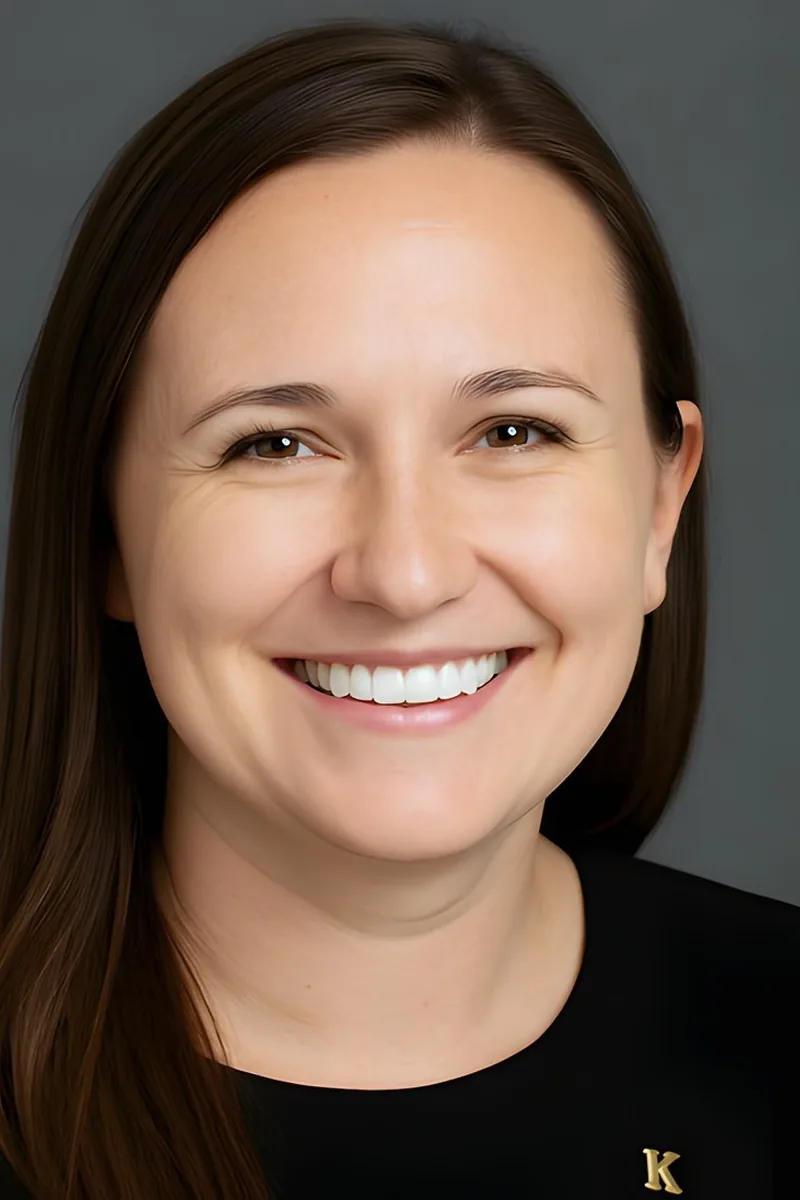
Studying economics at the undergraduate level means living inside probability distributions, hypothesis tests, and regression models — so Laura treats statistics as a language she already speaks fluently. She breaks down concepts like p-values and confidence intervals by tying them to concrete decision-making scenarios rather than abstract formulas. Her 5.0 rating speaks to how clearly that approach translates for students.
A public policy background is surprisingly useful for teaching statistics — Noel spent his University of Chicago coursework interpreting real datasets, evaluating survey methodology, and distinguishing correlation from causation in policy research. He brings that same lens to topics like hypothesis testing, confidence intervals, and probability distributions, grounding abstract formulas in concrete examples that make the reasoning intuitive.
Reading a research paper in medical school means interrogating p-values, confidence intervals, and study design on a daily basis — so Jean knows statistics as a working tool, not just a textbook subject. She teaches concepts like probability distributions and hypothesis testing by grounding them in real scenarios where the numbers actually matter. Students walk away understanding not just how to run a calculation but what the result means.
Interpreting a p-value or choosing between a z-test and a t-test trips up even strong math students because statistics demands a different kind of reasoning than algebra or calculus. Natasha's biostatistics background and MIT engineering training mean she can explain hypothesis testing, confidence intervals, and regression analysis through real experimental contexts. She's rated 4.9 by students.
Probability distributions, hypothesis testing, and confidence intervals each require a different kind of thinking than most math courses demand. Ken has taught introductory statistics at the community college level and approaches the subject by grounding every formula in what it actually measures — so students can interpret results, not just compute them.
Probability distributions, hypothesis testing, and regression analysis all require a specific kind of reasoning — translating real-world questions into mathematical language and back again. Yiyu's graduate education background means she approaches statistics through the lens of how students actually learn to interpret data, not just how to run formulas. Rated 5.0 by students.
Graduate research in global health and population means Sarah uses statistics daily — designing studies, running biostatistical analyses, and interpreting results that inform real public health decisions. That applied context makes her especially effective at teaching concepts like confidence intervals, sample size calculations, and regression, because she can show exactly where each one matters outside the classroom. Rated 5.0 by students.
Probability distributions, confidence intervals, and p-values all require a specific kind of reasoning that's different from most math courses — it's less about finding the one right answer and more about quantifying uncertainty. Duncan, who holds a master's in statistics, teaches students to interpret results in context so they can explain what a 95% confidence interval actually means. He's rated 5.0 across his tutoring sessions.
Studying genetics at Cornell meant designing experiments and interpreting data daily — chi-square tests, probability distributions, and regression analysis were part of Jillian's core coursework. She teaches statistics as a tool for making decisions under uncertainty, connecting concepts like standard deviation and p-values to the kinds of questions they actually answer.
Economics training lives and breathes statistics — regression analysis, hypothesis testing, confidence intervals — and Arthur used all of them extensively throughout his Economics degree. He teaches students to interpret data outputs and understand what a p-value actually means, not just how to calculate one.
Studying molecular biology means designing experiments, analyzing data sets, and interpreting p-values on a regular basis — so Tahmid teaches statistics as a practical tool, not a collection of formulas. He's especially sharp on probability distributions, hypothesis testing, and knowing which test to apply when, skills he uses in his own lab and research work at Wesleyan.
As a research scientist studying Alzheimer's and Parkinson's therapies, Anthony uses statistical methods daily — hypothesis testing, regression analysis, and probability distributions are part of how he evaluates experimental data. That real-world context makes him effective at explaining why a p-value matters or how a confidence interval actually works. He turns statistics from an abstract math course into something students can see applied to actual research questions.
As a postdoctoral researcher at Harvard Medical School, Patrick uses statistics every day — regression models, ANOVA, probability distributions — to draw conclusions from experimental data. That real-world immersion means he teaches statistics as a way of thinking about evidence, not just a set of calculator procedures. He's rated 5.0 by students.
The jump from calculating a mean to understanding what a p-value actually tells you is where most statistics students get lost. Fernando tackles that gap head-on, teaching hypothesis testing, probability distributions, and regression analysis through the lens of real data problems he encounters in his Harvard biophysics research.
An actuarial math degree is essentially a statistics degree with teeth — John spent his time at WPI working through probability distributions, hypothesis testing, and regression analysis as professional tools, not just textbook exercises. He unpacks the logic behind formulas like Bayes' theorem and the central limit theorem so students understand when and why to apply each method.
Probability distributions, hypothesis testing, and standard deviation all require a kind of mathematical reasoning that's different from what most students are used to. As a political science major who regularly interprets polling data and statistical models, Justin connects stats concepts to real-world questions — which makes the logic behind z-scores and confidence intervals far more intuitive.
Having studied mathematics at the undergraduate level, Nathaniel can trace statistical methods back to their pure math origins — showing, for example, how a normal distribution curve emerges from calculus or why the algebra behind a regression line actually minimizes squared errors. That mathematical backbone makes him especially effective at teaching students who get lost when statistics courses hand them formulas without explaining where they came from.
After completing secondary school in South Africa, I did a PG year at a high school in Connecticut. During my year in Connecticut, I took Honors and AP Chemistry, Honors and AP Physics, and Honors Calculus; I also received the CollegeBoard AP Scholar with Honors Award. I have experience tutoring the New SAT. I understand the material and subtle nuances of the test. I have developed test-taking strategies that help a great deal when taking the SAT.
Interpreting a confidence interval or explaining what a standard deviation actually measures requires a different kind of math thinking than most students are used to. Kathrine's graduate program in Mathematics Secondary Education at BU specifically addresses how to teach statistical reasoning, giving her tools to make probability distributions and hypothesis testing feel less like guesswork and more like structured logic.
Interpreting a confidence interval or choosing the right hypothesis test requires more than plugging into formulas — it demands understanding what the numbers actually claim. Louis connects statistical reasoning to real-world data analysis he encounters in civil engineering research, walking through concepts like distributions, regression, and p-values with an emphasis on when and why each method applies.
Understanding statistics means thinking about data the way researchers actually do — not just computing a standard deviation but knowing what it tells you about a distribution. Andrew studied psychology, where statistical analysis is baked into every research methods course, so he teaches concepts like hypothesis testing and regression with the kind of applied intuition that makes them click.
Probability distributions, hypothesis testing, confidence intervals — statistics asks students to think in a fundamentally different way than most math courses. Kevin earned his degree in Mathematics and Statistics, which means he doesn't just know the formulas; he can explain why a p-value means what it means and when a particular test applies.
I am a current first-year honors student at Northeastern University pursuing a B.A. in Political Science and a B.A. in History, Culture, and Law. I am a youth activist and have experience working for campaigns and elected officials and am particularly passionate about mental health, climate change prevention, and LGBTQ+ rights. I have done private tutoring for the past three years with students in Elementary, Middle, and High School in a variety of school subjects including but not limited to Math, History, and Writing/Grammar. I am passionate about education and want to use my skillset and knowledge to help other students achieve their best selves. I'm from Denver, Colorado, and currently live in Boston and love to read, watch sitcoms and, of course, tutor my students.
I am currently a Finance major at Boston College. I graduated from the United World College in Mostar in Bosnia and Herzegovina. At this school, my interest in tutoring and getting to know different people was ignited when I started tutoring non-native English speakers. I learned to be patient while teaching new subjects and to cater to the needs and interests of my students. I have lots of experience taking standardized tests such as the ACT and AP tests and would love to spread my knowledge to my tutees in an exciting and dynamic way.
I am a recent graduate of Bowdoin College with a BA in Biology, English, and Theater. I have been tutoring pretty steadily in one form or another since middle school and am quite comfortable tackling diverse subjects in both the arts and sciences. As a native Spanish speaker, reader, and writer I have years of experience tutoring students at all proficiency levels in the language. My bilingual background has also given me the opportunity to work with native Spanish speakers in other academic subjects. I bring a compassionate and collaborative approach to teaching. I strongly believe that a tutor must treat his or her student as a teammate and not as someone who merely needs instruction. The goal of any tutoring session should be to bring out and foster a student's own capacity to understand and excel in a given field, which begins with respect. I am currently pursuing a graduate study in biology- where my interests primarily lie in evolution and bioanthropology.
I am a highly successful physics and chemistry teacher in Massachusetts Public Schools for over 25 years. I graduated with high honors from Princeton University in Chemical Engineering. My math skills are practical and include graduate courses in differential equations and computer modeling.
I am excited to be your GRE and/or math and economics tutor! I recently graduated from the University of Pennsylvania, where I studied economics and math and gained experience as a peer tutor. On my most recent GRE test, I scored a 170V and 169Q, and am excited to share what I learned about test content, strategy, and study techniques with you! Please feel free to send me a message for more info!
I am currently working toward my M.S. in Medical Sciences at Boston University School of Medicine. In college, I worked with a high school student, for his 9th grade year, focusing mostly on his biology and writing assignments. I was a research coordinator at the Marcus Autism center where I worked with very young kids (ages 2-9) with and without learning disabilities. We worked on general school-related skills and any homework they brought. In my master's program, I did a lot of group study. Frequently, this meant teaching a group of my peers who needed to see the material presented in a new way. I love learning and I want to help others love it, too. Throughout my studies, grades never just came easily to me. I was constantly working at getting better and trying to figure out how to solve problems in many different ways. With this type of experience, I want to help other students who may be struggling with a concept to get to a place where they see how fun and rewarding it can be to really understand the material. I tutor a wide variety of topics; however, my favorites are biology and anatomy. Biology is so exciting for me because it is the foundation for all of life, and helps us understand the world we live in. Anatomy is great because you are living in your own cheat sheet (your body)! When I am tutoring, I want to hear or see my students' thought processes. It's great if you can get to the right answer, but truly learning means knowing how you got there. So, I love having my students teach the concepts back to me. Outside of school, I play slow-pitch softball and I love to cook and bake.
I am a researcher, scientist, and writer living in Boston, Massachusetts. I graduated in May 2018 from Northeastern University, where I majored in biology. Over the course of my education, I have scored highly on the PSAT, SAT, AP exams in history, English language, English literature, biology, and statistics, SAT subject exams in history, English literature, and biology, and the MCAT; I am also EMT certified in the state of Massachusetts. As an undergrad, I tutored my peers in biostatistics and provided edits and feedback for written assignments. I am also an avid fiction writer who has written full-length novels and taken many creative and technical writing classes. I love finding different ways to organize information to maximize learning and absorption and helping others to improve their writing and reading comprehension. I understand how frustrating it can be to struggle with difficult topics, and I'm here to help. I look forward to working with you!
I am a Junior Chemistry major, Physics minor at UML. I also work on campus at the nuclear research reactor.
A year as a course assistant in Harvard's math department gave Richard a front-row seat to where students get tripped up — and in statistics, it's almost always the jump from computing a value to interpreting what it means. He teaches concepts like variability, correlation, and probability by connecting the math to the kind of data-driven arguments he encounters in his government coursework, where a misread confidence interval can derail an entire policy claim.
Running regression analyses, interpreting p-values, and choosing between parametric and nonparametric tests are things Martha does routinely in her social psychology research at Michigan. That hands-on fluency means she can explain not just how to compute a standard deviation or set up a hypothesis test, but why each step matters and what the results actually tell you. Rated 5.0 by students.
Probability distributions, hypothesis testing, and regression analysis all click faster when you've actually used them to make decisions. Hari's finance background means he's applied statistical methods to real datasets — forecasting, risk analysis, variance modeling — and he teaches the logic behind each test so students can choose the right approach on their own.
The IB Mathematics program threw Kinjal into statistics early — designing internal assessments that required real data collection, chi-square tests, and interpreting results under strict analytical standards. That experience, combined with her biology training at Texas A&M where statistical analysis underpins every lab report, means she teaches concepts like correlation, sampling, and variability as practical tools rather than isolated formulas. Rated 5.0 by students.
Probability distributions, hypothesis testing, and confidence intervals require a different kind of mathematical thinking than most students are used to. Nicholas pairs his applied mathematics background at Johns Hopkins with real problem-solving instincts, teaching students to interpret what a p-value actually means and when to apply which test. He's especially effective at connecting statistical reasoning to the kind of data analysis students encounter in science and engineering contexts.
Studying Statistics at NYU means Dennis doesn't just teach probability distributions and hypothesis testing from a textbook — he's actively working through these concepts in his own coursework. He's especially sharp at translating the notation-heavy language of statistics into plain English, which makes topics like confidence intervals and regression analysis far less intimidating.
I am currently working in a Bronx Public School as a teaching apprentice in Algebra. I have four years of experience tutoring one on one with students of all ages.
Studying Comparative Human Development at the doctoral level means Gabriel has spent years designing studies, interpreting data sets, and running statistical analyses firsthand. He teaches statistics by grounding concepts like probability distributions, hypothesis testing, and regression in real research questions rather than abstract formulas. That practical lens makes the subject click for students who struggle with the textbook approach.
Testimonials
Because the right Statistics tutor makes all the difference.
Average Session Rating – Based on 3.4M Learner Ratings
Practice Statistics
Free practice tests, flashcards, and AI tutoring for Statistics
Nearby Statistics Tutors
Other Worcester Tutors
Related Math Tutors in Worcester
Frequently Asked Questions
Many students struggle with interpreting data visualizations, understanding probability concepts, and applying statistical methods to real-world scenarios. Additionally, translating word problems into appropriate statistical tests—like knowing when to use a t-test versus chi-square—can be confusing. Personalized tutoring helps students build conceptual understanding rather than just memorizing formulas, making these connections clearer.
During an initial session, a tutor will assess your current understanding of Statistics concepts, identify specific areas where you're struggling, and learn about your learning style and goals. They'll then create a personalized plan that targets your needs—whether that's mastering hypothesis testing, improving data analysis skills, or building confidence with statistical software. This foundation ensures every session afterward is focused and productive.
Tutors experienced in Statistics understand that different schools and textbooks may emphasize different approaches or notation. When you connect with a tutor, share details about your course materials, textbook, and specific curriculum—and they'll align their instruction accordingly. This ensures explanations and examples match what you're learning in class, reducing confusion from different teaching methods.
Word problems require students to identify what statistical question is being asked, determine which methods apply, and execute calculations—a multi-step process that trips up many learners. Tutors break this down by teaching problem-solving strategies: reading carefully, identifying key information, translating context into statistical language, and choosing the right test or analysis. With guided practice, students develop confidence recognizing patterns across different problem types.
Absolutely. Math anxiety is common in Statistics, especially when students feel overwhelmed by formulas or uncertain about their problem-solving abilities. Personalized tutoring builds confidence through manageable, supportive instruction where there's no judgment—just focused learning. As students experience small wins and develop a deeper understanding of concepts, anxiety typically decreases and engagement increases.
Yes. Worcester has 60 schools across 6 school districts, and tutors connected through Varsity Tutors are familiar with Statistics curricula taught at schools throughout the area. Whether you're in AP Statistics, college-prep Statistics, or a specialized program, you can connect with tutors who know your school's expectations and can provide instruction aligned with your course.
Showing work in Statistics isn't just about getting the right answer—it demonstrates your reasoning, helps identify where mistakes occur, and ensures you understand each step. Tutors emphasize this by walking through problems step-by-step, explaining the "why" behind each calculation and decision. This approach helps you develop stronger problem-solving strategies and makes it easier to catch and correct errors.
Understanding Statistics isn't just about passing tests—it's about developing critical thinking skills to interpret data in everyday life. Tutors help students see how statistical concepts apply to real scenarios: analyzing survey results, understanding medical studies, evaluating business decisions, or interpreting news reports. This practical perspective makes abstract concepts more meaningful and helps students retain what they learn.
Let’s find your perfect tutor
Answer a few quick questions. We’ll recommend the right plan and match you with a top 5% tutor.