Award-Winning Pre-Calculus Tutors
serving Worcester, MA
Pre-Calculus
Tutors in Worcester
Private 1-on-1 tutoring, weekly live classes for academic support, test prep & enrichment, practice tests and diagnostics, and more to elevate grades and test scores.
Based on 3.4M Learner Ratings
UniversitiesSchools & Universities
DeliveredHours Delivered
ProficiencyGrowth in Proficiency
Who needs tutoring?
No obligation. Takes ~1 minute.
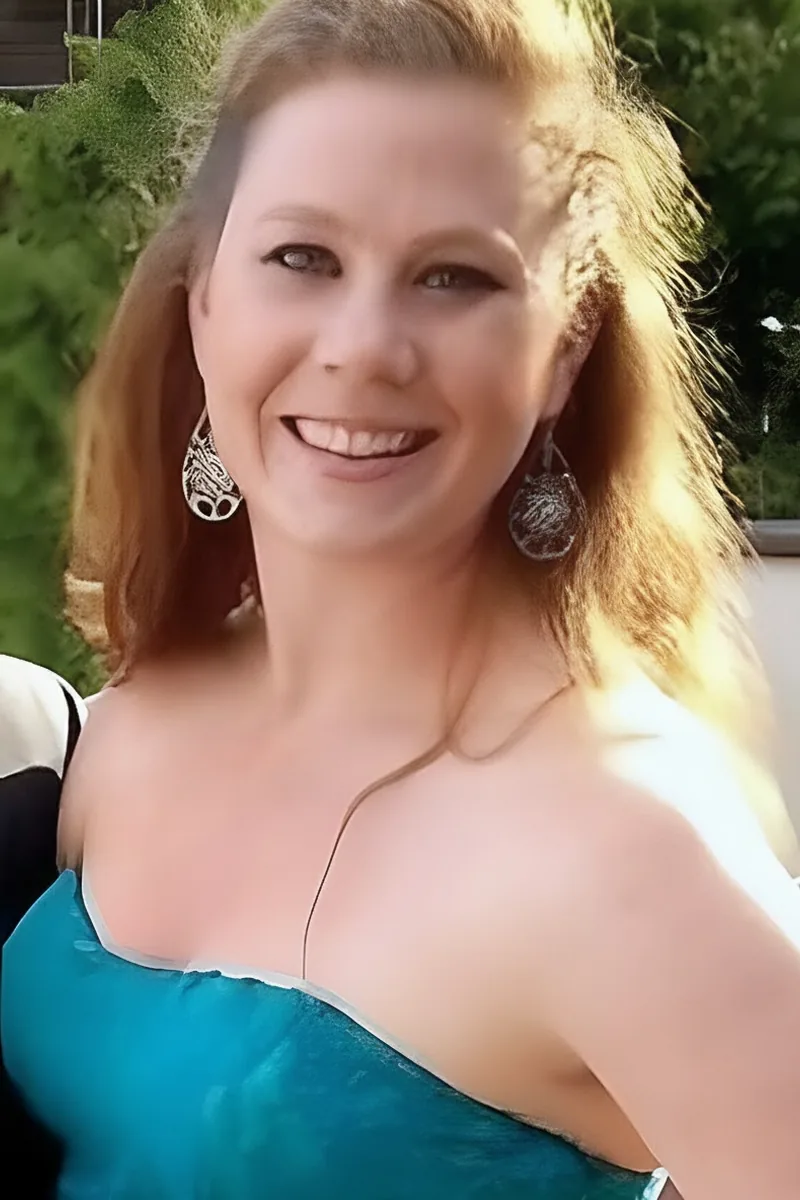
The jump to pre-calculus is where students suddenly need to think about trigonometric identities, limits of sequences, and polar coordinates all at once. Margaret tackles each of these by connecting them back to algebraic reasoning students already have, rather than treating every unit as brand new. Rated 4.9 by students, she's especially effective at demystifying the transition into calculus-level thinking.
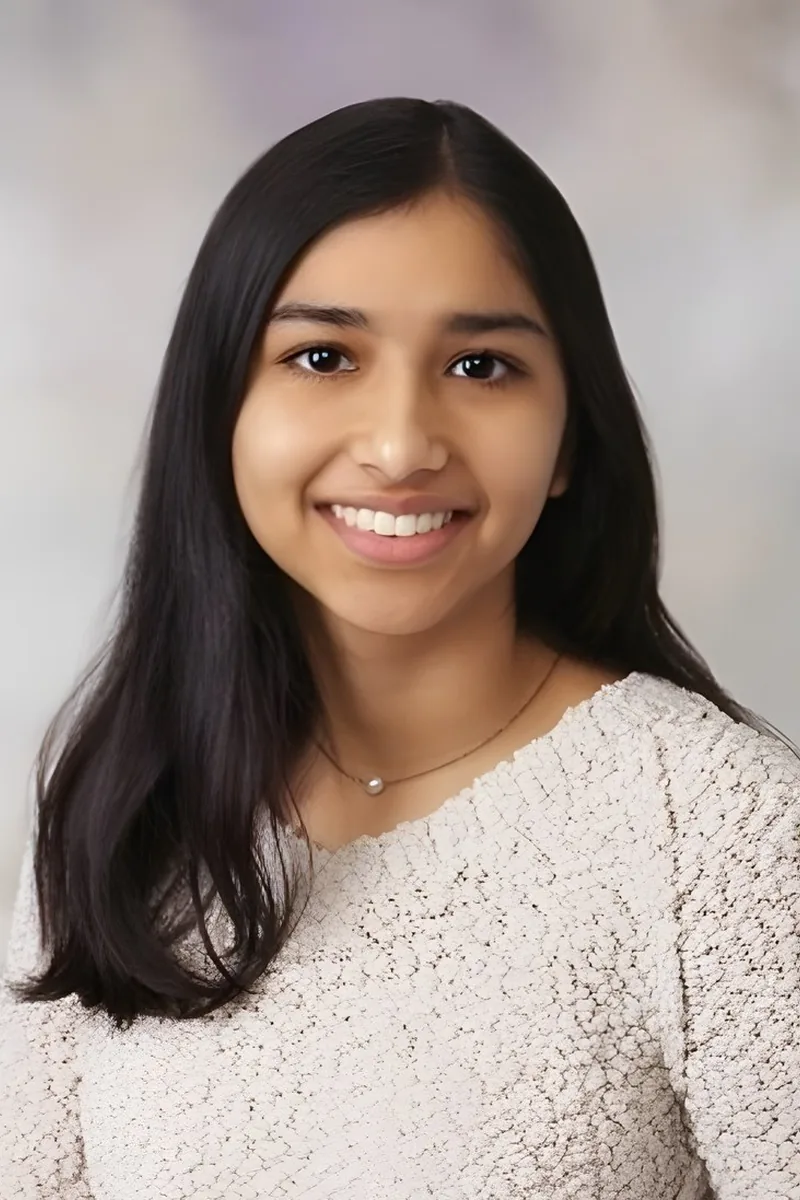
Computer science at Harvard means Parita thinks in functions all day — composition, recursion, domain restrictions, input-output logic — which is exactly the mental framework pre-calculus demands when students hit rational functions, piecewise definitions, and sequences. She tackles the course by making the abstract behavior of function families feel as concrete and debuggable as a line of code. Her 35 ACT and 5.0 rating back that up.
Substitute teaching STEM to college-prep high schoolers gave Noel a clear picture of where pre-calculus students actually get stuck — usually at the transition from memorizing trig values to understanding how the unit circle generates them, or from manipulating equations to reasoning about function behavior. His public policy training at the University of Chicago required enough quantitative modeling that he's comfortable walking through logarithmic and exponential relationships with real analytical depth. A 1550 SAT and 4.9 rating from students back up that comfort.
Harvard's History of Science program is surprisingly math-heavy — Erica spent semesters tracing how logarithmic scales, conic sections, and trigonometric models evolved from practical tools into the abstract framework students now encounter in pre-calculus. That historical lens gives her a distinctive way of teaching function families: she builds intuition for why a concept was invented before drilling the mechanics of how to use it. Rated 4.9 by students.
Having TA'd Physics II: Electricity and Magnetism at MIT, Cori knows exactly which pre-calculus skills — trig identities, polar form, complex number operations — students need to have locked down before the math gets layered into real applications. She tackles the course through challenging problems that build genuine understanding, particularly around the unit circle and function transformations that trip students up most. Her perfect SAT Math score (earned twice) reflects how deeply she's internalized this material.
Mechanical engineering at MIT means Vania encounters every pre-calculus concept — parametric equations, polar coordinates, trigonometric identities — as working tools inside design problems and physics derivations, not as isolated textbook exercises. She teaches the course by revealing how each topic connects to the next, so the jump from manipulating algebraic expressions to reasoning about function behavior feels like a natural progression. Her 1590 SAT and 5.0 rating confirm the depth behind that approach.
The jump from algebra to pre-calculus is where math stops being about solving for x and starts being about understanding how entire functions behave — and Brice, a computer science student at MIT with a perfect 1600 SAT, teaches that transition by connecting each new concept to the computational thinking he uses daily. He's especially sharp on sequences, recursive definitions, and the algebraic structures behind trigonometric and exponential functions, since those same ideas power the algorithms he writes in his CS coursework. Rated 4.9 by students.
At MIT, Adriana's urban studies coursework leans heavily on the mathematical modeling that pre-calculus introduces — exponential growth for population projections, logarithmic scales for density analysis, periodic functions for seasonal transit patterns. She teaches these topics by anchoring them in the applied contexts where she actually uses them, which makes abstract function behavior feel purposeful. Her 35 ACT confirms the quantitative instincts behind her approach.
Chemical engineering at MIT means Natasha solves systems built on the same polynomial, rational, and trigonometric relationships that pre-calculus students are wrestling with for the first time — reaction kinetics, heat transfer models, and signal processing all start here. She teaches the course knowing exactly which skills in function analysis and graph behavior will matter most once calculus arrives, and she's especially sharp at demystifying composite and inverse functions. Rated 4.9 by students.
The jump into Pre-Calculus trips students up when trigonometric identities, limits, and complex polynomial behavior all land at once. Grace's approach is to anchor each topic to its graphical intuition — seeing what a function actually does before manipulating it algebraically. Her broad math background across algebra through calculus means she can show exactly how Pre-Calc concepts set up what comes next.
Chemical-biological engineering at the college level means Kristen didn't just pass through pre-calculus — she pressure-tested every concept in it, from parametric equations to polar coordinate systems, across years of upper-division math and physics courses. She zeroes in on the moment where algebra ends and functional reasoning begins, teaching students to read and manipulate graphs of rational, trigonometric, and composite functions with genuine understanding. Her 4.9 rating and 1590 SAT reflect the rigor she brings to each session.
A physics degree trains you to see pre-calculus as the toolkit it actually is — Adam spent years using trigonometric identities to decompose forces, parametric equations to track projectile paths, and logarithmic models to describe wave intensity. He teaches the course with that physicist's instinct for connecting each concept to something concrete and measurable, which makes topics like polar coordinates and function transformations land faster. His deep calculus background through multivariable and BC means he always knows exactly where each pre-calc skill is headed next.
A Doctor of Science in Chemistry means Breno has spent years navigating the mathematical scaffolding that holds advanced science together — polynomial curve fitting for spectroscopic data, exponential models for reaction kinetics, and the trigonometric reasoning embedded in crystallography and molecular symmetry. He teaches pre-calculus as someone who needed every one of these tools to survive graduate-level research at the intersection of math and physical science. That applied chemistry perspective lets him show students exactly where function behavior and transformations stop being abstract and start doing real work.
Seventeen years teaching high school physics gave Ken an unusual vantage point on pre-calculus — he watched thousands of students hit the same walls with trigonometric functions, vector components, and rate-of-change reasoning that his physics curriculum demanded they already understand. That experience means he knows exactly which conceptual gaps in topics like the unit circle or function transformations will quietly derail a student later in calculus or applied science courses. His additional background teaching college-level mathematics rounds out an approach built on connecting pre-calc concepts to where they actually get used.
The jump from algebra to calculus stalls when Pre-Calculus concepts like trigonometric identities, function composition, and limits of sequences feel like disconnected rules. Vincent treats each topic as a building block toward calculus readiness, connecting ideas like unit circle values and rational function behavior to what students will actually need next. Rated 4.8 by students.
Anthony's psychology and literary arts background might seem distant from pre-calculus, but the analytical reasoning he honed dissecting arguments and narrative structures translates directly to breaking down function transformations and trigonometric identities into logical steps. He zeroes in on the conceptual bridges between algebra and calculus — particularly how polynomial end behavior and rational function asymptotes follow predictable patterns once students see the underlying logic. His 35 ACT and 5.0 rating back up that approach.
MIT's combined business and mathematics curriculum forces Michael to think about functions, rates of change, and modeling simultaneously — which is exactly the mental shift pre-calculus demands when students move from straightforward algebra into topics like composite functions and asymptotic behavior. He zeroes in on building the algebraic intuition behind graphs, so that when a rational function or logarithmic expression appears, students can sketch and interpret it rather than stare at it. Rated 5.0 by students.
Most pre-calculus struggles trace back to shaky earlier skills — a half-remembered exponent rule or a fuzzy understanding of function notation that quietly derails everything from logarithms to rational expressions. Valerie's applied math degree trained her to trace those dependency chains, and she deliberately reconstructs the missing links before pushing forward into new material. Rated 5.0 by students.
Twenty-five years teaching physics and chemistry in Massachusetts public schools means Jacques has watched thousands of students hit the same pre-calculus stumbling blocks — and he knows exactly how to dismantle them, particularly the leap from memorizing trig ratios to actually understanding the unit circle as a unified structure. His Princeton chemical engineering training loaded him with graduate-level differential equations and modeling, so he teaches pre-calc with a clear map of where every concept is headed. Rated 4.8 by students.
The jump from algebra to calculus hinges on how well a student understands limits, trigonometric identities, and the behavior of functions — all pre-calculus territory. Roel approaches these topics by connecting graphical intuition to algebraic manipulation, so students actually see why a rational function has an asymptote instead of just memorizing the rule.
A physics major who scored a 1590 SAT, Marika tackles pre-calculus the way physicists actually use it — treating vectors, trigonometric relationships, and function transformations as tools for describing real motion and forces rather than isolated textbook exercises. She's especially sharp on the bridge between algebraic manipulation and the kind of functional reasoning that calculus will demand, since her own coursework requires crossing that bridge constantly. Rated 5.0 by students.
Sarah's Classics master's degree required the kind of rigorous logical reasoning that translates surprisingly well to pre-calculus — parsing complex structures, identifying patterns, and building arguments step by step. She brings that same analytical discipline to topics like polynomial end behavior and rational function asymptotes, walking students through the 'why' behind each rule so the algebra stops feeling arbitrary. Her broad math teaching range, from pre-algebra through calculus, means she can quickly spot and shore up the specific gaps holding a student back.
A PhD candidate in chemical engineering at MIT, Erin works with differential equations and reaction kinetics daily — but she knows those tools only click when the pre-calculus underneath them is rock solid, especially function composition, asymptotic behavior, and exponential models. She zeroes in on building that conceptual bridge between algebra and calculus, making sure students understand *why* a rational function behaves near its vertical asymptote rather than just sketching it from a table. Rated 5.0 by students.
Duncan's master's in math statistics means he's spent serious time with the function families — polynomial, exponential, logarithmic — that pre-calculus introduces and that advanced coursework never stops using. He digs into the mechanics of transformations and compositions by tying each new idea back to the algebraic reasoning students already have, closing the gap between symbol-pushing and genuine understanding. Holds a 5.0 rating from students.
I am a very experienced high school and middle school teacher/tutor, as I have been tutoring or teaching in some capacity since August of 2010. I have always loved making personal connections with students and helping them make daunting studies (such as math or test preparation) more approachable. My favorite part of my job is empowering students to be more independent learners and helping them develop confidence in their abilities.
Eunice's combined Biology and Computer Science major at Northeastern means she's constantly toggling between the discrete logic of programming and the continuous function behavior that pre-calculus is built on — sequences feeding into series, transformations reshaping graphs, polynomial and rational expressions modeling real biological data. She zeroes in on building the bridge between algebraic mechanics students already trust and the more abstract functional reasoning calculus will demand. Her 35 ACT and 5.0 rating confirm she knows this material cold.
Three years tutoring Calculus I at Colgate gave Charlotte an unusually clear picture of which pre-calculus skills actually matter when the stakes rise — she watched students stumble on the same gaps in function composition, trigonometric reasoning, and limit intuition semester after semester. Her math degree means she teaches these topics with real depth, connecting the algebra students already know to the calculus concepts waiting on the other side. Rated 4.7 by students.
The jump to pre-calculus trips up a lot of students because it layers multiple skills at once — trigonometric identities, limits intuition, and function transformations all demand fluency with earlier algebra concepts. Jillian identifies exactly where the gaps are and rebuilds understanding from there, so topics like polar coordinates or sequences don't feel like they appear out of nowhere.
Cognitive science at Harvard trains you to think in models — growth curves, logarithmic scaling, periodic patterns — which is exactly the language of pre-calculus. Andrea uses that modeling intuition to teach topics like function transformations and trig identities as tools for describing real phenomena, not just abstract exercises. She's especially good at showing students how to read a graph's behavior before ever touching the algebra.
An Alzheimer's and Parkinson's research scientist, Anthony uses the same mathematical modeling daily that pre-calculus students are just beginning to encounter — fitting exponential decay curves to protein aggregation data, interpreting logarithmic dose-response relationships, and analyzing periodic signals in neural recordings. His biomedical engineering training at BU and Tufts built that fluency from the ground up, so he teaches topics like function transformations and trigonometric identities by tracing the logic rather than handing students formulas to memorize. Rated 4.9 by students.
Years of classroom teaching — from elementary through high school — gave Ryan a sharp sense of where students lose the thread between algebra and calculus, and pre-calculus is exactly that bridge. He zeroes in on the conceptual jumps that trip students up, like moving from linear thinking to understanding how rational and polynomial functions actually behave as systems. His 1470 SAT and 4.8 rating reflect steady, structured sessions built around each student's specific sticking points.
Molecular biology and biochemistry at Wesleyan means Tahmid regularly encounters the math that pre-calculus is actually building toward — exponential models for bacterial growth, logarithmic pH scales, and the periodic functions that describe molecular oscillations. He teaches these topics by connecting them to the science he's studying, which turns abstract curve sketching and function transformations into something students can visualize. Holds a 5.0 rating and a 1530 SAT.
Being in Boston University's accelerated seven-year medical program means Preetha is deep in the science coursework where pre-calculus tools — exponential models for drug absorption, logarithmic scales for pH calculations, trigonometric functions for waveform analysis — actually get put to work. She zeroes in on helping the algebra-to-functions leap make sense, especially when students hit the wall of abstract function transformations and can't see why they matter. Her 35 ACT confirms the quantitative sharpness behind her teaching.
Running quantitative analyses in a Harvard Medical School research lab keeps Patrick fluent in the polynomial, exponential, and logarithmic relationships that pre-calculus students are wrestling with for the first time. His PhD in cellular and molecular biology demanded constant work with growth models, decay curves, and rate-of-change reasoning — the exact conceptual territory that bridges algebra to calculus. Rated 5.0 by students.
Polynomial end behavior, rational function asymptotes, and the shift from 'solve for x' to 'analyze this function' — that's the leap that trips up most pre-calc students, and Hope's math degree means she can teach the why behind each concept instead of just the procedure. She carries a 1600 SAT and a 4.8 rating, but what matters more is that she teaches everything from elementary math through multivariable calculus, so she knows exactly which algebraic instincts to strengthen before a new idea lands.
Years of tutoring middle and high school math students means Andy has seen exactly where pre-calculus trips people up — the shift from manipulating equations to reasoning about function behavior, especially when logarithms and trig enter the picture. His computer science training at Suffolk reinforced that analytical thinking, since writing software demands the same careful logic that makes sense of compositions, inverses, and transformations. A 35 ACT and 1560 SAT confirm he's got the quantitative range to back it up.
Studying Physiology and Neurobiology at UConn, William encounters the math behind pre-calculus in contexts most students never see — modeling nerve impulse frequencies with sinusoidal functions, tracking hormone concentration with exponential decay, analyzing dose-response curves on logarithmic scales. That science-first perspective lets him teach topics like function transformations and trig identities by showing what they actually describe, which tends to stick better than purely abstract drill. His 33 ACT confirms the quantitative grounding behind the approach.
The jump to pre-calculus is where trigonometric identities, limits intuition, and function transformations all converge — and where many students first feel genuinely lost. Thomas approaches these topics the way his physics training demanded: by connecting each new rule back to a visual or physical meaning. That habit of grounding abstraction in something tangible makes concepts like polar coordinates and composite functions far less intimidating.
A Harvard Biophysics grad student with a biomedical engineering degree, Fernando has taught everything from elementary math through differential equations and complex analysis — meaning he knows exactly which pre-calculus skills (and which specific gaps) show up later to help or haunt students. He digs into the mechanics of function transformations and trigonometric reasoning by connecting each idea to the calculus concepts waiting on the other side, giving students a clear map instead of isolated techniques. His 32 ACT and 4.9 rating reflect consistent results across that full spectrum.
Halfway through a math degree at Tufts, Nikola is actively taking the courses that pre-calculus feeds into — which means he knows exactly which skills in rational functions, sequences, and trigonometric reasoning will matter most in six months and which are just busywork. He tackles the course's trickiest conceptual jump, moving from manipulating expressions to thinking in terms of function behavior, by connecting each new idea to the algebra students already have down cold. His 35 ACT and 5.0 rating back that up.
Testimonials
Because the right Pre-Calculus tutor makes all the difference.
Average Session Rating – Based on 3.4M Learner Ratings
Practice Pre-Calculus
Free practice tests, flashcards, and AI tutoring for Pre-Calculus
Nearby Pre-Calculus Tutors
Other Worcester Tutors
Related Math Tutors in Worcester
Frequently Asked Questions
Pre-Calculus bridges algebra and calculus by covering functions, polynomial and rational expressions, exponential and logarithmic functions, trigonometry, sequences, and series. The course emphasizes understanding the "why" behind mathematical concepts rather than just memorizing procedures. For students in Worcester, tutors can align instruction with your school's specific curriculum and textbook to ensure seamless progress toward calculus readiness.
While Algebra 2 focuses on solving equations and manipulating expressions, Pre-Calculus shifts toward analyzing functions, understanding their behavior, and making connections between different mathematical concepts. This transition from "how do I solve this?" to "what does this function tell us?" can feel challenging. Personalized tutoring helps students build conceptual understanding so they see patterns and connections, making the jump to calculus much smoother.
Word problems require translating real-world situations into mathematical models—a skill that goes beyond procedural computation. Many students struggle because they're unsure how to set up the problem or which concepts apply. Tutors work with you to develop problem-solving strategies: breaking down complex scenarios, identifying what you know and what you're solving for, and connecting the math to the context. With guided practice, word problems become less intimidating and more manageable.
Graphing requires understanding how algebraic features (like zeros, asymptotes, and transformations) show up visually on a coordinate plane. Many students memorize steps without seeing the deeper connections. Personalized instruction helps you visualize how changing a function's equation affects its graph, recognize key features at a glance, and move fluidly between algebraic and graphical representations—skills that are essential for calculus.
Math anxiety often stems from feeling lost or unsupported when concepts don't click immediately. Working 1-on-1 with a tutor creates a judgment-free space to ask questions, work through mistakes, and build confidence at your own pace. As you experience success with challenging topics—whether it's trigonometric identities or function transformations—your confidence grows, and anxiety decreases. Many students find that personalized attention transforms their relationship with math.
Showing work isn't just about getting the right answer—it demonstrates your reasoning and helps teachers identify where misunderstandings occur. In Pre-Calculus, clear work also builds your own problem-solving skills by forcing you to think through each step. Tutors help you develop organized, logical approaches to problems so showing work becomes natural, not tedious. This habit also prepares you well for calculus and standardized tests.
Your first session is about understanding where you are and where you want to go. Expect to discuss specific topics you're struggling with, review recent assignments or tests, and identify patterns in your challenges. The tutor will assess your conceptual understanding versus procedural skills, then create a personalized plan tailored to your learning style and goals. By the end, you'll have clarity on next steps and feel heard.
Varsity Tutors connects you with expert tutors who have deep knowledge of Pre-Calculus and experience helping students overcome common challenges. When you get matched with a tutor, you can discuss your specific needs, learning style, and goals. The right tutor will explain concepts clearly, adapt their teaching approach to how you learn best, and help you build both confidence and competence in the subject.
Let’s find your perfect tutor
Answer a few quick questions. We’ll recommend the right plan and match you with a top 5% tutor.