Award-Winning SAT Math Tutors
serving Worcester, MA
SAT Math
Tutors in Worcester
Private 1-on-1 tutoring, weekly live classes for academic support, test prep & enrichment, practice tests and diagnostics, and more to elevate grades and test scores.
Based on 3.4M Learner Ratings
UniversitiesSchools & Universities
DeliveredHours Delivered
ProficiencyGrowth in Proficiency
Who will be getting tutoring?
No obligation. Takes ~1 minute.

I'm a student at Clark University and I can help you with whatever you need. Whatever your learning style, whatever your difficulties, I will help you through it. Together, we can solve any problem you have. I can teach you how to study, I can edit your papers, I can teach you memory tricks and organizational skills and I guarantee that after a little while with me, your grades WILL improve.
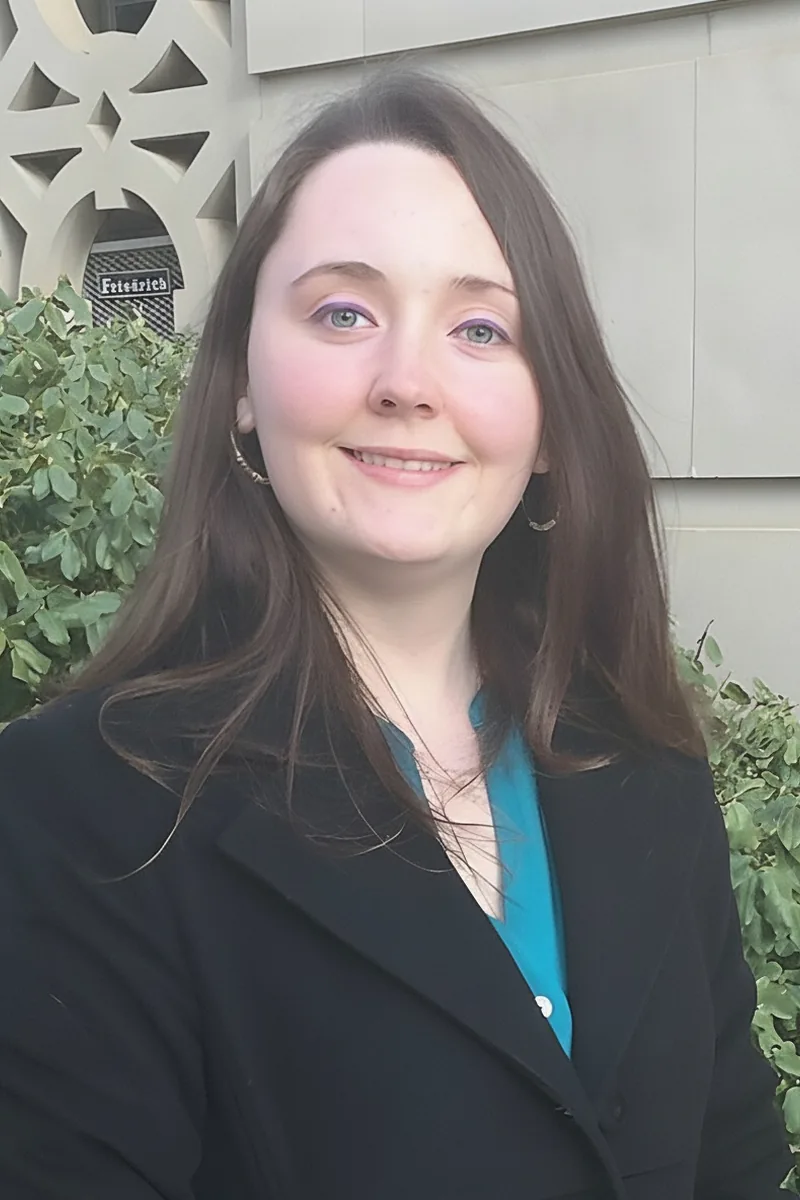
Megan scored a 1490 on the SAT and breaks the math section down by question type — heart of algebra, passport to advanced math, and problem solving with data analysis — so students know exactly what to expect. Her analytical training in cognitive science at UConn sharpens the way she teaches strategic elimination and time management on tricky multi-step problems. Rated 5.0 by students.
I am a rising senior at Wellesley College majoring in Music and American Studies. During my first year at college, I started tutoring students in grades K-12 at the Mathnasium center in Wellesley, MA. The following two years, I tutored my peers taking courses in American Popular Music, Jazz Music Theory, and Jazz History. Over the past two years, I've developed a passion for helping students pursue writing and research topics that reflect their identities and personal histories. By framing education as a lens through which to perceive themselves, students have been infinitely more engaged. I'm most passionate in tutoring topics related to music history, but interestedly, I've come to deeply appreciate and value writing, research, and analysis skills. Outside of the classroom, I play alto saxophone in a couple of jazz groups, read graphic novels, bake, knit/crochet, and am learning to skate on a longboard!
I am a graduate of Boston University. I received my Bachelor of Arts in Psychology, with a minor in Biology, and a Pre-Medical concentration. Given this, my academic knowledge is obviously eclectic. In the past few years following my education, I have discovered a passion for teaching and currently work as an Instructor for Seven Hills Foundation. I have a straight-forward teaching philosophy which applies to each student as an individual learner. This helps to identify and clarify misunderstandings in the process rather than stumbling over information. I am able to teach in English and Writing, as well as across most maths and sciences, including Organic/Inorganic Chemistry, Biology, Statistics, Algebra, and Calculus. I strongly believe in lifelong learning, and try to practice that philosophy daily. My other passion is music, as I play guitar and piano. Otherwise, I enjoy spending time with friends and simple moments of relaxation.
I am available to tutor in a broad range of subjects, though I am most passionate about Economics, History, and Civics. Please feel free to contact me and I would be happy to arrange a session.
A chemistry degree means Won spent years converting word problems into equations — balancing reactions, calculating concentrations, working through stoichiometry — which is exactly the skill the SAT Math section's algebra and problem-solving questions demand under time pressure. His 1560 SAT confirms he knows how to execute that skill quickly on test day, and he zeroes in on the geometry and passport-to-advanced-math questions where students most often second-guess themselves.
Creative writing might seem unrelated to SAT Math, but Sydney's 1600 SAT score speaks for itself — and her approach to the math section mirrors how she tackles a draft: strip every problem down to what it's actually asking, then build the solution step by step. She's especially sharp on the algebra-heavy word problems where students who can do the math still lose points because they misread the setup, a reading-comprehension trap her writing background makes her uniquely good at catching. Rated 4.9 by students.
Comparative literature might seem unrelated to SAT Math, but Cassandra's 1600 SAT speaks for itself — and her lit-trained habit of close reading turns out to be a real advantage on the section's deliberately tricky word problems, where misreading the setup costs more points than any algebra mistake. She teaches students to slow down on problem translation, locking in what's actually being asked before touching any arithmetic, especially on the ratio and percent questions that bury key details mid-sentence.
Rob earned a 1580 on the SAT and approaches the Math section by categorizing every question into one of roughly a dozen problem archetypes — heart-of-algebra setups, passport-to-advanced-math manipulations, and data-analysis traps. Once a student recognizes the archetype, the solving strategy clicks into place almost automatically. That pattern-recognition method is especially effective for students who understand the math but lose points to pacing or misreads.
Scoring a 1560 on the SAT gave Diana firsthand knowledge of what the Math section actually rewards — not just computational skill but the ability to translate word problems into algebraic setups quickly. She zeroes in on the high-yield topics like linear and quadratic modeling, ratios, and data analysis that make up the bulk of the test. Students walk away with specific strategies for both the no-calculator and calculator sections.
Every SAT Math question has a fast path and a slow path — Hope's 1600 SAT and mathematics degree mean she's mapped both for virtually every problem type, from Heart of Algebra setups to passport-to-advanced-math quadratics. She teaches students to recognize which approach a question is designed to reward, so they stop burning time on brute-force solving when a structural shortcut exists. Rated 4.8 by students.
Cindy scored a 1580 on the SAT and breaks the Math section down into its core question types — passport to advanced math, heart of algebra, and problem-solving with data analysis — so students know exactly what to expect. She teaches the pacing and elimination strategies that turn careless mistakes into confident answers. Rated 5.0 by students.
Scoring a 1550 on the SAT gave Rebecca firsthand insight into the pacing and problem-solving strategies that make the math section manageable, from no-calculator algebra to data analysis and passport-to-advanced-math questions. Her approach breaks each problem type into recognizable patterns so students spend less time second-guessing and more time executing.
The SAT Math section's trickiest questions aren't the hardest math — they're the ones that bury a straightforward algebra or geometry concept inside misleading phrasing. Maedeh, who scored 1560 on the SAT, teaches students to strip each problem down to its actual ask before solving, particularly on the "Heart of Algebra" and "Passport to Advanced Math" questions where rushing past a key word costs easy points. Her neuroscience background gives her a practical understanding of how test anxiety hijacks working memory, and she builds timed drills that keep students thinking clearly under pressure.
I am a current sophomore at Tufts pursuing a double major in Computer Science and Physics, both of which I draw from in my tutoring philosophy. While I am a firm believer that each student requires a strategy specifically tailored to them, I have found that there are a few general strategies that students respond well to. I make it a point to ensure that students understand the conceptual jump from material they are comfortable with to the material they are currently learning. This makes it possible for them to both understand the material on a deeper as well as have a better idea of the direction they are going. I also subscribe to the theory that a relaxed environment is critical for a students learning, so I prioritize creating this environment in my tutoring sessions. Outside of academia, I am passionate about playing/performing/composing music (singing, piano guitar etc) and am a member of both the Ballroom Dance Team and the Table Tennis Club at Tufts.
I am currently a Nursing student at St. Joseph School of Nursing in Nashua NH. I studied Biomedical Sciences with a major in Medicine from the University of Buea in Cameroon, West Africa. I travelled around Cameroon, working for a non-governmental organization called "Let Children Learn" tutoring students in rural areas of the country. These included students who could not afford to go to school and worked on their own in small groups in order to achieve their educational goals. Since moving to the United States, I have also had the opportunity to work with students in my school as a tutor. This has offered me a wide diversity as I have worked with students from several countries and from different backgrounds. Because I come from a bilingual country, I am fluent in French and English, and I am passionate about science and math. I strongly believe that hard work and determination can lead any student to achieve success. I enjoy playing soccer, table tennis, football, and I also love singing.
I am current student at Harvard Medical School. I attended Vassar College as an undergraduate where I studied Science, Technology and Society. I am a patient teacher and eager to work with students of all ages.
I'm excited to work with you or your child either on standardized test preparation or on generally improving performance in history, English, and social studies!
I'm a current senior at Harvard University earning a double major in Environmental Science and Public Policy and Studies of Women, Gender, and Sexuality. During my time at Harvard, I've done a wide variety of education-related work. I've taught my own self-designed course on Feminism, Intersectionality, and Queer Theory to high school students in both the US and Vietnam, and I currently design and lead customized inclusivity trainings with Harvard's Office of Equity, Diversity, and Inclusion.
MIT's computer science curriculum throws enough linear algebra, probability, and discrete math at Brice that the SAT's toughest passport-to-advanced-math questions feel like warm-ups — and his perfect 1600 confirms he's mastered the test itself, not just the underlying math. He teaches students to exploit the SAT's multiple-choice structure by back-solving and plugging in strategically, turning intimidating nonlinear equations into quick eliminations. Rated 4.9 by students.
I'm Emma. I'm a 2016 Northwestern University graduate currently working as an ESL classroom teacher. I'm a tutor because I love working individually with students, helping them understand material and grow more confident as learners! I majored in History and French at Northwestern and have worked for over a year as a classroom and private English teacher. I am qualified to teach English as a second language, French language, and all levels of academic writing. I'm also a \*huge\* standardized test geek--I'm here to help you prepare for tests like the SAT, LSAT, and GRE by helping you understand the logic of the test and the similarities among question types. My LSAT score puts me in the top half of one percent of all test takers--I have the skills to get you in the same range!
I am currently a senior working towards my B.A. in physics, and I just returned from a year of study in Europe, during which I worked full time as a climate change researcher at the University of Helsinki in Finland and passed two intensive PhD level atmospheric science courses. This subject is my passion and I love passing that on!
Cole's dual background in English and computer science means he reads SAT Math problems like code — isolating variables, parsing conditional logic, and spotting exactly where the test buries its trick in the phrasing of a word problem. That 1590 SAT wasn't an accident; he treats the math section's algebra and data questions as puzzles with predictable structure, and he teaches students to see that structure too.
I am a current undergraduate student at Northeastern University working towards a pharmacy degree, while minoring in Biology and Chinese. I first started tutoring in high school through peer tutoring, working with students younger than me and tutoring them in subjects that I had excelled in. Besides helping them in purely academic subjects like Chemistry or Math, I also gave them tips to study better and other organizational skills, which help in daily life as well. I really enjoy working with students and working with them towards their goals, both academically and personally. I believe anyone can succeed as long as they are interested and are willing to put in the time and effort. When I work with students, I try to break down different problems into smaller chunks, and work through these smaller bits to understand the big picture. I know how frustrating it is to not understand something, and I try to work with each student to figure out their strengths and weaknesses. I think the most rewarding thing is when you see the student go "aha!" and understand something they have been struggling with, it really gives both of you a feeling of satisfaction and relief. Outside of school, I like to do ballroom dancing while drinking way too much coffee.
A 1560 SAT means Priyanka tackled the Math section at near-perfect levels, particularly the no-calculator portion where algebraic fluency and number sense can't be faked. She digs into the specific question types students struggle with most — systems of equations with no solution, quadratic modeling, and data-inference problems — rather than reteaching content they already know.
Connie scored a 1560 SAT composite and uses that experience to pinpoint where students lose points on the Math section — usually on the no-calculator portion's trickier algebra and the calculator portion's data-interpretation questions. She walks through each problem type with an emphasis on setting up equations efficiently rather than relying on plugging in answers. Students leave sessions with a clearer sense of which strategies to deploy and when.
I am personable and open with my students because I believe that forging an honest and mutually respectful relationship is fundamental for us to be successful in learning together. I hope to bring my experience, dedication and eagerness to work with a variety of students to Varsity Tutors.
Policy debate coaching sharpened Ryan's ability to think through problems with tight time constraints — a skill he brings to SAT Math, where recognizing the fastest path through algebra and data-analysis questions matters as much as knowing the underlying math. His 1560 SAT confirms he's mastered the test's pacing and question design, and he teaches students to eliminate trap answer choices by stress-testing each option logically rather than grinding through every calculation. Rated 5.0 by students.
Scoring a 1550 on the SAT means Noel knows exactly where the tricky points hide — from quadratic word problems to data interpretation questions that test reasoning more than computation. He developed standardized test prep curricula at his former high school and brings that same structured, strategic approach to breaking down each math section. Rated 4.9 by students.
I am a master's student in computer science at the University of Massachusetts Amherst. I graduated from UMass with a bachelor's in computer science in 2020, and have been studying computer science since before college. I have prior experience as a tutor in my university's tutoring center for 3 years, and I am available to tutor basic math and most levels of computer science.
I'm a proud graduate of Cornell University (B.A. in Psychology, 2011) and William James College (M.A. in Psychology, 2014). I have founded my own business as a Productivity Coach, specializing in executive functioning and motivation. I also enjoy helping students learn with tutoring! My background means I am well suited to clients with test anxiety, and other psychological factors that interfere with academic potential. I have experience working with clients with ADD/ADHD and Autism Spectrum Disorder.
Scoring a 1590 SAT required near-perfect execution on the math section, and Kristen knows exactly where the test hides its difficulty — in word problems that layer multiple concepts, coordinate geometry questions that reward sketching, and data interpretation that punishes rushing. She breaks down each problem type so students recognize what's being asked before they start calculating.
I'm looking forward to helping students with test prep and gaining a deeper understanding of their subject matter. As an American History major I'm especially interested in history, government, literature and the arts. Reading and grammar are my specialities! I've worked as a blog editor and communications professional, and so hope to help students improve their essay writing and sentence structure. I have worked with students of all ages and levels, including special needs students with ADHD and autism.
After scoring a 1540 on the SAT, Yu developed a structured approach to the Math section that separates content gaps from strategy gaps — because a student who understands quadratics but misreads word problems needs a completely different intervention than one who doesn't know the formulas. She's especially sharp on the no-calculator section, where algebraic fluency and number sense matter most.
Scoring a 1580 SAT means Parita knows firsthand which math concepts the College Board leans on hardest — quadratic modeling, systems of equations, and the specific ways they disguise straightforward problems with tricky wording. She walks students through the patterns that repeat across practice tests so they can recognize problem types quickly and avoid the careless errors that cost easy points. Rated 5.0 by students.
The SAT Math section rewards students who can spot the fastest path to an answer, not just the correct one. Peter scored a 1550 composite and teaches strategies for the trickiest question formats — passport-to-advanced-math problems, scatterplot analysis, and multi-step word problems that bury the real question in context. He turns each practice set into a diagnostic, pinpointing exactly which content gaps cost the most points.
Most SAT Math mistakes happen before students even pick up their pencil — they misread what's being asked or choose a slow solution path. Dana, who scored 1570 on the SAT and holds dual training in mathematics and computer science, teaches the kind of strategic problem decomposition that turns a 90-second question into a 30-second one, especially on the polynomial and function questions where multiple valid approaches exist. Her years of math tutoring and peer-tutoring at Northeastern sharpened her ability to spot exactly which step is costing a student time.
Princeton's problem sets taught Margaret to treat every quantitative question as a puzzle with a fastest path — a mindset she brings to the SAT Math section's algebra-heavy grid-ins and multiple-choice traps, where students who default to brute-force solving burn precious minutes. Her 1530 SAT means she's personally navigated the test's trickiest geometry and advanced-math questions under real timing pressure. Rated 4.9 by students.
Mobile app development means Andy spends his days turning abstract logic into working code — and he brings that same structured thinking to SAT Math, particularly the algebra and problem-solving questions where translating a wordy setup into a clean equation is the whole battle. His 1560 SAT score backs up the approach, and his years tutoring middle and high school math mean he knows exactly which foundational gaps — order of operations shortcuts, fraction fluency, sign errors — quietly sabotage students on test day.
I'm an undergraduate student at Vanderbilt University. I'm passionate about helping others reach their full potential, and I would love to help you reach yours! I have received a 2330 on the old SAT and have taken 7 AP courses and received 5's on all of them. Please contact me if you have any questions, I would be happy to help!
Testimonials
Because the right SAT Math tutor makes all the difference.
Average Session Rating – Based on 3.4M Learner Ratings
Practice SAT Math
Free practice tests, flashcards, and AI tutoring for SAT Math
Nearby SAT Math Tutors
Other Worcester Tutors
Related Test Prep Tutors in Worcester
Frequently Asked Questions
Score improvement depends on your starting point and effort level, but most students see meaningful gains within 8-12 weeks of consistent practice. Students who work with a tutor typically improve 50-100+ points by focusing on weak areas, mastering test-specific strategies, and building confidence with timed practice. Your personalized tutor will identify which concepts need the most work and create a study plan tailored to your goals.
Your first session focuses on understanding your strengths, weaknesses, and test goals. Your tutor will likely review a practice test or discuss which topics feel most challenging—whether that's algebra, geometry, data analysis, or test pacing. From there, you'll develop a customized study plan that targets your specific needs and fits your timeline before test day.
Pacing is one of the most common challenges SAT Math students face, especially on the harder problems. A tutor can teach you strategic approaches like identifying which problems to tackle first, when to skip and return, and how to manage the 75-minute time limit effectively. Regular timed practice tests help you build speed without sacrificing accuracy, and your tutor will help you find the right balance for your skill level.
Tutors typically start by reviewing your practice test results to spot patterns—whether you're struggling with specific topics like quadratics or trigonometry, or whether the issue is timing and careless mistakes. They may also work through problems with you to understand your thought process and identify conceptual gaps versus test strategy issues. This diagnostic approach ensures your study time focuses on what actually needs improvement.
Most students benefit from taking 4-6 full practice tests under timed conditions in the weeks leading up to test day. This builds stamina, helps you identify remaining weak areas, and reduces test anxiety through familiarity. Your tutor can recommend a practice schedule based on how much time you have and your current score, ensuring you're practicing strategically rather than just grinding through tests.
Absolutely. Test anxiety often stems from feeling unprepared or uncertain about problem-solving strategies, both of which tutoring directly addresses. As you master content and develop confidence with timed practice, anxiety naturally decreases. Your tutor can also teach you specific techniques like managing your pacing, staying focused, and building mental resilience during the actual test.
Look for tutors with strong math backgrounds, proven SAT success, and experience teaching test-taking strategies—not just math concepts. Ideally, they've helped multiple students improve their scores and understand the nuances of SAT Math question formats and timing. Varsity Tutors connects you with expert tutors who specialize in SAT prep and can demonstrate their track record with students.
Most students see solid progress with 2-3 tutoring sessions per week combined with independent practice between sessions. If you're starting 12+ weeks before test day, 1-2 sessions weekly may be sufficient; closer to test day, you might increase to 3-4 sessions. Your tutor will help you build a realistic schedule that balances tutoring, practice tests, and review based on your starting score and target improvement.
Let’s find your perfect tutor
Answer a few quick questions. We’ll recommend the right plan and match you with a top 5% tutor.