Award-Winning Science Tutors
serving Springfield, MA
Science
Tutors in Springfield
Private 1-on-1 tutoring, weekly live classes for academic support, test prep & enrichment, practice tests and diagnostics, and more to elevate grades and test scores.
Based on 3.4M Learner Ratings
UniversitiesSchools & Universities
DeliveredHours Delivered
ProficiencyGrowth in Proficiency
Who needs tutoring?
No obligation. Takes ~1 minute.
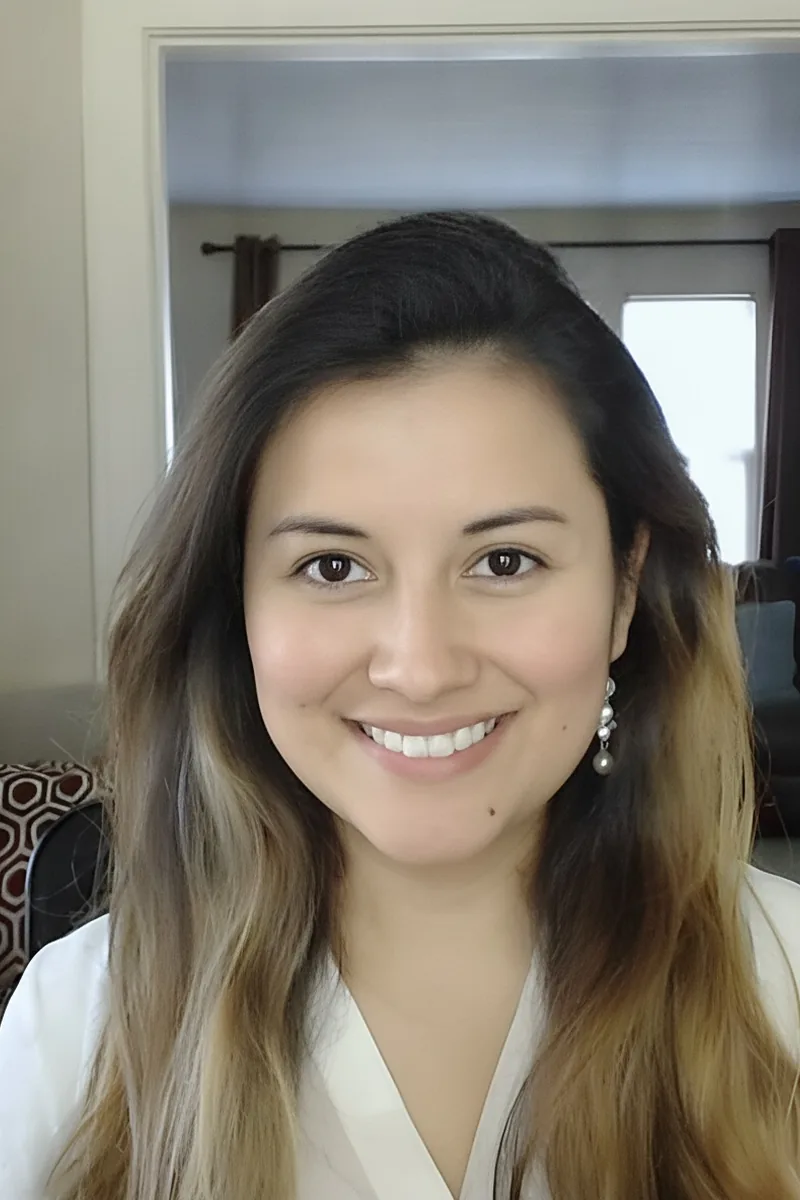
Running a nonprofit in Ecuador that educates families about nutrition required Vanessa to dig into food science research — understanding how nutrients interact, reading clinical studies, and translating dense scientific findings into language non-specialists could act on. That experience, combined with her research fellowship at Cambridge, means she teaches science as a process of asking good questions and evaluating evidence, not just memorizing definitions. Her 5.0 rating and 33 ACT confirm she can handle the rigor.
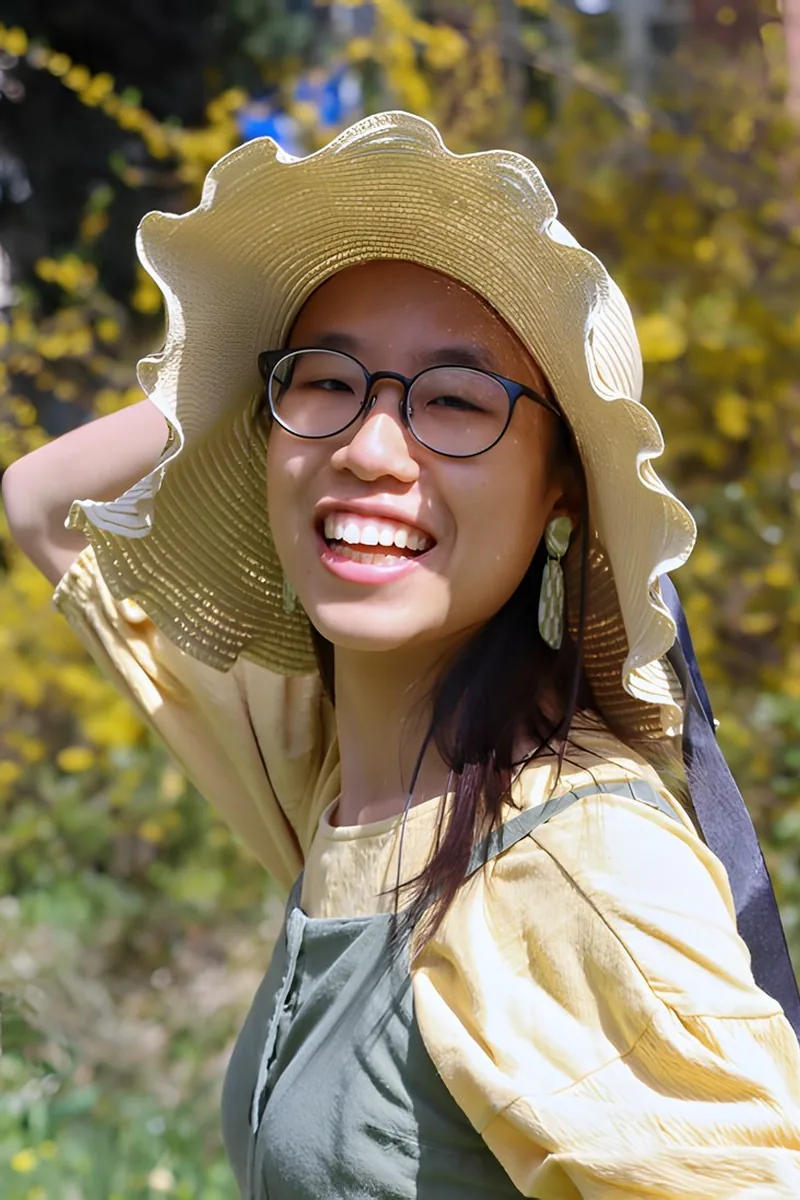
Growing up in Malaysia before studying at Penn and completing a Master's in Education at Harvard, Yu picked up science through multiple educational systems — which means she's seen the same concepts taught in very different ways and knows which explanations actually land. She leans on that cross-cultural perspective to teach topics like the scientific method, experimental reasoning, and data interpretation by reframing them until they click. Her chemistry background also lets her go deeper when students hit the quantitative side of science.
Growing up as a youth activist taught Talia to dig into research, evaluate competing claims, and figure out what the evidence actually supports — skills that translate directly to teaching students how to work through scientific reasoning, from interpreting graphs to understanding experimental design. Her perfect 36 ACT confirms she can handle data-heavy material across disciplines, and her 5.0 rating speaks to how clearly she communicates it.
Samuel's linguistics training at Harvard — analyzing how language systems work through data collection, hypothesis testing, and pattern recognition — mirrors the scientific method more closely than most people realize. He applies that same empirical mindset to teaching students how to design experiments, interpret results, and articulate conclusions clearly. Rated 5.0 by students, he's especially strong at helping those who struggle to translate scientific observations into precise written explanations.
For students who struggle with science mainly because of dense textbook language and data-heavy passages, Meghan brings a useful edge — her PhD-level reading skills make her adept at unpacking complex scientific writing and pulling out what actually matters. She's a strong fit for learners who need to improve how they interpret graphs, lab reports, and technical vocabulary.
Studying Environmental Science at Harvard means Alyssa lives at the intersection of biology, chemistry, and earth systems — exactly the kind of cross-disciplinary thinking that general science courses demand. She unpacks topics like ecosystems, genetics, and the scientific method by connecting them to tangible examples from her own research and coursework.
Currently earning her Master's in Medical Science at BU, Margaret lives inside scientific material every day — from cellular biology to experimental design and data interpretation. She breaks down complex processes into clear, logical sequences and connects abstract concepts to real-world examples that actually stick.
Studying at MIT means science is inescapable, even for a writing major — Marisa spent four years surrounded by physics problem sets, biology lectures, and lab reports. She's especially good at teaching students how to read scientific material carefully, interpret data, and write clear explanations of what they observe.
A psychology-trained tutor brings something unusual to science: an understanding of how memory and attention actually work when students are trying to absorb new vocabulary, diagrams, and processes. Kerry applies that knowledge directly, teaching students to organize scientific concepts — from the scientific method to basic biology — using strategies that match how their brains retain information.
Diana's TESOL training gave her a toolkit for making dense academic language accessible — a skill that matters enormously in science, where students often understand a concept but stumble over terminology like "dependent variable" or "photosynthesis" before they can show what they know. Her linguistics background means she instinctively breaks scientific vocabulary into Latin and Greek roots, turning unfamiliar words into puzzles students can solve on their own.
Comparative literature might seem distant from science, but Cassandra's daily work involves exactly what good science demands: reading dense material carefully, identifying patterns across complex systems, and building arguments from textual evidence. Her Latin training also means she can crack open scientific terminology at the root level — students stop guessing at words like 'endothermic' or 'photosynthesis' once they see the Greek and Latin pieces underneath.
Maedeh's neuroscience background means she thinks about science the way college courses demand: connecting molecular-level details to system-level outcomes. Whether a student is working through cell biology, basic physics, or chemistry stoichiometry, she emphasizes reading data carefully and building explanations from evidence rather than guessing.
A sociology major at Harvard, Benjamin spends his coursework immersed in research design, statistical analysis, and evidence evaluation — the same core skills that science classes test when students have to interpret data, control variables, or explain experimental outcomes. He's especially strong at teaching students to move from raw observations to clear, logical conclusions, treating every lab report or data table like a sociological case study where the evidence has to speak for itself.
Scott's sociology coursework at Harvard involves the same core scientific skills that trip students up — designing studies, identifying confounding variables, and interpreting data sets to figure out what's actually significant versus what's just noise. He brings that social-science research lens to topics like the scientific method and experimental design, making the logic behind each step concrete rather than formulaic.
While science isn't Rebecca's primary lane, her philosophy training at Notre Dame built the exact skill science courses test most: constructing and evaluating logical arguments from evidence. She applies that analytical framework to interpreting data tables, understanding experimental design, and writing lab reports that clearly connect results to hypotheses.
Between AP Biology, MCAT prep, and a full spread of math and statistics courses, Laura has spent more time with scientific content than her economics degree might suggest — she's comfortable with everything from cellular biology to experimental design to quantitative data analysis. That cross-disciplinary range means she can connect the dots for students whether they're graphing results, interpreting a lab experiment, or wrestling with the vocabulary-heavy reading that science classes pile on. Rated 5.0 by students.
Between her pre-dental coursework in biology, chemistry, and physics and her Harvard degree examining how scientific knowledge actually develops, Erica brings an unusually well-rounded perspective to science tutoring. She unpacks concepts like cell respiration, stoichiometry, or Newton's laws by connecting the underlying logic rather than asking students to memorize isolated facts.
While science isn't Emma's primary academic background, her degree in History and Philosophy of Science and Technology means she understands how scientific ideas develop and connect — which turns out to be a useful lens for younger students learning to read experiments, interpret data, and distinguish observation from inference. She's especially comfortable reinforcing the reading-heavy side of science coursework.
Computer science at Harvard means Parita spends her days doing what science coursework asks students to do — forming hypotheses, testing them systematically, and revising when the results don't match expectations. She's particularly strong at teaching students to read data displays and trace cause-and-effect relationships, since debugging code is essentially the scientific method applied line by line. Holds a 5.0 rating and a 35 ACT.
Substitute teaching both STEM and English to college-prep high schoolers gave Noel a front-row seat to the exact moment science clicks — usually when a student stops trying to memorize definitions and starts connecting concepts like energy transfer or cellular processes to something they can actually observe. His University of Chicago training in public policy sharpened his ability to read data critically and build evidence-based arguments, which translates directly to teaching students how to design experiments, interpret results, and write lab conclusions that say something meaningful.
Between MIT's rigorous core curriculum in chemistry, physics, and biology and her concentration in biomedical devices, Vania has an unusually broad science foundation. She connects concepts across disciplines — explaining, for instance, how the thermodynamics from chemistry reappears in cellular biology — which makes each subject click faster.
Halley's English classroom at a Cambridge prep school regularly requires students to build evidence-based arguments and evaluate competing claims — the same core skills that science coursework demands when interpreting experiments or explaining natural phenomena. Her Stanford education training, combined with daily practice teaching analytical reading and writing to 9th and 10th graders, means she's especially effective at helping students who struggle with the literacy-heavy side of science: parsing dense textbook passages, writing clear lab reports, and translating observations into coherent explanations.
Covering both biology and physics across middle and high school levels, Cindy tackles science by connecting abstract ideas to something concrete — turning Newton's third law into a real scenario or tracing energy flow through an actual ecosystem. Her Harvard coursework and 5.0 student rating speak to how effectively she breaks down concepts that textbooks often make unnecessarily dense.
Studying computer science at MIT while also tutoring biology, physics, and multiple levels of math means Brice lives inside the scientific process daily — forming hypotheses, testing them with data, and revising when results don't match predictions. He's especially strong on the quantitative backbone of science: setting up equations from word problems, reading graphs precisely, and making sure units actually make sense before plugging in numbers. Rated 4.9 by students.
Sydney's dual degree from Carnegie Mellon — Creative Writing paired with Vocal Performance — might not scream science, but her 35 ACT (including the Science section) proves she can tear through data tables, experimental setups, and graph interpretation at a high level. She's particularly good at teaching students how to read dense science passages carefully and extract exactly what's being asked, a skill she honed dissecting complex texts throughout her humanities training.
Science isn't Lesleigh's primary area of study, but her analytical training in graduate-level research translates well to teaching students how to read data, understand the scientific method, and write clear lab reports. She's especially useful for students who struggle with the reading-heavy side of science — interpreting textbook passages, pulling key information from experiments, and connecting vocabulary to concepts.
Between her materials science coursework and a TA role for MIT's Physics II: Electricity and Magnetism, Cori has spent years connecting scientific theory to hands-on problem solving. She explains concepts like force diagrams, chemical bonding, and energy conservation by grounding them in real physical systems students can visualize.
Growing up in Bosnia and attending an international school where he tutored non-native English speakers, Andy learned early how to explain unfamiliar concepts in plain, accessible language — exactly what's needed when students hit a wall with scientific vocabulary or abstract processes. His 34 ACT confirms he can handle the data interpretation and experimental reasoning that science coursework throws at students, and his finance training adds a quantitative edge when lessons turn to graphing, measurement, or working through calculations.
A Harvard Medical School graduate, Jean has spent years immersed in biology, physiology, and the physical sciences that support clinical medicine. She unpacks scientific concepts — from cellular respiration to human anatomy — using real-world analogies and visual examples that make abstract processes concrete. Her teaching experience with students of all ages means she can calibrate explanations to exactly the right level of complexity.
An MIT graduate student in chemical and biomolecular engineering, Natasha covers science from the molecular level up — organic chemistry reaction mechanisms, thermodynamics, cellular biology, and the math that ties them together. She talks through concepts conversationally, pushing students to articulate their reasoning rather than nod along passively.
A Harvard PhD program in German philosophy and classics doesn't scream 'science tutor,' but Zachary's daily work with Greek and Latin roots gives him a genuine advantage when students hit the vocabulary wall in biology or chemistry — terms like 'endothermic' or 'mitochondria' stop looking alien once you can break them apart. His classics training also drilled systematic classification and logical argumentation, which he applies to teaching students how to organize information and reason through cause-and-effect in lab settings.
Michelle's doctoral research on nanoparticles and bacterial infections sat at the intersection of biology, chemistry, physics, and materials science — so she's unusually comfortable jumping between scientific disciplines. Whether a student is struggling with cell organelle functions, chemical bonding, or force diagrams, she unpacks the underlying logic and ties abstract ideas to real experimental scenarios.
Biology is Connie's home base — she earned her degree in it at Northwestern and then spent four years in medical school applying it at the molecular, cellular, and systems level. That background means she can explain everything from mitosis to Mendelian genetics to acid-base chemistry with the kind of depth that makes concepts stick rather than blur together.
Studying urban planning at MIT means Adriana spends her days doing science in disguise — analyzing environmental data, modeling population dynamics, and evaluating how physical systems interact with human behavior. That cross-disciplinary training makes her especially effective at teaching students to connect scientific concepts like energy, ecosystems, and experimental design to the real world outside the textbook.
I'm excited to work with you or your child either on standardized test preparation or on generally improving performance in history, English, and social studies!
A Duke economics degree is more quantitative than most people realize — Kelly spent semesters working with regression models, controlled experiments, and data interpretation, all of which mirror the hypothesis-testing and evidence-evaluation skills science courses demand. She's particularly strong at walking students through graphs and helping them articulate what results actually show, rather than just restating textbook definitions. Holds a 5.0 rating.
As a middle school STEM teacher, Lena spends her days breaking down concepts like the scientific method, ecosystems, and basic chemistry into language students actually understand. She emphasizes how to read data tables, interpret experiments, and connect observations to conclusions — the skills that make science click across every unit.
Grace's political science coursework at Vanderbilt involved more data analysis than most people expect — polling methodology, statistical modeling of voter behavior, and evaluating whether a study's conclusions actually hold up under scrutiny. That training in picking apart evidence and spotting weak claims translates well when she teaches students to work through hypothesis testing, experimental design, and interpreting results in their science classes.
Most of Alison's teaching centers on English and writing, but her Masters in Curriculum and Instruction trained her to teach across disciplines — including how to scaffold scientific vocabulary, decode nonfiction text structures, and coach students through explaining their reasoning in complete, evidence-backed sentences. That cross-disciplinary lens is particularly useful in science, where students often understand a concept but can't articulate it clearly on a lab write-up or short-answer test.
Biological engineering at Cornell means Tina spent four years applying physics, chemistry, and biology simultaneously — modeling fluid dynamics in living tissue, analyzing biochemical pathways, and designing experiments with real constraints. That integrated training makes her especially effective at showing students how scientific disciplines overlap, whether the topic is chemical reactions, genetics, or energy systems. Rated 5.0 by students.
Testimonials
Because the right Science tutor makes all the difference.
Average Session Rating – Based on 3.4M Learner Ratings
Practice Science
Free practice tests, flashcards, and AI tutoring for Science
Nearby Science Tutors
Other Springfield Tutors
Related Science Tutors in Springfield
Frequently Asked Questions
Many Springfield students struggle with connecting abstract scientific concepts to real-world applications, especially in chemistry and physics where visualization is critical. Lab skills, data analysis, and the ability to design experiments are also areas where personalized guidance makes a significant difference. With an average student-teacher ratio of 12.6:1 across Springfield's 8 school districts, classroom time for individual practice and feedback can be limited, making targeted tutoring particularly valuable for building confidence in these areas.
Personalized 1-on-1 instruction allows tutors to focus entirely on your learning style, pace, and specific gaps—whether that's struggling with stoichiometry, understanding ecosystems, or mastering the scientific method. A tutor can spend time on the exact concepts holding you back rather than moving at a classroom pace, and can adapt explanations using analogies and examples that resonate with you. This targeted approach typically leads to faster skill development and deeper conceptual understanding than whole-class instruction alone.
Varsity Tutors connects you with tutors who understand Massachusetts science standards and the specific curricula used across Springfield's school districts. Whether you're working through middle school life science, high school biology, chemistry, physics, or AP-level courses, tutors tailor sessions to match what you're learning in class while filling in foundational gaps when needed. This alignment ensures tutoring reinforces and accelerates your classroom progress rather than working in isolation.
During your first session, a tutor will assess your current understanding of science concepts, identify specific areas of struggle, and learn about your learning style and goals. Together, you'll create a personalized plan focused on your priorities—whether that's improving lab report writing, mastering difficult topics before an exam, or building foundational skills. This foundation allows subsequent sessions to be highly targeted and productive from day one.
Varsity Tutors connects students with tutors across all grade levels and science disciplines—from elementary science and middle school life science to high school biology, chemistry, physics, environmental science, and AP/honors courses. Whether you're preparing for the MCAS, strengthening fundamentals, or tackling advanced coursework, there are tutors with expertise in your specific subject and level. Tutors can also help with science-specific skills like lab report writing, data analysis, and exam preparation.
Many students notice improved understanding and confidence within 2-3 sessions as tutors identify and address specific knowledge gaps. More significant improvements in grades, test scores, and conceptual mastery typically develop over 4-8 weeks of consistent tutoring, depending on the starting point and frequency of sessions. The key is regular practice between sessions and building on each week's progress—personalized tutoring accelerates this timeline by focusing effort exactly where it's needed most.
Yes—tutors work with Springfield students preparing for MCAS science assessments, semester exams, AP Science exams, and college entrance science sections. They focus on both content mastery and test-taking strategies, helping you understand what exams measure and how to approach different question types confidently. Exam-focused tutoring typically includes practice problems, timed practice tests, and targeted review of high-value concepts.
Start by telling us about your science needs—your current grade level, specific subject, goals, and any scheduling preferences. Varsity Tutors will match you with an expert tutor whose background and teaching style fit your needs. You'll have the opportunity to connect and discuss your goals before committing, ensuring a strong fit for productive tutoring sessions.
Let’s find your perfect tutor
Answer a few quick questions. We’ll recommend the right plan and match you with a top 5% tutor.