Award-Winning Algebra Tutors
serving Springfield, MA
Algebra
Tutors in Springfield
Private 1-on-1 tutoring, weekly live classes for academic support, test prep & enrichment, practice tests and diagnostics, and more to elevate grades and test scores.
Based on 3.4M Learner Ratings
UniversitiesSchools & Universities
DeliveredHours Delivered
ProficiencyGrowth in Proficiency
Who needs tutoring?
No obligation. Takes ~1 minute.
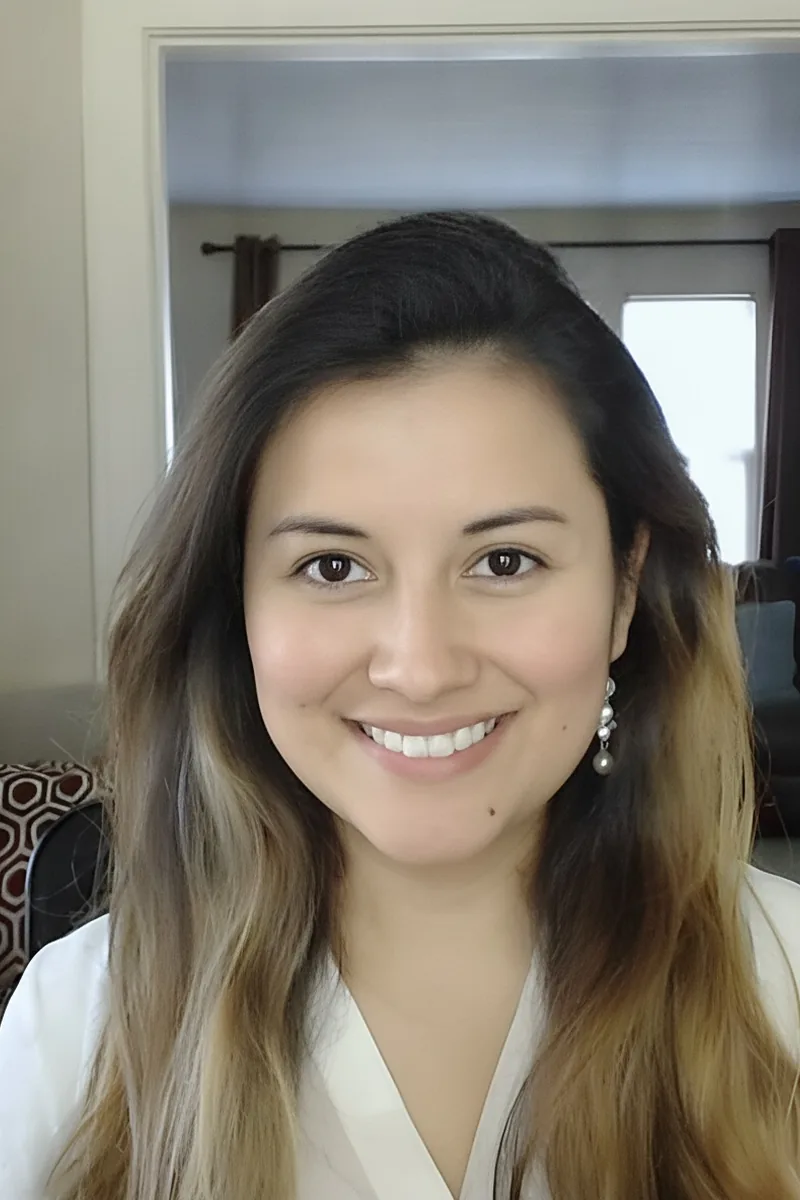
Vanessa treats algebra as a language for describing relationships — how one quantity depends on another, how patterns emerge from equations, how a graph tells a story. Her background in social science research at Harvard means she's constantly translating between abstract notation and concrete meaning, which is exactly the skill students need when tackling systems of equations or inequalities.

A lot of algebra frustration comes from gaps that quietly compound — a shaky grasp of distributing or sign rules snowballs by the time systems of equations arrive. Yu is deliberate about diagnosing exactly where those gaps are and rebuilding from there, drawing on her Harvard Graduate School of Education training in how students actually learn math.
Most algebra frustration comes from one place: students can follow along in class but freeze when a problem looks slightly different on the test. Talia teaches the underlying logic behind factoring, systems of equations, and function behavior so that unfamiliar problems become solvable puzzles rather than dead ends. She holds a 5.0 rating across her students.
The moment algebra introduces variables into word problems, many students stop trusting their own reasoning and start guessing at formulas. Samuel tackles that confidence gap directly — he teaches students to translate English sentences into equations, then solve systematically using tools like distribution, factoring, or substitution. His 5.0 client rating speaks to how well that structured, readable approach lands.
The jump from arithmetic to algebra is really a jump from numbers to abstract thinking — and that's where Diana's linguistics training pays off unexpectedly. She treats variables and expressions like a new language, teaching students to "read" equations and translate word problems into mathematical sentences. Solving systems or factoring polynomials becomes far less intimidating once students can decode what the notation actually says.
Meghan treats algebra like a language with its own grammar — variables, expressions, and equations all follow rules that make sense once you see the underlying logic. Her Cornell education and structured approach to problem-solving make her especially effective at untangling word problems and translating them into solvable equations. Rated 5.0 by students.
Environmental science coursework at Harvard involves more algebra than most people expect — building regression models for climate data, solving equilibrium equations in ecology, quantifying resource flows through systems of variables. Alyssa draws on that applied experience to teach algebra as something with a purpose, making topics like linear equations and function notation feel less abstract. Holds a 5.0 rating.
When a student stalls on algebra, it's usually one specific skill — distributing, factoring, or translating a word problem into an equation — not the whole subject at once. Marisa diagnoses that sticking point quickly and walks through it with clear language, drawing on years of peer tutoring at MIT and three years of after-school tutoring in high school.
A lot of algebra struggles aren't really about the math — they're about a student freezing up when they see variables for the first time, or losing track of multi-step equations halfway through. Kerry's training in executive functioning and motivation, built during her psychology career, gives her a different lens on these moments. She teaches the actual algebra — solving systems, factoring, working with inequalities — while also building the problem-solving stamina students need to stick with it.
Margaret's Princeton math background means she can trace algebraic concepts — like function notation or polynomial behavior — back to the underlying ideas that make them intuitive. Her psychology training also gives her a sharp read on where a student's reasoning breaks down, so she can rework an explanation on the spot rather than just repeating it louder. Rated 4.9 by students.
Comparative literature is all about close reading — pulling apart layers of meaning, tracking how pieces fit together, finding the logic underneath something that initially seems opaque. Cassandra applies that same analytical instinct to algebra, especially when students hit word problems or multi-step equations where identifying what the question is really asking matters more than raw computation. Her perfect 1600 SAT speaks to the kind of precision she brings across both verbal and quantitative reasoning.
Laura's economics training at the undergraduate level meant living inside algebraic models — demand curves, cost functions, optimization — where getting the algebra wrong meant getting the economics wrong. That real-stakes fluency shows when she teaches topics like linear equations and inequalities, because she can point to exactly where each skill gets used beyond the math classroom. Rated 5.0 by students.
Studying the history and philosophy of science at Harvard meant Erica spent years tracing how mathematical notation and algebraic thinking actually evolved — why we solve equations the way we do, not just how. That perspective gives her a unique angle on topics like systems of equations and working with variables, because she can unpack the logic behind each rule instead of just handing students a procedure to memorize. Rated 4.9 by students.
Parita tackles algebra by anchoring abstract ideas — like systems of equations or quadratic behavior — in concrete problem-solving strategies students can actually reproduce on their own. Her 1580 SAT and 35 ACT reflect deep fluency with algebraic reasoning under pressure, and her Harvard computer science training reinforces that precision daily. Rated 5.0 by students.
The jump into algebra trips up students who were never taught to think about math as a set of relationships rather than a set of answers. Benjamin zeroes in on that shift — teaching how to translate word problems into equations, manipulate expressions with purpose, and recognize patterns across linear and quadratic functions. Five years of academic prep work means he's seen nearly every way a student can get stuck and knows how to get them moving again.
A lot of algebra frustration comes from skipping the "why" — students learn to FOIL without understanding what distribution actually means, or memorize slope formulas without seeing the relationship they describe. Maedeh rebuilds that conceptual layer, especially around systems of equations and quadratic behavior, so that each new topic feels like a logical next step rather than a disconnected rule.
Most students don't struggle with algebra because the procedures are hard — they struggle because they never learned to read an equation as a statement about a relationship. Noel unpacks that translation layer, showing how setting up an equation from a word problem or interpreting a slope connects math to actual meaning. A 1550 SAT scorer and University of Chicago grad, he brings both the math chops and the communication skills to make abstract ideas concrete.
The jump from arithmetic to algebra trips students up when they can't see *why* they're manipulating symbols. Scott approaches topics like solving linear equations, factoring, and graphing by grounding each procedure in logic — explaining the reasoning behind each step so students can reconstruct methods on their own instead of relying on memorized shortcuts.
A lot of algebra frustration comes not from the operations themselves but from translating a word problem or real-world scenario into an equation worth solving. Rebecca spent years at Notre Dame's Writing Center teaching students to structure arguments clearly, and she brings that same clarity to setting up systems of equations, manipulating expressions, and interpreting what a solution actually means.
The logical reasoning skills Emma honed scoring in the top half of one percent on the LSAT translate surprisingly well to algebra, where recognizing patterns in equations and inequalities is half the battle. She walks students through each problem type — whether it's factoring polynomials or solving systems — by identifying the underlying structure rather than relying on rote steps.
Most algebra frustration comes from one place: students learn procedures without understanding what an equation is actually saying. Cindy tackles that head-on, teaching students to read expressions as relationships — so that factoring a quadratic or solving a system of equations becomes a logical process, not a memorized recipe. Her 5.0 rating speaks to how well that approach lands.
Confidence in algebra comes from wrestling with hard problems and realizing you can solve them — that's the core of how Cori teaches. Whether it's factoring complex polynomials, manipulating rational expressions, or translating word problems into equations, she breaks each skill into steps that build genuine understanding. Her perfect SAT Math scores twice over speak to the depth of her algebraic fluency.
Most Algebra struggles come down to one thing: students learn steps without understanding what an equation actually represents or why a technique works. Brice addresses that head-on, whether the topic is factoring quadratics, solving systems, or interpreting linear models, by connecting each method to the reasoning behind it. His experience tutoring everyone from middle schoolers to MIT peers means he adjusts his explanations to exactly the right level of abstraction.
Sydney scored a 1600 on the SAT and a 35 on the ACT, which means she's solved enough algebra under timed pressure to know exactly where students get tripped up — whether it's distributing negatives, misreading function notation, or losing track of steps in a multi-variable equation. Her Creative Writing background actually sharpens her algebra teaching: she's precise with language and knows how to explain a concept three different ways until one lands.
Lesleigh tackles algebra by treating equations like sentences that need to be decoded — identifying what each variable represents and why each step in solving follows logically from the last. Her background in classical languages, where grammar is essentially a system of rules and patterns, gives her a knack for making factoring, inequalities, and systems of equations feel less abstract.
Most algebra struggles come down to one thing: students learn steps without understanding what the symbols actually represent. Vania digs into the reasoning behind each manipulation — why you can add the same quantity to both sides, what a variable really means in context, how an equation models a situation — so that solving becomes logical rather than mechanical. Her experience tutoring through MIT's academic programs spans every level of math, and she holds a 5.0 client rating.
Halley approaches algebra the way she approaches a tough passage — by breaking it into smaller, logical pieces and finding the underlying structure. Her teaching background at a rigorous Cambridge prep school means she's practiced at making abstract concepts like systems of equations and polynomial expressions click for students who think they're 'not math people.'
When Jean tutored a GED student through the math section, she learned to zero in on the algebraic skills that matter most — solving linear equations, working with inequalities, and translating word problems into expressions. That experience taught her how to strip algebra down to its essential logic so students build real understanding. She's been teaching algebra in various settings for over ten years, adapting her explanations to fit each learner's style.
The logical precision Zachary developed through years of studying formal philosophy and classical languages translates directly to algebra, where every equation is essentially an argument with rules. He's especially effective at teaching students to read word problems as structured claims — identifying what's given, what's unknown, and how to set up the relationship between them.
I'm excited to work with you or your child either on standardized test preparation or on generally improving performance in history, English, and social studies!
The jump from arithmetic to algebra is really a jump from computing answers to reasoning about unknowns, and that shift trips up more students than any single topic. Natasha tackles it by getting students to verbalize their thinking — if you can explain why you're isolating a variable or how a system of equations models a real situation, the mechanics follow. Her engineering training at MIT keeps her fluent in every algebraic tool from factoring to function notation.
Every engineering course Michelle took during her BS and PhD built on algebraic fundamentals — manipulating rational expressions, solving systems of equations, working with logarithmic and exponential relationships. She breaks problems into smaller logical steps and asks targeted questions that push students to find the path forward themselves, rather than just watching someone else solve it.
Andy zeros in on the transition points where algebra gets tricky — moving from linear equations into systems, quadratics, and rational expressions. His approach is to build each new skill directly on top of the last one, so students can see how factoring a polynomial connects back to the distributive property they already know. Rated 5.0 by students.
Most algebra frustration comes from one place: students learn procedures without understanding what the symbols mean. Adriana digs into the reasoning behind solving equations, factoring, and graphing lines so that when problems get more complex — systems, inequalities, word problems — students have real intuition to fall back on.
The jump from solving simple equations to manipulating systems, quadratics, and rational expressions is where many algebra students lose confidence. Kelly approaches each topic by anchoring it to a concrete problem first — modeling a budget with linear equations, for example — before moving into the abstract manipulation. Her economics background at Duke makes that real-world bridge second nature.
Medical training forces you to rearrange equations constantly — dosage calculations, pharmacokinetics, interpreting lab values — and Connie's path from a biology degree at Northwestern through Boston University's medical program means she's been doing algebra under pressure for years. She's particularly good at showing students how to translate word problems into clean equations, since that's essentially what clinical reasoning demands every day.
The jump from arithmetic to algebra trips up many students because variables suddenly replace familiar numbers. Elise tackles that transition by grounding equations in concrete examples first — translating word problems into expressions, then building toward solving systems and inequalities once the logic feels intuitive.
The biggest hurdle in algebra isn't the math itself — it's learning to think abstractly about quantities that used to be concrete. Lena tackles this head-on as a middle school STEM teacher, bridging students from numerical thinking into variable manipulation, equation solving, and graphing linear relationships. She's especially skilled at spotting the specific misconception behind a wrong answer.
Before tackling engineering-level math at Cornell, Tina built the algebraic fluency that made everything else possible — manipulating expressions, solving systems, and reasoning through word problems. She breaks down each type of problem into a repeatable logical sequence so students develop confidence, not just answers.
Most Algebra frustration comes from one place: students learn procedures without understanding why they work, so every new problem type feels like starting over. Grace reverses that pattern by teaching the logic behind factoring, systems of equations, and inequalities so students can reason through unfamiliar problems on their own. She covers algebra at both the introductory and advanced levels.
Testimonials
Because the right Algebra tutor makes all the difference.
Average Session Rating – Based on 3.4M Learner Ratings
Practice Algebra
Free practice tests, flashcards, and AI tutoring for Algebra
Nearby Algebra Tutors
Other Springfield Tutors
Related Math Tutors in Springfield
Frequently Asked Questions
Many students struggle with the shift from arithmetic to abstract algebraic thinking—understanding why we use variables and how to manipulate equations conceptually, not just mechanically. Word problems, multi-step equations, and graphing are frequent pain points, along with gaps in foundational skills that make later topics harder. Math anxiety can also compound these challenges, making it harder to persist through problem-solving.
Your first session is about building a clear picture of where your student is and what they need. A tutor will assess their current understanding, identify specific gaps (whether in foundational skills or recent topics), and learn about their learning style and goals. This foundation helps create a personalized plan that targets the right areas and builds confidence from day one.
Tutors teach students to break complex problems into manageable steps and explain their reasoning—skills that matter both for understanding and for getting full credit on tests. By working through problems together, students learn to recognize patterns, choose efficient strategies, and catch their own mistakes. This builds the metacognitive skills that make them independent problem-solvers.
Yes. Springfield's 8 school districts use different materials and pacing, and tutors are experienced working with the major algebra programs and approaches. Whether your student's school uses a traditional textbook, integrated curriculum, or online platform, tutors can align their instruction to match what's being taught in class and reinforce the concepts in a way that makes sense for that approach.
Absolutely. Math anxiety often stems from past struggles or feeling lost—personalized tutoring removes the pressure of a large classroom and creates a safe space to ask questions and make mistakes. As students experience success with manageable problems and see patterns click into place, their confidence grows naturally, and anxiety decreases.
Tutors break these topics into visual and logical components. For graphing, they help students understand the relationship between equations and their graphs, not just memorize steps. For proofs, they teach students to think like mathematicians—understanding why each step follows logically from the previous one. This conceptual approach makes these challenging topics less intimidating and more meaningful.
Tutors help students recognize that algebra isn't isolated procedures but a connected system—showing how solving equations relates to graphing, how factoring connects to roots, and how patterns repeat across different problem types. When students see these relationships, algebra becomes more intuitive, retention improves, and they're better prepared for advanced math.
Varsity Tutors connects you with experienced algebra tutors who understand the Springfield area and can work with your student's specific needs and schedule. You'll share details about your student's current level, goals, and any particular topics that need attention, and we'll match them with a tutor who's the right fit. From there, you can start personalized instruction right away.
Let’s find your perfect tutor
Answer a few quick questions. We’ll recommend the right plan and match you with a top 5% tutor.