Award-Winning AP Human Geography Tutors
serving Barnstable, MA
AP Human Geography
Tutors in Barnstable
Private 1-on-1 tutoring, weekly live classes for academic support, test prep & enrichment, practice tests and diagnostics, and more to elevate grades and test scores.
Based on 3.4M Learner Ratings
UniversitiesSchools & Universities
DeliveredHours Delivered
ProficiencyGrowth in Proficiency
Who needs tutoring?
No obligation. Takes ~1 minute.
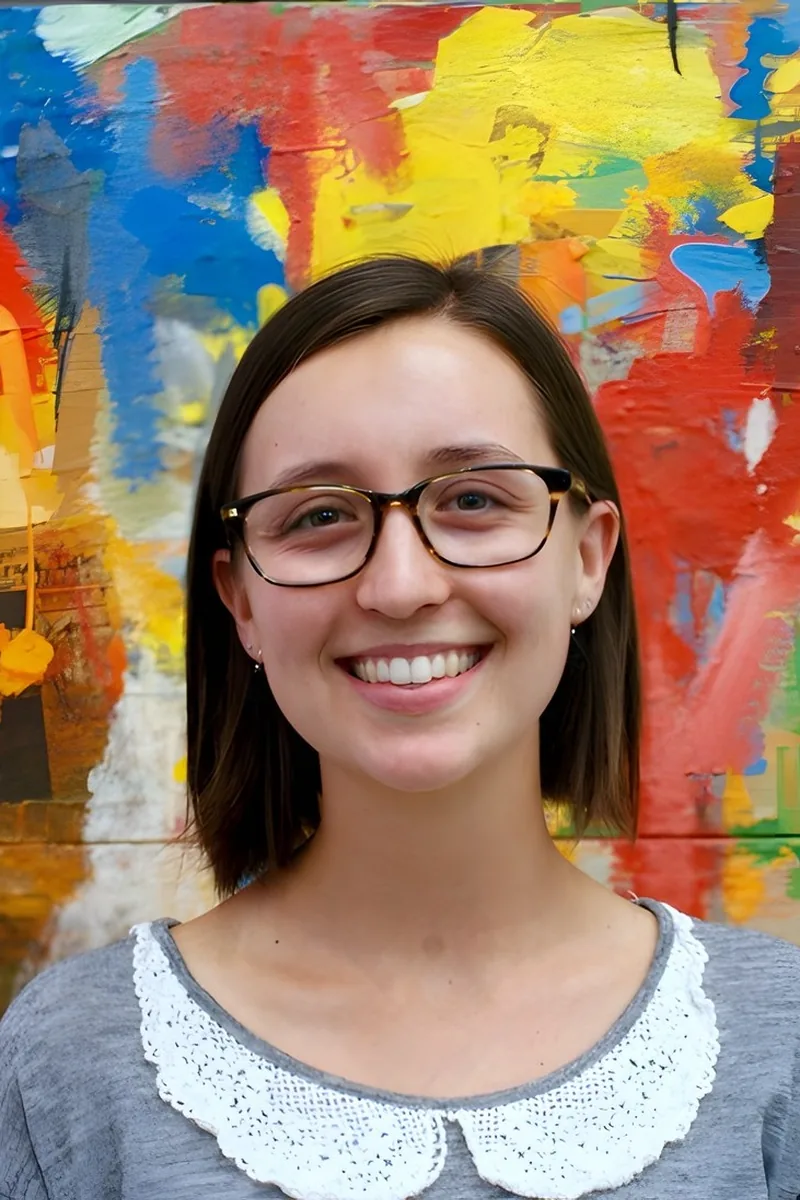
Samantha's American Studies program is essentially AP Human Geography's reading list in degree form — she's deep in the cultural landscapes, migration narratives, and political structures that show up across Units 3 through 7. That academic grounding, plus a 35 ACT, means she can break down both the conceptual side (why Mackinder's heartland theory matters, how acculturation differs from assimilation) and the test-strategy side of stimulus-based multiple choice and FRQs.

Double-majoring in Digital Journalism and Political Science means Alyssa spends her coursework analyzing how media, governments, and cultural forces shape communities — the same dynamics that drive AP Human Geography units on political organization, cultural patterns, and urbanization. She's strongest with the K-6 through middle school crowd, but her social studies background and knack for making dense vocabulary accessible translate well to walking through concepts like sovereignty, devolution, and supranationalism in ways that go beyond flashcard memorization.
A Latin American History degree from Duke means Jean spent years studying the exact processes — colonialism, land reform, rural-to-urban migration, political boundary shifts — that AP Human Geography tests across nearly every unit. She unpacks models like Rostow's stages of development or the core-periphery framework using real Latin American case studies that make the content stick far better than textbook definitions alone. Her 1500 SAT also reflects the analytical reading skill that pays off on the exam's stimulus-based questions.
Mikkel's biology degree with a biochemistry focus might seem like an odd fit for AP Human Geography, but the population ecology and resource distribution concepts he studied at Carleton map surprisingly well onto units covering the demographic transition model, Malthusian theory, and agricultural development patterns. He also brings strong Spanish fluency and broad social studies knowledge to the cultural geography and political organization units, where understanding how language and identity shape regional boundaries makes abstract models feel concrete.
Teaching World History and Economics to high schoolers means Bradley already covers the historical forces — colonialism, industrialization, migration — that sit behind most AP Human Geography units. He connects those classroom experiences to the exam's trickiest content, like applying the demographic transition model or explaining how Wallerstein's world-systems theory plays out in real trade patterns. His 33 ACT composite also signals the kind of analytical reading skill that pays off on stimulus-based multiple choice.
Charlotte's economics training at Vanderbilt gives her a natural handle on the development and globalization units that dominate AP Human Geography — she can unpack concepts like Rostow's modernization model or core-periphery dynamics with real economic reasoning instead of rote definitions. Her 36 ACT composite means she's also sharp on the stimulus-based multiple choice, where reading maps and data tables quickly matters as much as knowing the content. Rated 5.0 by students.
AP Human Geography's free-response questions ask students to connect geographic concepts — like urbanization models or cultural diffusion — to real-world examples in a structured written argument. Eileen approaches these as analytical writing exercises, teaching students to unpack the prompt, organize their evidence, and write concisely enough to finish on time.
The IB program's interdisciplinary structure — connecting science, politics, and cultural analysis across a global curriculum — mirrors exactly how AP Human Geography asks students to think about spatial patterns and human decision-making. Rithika draws on that IB training and her Science, Technology, and Society coursework to unpack how technological change drives urbanization, agricultural shifts, and industrial development across Units 5 through 7. She's especially sharp at helping students see connections between models rather than treating each unit as a separate vocabulary list.
Population pyramids, the Demographic Transition Model, spatial diffusion — AP Human Geography throws a lot of vocabulary at students and expects them to apply it to real-world scenarios on the FRQs. Liraz teaches students to think geographically, connecting concepts like urbanization patterns and cultural landscapes to places they already know about.
Rima's health policy background gives her a concrete way into some of AP Human Geography's trickiest units — she can explain why the epidemiological transition or Rostow's development model aren't just abstract diagrams but reflections of real policy decisions that reshape how populations grow, move, and organize. That cross-disciplinary perspective, combined with her humanities training in reading and writing analysis, makes her particularly useful when students need to connect dense vocabulary to the kind of process-based explanations the FRQs demand. Holds a 5.0 rating.
Jenna's AP background spans multiple disciplines — AP English, AP Calculus, AP Environmental Science, AP U.S. Government — which means she's familiar with the cross-subject thinking AP Human Geography actually rewards, where a single question might pull from economics, politics, and environmental science simultaneously. She's particularly sharp at helping students decode the exam's multiple-choice stimulus materials, drawing on the same analytical reading skills that earned her a 1400 SAT and 31 ACT. Rated 4.9 by students.
A Duke History major with Biology and Chemistry minors, Rayhan reads AP Human Geography's agriculture and development units the way a pre-med student reads systems — tracing how variables like industrialization, resource access, and population pressure interact to produce specific outcomes. That cross-disciplinary habit is especially useful when students need to explain *why* a model like Rostow's stages or the Green Revolution played out differently across regions, not just label the stages on a diagram. Rated 5.0 by students.
I am a sophomore at Columbia University, studying political science and philosophy. I often like to joke that teaching runs in my blood I come from a family of teachers who instilled in me the passion to help others learn. Since I could grasp concepts I learned in school, I've always gone out of my way to help my fellow classmate. As I got older, that became formalized tutoring through school organizations and I eventually worked for the New York City Department of Education. There, I helped students with their standardized testing for the state assessments and the SAT. I love teaching math because I feel it's the subject where I can gauge the strength of my students best. Math is such a versatile (though widely-hated) subject, where every unique learning style can always result in the same answer. I also get the most freedom when it comes to designing questions to help students grow and practicing alongside them easily the most fun part of a tutoring session with me. I'm never shy when it comes to tutoring anything else, though, whether it be any sort of history, literature, or government-related topic. My goal as a tutor is not all about teaching anything new to my students, but instead drawing out the skills they already have.
Sarah's dual focus on statistics and political science means she's comfortable with both the quantitative models (population pyramids, demographic transition data) and the political frameworks (sovereignty, devolution, supranational organizations) that AP Human Geography weaves together across its units. Her 34 ACT and strong test-taking instincts also translate well to the exam's stimulus-based multiple choice, where reading a population chart or thematic map quickly and accurately is half the battle.
Testimonials
Because the right AP Human Geography tutor makes all the difference.
Average Session Rating – Based on 3.4M Learner Ratings
Practice AP Human Geography
Free practice tests, flashcards, and AI tutoring for AP Human Geography
Nearby AP Human Geography Tutors
Other Barnstable Tutors
Related Social Studies Tutors in Barnstable
Frequently Asked Questions
Varsity Tutors matches Barnstable students with expert AP Human Geography tutors for 1-on-1 instruction. We pair each student with a tutor based on their specific needs, learning style, and goals.
Whether you need homework help, exam prep, or want to get ahead, our AP Human Geography tutors are ready to help.
Common challenges include gaps from earlier material, difficulty with specific concepts, and trouble applying learning to new problems. These issues can snowball quickly in AP Human Geography.
A tutor identifies where you're stuck, fills in gaps, and provides targeted practice. The 1-on-1 format means you get help exactly where you need it.
Tutors work with your student's actual coursework—homework assignments, class notes, and upcoming tests. This keeps tutoring directly relevant to what's happening in the classroom.
When you share information about your student's school and curriculum, we can match you with a tutor who has relevant experience.
All tutors complete background checks, credential verification, and teaching evaluation. Many of our AP Human Geography tutors hold advanced degrees or have years of teaching experience.
You can review tutor profiles to find someone with the right background for your student's level and needs.
Many students see improved grades within a few weeks, along with better understanding of AP Human Geography concepts and more confidence tackling challenging material.
Tutors track progress and adjust their approach to ensure continued improvement.
Most students benefit from 1-2 sessions per week. More frequent sessions help if your student is significantly behind or has an important exam coming up.
Your tutor can recommend a schedule based on your student's specific situation and goals.
Tutoring is purchased in packages of hours, with rates varying by tutor experience. Varsity Tutors offers several options to fit different budgets and needs.
You can discuss pricing during your consultation to find what works best.
Your tutor will assess where your student is, discuss goals, and start working on priority areas. Most students bring current homework or upcoming test material to focus on.
By the end, you'll have a clear sense of how the tutor can help and a plan for moving forward.
Let’s find your perfect tutor
Answer a few quick questions. We’ll recommend the right plan and match you with a top 5% tutor.