Award-Winning AP Human Geography Tutors
serving Worcester, MA
AP Human Geography
Tutors in Worcester
Private 1-on-1 tutoring, weekly live classes for academic support, test prep & enrichment, practice tests and diagnostics, and more to elevate grades and test scores.
Based on 3.4M Learner Ratings
UniversitiesSchools & Universities
DeliveredHours Delivered
ProficiencyGrowth in Proficiency
Who needs tutoring?
No obligation. Takes ~1 minute.
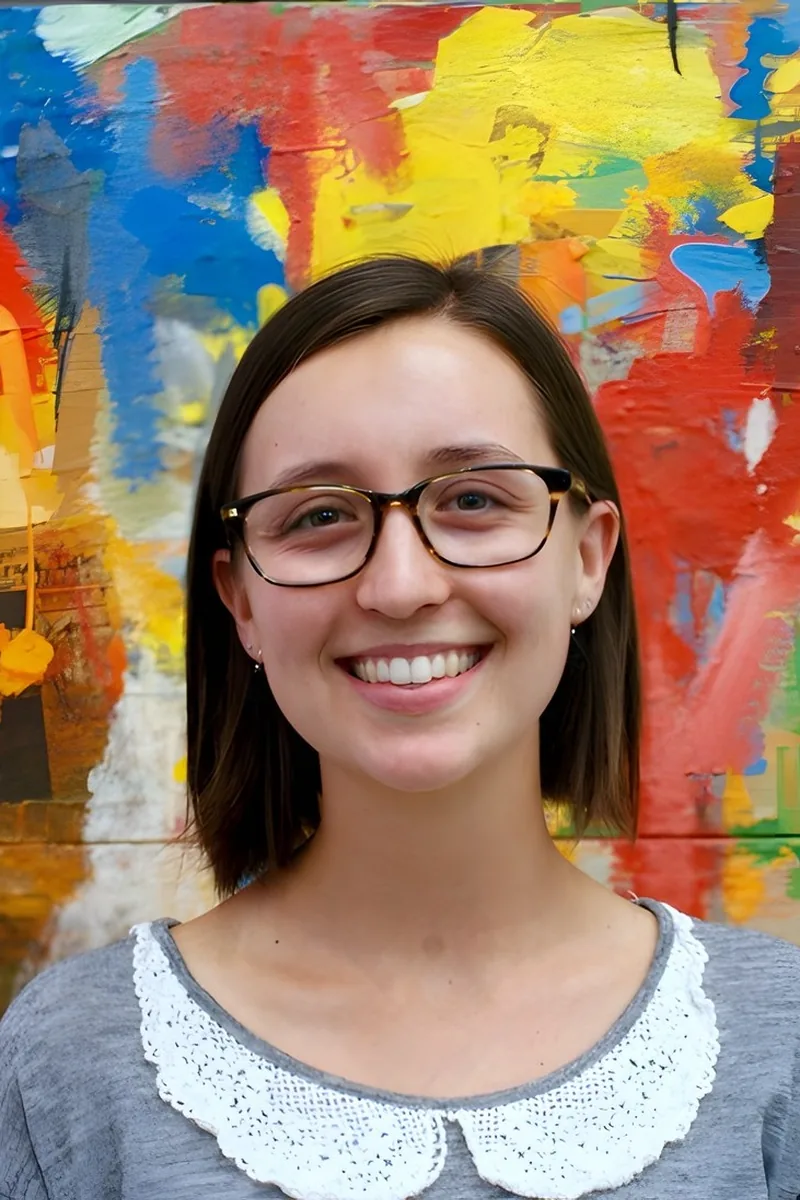
Samantha's American Studies program is essentially AP Human Geography's reading list in degree form — she's deep in the cultural landscapes, migration narratives, and political structures that show up across Units 3 through 7. That academic grounding, plus a 35 ACT, means she can break down both the conceptual side (why Mackinder's heartland theory matters, how acculturation differs from assimilation) and the test-strategy side of stimulus-based multiple choice and FRQs.

Double-majoring in Digital Journalism and Political Science means Alyssa spends her coursework analyzing how media, governments, and cultural forces shape communities — the same dynamics that drive AP Human Geography units on political organization, cultural patterns, and urbanization. She's strongest with the K-6 through middle school crowd, but her social studies background and knack for making dense vocabulary accessible translate well to walking through concepts like sovereignty, devolution, and supranationalism in ways that go beyond flashcard memorization.
Steve's English and Global Studies degree means he spent years analyzing how language, culture, and political systems interact across borders — the kind of cross-regional thinking that AP Human Geography rewards on every FRQ. He's particularly strong at teaching students to write clear, argument-driven responses for units on political organization and cultural patterns, where connecting vocabulary to real-world processes matters more than memorizing definitions. Rated 4.6 by students.
David is a practicing city planner, which means concepts like Christaller's central place theory, urban sprawl models, and the demographic transition aren't abstract exam topics for him — they're tools he uses at work. He unpacks AP Human Geography through real-world examples from his own projects, making it easier to internalize the spatial patterns and vocabulary the exam demands.
Twelve AP classes and a math-focused mind at UChicago mean Felix approaches AP Human Geography's models — things like the von Thünen agricultural model or gravity model — with the quantitative intuition most social studies tutors lack. He's sharp at teaching students to decode the exam's data-heavy stimulus questions, reading population pyramids and development indicators with precision rather than guesswork. Rated 5.0 by students.
Hannah's history degree and MFA training give her two skills AP Human Geography constantly demands — contextualizing how political boundaries and migration patterns evolved over time, and constructing the kind of tight, thesis-driven FRQ responses that earn full credit. She's particularly sharp on units where students need to connect historical forces like colonialism or industrialization to spatial models, turning what feels like abstract vocabulary into cause-and-effect arguments grounded in real places.
I am a graduate of The University of Colorado, Boulder and Harvard Kennedy School. I received my Bachelor of Arts in Economics and my Master in Public Policy with a focus on international and global affairs. Since graduation, I have worked in investment banking and management consulting, though I also have worked on government relations. While I tutor a broad range of subjects, I am most passionate about History, English Literature, and Math (namely algebra and pre-calc). In my experience helping students prepare for Standardized Tests, I like to focus on the writing and math assessments, as those tend to be challenging to many students. I believe in ensuring students are able to think independently and have the confidence to understand the material. I believe the subjects I tutor are necessary for students to succeed and I want to impart what I know to students. In my spare time, I enjoy reading about history and geopolitics, hiking, and writing.
Engineering students learn to think in systems — how inputs, feedback loops, and spatial constraints shape outcomes — which is exactly the reasoning AP Human Geography rewards when students tackle topics like urbanization models or agricultural land-use patterns. Kashish applies that analytical mindset to help break down stimulus-based questions, teaching students to extract geographic arguments from maps and data sets the way she'd approach a technical problem at Brown. Rated 5.0 by students.
Victoria's U.S. History degree grounds her in the colonialism, westward expansion, and immigration narratives that feed directly into AP Human Geography's units on political organization, migration, and cultural landscapes. She teaches students to trace how historical forces — like industrialization or imperialism — produced the spatial patterns and boundary disputes the exam actually asks about, turning timeline knowledge into geographic reasoning. Rated 4.8 by students.
Population pyramids, the Demographic Transition Model, Rostow vs. dependency theory — AP Human Geography throws dense conceptual models at students who often haven't taken a geography course before. Mark's international relations training at Tufts means he can ground these abstract models in concrete examples, connecting spatial patterns to the political and economic forces that actually produce them.
Spatial thinking trips up a lot of AP Human Geography students — understanding why cities develop where they do, how migration reshapes cultural landscapes, or what Ravenstein's laws actually predict. Amena tackles the free-response questions by teaching students to link geographic models to real-world examples, which is where most exam points are won or lost.
Courtney's French Language and Literature degree means she spent years studying how language, colonialism, and cultural identity intersect across Francophone regions — from West Africa to the Caribbean to Quebec — which maps neatly onto AP Human Geography's units on cultural diffusion, political boundaries, and language patterns. As a freelance writer, she also brings practical clarity to FRQ responses, teaching students to construct tight geographic arguments instead of listing vocabulary. Rated 5.0 by students.
UCLA's International Development Studies curriculum puts Claudia right in the middle of the global migration, urbanization, and political boundary questions that AP Human Geography builds its units around — she's studying these processes academically while tutoring students through them on the exam. Her work at UCLA's Writing Center also sharpens a skill most AP Human Geo tutors overlook: teaching students to construct tight, evidence-driven FRQ responses that connect models like Rostow's stages or the Burgess concentric zone theory to stimulus material in a few clear sentences.
Economic development models, urbanization patterns, and the politics of agricultural land use sit at the intersection of Dana's economics expertise and AP Human Geography's core units. She teaches students to read spatial data critically and to write FRQ answers that link geographic concepts — like Rostow's stages or the demographic transition model — to specific real-world examples.
Testimonials
Because the right AP Human Geography tutor makes all the difference.
Average Session Rating – Based on 3.4M Learner Ratings
Practice AP Human Geography
Free practice tests, flashcards, and AI tutoring for AP Human Geography
Nearby AP Human Geography Tutors
Other Worcester Tutors
Related Social Studies Tutors in Worcester
Frequently Asked Questions
AP Human Geography covers eight major units: thinking geographically, population and migration patterns, cultural patterns and processes, political organization of space, agriculture and rural land use, cities and urban land use, industrial and economic development, and human-environment interaction. The course emphasizes understanding how humans interact with their environment and each other across different scales—from local to global. Tutors can help you master these interconnected concepts and prepare for the multiple-choice and free-response sections of the exam.
Score improvement depends on your starting point and how consistently you work with a tutor. Students who work with personalized 1-on-1 instruction typically see meaningful gains by focusing on weak units, mastering question formats, and developing stronger analytical writing skills. Most students benefit from identifying which of the eight units are causing the most difficulty, then building targeted practice around those areas. A tutor can help you track progress through practice tests and adjust your study strategy based on real results.
Many students struggle with synthesizing information across the eight units and understanding how concepts connect—for example, how migration patterns relate to cultural diffusion or economic development. The free-response questions require strong analytical writing and the ability to apply geographic concepts to real-world scenarios, which takes practice. Additionally, students often underestimate the importance of case studies and specific examples; the exam rewards those who can support arguments with concrete geographic evidence. A tutor can help you build these connections and develop the writing skills needed for high FRQ scores.
Success on AP Human Geography requires managing your time across 60 multiple-choice questions (55 minutes) and three free-response questions (75 minutes). For multiple-choice, read questions carefully to identify what's being asked geographically—eliminate answers that describe concepts but miss the geographic scale or process. For FRQs, spend time outlining your response before writing to ensure you address all parts of the prompt and include specific examples. Tutors can help you practice these strategies through timed practice tests and teach you how to quickly identify which geographic concepts apply to unfamiliar scenarios.
The best way to identify weak areas is to take a full-length practice test and analyze your results by unit—you'll quickly see whether you're struggling with population concepts, political geography, urban systems, or another area. Once you know your weak spots, focus your study time there rather than reviewing material you already understand well. A tutor can create a targeted study plan that prioritizes your weakest units, provides additional explanation and examples, and uses practice questions to build confidence. This focused approach is much more effective than trying to review all eight units equally.
Writing is crucial—the three free-response questions account for 50% of your exam score, so strong analytical writing directly impacts your final grade. FRQs require you to explain geographic concepts, apply them to specific places or scenarios, and support your arguments with examples. Many students can identify the right concept but struggle to explain it clearly or connect it to the question asked. Tutors can help you develop the writing habits that earn high FRQ scores: clear thesis statements, logical organization, specific geographic evidence, and concise explanations that directly address what's being asked.
Most students benefit from taking at least 3-4 full-length practice tests under timed conditions in the weeks leading up to the exam. Your first practice test establishes a baseline and identifies weak areas; subsequent tests help you track improvement and refine your test-taking strategy. Between practice tests, focus on targeted study of weak units rather than taking test after test. A tutor can help you interpret practice test results, identify patterns in your mistakes, and adjust your study plan based on what you're learning. Quality practice with reflection is more valuable than quantity alone.
Varsity Tutors connects you with expert tutors who specialize in AP Human Geography and understand the exam's specific demands. When you match with a tutor, you can discuss your current level, target score, and timeline so they can create a personalized study plan tailored to your needs. Whether you're looking to improve from a 3 to a 4, master difficult units, or strengthen your free-response writing, a tutor can provide the focused instruction and accountability that leads to real score improvement.
Let’s find your perfect tutor
Answer a few quick questions. We’ll recommend the right plan and match you with a top 5% tutor.