Award-Winning Middle School Math Tutors
serving Barnstable, MA
Middle School Math
Tutors in Barnstable
Private 1-on-1 tutoring, weekly live classes for academic support, test prep & enrichment, practice tests and diagnostics, and more to elevate grades and test scores.
Based on 3.4M Learner Ratings
UniversitiesSchools & Universities
DeliveredHours Delivered
ProficiencyGrowth in Proficiency
Who needs tutoring?
No obligation. Takes ~1 minute.
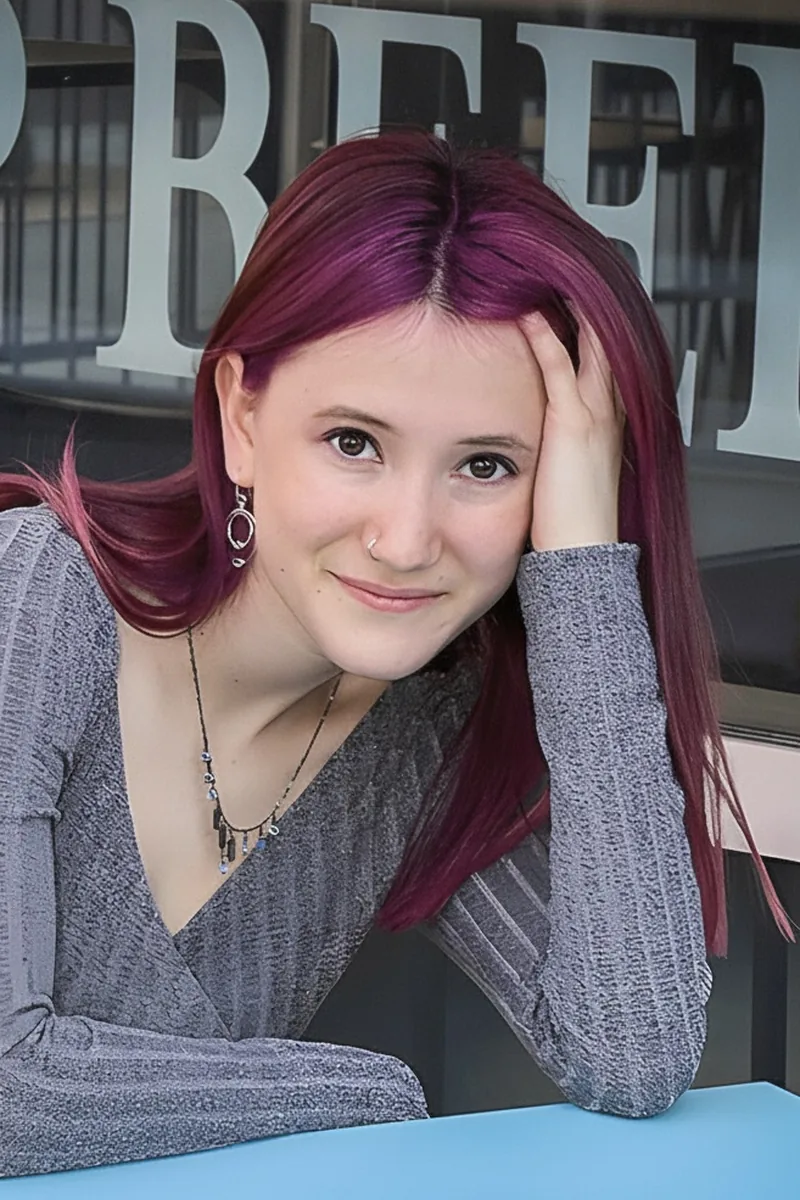
The jump from arithmetic to algebraic thinking is where middle school math gets genuinely hard — variables, proportional reasoning, and negative numbers all arrive at once. Talia has spent three years tutoring middle schoolers through exactly this transition, and she's skilled at spotting the specific conceptual gap that's causing a student to struggle rather than just re-explaining the procedure.

Most of Samuel's tutoring centers on writing and language arts, but his math roster runs from elementary through calculus — and middle school is where those subjects quietly overlap, since word problems and multi-step equations demand the same careful reading skills he teaches in English. He's especially effective at slowing students down to decode what a problem is actually asking before they start computing. Rated 5.0 by students.
Ratios, proportions, and early equation-solving can feel abstract to middle schoolers who've only ever worked with straightforward arithmetic. Marisa bridges that gap by connecting each new concept to something concrete — turning word problems into stories and fractions into visual models that actually click.
Kerry's productivity coaching business is built on executive functioning — breaking big tasks into steps, managing attention, staying motivated through frustration — which is exactly what middle schoolers need when math shifts from straightforward arithmetic into multi-step problems with integers and basic variables. Her psychology training at Cornell and William James College also means she recognizes when test anxiety or attention difficulties are the real barrier, not the math itself. That combination of academic coaching and psychological insight makes her especially effective with students who have the ability but can't seem to show it on paper.
Fractions, ratios, and proportional reasoning trip up more middle schoolers than almost any other topic — and Diana tackles these by connecting them to real scenarios students actually encounter. Her linguistics background gives her a sharp ear for how kids describe their thinking, so she can pinpoint exactly where a concept breaks down. She's a certified teacher who knows how to bridge the gap between arithmetic and the abstract reasoning algebra will demand.
Sixth and seventh graders often don't realize that the ratios, proportions, and basic geometry they're learning now are the scaffolding for every math class that follows. Margaret makes those connections explicit — showing a student why cross-multiplication works, for instance, instead of just drilling the procedure. Her psychology background informs how she adapts explanations to match the way each student actually processes new ideas.
Public policy analysis at the University of Chicago meant Noel spent years working with data, percentages, and statistical reasoning — exactly the quantitative thinking that middle school math is quietly building toward through topics like proportional relationships and basic equations. He connects those skills back to real decisions (budgets, polling data, population trends) so students see why the math matters beyond the worksheet. Rated 4.9 by families.
The jump from elementary arithmetic to middle school math introduces fractions, ratios, proportions, and basic geometry all at once, which can feel overwhelming. Laura tackles each of these topics by connecting them to everyday situations — splitting a recipe, comparing prices, measuring a room — so the reasoning sticks long after the worksheet is done.
From fractions and ratios to early equation-solving, middle school math piles on new concepts fast. Scott tackles each topic by building connections between them — showing, for instance, how proportional reasoning links to percentages, graphs, and real-world problem setups — so students see math as a coherent system instead of disconnected chapters.
Sixth through eighth grade is when math stops being just arithmetic and starts asking students to think — proportional reasoning, coordinate planes, basic statistics. Benjamin, a Harvard sophomore, tackles these topics by connecting them to problems students actually find interesting, turning what often feels like busywork into genuine understanding.
An MIT mechanical engineering student who scored a 1590 on the SAT, Vania knows exactly which middle school math skills — integer operations, fraction fluency, ratio reasoning — become load-bearing walls in high school and beyond. She zeroes in on building that numerical intuition early, using the same scaffolding techniques she picked up tutoring MIT's core math and science courses through Seminar XL. Rated 5.0 by students.
Creative writing and math don't seem related until you watch Sydney break down a multi-step problem the way she'd outline a story — identifying what's given, what's missing, and what connects the two. Her Carnegie Mellon training in structured thinking and a 1600 SAT score mean she can meet the actual math head-on, but it's her instinct for clear, logical sequencing that makes topics like fraction operations and early variable work click for middle schoolers. Rated 4.9 by families.
The jump from arithmetic to proportional reasoning, basic geometry, and introductory statistics trips up a lot of middle schoolers. Cindy zeroes in on the conceptual gaps — not just getting the right answer on a ratio problem, but understanding why cross-multiplication works in the first place. She's rated 5.0 by her students and has a knack for making abstract ideas click for younger learners.
Every math concept a middle schooler encounters — ratios, proportional reasoning, basic geometry, intro to variables — becomes a building block they'll rely on for years. Natasha is a social learner herself and encourages students to talk through their reasoning out loud, which makes it easy to catch misunderstandings early. That collaborative style has earned her a 4.9 rating across dozens of sessions.
The jump from elementary arithmetic to middle school math — fractions, ratios, negative numbers, basic equations — is where many students quietly lose confidence. Jean spent years tutoring adolescents through Boston's Artists for Humanity program, often meeting a new student and quickly figuring out which visual examples or analogies would make a tricky concept land. That adaptability makes her especially effective with middle schoolers who each process math differently.
The jump from elementary math to middle school math is where students first encounter negative numbers, proportional reasoning, and basic equation-solving — and where confidence either builds or stalls. Adriana's approach at this level is to make each new idea feel like a logical next step rather than an arbitrary rule handed down from a textbook.
Sixth through eighth grade is when math stops being just computation and starts requiring reasoning — proportional relationships, integer operations, and early equation-solving all demand a different kind of thinking. Grace tackles these concepts by tying them to concrete examples before moving to the abstract, building the kind of number sense that carries students confidently into high school math.
Fractions, ratios, and pre-algebra concepts click faster when a student understands the reasoning behind each step, not just the procedure. Elise breaks down problems into smaller logical pieces and connects arithmetic to real-world scenarios — an approach that builds genuine number sense. Rated 5.0 by students.
Teaching middle school STEM every day means Lena sees firsthand which concepts — ratios, proportional reasoning, negative numbers — students struggle with most and why. She builds each session around closing specific gaps rather than re-teaching an entire chapter. Her Cornell training and classroom experience give her a deep toolkit for making abstract math ideas click.
Studying both biology and theater at Bowdoin meant Alex constantly toggled between quantitative lab work and creative problem-solving — a combination that pays off when teaching middle schoolers to think flexibly about geometry concepts, fraction operations, and the early shift into variables. His graduate work in biology keeps him fluent in the kind of proportional and data-driven reasoning that underpins so much of what sixth and seventh graders are asked to do. Rated 4.8 by students.
The jump from elementary arithmetic to middle school math — ratios, proportional reasoning, negative numbers, intro to linear equations — demands a tutor who can bridge concrete thinking and abstract concepts. Nicole spent a year running small-group instruction and a homework club for an AmeriCorps program, so she's used to spotting exactly where a student's understanding breaks down and rebuilding from that point.
Fractions, ratios, and proportions click faster when a student sees how they connect to real problems — like scaling a recipe or calculating a medication dose. Theodora draws on her science background to make middle school math concepts tangible, turning abstract operations into something students can visualize. Rated 5.0 by students, she builds confidence with integers, decimals, and pre-algebra fundamentals.
From fractions and ratios to pre-algebra concepts like integer operations and basic equation solving, Crystal builds each lesson around the specific skill a student is stuck on. Her experience teaching over 200 elementary students in France gave her a toolbox of ways to explain the same idea differently until it lands.
Legal studies at Northwestern sharpened Mollie's ability to build logical arguments step by step — a skill that maps directly onto how middle schoolers need to think through multi-step equations and geometric reasoning. She scored a 1530 on the SAT and holds a 5.0 rating, and her strength is in slowing down at the exact moment a concept like negative number operations or fraction division starts to feel slippery, then rebuilding clarity before moving on.
Ratios, proportional reasoning, and introductory geometry can feel like a pile of disconnected rules unless someone shows how each concept builds on the last. Olivia has spent years tutoring middle school math students and excels at revealing those connections — turning a confusing unit on fractions and decimals into something that clicks. Rated 4.8 by her students.
An applied mathematics degree means Roel doesn't just know middle school math — he knows exactly where it's heading, which lets him teach topics like ratios, integer operations, and early variable work in ways that set students up for algebra instead of creating habits they'll need to unlearn. His 1540 SAT score speaks to that deep mathematical fluency, and his experience across subjects from pre-algebra through real analysis gives him an unusually clear picture of which foundational skills matter most right now.
Linguistics trains you to spot patterns in complex systems — phonological rules, morphological structures, syntactic trees — and Meghan applies that same pattern-recognition instinct to teaching middle schoolers how to decode equations and spot relationships between quantities. Her 31 ACT score and 5.0 student rating back up a teaching style that emphasizes understanding the structure of a problem before jumping to solve it, which is exactly the shift students need when arithmetic starts giving way to algebraic thinking.
Fractions, ratios, and pre-algebra concepts click faster when a student sees how each one connects to the next — and that's exactly how Irene structures her sessions. As a computer science major at Boston University with four years of tutoring experience, she breaks down multi-step problems into small, logical pieces that build real confidence with middle school math.
From fractions and ratios to early linear equations, middle school math covers a huge range of skills that students will lean on for years. Alice has tutored kids through exactly these topics before and knows how to spot the specific gap — whether it's decimal operations or proportional reasoning — that's holding a student back.
The jump from arithmetic to algebraic thinking is where many middle schoolers start to feel lost — variables, proportional relationships, and negative numbers suddenly make math feel abstract. Yiyu breaks these concepts down by connecting them to the concrete math skills students already have, building a bridge between elementary computation and high school algebra.
Between fractions, ratios, and the first taste of geometry, middle school math is where many students quietly start losing confidence. Rob spent years teaching at Choate Rosemary Hall, where he learned to spot exactly where a student's understanding breaks down and rebuild from that point. His approach turns intimidating word problems into step-by-step reasoning exercises that students can actually own.
The jump from arithmetic to proportional reasoning, integer operations, and basic geometry catches a lot of middle schoolers off guard. Ibi tackles these transitions by showing students the logic behind each rule — why dividing by a fraction means multiplying by its reciprocal, or how ratios connect to percentages. Her patience and clarity make the abstract feel manageable.
Ratios, proportions, and introductory equations are the bridge between arithmetic and algebra, and how a student crosses that bridge shapes everything that follows. Will identifies the exact misconception slowing a student down — whether it's fraction operations or translating word problems into expressions — and clears it up before moving forward.
The jump from arithmetic to pre-algebraic thinking is where middle school math gets interesting — and where a lot of kids start feeling lost with ratios, proportional reasoning, and integer operations. Liana breaks those concepts down into concrete steps, building each idea from something the student already understands. Her patience and 4.9 rating speak to how well that approach lands with younger learners.
Working with elementary-aged kids in Providence — many of them English language learners — Ashlie got practiced at explaining mathematical ideas in plain, concrete language, a skill that translates directly to middle school topics like fractions, ratios, and early equation-solving. Her Brown education leaned heavily on data and quantitative analysis through global development research, so she's comfortable with the numbers side of things even though her degree isn't in math. She's especially good at helping kids who freeze up on word problems slow down and figure out what the question is actually asking.
A lot of middle school math anxiety comes from gaps that quietly built up in earlier grades — a shaky grasp of fractions, confusion about negative numbers, or trouble setting up word problems. Jordan identifies exactly where those gaps are and fills them in with clear, patient explanations. His background in economics and statistics gives him a knack for making proportions, percentages, and data interpretation click.
I am a graduate of Princeton University, where I received my B.A. in Classics with a focus on Roman History and a minor in Environmental Studies. Since graduation, I have worked as a teacher in Lawrence MA, where I help design curriculum for social studies and science and teach reading, math, social studies, and science to kindergarten through first grade students. I have also tutored adults working towards their GED, led ESL conversation classes, and worked with high school age students. I have experience tutoring a broad range of subjects and working with a wide variety of ages. Whether it’s learning how to be a better test-taker or honing an essay on Shakespeare, my favorite thing about tutoring is seeing the great progress my students make. Although my college focus was on history and literature, I also love to tutor math, which was my favorite subject all through middle school and high school. Outside of academics, I love playing field hockey, hiking, traveling, and spending time with my family and two corgis.
Ratios, proportions, and percentages aren't just textbook exercises — Jadyn connects them to real-world scenarios like budgeting and investing, drawing on a career in venture capital to make abstract math feel immediately useful. That practical lens keeps middle schoolers engaged when topics like integer operations or basic geometry start to feel dry.
Getting proportions, fractions, and integer operations right in middle school sets up everything that comes later in math. Kevin approaches these foundational topics with the precision of someone who earned dual science degrees at MIT, breaking each concept into clear, logical steps that stick.
I am a very experienced high school and middle school teacher/tutor, as I have been tutoring or teaching in some capacity since August of 2010. I have always loved making personal connections with students and helping them make daunting studies (such as math or test preparation) more approachable. My favorite part of my job is empowering students to be more independent learners and helping them develop confidence in their abilities.
Testimonials
Because the right Middle School Math tutor makes all the difference.
Average Session Rating – Based on 3.4M Learner Ratings
Nearby Middle School Math Tutors
Other Barnstable Tutors
Related Math Tutors in Barnstable
Frequently Asked Questions
Varsity Tutors matches Barnstable students with expert Middle School Math tutors for 1-on-1 instruction. We pair each student with a tutor based on their specific needs, learning style, and goals.
Whether you need homework help, exam prep, or want to get ahead, our Middle School Math tutors are ready to help.
Common challenges include gaps from earlier material, difficulty with specific concepts, and trouble applying learning to new problems. These issues can snowball quickly in Middle School Math.
A tutor identifies where you're stuck, fills in gaps, and provides targeted practice. The 1-on-1 format means you get help exactly where you need it.
Tutors work with your student's actual coursework—homework assignments, class notes, and upcoming tests. This keeps tutoring directly relevant to what's happening in the classroom.
When you share information about your student's school and curriculum, we can match you with a tutor who has relevant experience.
All tutors complete background checks, credential verification, and teaching evaluation. Many of our Middle School Math tutors hold advanced degrees or have years of teaching experience.
You can review tutor profiles to find someone with the right background for your student's level and needs.
Many students see improved grades within a few weeks, along with better understanding of Middle School Math concepts and more confidence tackling challenging material.
Tutors track progress and adjust their approach to ensure continued improvement.
Most students benefit from 1-2 sessions per week. More frequent sessions help if your student is significantly behind or has an important exam coming up.
Your tutor can recommend a schedule based on your student's specific situation and goals.
Tutoring is purchased in packages of hours, with rates varying by tutor experience. Varsity Tutors offers several options to fit different budgets and needs.
You can discuss pricing during your consultation to find what works best.
Your tutor will assess where your student is, discuss goals, and start working on priority areas. Most students bring current homework or upcoming test material to focus on.
By the end, you'll have a clear sense of how the tutor can help and a plan for moving forward.
Let’s find your perfect tutor
Answer a few quick questions. We’ll recommend the right plan and match you with a top 5% tutor.