Award-Winning AP Human Geography Tutors
serving Springfield, MA
AP Human Geography
Tutors in Springfield
Private 1-on-1 tutoring, weekly live classes for academic support, test prep & enrichment, practice tests and diagnostics, and more to elevate grades and test scores.
Based on 3.4M Learner Ratings
UniversitiesSchools & Universities
DeliveredHours Delivered
ProficiencyGrowth in Proficiency
Who needs tutoring?
No obligation. Takes ~1 minute.
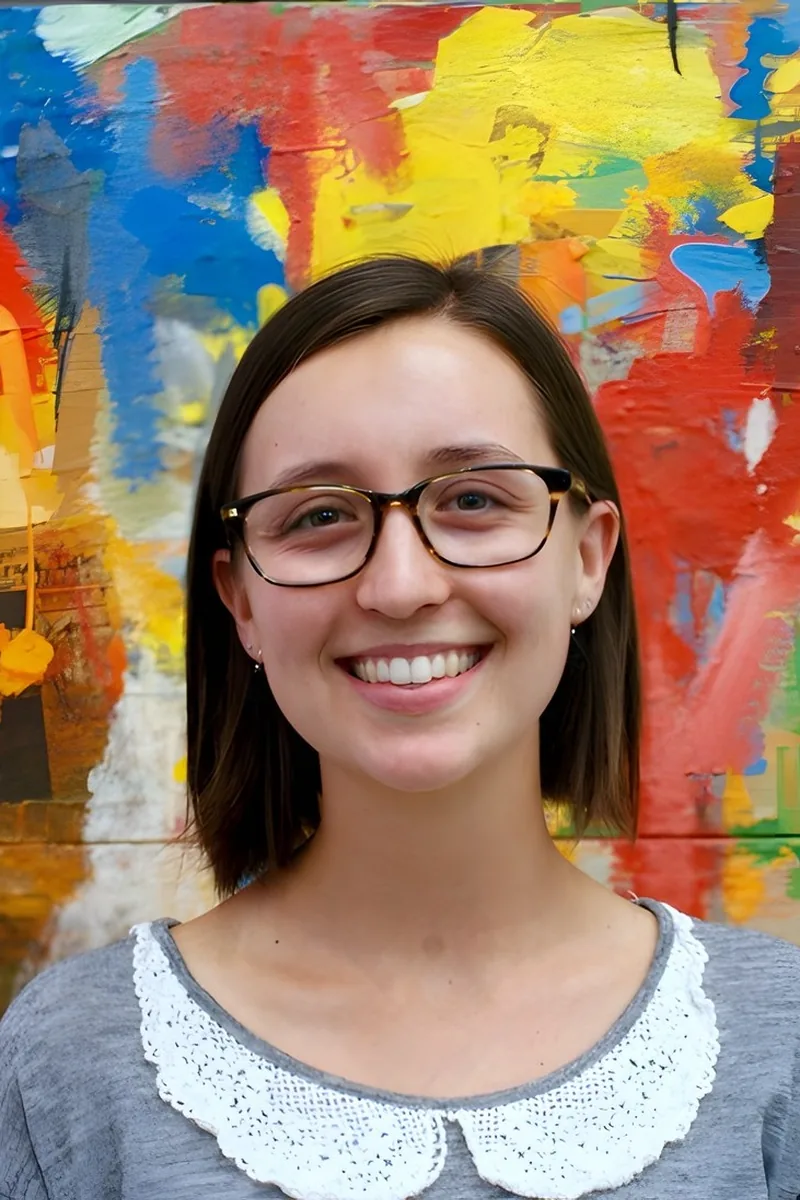
Samantha's American Studies program is essentially AP Human Geography's reading list in degree form — she's deep in the cultural landscapes, migration narratives, and political structures that show up across Units 3 through 7. That academic grounding, plus a 35 ACT, means she can break down both the conceptual side (why Mackinder's heartland theory matters, how acculturation differs from assimilation) and the test-strategy side of stimulus-based multiple choice and FRQs.

Double-majoring in Digital Journalism and Political Science means Alyssa spends her coursework analyzing how media, governments, and cultural forces shape communities — the same dynamics that drive AP Human Geography units on political organization, cultural patterns, and urbanization. She's strongest with the K-6 through middle school crowd, but her social studies background and knack for making dense vocabulary accessible translate well to walking through concepts like sovereignty, devolution, and supranationalism in ways that go beyond flashcard memorization.
I am a graduate of The University of Colorado, Boulder and Harvard Kennedy School. I received my Bachelor of Arts in Economics and my Master in Public Policy with a focus on international and global affairs. Since graduation, I have worked in investment banking and management consulting, though I also have worked on government relations. While I tutor a broad range of subjects, I am most passionate about History, English Literature, and Math (namely algebra and pre-calc). In my experience helping students prepare for Standardized Tests, I like to focus on the writing and math assessments, as those tend to be challenging to many students. I believe in ensuring students are able to think independently and have the confidence to understand the material. I believe the subjects I tutor are necessary for students to succeed and I want to impart what I know to students. In my spare time, I enjoy reading about history and geopolitics, hiking, and writing.
Mikkel's biology degree with a biochemistry focus might seem like an odd fit for AP Human Geography, but the population ecology and resource distribution concepts he studied at Carleton map surprisingly well onto units covering the demographic transition model, Malthusian theory, and agricultural development patterns. He also brings strong Spanish fluency and broad social studies knowledge to the cultural geography and political organization units, where understanding how language and identity shape regional boundaries makes abstract models feel concrete.
Georgetown's International Politics program — especially Jennifer's concentration in International Security Studies — is essentially a deep dive into the political boundaries, state sovereignty, and supranational conflicts that dominate AP Human Geography's Unit 4. Her journalism training at Northwestern adds a second edge: she knows how to teach students to construct tight, evidence-based FRQ responses, since building arguments from source material is what she does professionally every day.
The trickiest part of AP Human Geography for most students isn't the content — it's learning to write FRQ responses that explain geographic concepts rather than just describe them. Samantha's writing and essay-editing expertise makes her particularly sharp at teaching students how to structure those responses, connecting models like the gravity model or Rostow's stages to specific evidence. Rated 5.0 by students.
I am a sophomore at Columbia University, studying political science and philosophy. I often like to joke that teaching runs in my blood I come from a family of teachers who instilled in me the passion to help others learn. Since I could grasp concepts I learned in school, I've always gone out of my way to help my fellow classmate. As I got older, that became formalized tutoring through school organizations and I eventually worked for the New York City Department of Education. There, I helped students with their standardized testing for the state assessments and the SAT. I love teaching math because I feel it's the subject where I can gauge the strength of my students best. Math is such a versatile (though widely-hated) subject, where every unique learning style can always result in the same answer. I also get the most freedom when it comes to designing questions to help students grow and practicing alongside them easily the most fun part of a tutoring session with me. I'm never shy when it comes to tutoring anything else, though, whether it be any sort of history, literature, or government-related topic. My goal as a tutor is not all about teaching anything new to my students, but instead drawing out the skills they already have.
Studying both History and Neuroscience at Rice gives Nathan a dual lens for AP Human Geography — he understands the historical forces behind concepts like colonialism and cultural hearths, and he thinks analytically about how population models and spatial data actually work. He's especially effective at breaking down the exam's stimulus-based questions, teaching students to pull geographic arguments out of maps and charts rather than defaulting to memorized definitions. Rated 5.0 by students.
Population pyramids, Ravenstein's laws of migration, the Burgess model — AP Human Geography throws a lot of spatial concepts at students who've never taken a geography course before. Juan breaks these models down by tying them to real places and current events, which makes the free-response questions far less intimidating.
Todd's biology degree from UIUC and social work graduate training at UChicago give him an unusual combination for AP Human Geography — he understands population dynamics and environmental systems scientifically, and he thinks about migration, urbanization, and cultural change through a social sciences lens. That crossover is especially useful when students need to unpack how the demographic transition model or Malthusian theory connects biological resource constraints to human settlement patterns. Rated 5.0 by students.
A UChicago BA and UBC master's degree — both in geography — plus a Fulbright research fellowship in Bulgaria mean Duncan has lived the discipline AP Human Geography introduces: migration, cultural landscapes, political boundaries, and spatial organization aren't abstract textbook units for him but the actual substance of his academic career. He teaches students to apply models like the von Thünen or demographic transition not as vocabulary to memorize but as tools for interpreting the stimulus maps and data sets the exam puts in front of them. Rated 5.0 by students.
Environmental Studies at Oberlin meant Jackson spent four years studying how human activity, resource use, and political decisions reshape landscapes — the same interconnections AP Human Geography tests across units on agriculture, development, and urbanization. He unpacks models like Borchert's urban evolution or the von Thünen model by grounding them in real environmental case studies, which makes the content stick when students hit stimulus-based questions on exam day. Rated 5.0 by students.
A Latin American History degree from Duke means Jean spent years studying the exact processes — colonialism, land reform, rural-to-urban migration, political boundary shifts — that AP Human Geography tests across nearly every unit. She unpacks models like Rostow's stages of development or the core-periphery framework using real Latin American case studies that make the content stick far better than textbook definitions alone. Her 1500 SAT also reflects the analytical reading skill that pays off on the exam's stimulus-based questions.
Elena's Child Development studies at Vanderbilt give her a sharp understanding of how population dynamics, family structures, and cultural practices vary across regions — concepts that map directly onto AP Human Geography units covering population, migration, and cultural patterns. She pairs that with strong SAT performance (1540) and a knack for teaching younger students complex ideas in accessible ways, which translates well to breaking down dense models like the demographic transition or Zelinsky's migration framework for exam prep. Rated 5.0 by students.
Testimonials
Because the right AP Human Geography tutor makes all the difference.
Average Session Rating – Based on 3.4M Learner Ratings
Practice AP Human Geography
Free practice tests, flashcards, and AI tutoring for AP Human Geography
Nearby AP Human Geography Tutors
Other Springfield Tutors
Related Social Studies Tutors in Springfield
Frequently Asked Questions
AP Human Geography explores how humans interact with their environment across eight units: thinking geographically, population and migration patterns, cultural patterns and processes, political organization of space, agriculture and rural land use, cities and urban development, industrial and economic development, and human-environment interaction. The course emphasizes real-world examples and helps you understand the "why" behind global patterns, making it more conceptual than memorization-heavy compared to other AP exams.
The exam has two sections: a 60-minute multiple-choice section with 60 questions (50% of your score) and a 75-minute free-response section with three essays (50% of your score). The free-response questions require you to apply geographic concepts to real-world scenarios, so understanding the "why" behind patterns matters more than memorizing facts. Many students find the time management challenging, especially balancing depth of analysis with the three essays.
Students often struggle with connecting abstract geographic concepts to specific real-world examples, distinguishing between similar cultural or political patterns, and managing time during the free-response section. Many also find it challenging to move beyond surface-level descriptions and provide the analytical depth that earns higher scores. Tutors can help you build a framework for analyzing geographic problems and develop strategies for organizing your essays quickly under pressure.
Score improvement depends on your starting point and effort level, but most students see meaningful gains—often 1-2 points on the 1-5 scale—when they work with a tutor to strengthen weak units and develop better test-taking strategies. The national average score is around 2.5, so with focused preparation on your problem areas and consistent practice with released exams, you can realistically target a 3 or 4. Your tutor can identify which units need the most work and create a study plan that maximizes your preparation time.
Most students benefit from 3-4 months of focused preparation, though this varies based on your starting knowledge and course pacing. If you're taking the course concurrently, consistent weekly tutoring sessions starting in January or February gives you time to master each unit, practice full-length exams, and refine your essay-writing skills. Even if you're starting closer to exam day, targeted tutoring on your weakest units can still significantly improve your score.
Each free-response question asks you to demonstrate geographic thinking by explaining patterns, providing examples, and analyzing connections—not just listing facts. A strong strategy is to spend 2-3 minutes planning your essay (identifying key concepts and examples), 15-18 minutes writing, and 2-3 minutes reviewing. Tutors can teach you templates for structuring your responses, help you develop a personal "example bank" of countries and regions you can reference quickly, and coach you on how much detail scorers actually expect.
Varsity Tutors connects you with expert tutors who specialize in AP Human Geography and understand the specific challenges of the exam. You can get matched with a tutor who fits your schedule and learning style, whether you need help with particular units, essay-writing strategies, or full-exam preparation. Most students find it helpful to start tutoring early in the course so you can build a strong foundation rather than cramming before the May exam.
Your first session is typically a diagnostic conversation where your tutor learns about your current understanding, identifies which units are strongest and weakest, and understands your goals for the exam. You'll discuss your learning style, any anxiety around test-taking, and create a customized study plan together. This foundation helps your tutor design sessions that target your specific needs rather than reviewing material you already know well.
Let’s find your perfect tutor
Answer a few quick questions. We’ll recommend the right plan and match you with a top 5% tutor.