Award-Winning Organic Chemistry Tutors
serving Barnstable, MA
Organic Chemistry
Tutors in Barnstable
Private 1-on-1 tutoring, weekly live classes for academic support, test prep & enrichment, practice tests and diagnostics, and more to elevate grades and test scores.
Based on 3.4M Learner Ratings
UniversitiesSchools & Universities
DeliveredHours Delivered
ProficiencyGrowth in Proficiency
Who needs tutoring?
No obligation. Takes ~1 minute.

Reaction mechanisms are the backbone of organic chemistry, and Natasha teaches them the way she learned them in her biomolecular engineering program — by tracing electron movement step by step until the logic feels inevitable rather than arbitrary. She digs into arrow-pushing, stereochemistry, and functional group reactivity by asking students to predict products before revealing answers, building real intuition for how molecules behave.
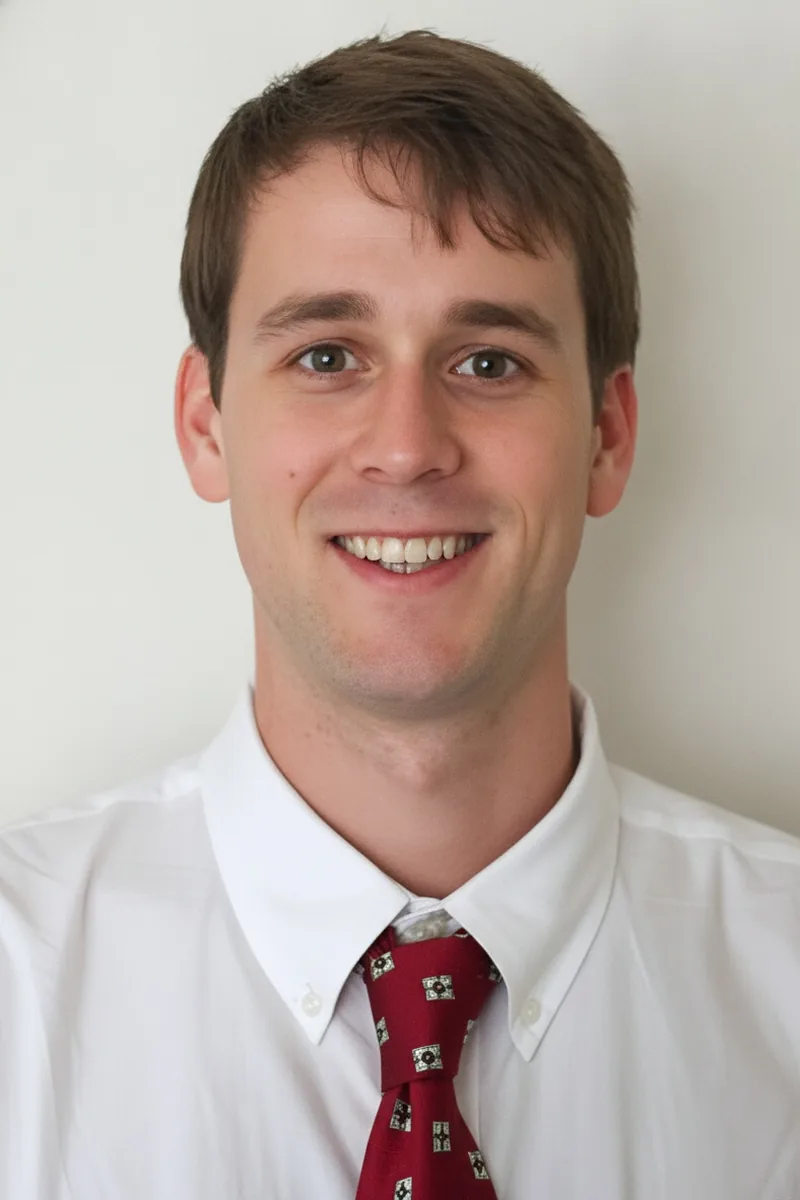
Teaching two Chemistry 101 lab sections gave Davis hands-on experience explaining reaction mechanisms, functional group behavior, and electron-pushing arrows to students encountering them for the first time. He approaches organic chemistry as a language of patterns — once students learn to read electron density and leaving-group tendencies, synthesis problems become far more manageable.
Nicole's graduate work in Cellular and Molecular Biology at Duke means she's constantly tracing biochemical pathways back to the organic reactions that drive them — carbonyl additions, acyl substitutions, the functional group chemistry that makes metabolism possible. That daily immersion gives her a way of teaching arrow-pushing and reaction prediction that's rooted in seeing these mechanisms actually matter, not just memorizing reagent tables. Rated 4.9 by students.
Reaction mechanisms are the language of organic chemistry, and Marc learned that language thoroughly during his biochemistry degree, where every biosynthetic pathway demanded fluency with nucleophilic attacks, stereochemistry, and electron-pushing. He walks through each mechanism step by step, connecting arrow-pushing to the actual energetics driving the reaction.
I am also a first year medical student at the Tufts University School of Medicine in Boston. I have extensive experience with premedical classes and have taken and tutored the MCAT exam. I placed in the 97th percentile of the MCAT exam and I understand what the test takers want students to know and how to bridge the gap between knowing the material and doing well on the test. I am always excited when a student finally has that "ah-ha" moment and declares that they now can see how all of these seemingly separate scientific topics are actually all related. The MCAT no longer seems scary, but turns into a means of truly learning this material and providing a strong foundation for the future.
Reaction mechanisms start making sense when you can trace electron movement step by step — arrow pushing, nucleophilic attacks, leaving groups. Will's pre-med concentration at Boston University meant semesters of organic chemistry where he learned to connect functional group behavior to real biochemical pathways. Rated 5.0 by students, he breaks down synthesis problems into logical chains rather than memorization marathons.
Reaction mechanisms are the language of organic chemistry, and Michael learned to speak it fluently during his Chemistry & Chemical Biology program at Cornell. He teaches students to trace electron movement through substitution, elimination, and addition reactions so they can predict products instead of relying on memorized shortcuts.
Tufts Biomedical Science coursework gave Sarah repeated exposure to organic chemistry concepts well beyond a single semester — she's traced reaction mechanisms through pharmacology, biochemistry, and molecular biology, which means she knows how carbonyl reactivity and functional group transformations actually show up downstream. She breaks multi-step synthesis problems into decision points: what's the nucleophile, what's leaving, and what drives the reaction forward. Rated 5.0 by students.
Chemical engineering at Columbia and MIT means Kelsey has worked through organic chemistry from both the academic and applied sides — synthesis design, reaction kinetics, and process-level thinking about how functional group transformations scale beyond a single flask. She digs into the thermodynamic and kinetic reasoning behind selectivity questions, like why one reaction pathway dominates under specific conditions, giving students a problem-solving framework they can carry into exams. Rated 4.9 by students.
Reaction mechanisms are the backbone of organic chemistry, and they stop being intimidating once you learn to read electron movement like a story rather than memorize arrow-pushing patterns. Vaibhav's cellular and molecular biology program at Pitt required extensive organic chemistry coursework, so he teaches substitution, elimination, and addition reactions through the lens of someone who's applied them in biochemical contexts. He unpacks each mechanism by starting with why electrons move, then building to predicting products.
I'm well versed in areas of General Chemistry, as well as Algebra and Geometry.
Reaction mechanisms are the backbone of organic chemistry, and Claire — who earned her chemistry degree from Amherst — teaches them by tracing electron movement through each step of substitution, elimination, and addition reactions. Instead of memorizing hundreds of individual reactions, her students learn to predict products by understanding nucleophilicity, sterics, and leaving group ability. That pattern-recognition approach is what got her a 5.0 rating.
Pursuing biochemistry at Tufts while prepping for medical school means Suraj has worked through organic chemistry with the kind of rigor that comes from needing every mechanism to stick — not just for one exam, but for MCAT prep and upper-level biochemistry courses that build directly on it. He zeroes in on where a student's reasoning breaks down mid-mechanism, whether it's misidentifying the nucleophile in an addition-elimination or losing track of stereochemistry through a multi-step synthesis, and rebuilds the logic from that exact point. Rated 5.0 by students.
I am currently a Ph.D. student at Harvard University in the department of Chemistry and Chemical Biology.
I am a graduate of Boston University (BU) as of 2012, and I recently graduated from Tufts University in 2014. I have received my Bachelors of Science in Biomedical Engineering from BU, and I have earned my Masters of Science degree in the same field at Tufts. I currently work as a research scientist in Cambridge studying therapies for Alzheimer's and Parkinson's Disease. My tutoring experience stems from my involvement in the National Honor Society at Xaverian Brothers High School where I tutored Freshman and Sophomore classes in our mathematics and science, specifically Algebra, Calculus and Biology. Furthermore, after being inducted in the Tau Beta Pi Engineering Honor Society at BU, I led tutoring sessions specifically geared to Engineering principles such as mechanics, physics, and mathematics. As an engineer, my favorite subjects to study are High School to College Mathematics as well as the Sciences (Physics, Chemisty, Biology) because it gives the mind a great workout! I am a generally upbeat and motivated individual which is essentially translated to my tutoring strategies; if you can somehow make the subject engaging, the more chances the student will want to learn the material! I enjoy that "A-ha!" moment when the student fully and finally understands a concept! In my spare time, I am a competitive ballroom dancer, theater aficionado and a scientific researcher in biomedical engineering!
I am an avid skier and outdoorswoman, and a passionate fan of Boston sports. As a tutor, I offer a broad range of scientific subjects, including Physics, Chemistry and Biology, and I am particularly passionate about Biochemistry and Microbiology. I also offer and enjoy test prep, including the SAT and independent school entrance exams such as the ISEE and SSAT. As an educator, I am passionate about helping every student, because I believe that everyone has the potential to succeed in Science and excel on standardized tests. I love the subjects I tutor and I strive to help my students appreciate the value of knowledge so they understand not only the material, but why it is relevant and important in their lives.
I am currently a second year medical student at Tufts University. I was a tutor for fpur years at Brigham Young University, and I love helping people learn! I tutor Economics, Math and all the basic sciences. I really enjoy tutoring these subjects because my students and I work together to understand the principles underlying the problems, which helps us remember everything better and makes studying more enjoyable. My tutoring theory is that students either know the answer or know how to find it, and together we can make that happen.
I have always enjoyed teaching even when I was in grade school helping my friends with their homework. I live for that 'aha!' moment with a student! I have tutored off and on for the past 10 years both as a tutor in math and chemistry and later as a teaching assistant in chemistry during graduate school. I love to meet students where they are and build from there. We break complex concepts into digestible pieces to build upon where your understanding already is.
Having fought through orgo on the path to a 36 ACT and a biology degree — with MCAT prep sharpening every mechanism further — Aleeza knows exactly where students get tripped up on topics like carbonyl additions and substitution-vs-elimination decision-making. She teaches reaction patterns by connecting them back to the biological molecules they show up in, which makes the logic behind electron flow feel purposeful rather than abstract. Rated 4.9 by students.
Reaction mechanisms are the language of organic chemistry, and Zain treats them that way — teaching students to read electron flow in arrow-pushing diagrams the same way they'd follow the logic of a sentence. His university coursework in organic chemistry at Vanderbilt covered everything from substitution and elimination selectivity to carbonyl chemistry and retrosynthetic analysis.
Reaction mechanisms are the backbone of organic chemistry, and spotting nucleophilic attacks or predicting stereochemical outcomes requires genuine pattern recognition, not rote memorization. Lauren's chemistry minor at Duke and her hands-on lab research give her a practical fluency with functional group reactivity that she translates into clear, step-by-step reasoning for each mechanism type.
Reaction mechanisms are the language of organic chemistry, and Amin earned an entire master's degree becoming fluent in them. He teaches students to read electron flow the way you'd read a sentence — identifying nucleophiles, leaving groups, and stereoelectronic effects so that predicting products becomes a reasoning exercise, not a memorization marathon. Rated 4.5 by students.
Reaction mechanisms are the language of organic chemistry, and Josef teaches students to read them — arrow pushing, stereochemistry, and functional group reactivity — rather than memorize hundreds of individual reactions. His biochemistry focus at Cornell means he can connect orgo concepts like nucleophilic substitution and carbonyl chemistry directly to biological molecules students will encounter later.
Currently majoring in chemistry at MIT, Nicholas is immersed in the reaction logic and electron-pushing that organic chemistry demands — and he's learning it at a program known for its rigorous mechanistic approach. He breaks down topics like nucleophilic additions and stereochemical outcomes by connecting them to the underlying thermodynamic and kinetic reasoning, making unfamiliar transformations feel predictable rather than random. Rated 5.0 by students.
Reaction mechanisms click when you understand electron movement — why a nucleophile attacks one carbon over another, how steric hindrance redirects a pathway, what drives an elimination versus a substitution. Enric's PhD in Chemistry means he's spent years thinking at the mechanistic level and can unpack arrow-pushing, stereochemistry, and retrosynthetic analysis in ways that make each reaction type feel logical rather than arbitrary.
Reaction mechanisms become far less intimidating when you can see the electron movement as a story rather than a set of arrows to memorize. Monika's biochemistry degree required deep fluency in organic chemistry — from nucleophilic substitutions through multi-step synthesis — and she teaches students to predict products by understanding why electrons move, not just where.
Biochemistry majors don't just pass organic chemistry — they keep using it, which means Addison is building on reaction mechanisms and functional group behavior in courses well beyond the introductory sequence at Rice. That ongoing exposure to carbonyl chemistry, stereochemistry, and arrow-pushing in biological contexts gives her a practical fluency that makes tutoring sessions feel less like reviewing old notes and more like working through the material with someone who still thinks in it daily.
Reaction mechanisms are the backbone of organic chemistry, and most exam mistakes trace back to shaky arrow-pushing fundamentals. Abhinav teaches students to classify reactions by nucleophile-electrophile interactions first, then layer on stereochemistry and regiochemistry — an approach that turns a seemingly infinite number of reactions into a manageable set of patterns.
Reaction mechanisms are the language of organic chemistry — if you can't follow electron movement through a nucleophilic substitution or an elimination, every new reaction feels like something to memorize from scratch. Cassandra teaches students to recognize the patterns that repeat across seemingly different reactions: leaving group quality, steric effects, acid-base behavior. That pattern-recognition approach, sharpened by her biology and biochemistry background, turns a notoriously overwhelming course into something students can actually reason through.
Daniel's PhD work in genetics and neuroscience at Rockefeller means he uses organic chemistry daily — understanding how small molecules interact with proteins, how drug candidates are designed, and why stereochemistry matters at the molecular level. That real-world context turns topics like carbonyl reactivity and functional group transformations into something students can anchor to actual science, not just exam prep.
Testimonials
Because the right Organic Chemistry tutor makes all the difference.
Average Session Rating – Based on 3.4M Learner Ratings
Practice Organic Chemistry
Free practice tests, flashcards, and AI tutoring for Organic Chemistry
Nearby Organic Chemistry Tutors
Other Barnstable Tutors
Related Science Tutors in Barnstable
Frequently Asked Questions
Varsity Tutors matches Barnstable students with expert Organic Chemistry tutors for 1-on-1 instruction. We pair each student with a tutor based on their specific needs, learning style, and goals.
Whether you need homework help, exam prep, or want to get ahead, our Organic Chemistry tutors are ready to help.
Common challenges include gaps from earlier material, difficulty with specific concepts, and trouble applying learning to new problems. These issues can snowball quickly in Organic Chemistry.
A tutor identifies where you're stuck, fills in gaps, and provides targeted practice. The 1-on-1 format means you get help exactly where you need it.
Tutors work with your student's actual coursework—homework assignments, class notes, and upcoming tests. This keeps tutoring directly relevant to what's happening in the classroom.
When you share information about your student's school and curriculum, we can match you with a tutor who has relevant experience.
All tutors complete background checks, credential verification, and teaching evaluation. Many of our Organic Chemistry tutors hold advanced degrees or have years of teaching experience.
You can review tutor profiles to find someone with the right background for your student's level and needs.
Many students see improved grades within a few weeks, along with better understanding of Organic Chemistry concepts and more confidence tackling challenging material.
Tutors track progress and adjust their approach to ensure continued improvement.
Most students benefit from 1-2 sessions per week. More frequent sessions help if your student is significantly behind or has an important exam coming up.
Your tutor can recommend a schedule based on your student's specific situation and goals.
Tutoring is purchased in packages of hours, with rates varying by tutor experience. Varsity Tutors offers several options to fit different budgets and needs.
You can discuss pricing during your consultation to find what works best.
Your tutor will assess where your student is, discuss goals, and start working on priority areas. Most students bring current homework or upcoming test material to focus on.
By the end, you'll have a clear sense of how the tutor can help and a plan for moving forward.
Let’s find your perfect tutor
Answer a few quick questions. We’ll recommend the right plan and match you with a top 5% tutor.