Award-Winning Physical Chemistry Tutors
serving Chicago, IL
Physical Chemistry
Tutors in Chicago
Private 1-on-1 tutoring, weekly live classes for academic support, test prep & enrichment, practice tests and diagnostics, and more to elevate grades and test scores.
Based on 3.4M Learner Ratings
UniversitiesSchools & Universities
DeliveredHours Delivered
ProficiencyGrowth in Proficiency
Who needs tutoring?
No obligation. Takes ~1 minute.
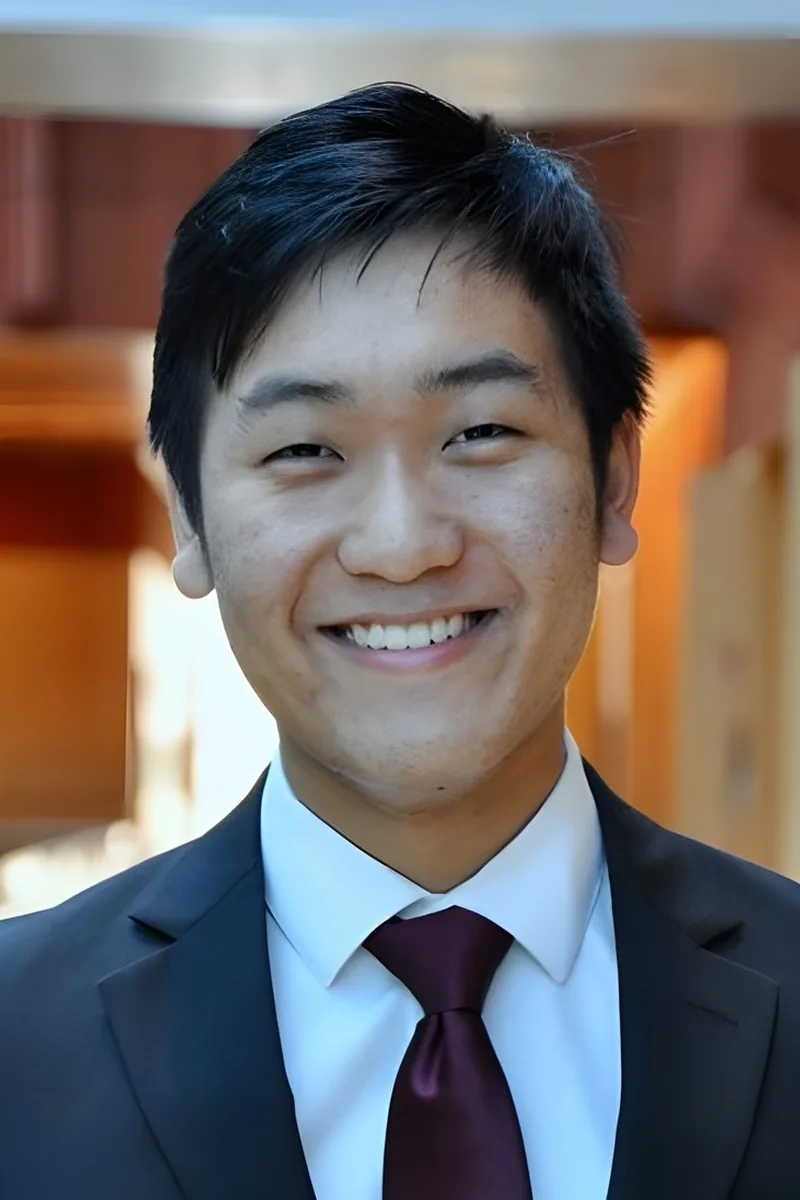
As an MD/PhD student at Northwestern with a chemistry PhD focus and a B.S. in Chemical Science from Michigan, Austin has gone deep on the thermodynamics and quantum mechanics that form p-chem's backbone — and he's still actively working through advanced coursework in these areas. He tackles derivations by building chemical intuition first, so when a student hits a wall at, say, a Legendre transform connecting internal energy to Gibbs free energy, the math follows naturally from understanding what each variable physically represents.
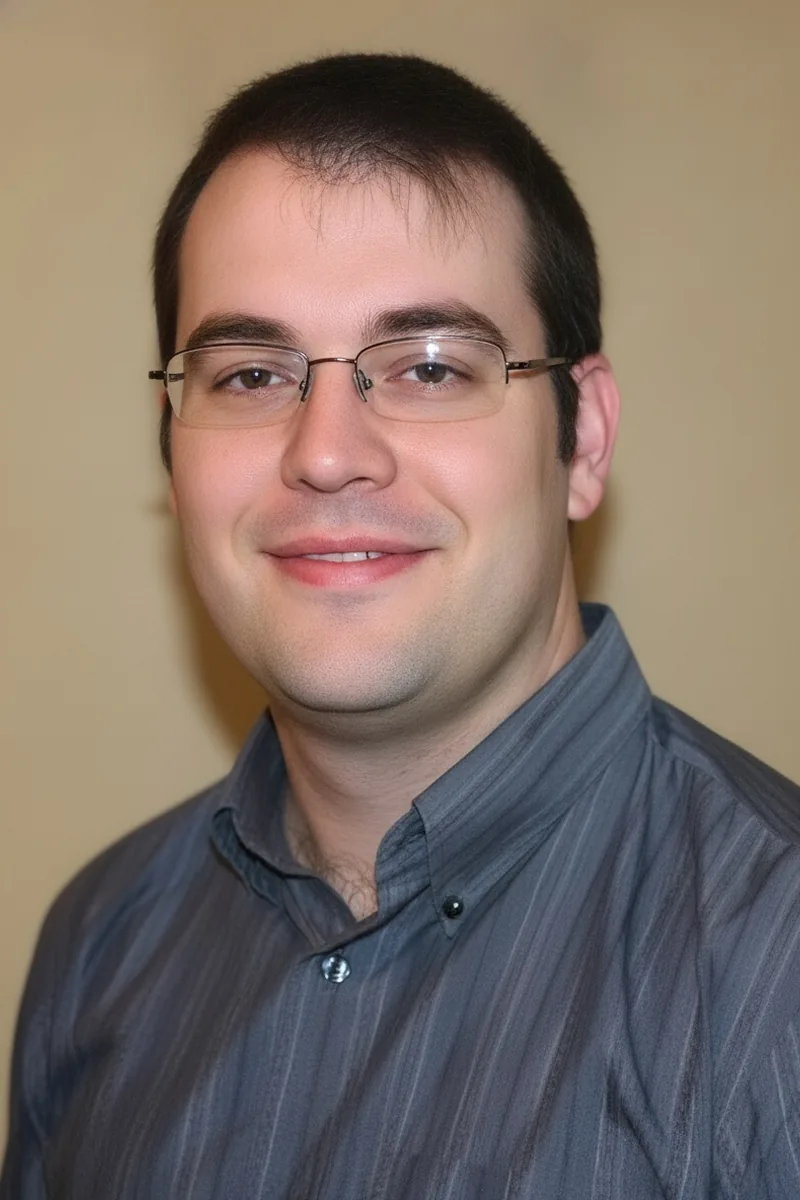
I am currently an adjunct professor of chemistry at a small liberal arts college in the Chicago area. Previously, I worked in the chemical industry for several years as a researcher, but I've found that the most satisfying moments have come when I am able to share my expertise with someone else. Similarly, I very much enjoyed the four semesters in the graduate school when I was a teaching assistant. It gave me the opportunity to work with students and help them develop an understanding for the subject. These are the primary reasons that I have decided to go into teaching.
This is Jacob's home turf. He earned his Ph.D. in Physical Chemistry from UC Berkeley and now conducts research at Northwestern, so topics like quantum mechanics, statistical thermodynamics, and spectroscopy are part of his everyday work. He walks students through the math-heavy derivations that make p-chem notoriously difficult, connecting each equation back to the physical picture it describes.
A physics degree means Eitan spent years inside the quantum mechanics, statistical mechanics, and thermodynamics that p-chem courses formalize on the chemistry side — Schrödinger's equation, Boltzmann statistics, and state functions are native territory rather than new abstractions. He teaches the derivations by clarifying the physical picture each equation encodes, so a student wrestling with a partition function or a Carnot cycle can see the molecular behavior driving every calculus step. Holds a 5.0 rating.
Pursuing a PhD in Analytical Chemistry at UIUC means Whitney spends her days immersed in the quantitative rigor that makes p-chem so demanding — thermodynamic derivations, kinetic modeling, and the statistical mechanics underlying instrumental techniques. She's currently TAing college-level chemistry courses, which keeps her sharp on exactly where students lose the thread in topics like Gibbs free energy, phase diagrams, and partition functions. That combination of active research and daily teaching gives her a practical read on which derivations need more physical intuition and which just need cleaner math.
Computational linguistics might seem far from p-chem, but Justin's SAT-level math chops and his chemistry coursework give him enough quantitative grounding to tackle the foundational concepts — working through state functions, basic thermodynamic relationships, and the algebra behind equilibrium expressions. He's strongest at slowing down the notation-heavy steps that lose students early in a p-chem sequence, making sure each symbol maps to something physically real before moving forward.
Co-teaching an organic chemistry lab at UC Berkeley and holding review sessions for general chemistry gave Yuxuan firsthand experience breaking down reaction energetics and equilibrium — concepts that p-chem revisits with far more mathematical rigor. His biochemistry training means he's already worked through the thermodynamic and kinetic frameworks underlying enzyme behavior and molecular interactions, so he can trace a derivation back to the chemistry it actually describes. Rated 4.9 by students.
Nicholas studied biology with enough chemistry and physics depth to encounter the thermodynamic and kinetic frameworks that p-chem builds on — enzyme energetics, gas laws, equilibrium — before they get buried under pages of calculus. His 33 ACT reflects strong quantitative reasoning, and he leans on that cross-disciplinary perspective to clarify why a concept like enthalpy or a phase transition behaves the way it does at the molecular level, not just how to push through the derivation.
Katherine's broad math and science background — spanning calculus, thermodynamics, and physics — means she's comfortable with the multivariable calculus and differential equations that make p-chem derivations so dense. She takes apart concepts like Maxwell relations and chemical potential by slowing down at the exact algebraic step where the physical intuition tends to disappear. Rated 5.0 by students.
Eight years as a chemistry professor at Trinity College meant Maria taught p-chem repeatedly — not just lecturing on thermodynamic state functions and quantum mechanical models, but sitting with students in office hours untangling the specific derivation step where they got lost. That Ph.D.-level command of the subject, combined with a 5.0 rating, reflects someone who knows exactly which Maxwell relation or partition function integral is about to cause trouble and can rework it on the spot.
Pre-med coursework at Rice plus dual degrees in environmental sciences and ecology meant Daniel was solving energy balance problems and applying thermodynamic reasoning to natural systems well before encountering p-chem's formal derivations. His lab technician work at Rice keeps the quantitative skills sharp — setting up calculations involving enthalpy, equilibrium, and kinetic models is part of the daily routine, not a distant textbook memory.
Medical school at Tufts demands fluency in the thermodynamics and kinetics that p-chem students dread — Eric works through Gibbs free energy calculations, entropy-driven processes, and rate equations daily in a clinical science context, which keeps the material grounded rather than purely abstract. His economics background also sharpens the kind of quantitative modeling and equilibrium thinking that translates surprisingly well to topics like chemical potential and phase diagrams.
Pursuing a dual Ph.D./Pharm.D. at UConn with graduate work in medicinal chemistry means Xhesika encounters the thermodynamic and kinetic formalism of p-chem as daily working tools — calculating drug stability, modeling reaction pathways, predicting how molecular interactions shift with temperature and pressure. She teaches derivations like Maxwell relations and Clausius-Clapeyron by tying each variable back to the pharmacological systems where she actually uses them, so the math carries chemical weight instead of feeling like abstract symbol-pushing.
The calculus buried inside p-chem — partial derivatives in Maxwell relations, integrals across thermodynamic cycles, eigenvalue problems in quantum mechanics — is often what trips students up more than the chemistry itself. Christopher teaches both physics and calculus alongside chemistry, which means he can diagnose whether a student is stuck on the math or the physical concept and tackle the actual bottleneck. That cross-subject fluency makes dense topics like partition functions or enthalpy derivations far more approachable.
Two chemistry degrees — bachelor's and master's — mean Chad has gone through the full p-chem gauntlet himself, from quantum mechanical models and statistical thermodynamics to the calculus-dense derivations of chemical kinetics. He teaches the subject by zeroing in on where the math and the molecular picture disconnect for each student, whether that's a tricky partial derivative in a thermodynamic identity or the logic behind a partition function. Rated 4.8 by students.
Decades as a PhD chemical engineer meant Steven was solving Clausius-Clapeyron problems, reaction kinetics models, and energy balance derivations long before they were textbook exercises — they were daily work. He breaks down p-chem's toughest material by explaining a concept one way, re-explaining it from a different angle, then grounding it in a real engineering application where the math actually matters. Rated 4.9 by students.
Testimonials
Because the right Physical Chemistry tutor makes all the difference.
Average Session Rating – Based on 3.4M Learner Ratings
Nearby Physical Chemistry Tutors
Other Chicago Tutors
Related Science Tutors in Chicago
Frequently Asked Questions
Physical Chemistry bridges chemistry and physics by focusing on the quantitative relationships between matter, energy, and molecular behavior. Many students find it challenging because it requires strong math skills, abstract thinking about molecular-level phenomena, and the ability to connect equations to real chemical behavior. Rather than memorizing facts, Physical Chemistry demands understanding why reactions occur and how to predict outcomes using thermodynamics, kinetics, and quantum mechanics. A tutor can help you move beyond formula-plugging to truly grasp the underlying principles.
Stoichiometry and balancing equations are foundational skills that require both systematic practice and conceptual clarity. Many students memorize steps without understanding conservation of mass or mole ratios. Effective learning involves working through varied problem types—from simple molecular equations to complex redox reactions—and connecting each step to the underlying chemistry. Personalized tutoring helps identify where your understanding breaks down, whether it's mass-to-mole conversions, limiting reactants, or yield calculations, so you can build genuine confidence rather than rely on patterns.
Abstract Physical Chemistry concepts become manageable when broken into visual and conceptual frameworks. Expert tutors use diagrams, molecular models, energy diagrams, and real-world analogies to help you "see" what's happening at the molecular level. For example, understanding entropy is easier when you visualize particle distribution, and molecular orbital theory makes sense when you see how electron density shapes bond strength. Tutors also connect these concepts to observable phenomena—like why certain reactions are spontaneous or why catalysts speed up reactions—so the abstractions feel grounded in reality.
Physical Chemistry exams typically test two skill sets: calculation accuracy (thermodynamic calculations, rate laws, equilibrium problems) and conceptual understanding (explaining why reactions occur, interpreting graphs, applying theory). Effective preparation involves practicing problems across both categories, not just drilling calculations. A tutor can help you develop a study strategy that includes working through past exams, identifying common mistake patterns, building intuition about when certain laws apply, and explaining concepts aloud to check your understanding. This two-pronged approach ensures you're ready for both computational and conceptual questions.
Since Physical Chemistry is heavily math-dependent—involving calculus, logarithms, exponential functions, and unit conversions—weak math skills often create a bottleneck. Rather than struggling through both new chemistry concepts and unfamiliar math simultaneously, a tutor can help you strengthen the specific math tools you need: derivatives for reaction rates, integrals for thermodynamic work, or logarithms for pH and equilibrium. By addressing the math foundation alongside the chemistry concepts, you build confidence and can focus mental energy on understanding the chemistry itself.
The gap between theoretical equations and actual lab results frustrates many students. Personalized tutoring bridges this gap by connecting concepts like thermodynamics, equilibrium, and kinetics to what you observe in the lab. For example, understanding Le Chatelier's principle becomes vivid when you've seen how temperature shifts an equilibrium; reaction order makes sense after analyzing experimental data. Tutors help you interpret lab results through the lens of theory, troubleshoot unexpected outcomes, and understand the scientific method beyond just following a procedure—turning laboratory work into reinforcement of Physical Chemistry principles.
Finding the right tutor match is crucial for Physical Chemistry, since the subject spans thermodynamics, kinetics, quantum mechanics, and more—and you may only need help with specific areas. Varsity Tutors connects you with tutors who have expertise in your particular challenge areas, whether that's statistical thermodynamics, electrochemistry, or molecular spectroscopy. You can discuss your specific curriculum, upcoming exams, and learning goals, ensuring you get matched with someone who understands both the depth of Physical Chemistry and your individual needs as a Chicago-area student.
Let’s find your perfect tutor
Answer a few quick questions. We’ll recommend the right plan and match you with a top 5% tutor.