Award-Winning Japanese Tutors
serving Chicago, IL
Japanese
Tutors in Chicago
Private 1-on-1 tutoring, weekly live classes for academic support, test prep & enrichment, practice tests and diagnostics, and more to elevate grades and test scores.
Based on 3.4M Learner Ratings
UniversitiesSchools & Universities
DeliveredHours Delivered
ProficiencyGrowth in Proficiency
Who needs tutoring?
No obligation. Takes ~1 minute.

A PhD in linguistics means Lewis doesn't just know languages — he understands how they work structurally, which is exactly what you need when Japanese throws you grammar that has zero English parallels. He applies that analytical framework to breaking down sentence-final particles, SOV word order, and the logic behind verb conjugation so the patterns become predictable rather than random. His experience teaching ESL/ELL also means he's practiced at bridging the gap between how English and non-European languages organize meaning.
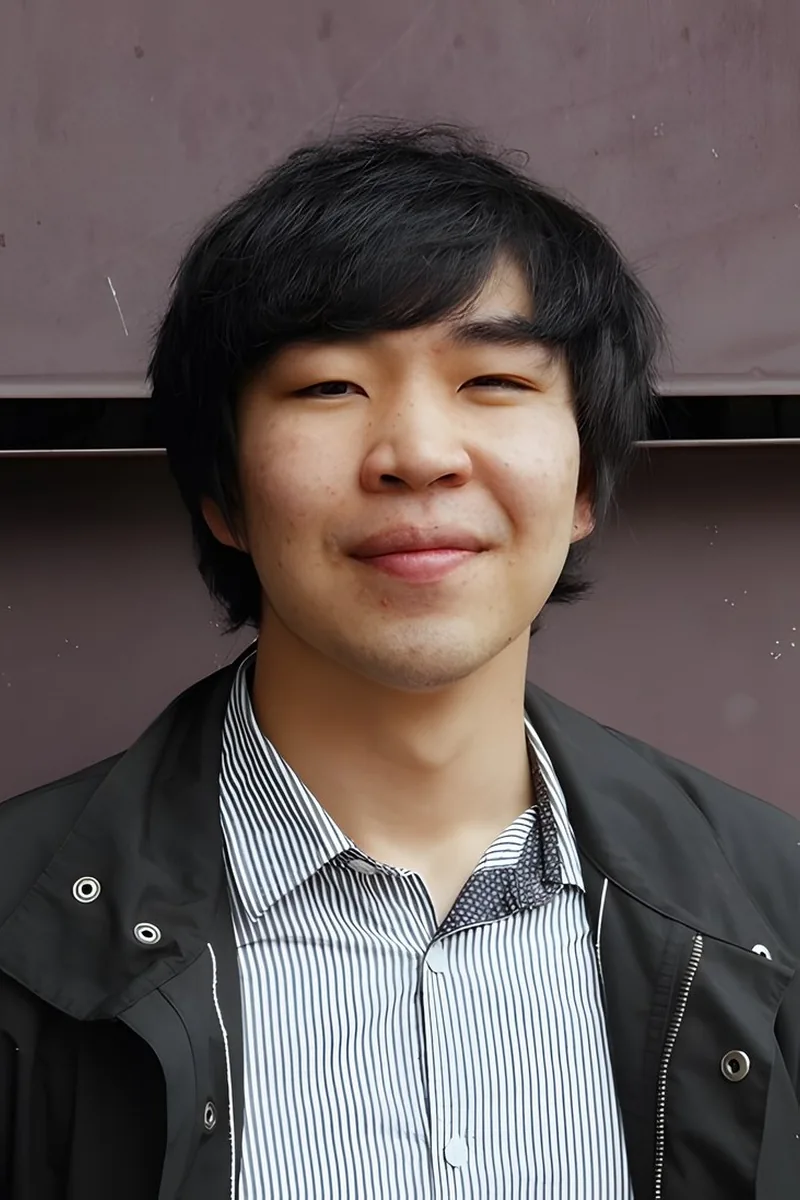
During his final summer at NYU, William traveled to Japan to study the language alongside traditional music and wartime film, grounding his Japanese in real cultural context. That immersive experience means he connects vocabulary and grammar to the situations where they're actually used — from reading signs and menus to discussing historical texts. He's especially strong at bridging the gap between textbook Japanese and how the language sounds in practice.
As a dedicated language tutor with several years of experience, I bring both expertise and enthusiasm to every lesson. I specialize in Chinese, Japanese, and basic Arabic, and I have had the privilege of guiding students of diverse ages and backgrounds through their language-learning journeys.
Zhaleh is actively studying Japanese at Carnegie Mellon University, which means she's navigating the same kanji memorization strategies, grammar particle distinctions, and reading comprehension challenges her students face. She breaks down tricky structures like て-form conjugations and は vs. が usage in ways that make the logic behind the language click.
Learning Japanese means juggling three writing systems, honorific levels, and grammar that works nothing like English — and Karen tackles all of it from firsthand experience using the language abroad. Whether a student is memorizing their first hundred kanji or practicing particle usage in complex sentences, she builds each lesson around practical communication skills.
Linguistics training gives Andrew a structural advantage when teaching Japanese — he understands how languages build meaning differently, which matters when explaining why particles replace prepositions or why verbs land at the end of every sentence. His background in Korean and German means he's personally navigated multiple grammar systems far removed from English, and he applies that comparative instinct to make Japanese word order and conjugation feel logical rather than arbitrary.
Most students learning Japanese hit a wall somewhere between mastering hiragana and actually constructing sentences with particles, verb conjugations, and counters. Kai has been teaching Japanese through the student organization meetings on campus, building lessons that move learners from basic self-introductions to reading short passages and holding simple conversations.
As a native Japanese speaker with over fifty years of fluency in reading, writing, and conversation, Hatsuki teaches the language the way it's actually used — from particle usage and keigo (honorific speech) to the nuances between hiragana, katakana, and kanji in everyday contexts. She currently lives in the U.S. with her family, giving her a natural understanding of where English speakers stumble with Japanese grammar and pronunciation.
Darin brings an analytical learner's perspective to Japanese, tackling the language's grammar patterns and writing systems with the same systematic approach he applied to his scientific training. For students working through hiragana, katakana, kanji recognition, or verb conjugation, he offers structured methods that make consistent progress feel achievable.
I currently work for an afterschool enrichment program (Best Brains) tutoring elementary English and math, and I have 4+ years of experience as a private ESL tutor for both children and adults. I am working toward my Masters of Science in Secondary English Education and ESL at the University of Wisconsin- Madison. I graduated from the University of Oregon with a Bachelor of Arts in Comparative World Literature and Japanese, and from the University of Wisconsin-Madison with a Master of Arts in Japanese Language and Literature. I began tutoring while I was in high school, assisting with algebra homework. In college, I volunteered as a kindergarten reading assistant through a program called Start Making a Reader Today. I later volunteered while in graduate school at a local high school tutoring students in beginner Japanese. I have also been employed by the University of Wisconsin as a Teaching Assistant, and taught in Religious Studies and East Asian Studies. In all cases, it has been a pleasure watching students progress in their academics and to see them grow as young scholars. I especially enjoy teaching language arts because of the feeling of connection that language can bring. My favorite part of teaching is seeing the smiling face of someone the moment that they finally "get" something they've been struggling with and watching their confidence boost. In my free time, I host a small book club, pen pal with friends around the world, and try my hand at new recipes.
Shona's semester abroad in Seville proved that immersion reshapes how you learn any language — a lesson she carries into teaching Japanese, where she emphasizes building comfort with sentence patterns and particles through active use rather than translation drills. Her AP Japanese Language and Culture tutoring draws on both her structured math-trained thinking and her own experience navigating a second language in real-world settings. Rated 4.9 by students.
Cori is pursuing a Japanese minor at MIT, which means she's actively working through the grammar structures, kanji readings, and particle usage that trip up most learners. That proximity to the learning process gives her a practical sense of what sticks and what needs extra repetition.
I am particularly passionate about math as well as standardized test prep. I studied math on a double-accelerated track throughout middle school and high school, covering math from algebra to multivariable calculus. Aside from teaching academic subjects, I am also trained in playing the piano and violin, having taken lessons for piano from the ages of 4 to 18 and playing violin in my school orchestra from 5th to 12th grade. I love working with students to improve their skills in an area of study, and my favorite part is getting to see them gain confidence in themselves and their own abilities!
I'm a candidate for a B.S. in Business Administration at Northeastern University. In addition to tutoring, I enjoy playing the tuba and learning about transportation engineering/planning. I'm also fully Japanese and can read, write, and speak the language. As someone who scored 1530 on the SAT and 800 on the Math II subject test, I'd love to assist you in preparing for college!
I am studying Chemical Biology in UC Berkeley. One of my passions is Organic Chemistry, which I used to loath but now enjoys after taking a year of it. Also, because I like helping others, I enjoys tutoring/teaching students who are struggling. During high school, I have tutored other high students after school on various subjects such as Math, Physics, Chemistry, and Latin. During college, I have held informal review sessions for General Chemistry and Organic Chemistry for my underclassmen. I tutored my roommate and one of my underclassmen in Organic Chemistry. Finally, with a Graduate Student TA, I co-taught a Organic Chemistry Lab class section , where I answer questions regarding lab material and demonstrate lab techniques. Currently, I am interested in tutoring Organic Chemistry, General Chemistry, Biochemistry, Physics, and Calculus
I would like to work with people who want to advance their Japanese knowledge and capabilities. I have lived for 18 years in Japan and can guide someone through the intricacies of the language. I have certified top level proficiency on the Japan Foundation Japanese Proficiency Test.
Damien studied Asian studies at Cornell, where Japanese language and culture were central to his coursework. He approaches the language by grounding grammar patterns — particles like は versus が, verb conjugation groups, and sentence-ending forms — in real context so they stick. Rated 5.0 by students, he makes the jump from textbook exercises to actual comprehension feel manageable.
Mechanical engineering at the University of Dayton doesn't obviously connect to Japanese, but Nicholas's systematic problem-solving mindset lends itself well to breaking down kanji radicals, verb conjugation groups, and particle logic into repeatable patterns. He's also genuinely social and talkative — a trait that matters more than you'd think when practicing conversational Japanese, where comfort with speaking aloud is half the battle.
Testimonials
Because the right Japanese tutor makes all the difference.
Average Session Rating – Based on 3.4M Learner Ratings
Nearby Japanese Tutors
Other Chicago Tutors
Related Languages Tutors in Chicago
Frequently Asked Questions
Personalized 1-on-1 instruction with a Japanese tutor gives you the speaking practice that's difficult to get in traditional classrooms. With a dedicated tutor, you have someone to talk with every session—whether you're practicing everyday conversation, working through grammar in real-time, or building confidence with native-like pronunciation. Varsity Tutors connects students in Chicago with expert tutors who can tailor speaking exercises to your level and goals, making it possible to develop fluency even if your school's program focuses mainly on reading and writing.
Japanese verbs conjugate based on tense, politeness level, and negation—which creates dozens of patterns that feel overwhelming without personalized guidance. Rather than memorizing conjugation tables, a tutor can help you understand the underlying system and practice conjugations in natural contexts through conversation and writing exercises. This approach builds intuitive mastery instead of rote memorization, so conjugations become automatic when you're actually speaking or writing in Japanese.
Learning all three writing systems takes strategy. Most students start with hiragana and katakana (the phonetic alphabets), then gradually add kanji. The challenge is retention—spaced repetition and practice testing are proven techniques to move kanji from short-term memory into long-term mastery. A tutor can create a personalized learning schedule based on your pace and the kanji your Chicago school curriculum requires, helping you avoid the common mistake of trying to learn hundreds of characters at once without a clear progression.
Understanding Japanese culture—from polite speech levels that reflect social relationships to cultural references embedded in everyday language—makes learning much more meaningful and helps you use Japanese authentically. A tutor can weave cultural context into lessons naturally, explaining why certain phrases are used in specific situations and how context matters in real communication. This immersion-style approach helps you develop not just language skills, but cultural fluency that goes beyond what textbooks typically cover.
Vocabulary sticks better when you use it in conversation and writing rather than passive flashcard review. A tutor can help you practice new words in realistic dialogues, incorporate them into sentences you actually want to say, and use retrieval practice (bringing up vocabulary in unexpected contexts) to strengthen memory. This active approach is faster than flashcard cramming and helps you build a vocabulary you can actually use in real communication, rather than recognition-only memorization.
Japanese isn't universally offered across Chicago's 882 schools and 12 school districts, so availability varies. If your school doesn't offer Japanese or has limited options, personalized tutoring is a great way to start or continue learning on your own schedule. Whether you're learning Japanese to stay connected to your heritage, prepare for college language requirements, or develop a skill for your future, Varsity Tutors connects you with expert tutors who can provide the guidance you need regardless of what your school offers.
Pronunciation in Japanese is actually more regular than in English—once you understand the sound system, consistency comes naturally. The challenge is hearing the subtle differences in pitch accent, long vowels, and consonant sounds that native speakers use. A tutor can model correct pronunciation, listen to you speak, and give immediate feedback on specific sounds that need work. Regular speaking practice with someone who hears and corrects your accent is far more effective than audio apps alone for developing natural-sounding Japanese.
Let’s find your perfect tutor
Answer a few quick questions. We’ll recommend the right plan and match you with a top 5% tutor.