Award-Winning AP Chemistry Tutors
serving Chicago, IL
AP Chemistry
Tutors in Chicago
Private 1-on-1 tutoring, weekly live classes for academic support, test prep & enrichment, practice tests and diagnostics, and more to elevate grades and test scores.
Based on 3.4M Learner Ratings
UniversitiesSchools & Universities
DeliveredHours Delivered
ProficiencyGrowth in Proficiency
Who needs tutoring?
No obligation. Takes ~1 minute.

AP Chemistry's toughest stretch for most students is the leap from stoichiometry into equilibrium, thermodynamics, and electrochemistry, where conceptual reasoning matters as much as calculation. Jhonatan's extensive lab science background in biological sciences means he thinks about chemical principles in applied contexts — reaction kinetics, buffer systems, Gibbs free energy — and explains them with that same concreteness.
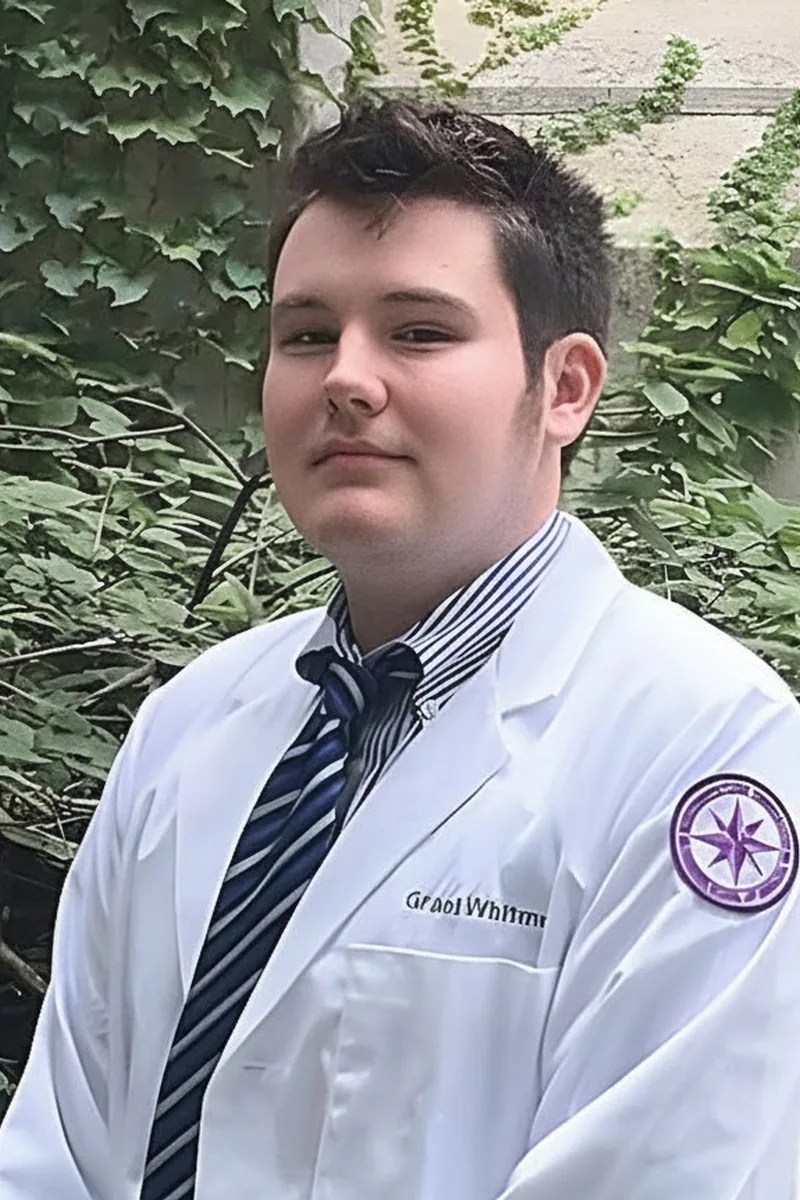
Equilibrium, thermodynamics, and electrochemistry tend to be the units where AP Chemistry students start second-guessing themselves. Grant earned his biochemistry degree before medical school, so he's spent years applying these principles in contexts ranging from lab bench titrations to physiological buffer systems — and he teaches the underlying reasoning that makes even the trickiest free-response prompts manageable.
AP Chemistry's free-response questions reward students who can explain why a reaction behaves a certain way, not just balance the equation. Masooma digs into the reasoning behind thermodynamics, equilibrium shifts, and electrochemical cell notation so students can construct those written explanations confidently. She scored a 34 on the ACT and brings that same test-strategy mindset to navigating the AP exam's format.
AP Chemistry's toughest units — equilibrium, thermodynamics, electrochemistry — require students to toggle between conceptual reasoning and quantitative problem-solving in the same question. Ellen's chemistry minor at Oberlin meant working through these topics in a rigorous college setting, and she brings that depth to AP-level prep. She walks students through free-response strategies by connecting each calculation back to the underlying chemical principle.
AP Chemistry's toughest stretch for most students is the leap from stoichiometry into equilibrium and thermodynamics, where intuition stops working and quantitative reasoning takes over. Kyle's engineering training at the college level required deep fluency in these exact concepts, and he breaks down Le Chatelier's principle and Hess's law with the precision of someone who's applied them in practice.
As a Ph.D. student in Computational and Applied Mathematics at the University of Chicago, with a Bachelor's in Mathematics from MIT, I am passionate about making mathematics accessible and engaging for all learners. My experience as a teaching assistant for calculus courses has honed my ability to design effective problem sets and lead dynamic recitations, while also providing personalized support through office hours and one-on-one tutoring. I specialize in subjects such as Algebra I & II, AP Calculus, Differential Equations, and Linear Algebra. I strive to create a supportive learning environment where students feel comfortable asking questions and exploring concepts. My teaching philosophy centers on patience, encouragement, and tailored lessons that align with each student's unique goals and learning style. I am dedicated to helping students build both their mathematical skills and their confidence, ensuring they can tackle challenges with a sense of accomplishment.
Engineering coursework at Michigan means Zain is neck-deep in the college-level chemistry that AP students are gearing up for — but his real edge is on the conceptual side, where he teaches students to visualize what's happening during a reaction rather than just crunching numbers through a formula. He's particularly sharp on topics like gas laws and phase equilibria, where connecting macroscopic observations to molecular behavior is what separates a 3 from a 5. Rated 4.6 by students.
Studying Chemical and Biomolecular Engineering at Johns Hopkins means Thomas lives inside the concepts AP Chemistry tests — thermodynamics, equilibrium, reaction kinetics, and molecular bonding all show up in his college coursework at a deeper level. He unpacks tough topics like electrochemistry and acid-base titrations by tying them back to the underlying math, which makes free-response questions far more approachable.
I am a sophomore at UIUC studying agricultural and biological engineering. Eventually, I hope to work on environmental engineering related projects concerning the improvement of ecosystem management and reducing the harmful effects of pollutants in the environment. As an aspiring engineer, my favorite subjects to teach students are math and science. I've been working with kids as a swim instructor and music teacher for the past six years now. As I've begun developing experience tutoring students, my favorite part about helping students learn math and science concepts is teaching them how these different concepts interconnect and later helping them to develop critical thinking skills to work through difficult material.
Jacob has taught introductory college chemistry as both a TA and a head instructor at UC Berkeley, which means he's seen — and corrected — nearly every misconception that trips up AP Chemistry students. He digs into the conceptual reasoning behind topics like equilibrium, electrochemistry, and thermodynamic favorability so that free-response questions feel approachable. His Ph.D. in Physical Chemistry gives him a depth of knowledge that lets him answer the "but why?" questions most AP resources skip.
Thermodynamics, equilibrium, electrochemistry, kinetics — AP Chemistry asks students to reason quantitatively through all of them under serious time pressure. Hannahlore holds a Bachelor of Chemistry with an analytical concentration, which means she doesn't just know these topics; she's applied them in lab settings where precision and conceptual understanding actually matter. She walks through each unit by anchoring calculations to the physical reality behind them.
The jump from regular to AP Chemistry is mostly about quantitative depth: equilibrium expressions, thermodynamic calculations, electrochemical cell potentials. Mateusz's science training at Illinois gave him daily practice applying these exact concepts in lab and coursework settings. He breaks multi-step problems — like calculating Ksp from solubility data or predicting reaction spontaneity — into a clear decision-making process.
A Master of Science in Physical Chemistry means Luis has spent serious time with the theoretical backbone of AP Chemistry — thermodynamics, quantum mechanical models of bonding, and kinetics derivations that go far deeper than what the AP exam requires. That depth lets him unpack concepts like Gibbs free energy or rate law determination in ways that make the math and the molecular reality feel like the same story. Rated 4.9 by students.
Few AP Chemistry tutors are simultaneously earning a PhD in chemistry — Whitney is deep in the discipline every day at UIUC, which means topics like equilibrium, electrochemistry, and thermodynamics aren't distant textbook memories but active parts of her research life. She uses real lab scenarios to make abstract concepts like Le Chatelier's principle and reaction kinetics tangible and exam-ready.
Thermodynamics, equilibrium, and electrochemistry aren't just AP exam topics for Juan — they're core material in his chemical engineering program at UIUC. He digs into the quantitative side of AP Chemistry, teaching students to set up ICE tables, balance redox reactions, and interpret lab data with the rigor the exam demands.
Actuarial science trains you to think in probabilities and precise calculations — skills Noah applies directly when teaching AP Chemistry's quantitative backbone, especially equilibrium expressions, stoichiometric ratios, and gas law problems where one misplaced unit derails an entire solution. He approaches each topic by building the mathematical reasoning first, then layering in the chemistry, so students understand what they're calculating and why. Rated 4.9 by students.
Equilibrium calculations and thermodynamics tend to be the units where AP Chemistry separates students who understand the 'why' from those running on memorized procedures. Sharan digs into the conceptual logic behind Le Chatelier shifts and Gibbs free energy so that quantitative problems feel like extensions of ideas, not isolated formulas. Her premed science background at Cornell keeps her sharp on exactly the kind of rigorous problem-solving the AP exam rewards.
Cornell's engineering curriculum put Ravnoor through rigorous college-level chemistry, and his computer science training sharpened the algorithmic thinking that pays off when students need to systematically work through multi-step problems like limiting reagent calculations or electrochemical cell setups. He teaches AP Chemistry's quantitative sections by treating each problem like a debugging exercise — isolating variables, checking units at every step, and building toward answers methodically rather than jumping to formulas. Rated 5.0 by students.
Equilibrium expressions, thermodynamics, and electrochemistry all demand comfort with both conceptual reasoning and quantitative precision. JF's math and computational science background at Stanford makes the mathematical side of AP Chem — ICE tables, rate law calculations, stoichiometric conversions — second nature, freeing up mental energy for the deeper conceptual understanding the exam rewards. Rated 5.0 by students.
Five semesters as a chemistry teaching assistant — three in general chemistry and two in organic — gave Troy a front-row seat to exactly where AP Chemistry students get stuck: equilibrium calculations, thermodynamics sign conventions, and electron configuration exceptions. He tackles these pain points by tying abstract rules back to the periodic trends and mathematical logic that govern them.
The jump from honors chemistry to AP Chemistry catches students off guard because suddenly they need to explain *why* — why equilibrium shifts, why certain reactions are spontaneous, why atomic structure dictates bonding behavior. Cassandra tackles these conceptual layers by tying each unit back to the underlying thermodynamic and kinetic principles, so students aren't just memorizing trends but understanding the logic that drives them. Her science degree and experience with analytical chemistry give her depth well beyond the AP curriculum.
AP Chemistry's free-response questions demand more than memorizing reactions — they require students to connect equilibrium, thermodynamics, and kinetics into coherent explanations under time pressure. Vishank's data analytics background at Ohio State sharpens how he breaks down multi-step problems, teaching students to identify what the question is really testing before diving into calculations. Rated 4.9 by students.
Forty-plus AP and general chemistry students have worked through thermodynamics, electrochemistry, and equilibrium calculations with Amy, and her 5.0 rating speaks to the results. Her master's in environmental toxicology keeps her deeply connected to the material — she teaches AP concepts like Gibbs free energy and kinetics as tools scientists actually use, not just formulas to memorize for the exam.
Teaching 12th grade Chemistry at a high-performing Philadelphia magnet school means Kathleen sees exactly which AP Chemistry concepts — from equilibrium reasoning to periodic trends — trip students up on exams, and she's built classroom-tested strategies for each one. Her Penn M.S.Ed in Secondary Science Education and her chemistry degree give her both the content depth and the pedagogical training to explain why a reaction proceeds the way it does, not just how to get the right answer. Rated 5.0 by students.
Cornell's environmental engineering program requires a chemistry sequence heavy on aqueous equilibria, redox reactions, and thermodynamics — exactly the content that dominates AP Chemistry's most demanding free-response questions. Akanksha draws on that coursework plus her experience teaching chemistry through Cornell's STEP program to walk students through topics like acid-base titrations and reaction energetics with real-world environmental applications that make the material stick. Rated 4.8 by students.
Computational biology at Cornell means Emily lives at the intersection of quantitative reasoning and molecular science — she's worked through the same college-level chemistry that AP students are preparing for, but with the added demand of modeling chemical systems computationally. She teaches topics like equilibrium and reaction energetics by emphasizing the mathematical structure underneath, so students learn to read what equations are actually telling them about molecular behavior. Rated 4.9 by students.
Three semesters as a college chemistry TA gave Joshua deep familiarity with the exact concepts that stump AP students: equilibrium calculations, thermodynamics, and electrochemistry. He knows how free-response questions are structured and teaches students to connect mathematical problem-solving with the conceptual reasoning the AP exam rewards.
In 2022, I completed my Ph.D. in Chemistry at Vanderbilt University. My goal is to use my expertise in chemistry, algebra, and calculus to help students not only learn but also enjoy these subjects. My favorite subject to teach is general chemistry as it highlights the importance of interdisciplinary study combining, physics, math, and even biology. While my degree expertise lies in chemistry, I am equally adapt in teaching all levels of mathematics. I take pride in reinforcing mathematics concepts with tangible applications in other fields to highlight its importance and making learning interesting.
Testimonials
Because the right AP Chemistry tutor makes all the difference.
Average Session Rating – Based on 3.4M Learner Ratings
Practice AP Chemistry
Free practice tests, flashcards, and AI tutoring for AP Chemistry
Nearby AP Chemistry Tutors
Other Chicago Tutors
Related Science Tutors in Chicago
Frequently Asked Questions
Score improvement depends on your starting point and commitment level, but students typically see meaningful gains within 8-12 weeks of focused preparation. Many students jump from a 2 or 3 to a 4 or 5 with targeted tutoring that addresses their specific weak areas—whether that's equilibrium calculations, thermodynamics, or lab-based questions. The key is identifying exactly where you're losing points and building mastery in those areas rather than reviewing material you already understand.
Students in Chicago and beyond most often struggle with equilibrium concepts, acid-base chemistry, and kinetics—topics that require both conceptual understanding and computational skill. Thermodynamics and electrochemistry also trip up many test-takers because they involve multiple interconnected concepts. The good news is that a tutor can break these down into digestible pieces and show you the problem-solving patterns that appear repeatedly on the exam.
The AP Chemistry exam gives you 225 minutes total—roughly 90 minutes for 60 multiple-choice questions and 105 minutes for 3 free-response questions. A smart strategy is spending about 1.5 minutes per multiple-choice question, which leaves time to revisit difficult ones, and allocating 30-35 minutes per free-response question. Tutors can help you practice this timing through full-length practice tests so you develop a rhythm and avoid the panic of running out of time on test day.
About 25% of the exam tests lab skills and experimental reasoning, including questions about data analysis, error sources, and designing experiments to test hypotheses. This is a unique challenge because it requires both chemistry knowledge and scientific reasoning. Tutors can walk you through past lab questions and teach you the language and logic the College Board expects, so you're not caught off-guard by unfamiliar experimental scenarios.
Most students benefit from 3-4 months of consistent preparation, with 5-8 hours per week of focused study. An effective plan includes reviewing one major unit at a time, doing practice problems immediately after learning concepts, taking full-length practice tests every 2-3 weeks, and reviewing mistakes carefully. A tutor can customize this timeline based on your current level and help you prioritize which topics to tackle first based on exam weight and your personal weak spots.
Practice tests are essential—they're the best way to identify weak areas, build test-taking stamina, and get comfortable with the exam format and question styles. Aim for at least 4-5 full-length practice tests spread throughout your prep, with your first one early to establish a baseline and your last one 1-2 weeks before exam day. Between full tests, focus on targeted practice in your problem areas; a tutor can help you analyze your practice test results and create a focused study plan based on where you're losing points.
Test anxiety is common, especially in chemistry where concepts build on each other. The best antidote is preparation—knowing you've practiced similar problems and understand the material deeply builds genuine confidence. Tutors can also teach you test-day strategies like reading questions carefully, managing your time so you're not rushed, and approaching difficult problems strategically rather than panicking. Regular practice tests in timed conditions help normalize the exam experience so test day feels familiar rather than frightening.
Look for a tutor with strong chemistry credentials and, ideally, experience helping students prepare specifically for the AP exam. They should understand the College Board's curriculum and question formats, be able to explain complex topics clearly, and know how to identify and target your specific weak areas. Varsity Tutors connects you with expert tutors who specialize in AP Chemistry and can tailor their approach to your learning style and timeline.
Let’s find your perfect tutor
Answer a few quick questions. We’ll recommend the right plan and match you with a top 5% tutor.