Award-Winning Physical Chemistry Tutors
serving Honolulu, HI
Physical Chemistry
Tutors in Honolulu
Private 1-on-1 tutoring, weekly live classes for academic support, test prep & enrichment, practice tests and diagnostics, and more to elevate grades and test scores.
Based on 3.4M Learner Ratings
UniversitiesSchools & Universities
DeliveredHours Delivered
ProficiencyGrowth in Proficiency
Who needs tutoring?
No obligation. Takes ~1 minute.

A bio-organic chemistry degree means Alex spent serious time with thermodynamic cycles, kinetics derivations, and the quantum mechanical underpinnings of molecular behavior — the core of any p-chem course. He approaches the subject by tying each derivation back to the organic and biochemical systems students already recognize, so an intimidating equation like the Arrhenius expression becomes a story about why reactions speed up at the molecular level.
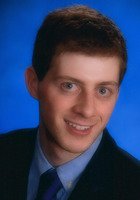
Garrett's biology degree means he already thinks in terms of systems — enzyme kinetics, membrane potentials, metabolic energy flow — which gives him a concrete anchor for the abstract math that makes p-chem so intimidating. He teaches thermodynamic and kinetic concepts by connecting derivations to the biological and chemical phenomena they describe, so something like a Gibbs free energy calculation feels like a tool rather than an exercise in symbol-pushing.
Thermodynamics, quantum mechanics, kinetics — physical chemistry is where math and chemistry collide, and most students need a tutor comfortable in both languages. Natasha's chemical engineering degree gave her deep fluency with partition functions, phase diagrams, and rate laws, and her MIT graduate work keeps those concepts sharp. She approaches p-chem by deriving key equations alongside students so the physics behind each formula becomes visible.
Two chemistry degrees — bachelor's and master's — mean Chad has gone through the full p-chem gauntlet himself, from quantum mechanical models and statistical thermodynamics to the calculus-dense derivations of chemical kinetics. He teaches the subject by zeroing in on where the math and the molecular picture disconnect for each student, whether that's a tricky partial derivative in a thermodynamic identity or the logic behind a partition function. Rated 4.8 by students.
Medical school at Tufts demands fluency in the thermodynamics and kinetics that p-chem students dread — Eric works through Gibbs free energy calculations, entropy-driven processes, and rate equations daily in a clinical science context, which keeps the material grounded rather than purely abstract. His economics background also sharpens the kind of quantitative modeling and equilibrium thinking that translates surprisingly well to topics like chemical potential and phase diagrams.
Studying biochemistry and cell biology at Rice means Sugi already had to internalize the thermodynamic and kinetic principles that drive cellular processes — free energy calculations for metabolic reactions, equilibrium constants governing binding events — before tackling them in their pure mathematical form. She unpacks p-chem derivations by linking each variable back to the molecular behavior it quantifies, turning something like a chemical potential expression into a description of what molecules are actually doing at a phase boundary. Rated 5.0 by students.
Pursuing a PhD in Analytical Chemistry at UIUC means Whitney spends her days immersed in the quantitative rigor that makes p-chem so demanding — thermodynamic derivations, kinetic modeling, and the statistical mechanics underlying instrumental techniques. She's currently TAing college-level chemistry courses, which keeps her sharp on exactly where students lose the thread in topics like Gibbs free energy, phase diagrams, and partition functions. That combination of active research and daily teaching gives her a practical read on which derivations need more physical intuition and which just need cleaner math.
Decades as a PhD chemical engineer meant Steven was solving Clausius-Clapeyron problems, reaction kinetics models, and energy balance derivations long before they were textbook exercises — they were daily work. He breaks down p-chem's toughest material by explaining a concept one way, re-explaining it from a different angle, then grounding it in a real engineering application where the math actually matters. Rated 4.9 by students.
Two years as an organic chemistry lab TA at the college level gave Maha hands-on experience with the reaction kinetics and thermodynamic reasoning that form the backbone of any p-chem sequence. Now pursuing graduate work in public health at Johns Hopkins, she approaches topics like equilibrium constants and energy diagrams through the lens of someone who's had to apply them in real experimental settings, not just derive them on paper. Rated 5.0 by students.
Pursuing a dual Ph.D./Pharm.D. at UConn with graduate work in medicinal chemistry means Xhesika encounters the thermodynamic and kinetic formalism of p-chem as daily working tools — calculating drug stability, modeling reaction pathways, predicting how molecular interactions shift with temperature and pressure. She teaches derivations like Maxwell relations and Clausius-Clapeyron by tying each variable back to the pharmacological systems where she actually uses them, so the math carries chemical weight instead of feeling like abstract symbol-pushing.
Biochemistry lab work and a dual bachelor's in arts and biochemistry mean Andrew has already applied the thermodynamics, kinetics, and quantum mechanical concepts that make p-chem brutal — calculating free energy changes in enzyme systems, modeling reaction rates at the molecular level. He unpacks the heavy calculus in derivations by keeping one foot in the real chemistry, so a partition function or a phase diagram reads as a description of molecular behavior rather than an exercise in pure math. Rated 4.9 by students.
Rice's chemistry curriculum put Asad through the full p-chem gauntlet — thermodynamics, quantum mechanics, kinetics — and his path to medical school at UT Houston means he's had to internalize concepts like enthalpy, entropy, and equilibrium well enough to apply them in biological and clinical contexts. That dual pressure of rigorous chemistry coursework and MCAT preparation sharpened his ability to explain why a derivation works, not just how to grind through the math.
Testimonials
Because the right Physical Chemistry tutor makes all the difference.
Average Session Rating – Based on 3.4M Learner Ratings
Other Honolulu Tutors
Related Science Tutors in Honolulu
Frequently Asked Questions
Physical Chemistry requires mastering both abstract theoretical concepts and practical problem-solving skills—from thermodynamics and kinetics to quantum mechanics. Many students struggle with visualizing molecular-level processes, balancing complex equations, and understanding how theoretical principles connect to real lab work. Personalized tutoring helps break down these interconnected topics and builds the conceptual foundation needed to tackle challenging problem sets.
Expert tutors work with you to clarify difficult concepts like entropy, reaction mechanisms, and spectroscopy, then connect them to practical applications and lab scenarios. Rather than memorizing formulas, personalized 1-on-1 instruction focuses on building true understanding so you can apply principles to new problems. Tutors also help you develop systematic problem-solving strategies and catch gaps in foundational math or chemistry knowledge that may be holding you back.
Yes—tutors can help you understand the theory behind lab procedures, predict outcomes, and interpret experimental results. They'll guide you through the scientific method, help you design experiments thoughtfully, and explain how your lab work connects to the lecture material. This deeper preparation makes lab sessions more meaningful and helps you write stronger lab reports.
Your first session focuses on understanding your current level, identifying specific challenges (whether it's thermodynamics, kinetics, or problem-solving strategies), and learning your preferred learning style. The tutor will assess what concepts are solid and where gaps exist, then create a personalized plan tailored to your goals—whether that's improving your grade, preparing for an exam, or building confidence with difficult topics.
Varsity Tutors connects you with tutors who have strong backgrounds in chemistry and physics, often with degrees in chemistry, chemical engineering, or related fields. Many have teaching experience or advanced coursework in Physical Chemistry specifically. All tutors are vetted to ensure they can explain complex concepts clearly and help students develop real mastery, not just test-taking tricks.
Unit conversions and dimensional analysis are critical in Physical Chemistry, and tutors can teach you systematic approaches that work for any problem. Rather than memorizing conversion factors, you'll learn the logic behind them and develop confidence tackling multi-step calculations involving pressure, energy, concentration, and temperature. This skill transfers across thermodynamics, kinetics, and equilibrium problems.
Tutors use diagrams, molecular models, energy diagrams, and real-world analogies to make abstract ideas like molecular orbitals, reaction pathways, and thermodynamic states concrete and understandable. They can also connect theory to observable phenomena—like why certain reactions are spontaneous or how temperature affects reaction rates—so you develop intuition rather than just memorizing definitions.
Honolulu's schools and the University of Hawaii offer chemistry labs, study groups, and tutoring centers that can support your learning. Personalized tutoring from Varsity Tutors works alongside these resources, providing flexible 1-on-1 support on your schedule to target your specific gaps and help you make the most of classroom instruction and lab work.
Let’s find your perfect tutor
Answer a few quick questions. We’ll recommend the right plan and match you with a top 5% tutor.