Award-Winning Pre-Calculus Tutors
serving Honolulu, HI
Pre-Calculus
Tutors in Honolulu
Private 1-on-1 tutoring, weekly live classes for academic support, test prep & enrichment, practice tests and diagnostics, and more to elevate grades and test scores.
Based on 3.4M Learner Ratings
UniversitiesSchools & Universities
DeliveredHours Delivered
ProficiencyGrowth in Proficiency
Who needs tutoring?
No obligation. Takes ~1 minute.
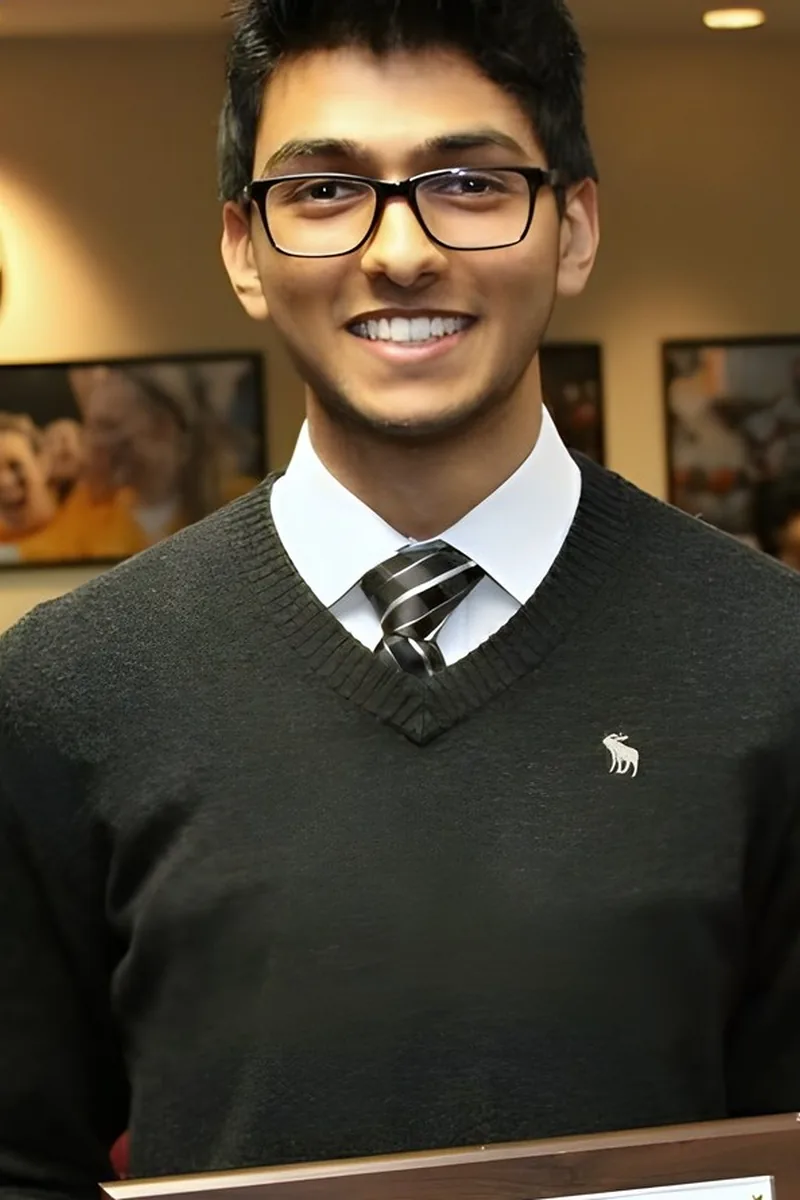
Molecular biophysics at Brown throws Srini into the deep end of mathematical modeling — fitting protein folding kinetics to exponential curves, analyzing oscillatory molecular dynamics with trig functions, mapping multivariable relationships through composition. That daily immersion means he teaches pre-calculus topics like function transformations and logarithmic properties as tools he actively uses, not abstract concepts he's reciting from a textbook. A 1600 SAT and 35 ACT confirm the mathematical fluency behind his approach.
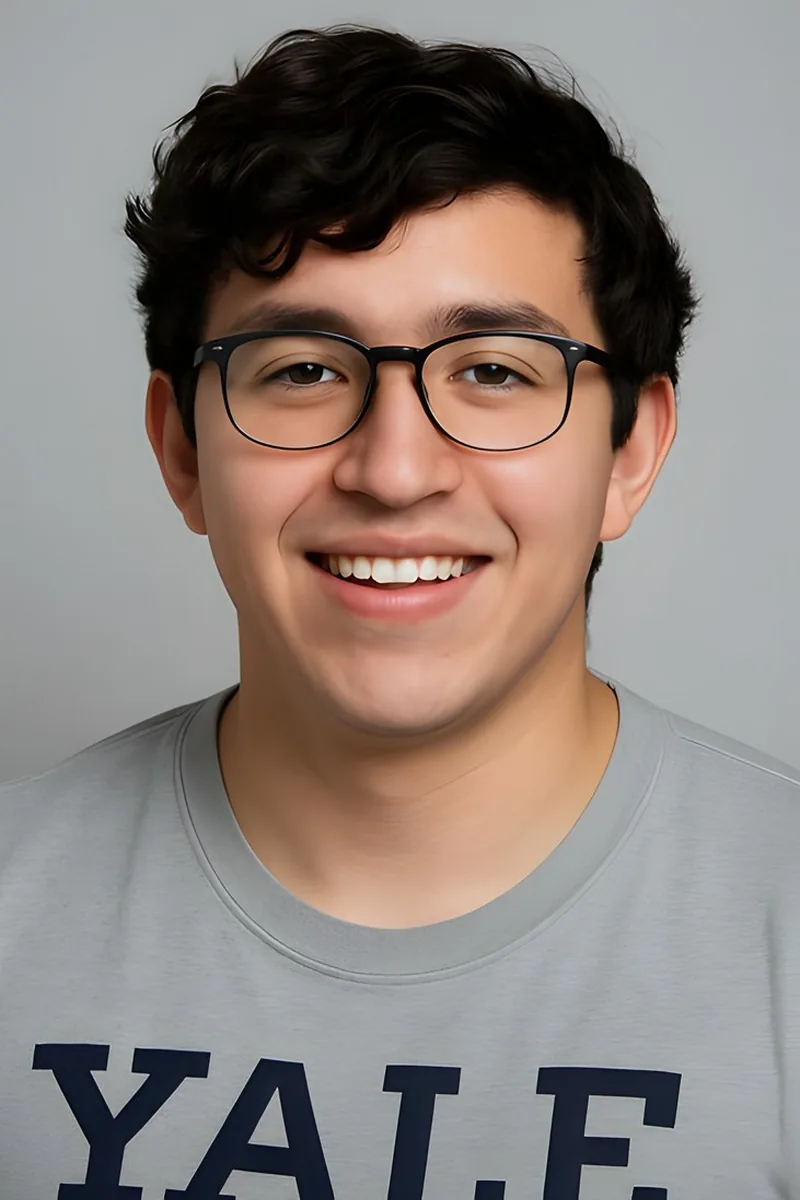
What separates students who survive pre-calculus from those who actually understand it is whether they've internalized the *why* behind each technique — and Daniel, as an applied mathematics major, learned every concept the hard way, by sitting down and working through the logic piece by piece. That deliberate approach makes him especially effective at breaking down topics like rational functions and graph transformations, since he teaches the reasoning he had to build for himself rather than skipping steps that feel obvious. Rated 4.7 by students.
The jump to pre-calculus trips up a lot of students because it's the first time they need to think about functions as objects — transforming them, composing them, analyzing their behavior. Christine's engineering coursework at Johns Hopkins required fluency with trigonometric identities, polar coordinates, and limits, so she teaches these topics with the confidence of someone who uses them daily.
William's computer science coursework at Rice means he regularly implements the functions, transformations, and trigonometric relationships that pre-calculus students are still learning to read on paper — he's coded them, graphed them, and debugged them. That hands-on fluency lets him explain topics like composite functions or logarithmic behavior by tracing the logic step by step, so the algebra feels like it's going somewhere. His 1540 SAT confirms the mathematical precision behind his approach.
Everything in pre-calculus — logarithmic identities, trigonometric graphs, sequences, limits — exists to set up the ideas students will need in calculus. Because Agustin already teaches both AP Calc AB and BC, he knows exactly which pre-calc skills matter most and where gaps tend to cause trouble later. He spends extra time on function transformations and unit-circle reasoning, since those two areas pay the biggest dividends.
The jump to pre-calculus is where many students first encounter limits of their algebraic intuition — rational functions behave strangely, trigonometric identities pile up, and sequences suddenly matter. Emily tackles these topics by emphasizing the graphical and conceptual logic underneath, drawing on a math background that earned her a 1590 SAT and a 36 ACT.
The jump into limits, trigonometric identities, and composite functions can feel overwhelming without someone who knows how to sequence the ideas clearly. Pinelopi has tutored math from pre-algebra through calculus, which means she can pinpoint exactly which earlier concept a student is missing when pre-calc material stops making sense. Rated 5.0 by students.
Andrew's PhD in biomedical engineering means he's pushed well past calculus into differential equations and multivariable territory — so he teaches pre-calculus with a clear map of where every topic is headed and why it matters. He's particularly sharp on the transition points that trip students up, like moving from memorizing trig ratios to actually understanding the unit circle as a geometric argument. Rated 4.9 by students.
The jump to pre-calculus is where students suddenly need to think about trigonometric identities, limits of sequences, and polar coordinates all at once. Margaret tackles each of these by connecting them back to algebraic reasoning students already have, rather than treating every unit as brand new. Rated 4.9 by students, she's especially effective at demystifying the transition into calculus-level thinking.
Holding degrees in both mechanical and electrical engineering, Steve has spent years in the territory where pre-calculus stops being coursework and starts being the toolkit — trigonometric analysis for signal processing, polynomial modeling for system dynamics, vectors and complex numbers for circuit design. He teaches the course knowing exactly which skills will matter most when students hit calculus and engineering-track courses, and builds each lesson around that forward view. Rated 4.9 by students.
Mechanical engineering at Harvard means Christopher spends most of his time in calculus and differential equations — but he knows exactly which pre-calculus skills hold that work together, especially fluency with trigonometric graphs, composite functions, and the algebraic manipulation that makes limits possible later. He teaches each topic by gradually removing scaffolding until a student can tackle problems independently, flagging the specific mistakes that tend to snowball in calculus. His 35 ACT and 4.8 rating reflect a tutor who's recently built the same bridge his students are crossing now.
The jump from algebra to calculus-readiness often stalls at one specific point: understanding how functions actually behave — why a rational expression blows up near an asymptote, how composite functions layer transformations, what makes polynomial end behavior predictable. Samuel tackles that conceptual bridge head-on, drawing on his applied mathematics training at Caltech where these ideas aren't theoretical warm-ups but working tools. His 1550 SAT confirms the quantitative sharpness behind his teaching.
Testimonials
Because the right Pre-Calculus tutor makes all the difference.
Average Session Rating – Based on 3.4M Learner Ratings
Practice Pre-Calculus
Free practice tests, flashcards, and AI tutoring for Pre-Calculus
Other Honolulu Tutors
Related Math Tutors in Honolulu
Frequently Asked Questions
Pre-Calculus shifts from memorizing procedures to understanding why those procedures work. You'll move from solving equations to analyzing functions deeply—looking at their behavior, transformations, and real-world applications. Many students find this conceptual leap challenging, especially when dealing with trigonometry and function composition, which require seeing how different mathematical ideas connect.
Trigonometry, function transformations, and word problems top the list for most students. Trigonometry requires visualizing angles and understanding unit circles, while function transformations demand strong conceptual thinking rather than plug-and-chug calculation. Word problems compound the challenge because they require translating real situations into mathematical language—a skill that takes deliberate practice and strategic guidance.
A tutor can slow down and highlight the connections between topics—showing how exponential functions relate to logarithms, or how unit circle values connect to trigonometric graphs. Rather than racing through problems, personalized instruction lets you explore why a concept works and how it applies in different contexts. This builds the deep understanding that makes advanced math feel less overwhelming.
Your tutor will assess your current understanding of key Pre-Calculus topics, identify specific areas where you're struggling, and learn about your learning style and goals. Together, you'll create a focused plan that targets your biggest challenges—whether that's function notation, trigonometric identities, or problem-solving strategies. This personalized approach ensures every session builds directly on what you need most.
Showing work reveals your reasoning process and helps both you and your teacher spot where understanding breaks down. In Pre-Calculus, the steps matter as much as the answer because they show whether you truly understand the concept or just got lucky. A tutor can teach you how to organize and present your work clearly while building genuine problem-solving skills.
Yes—schools may emphasize different topics or use different textbooks, which can affect pacing and depth. Some focus heavily on trigonometry while others prioritize function analysis and sequences. Varsity Tutors connects you with tutors who understand your specific school's curriculum and can align instruction with what your teacher expects, making tutoring directly relevant to your coursework.
Math anxiety often stems from gaps in understanding or fear of making mistakes. Personalized tutoring builds confidence by breaking complex topics into manageable pieces and celebrating progress along the way. Working one-on-one in a low-pressure environment lets you ask questions freely and practice problem-solving strategies without judgment, gradually shifting anxiety into confidence.
Pre-Calculus is the bridge to Calculus and other advanced math courses required for STEM majors. It builds the function analysis, algebraic manipulation, and problem-solving skills that college-level math demands. Strong Pre-Calculus mastery means you'll enter college math with genuine understanding rather than just procedural knowledge, setting you up for success in more rigorous coursework.
Let’s find your perfect tutor
Answer a few quick questions. We’ll recommend the right plan and match you with a top 5% tutor.