Award-Winning Geometry Tutors
serving Honolulu, HI
Geometry
Tutors in Honolulu
Private 1-on-1 tutoring, weekly live classes for academic support, test prep & enrichment, practice tests and diagnostics, and more to elevate grades and test scores.
Based on 3.4M Learner Ratings
UniversitiesSchools & Universities
DeliveredHours Delivered
ProficiencyGrowth in Proficiency
Who needs tutoring?
No obligation. Takes ~1 minute.
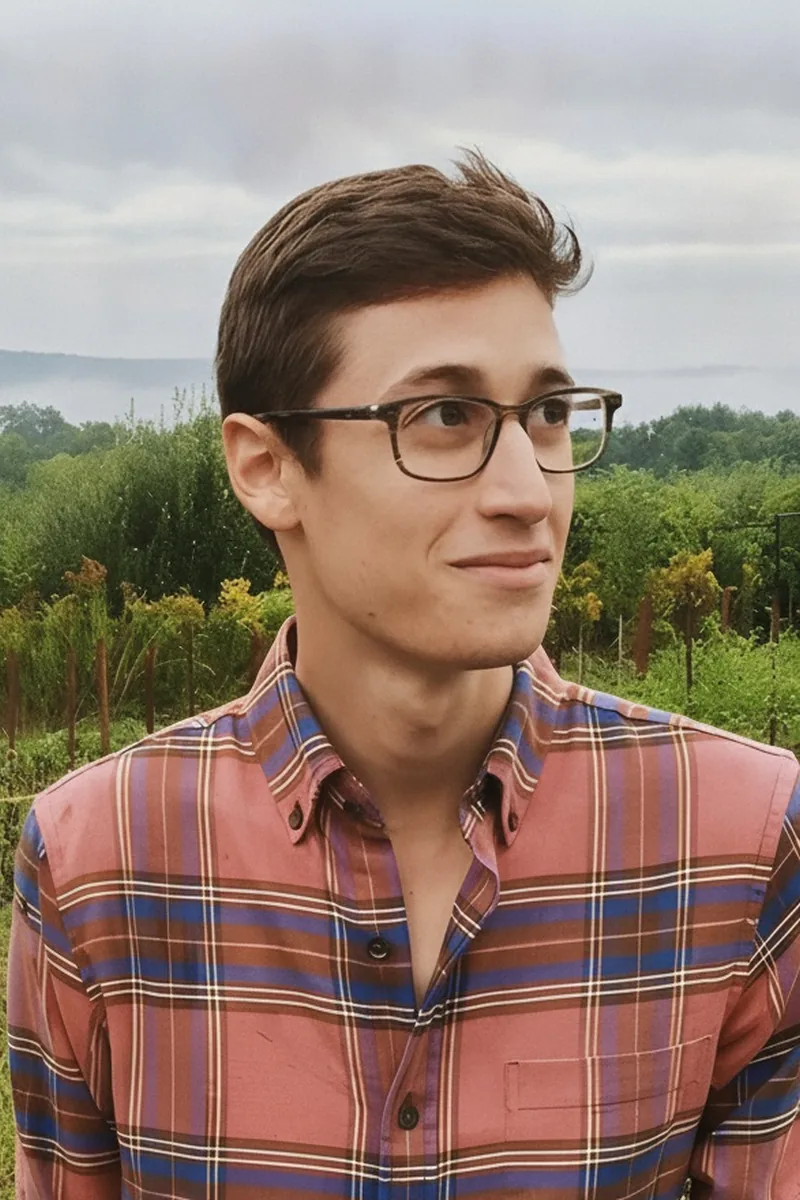
Proofs are where most geometry students get stuck — the leap from calculating angles to constructing logical arguments feels like a different subject entirely. Jonathan breaks that transition down by teaching students to identify given information, spot congruence relationships, and build each proof step by step. His 4.9 rating speaks to how well that structured approach clicks.
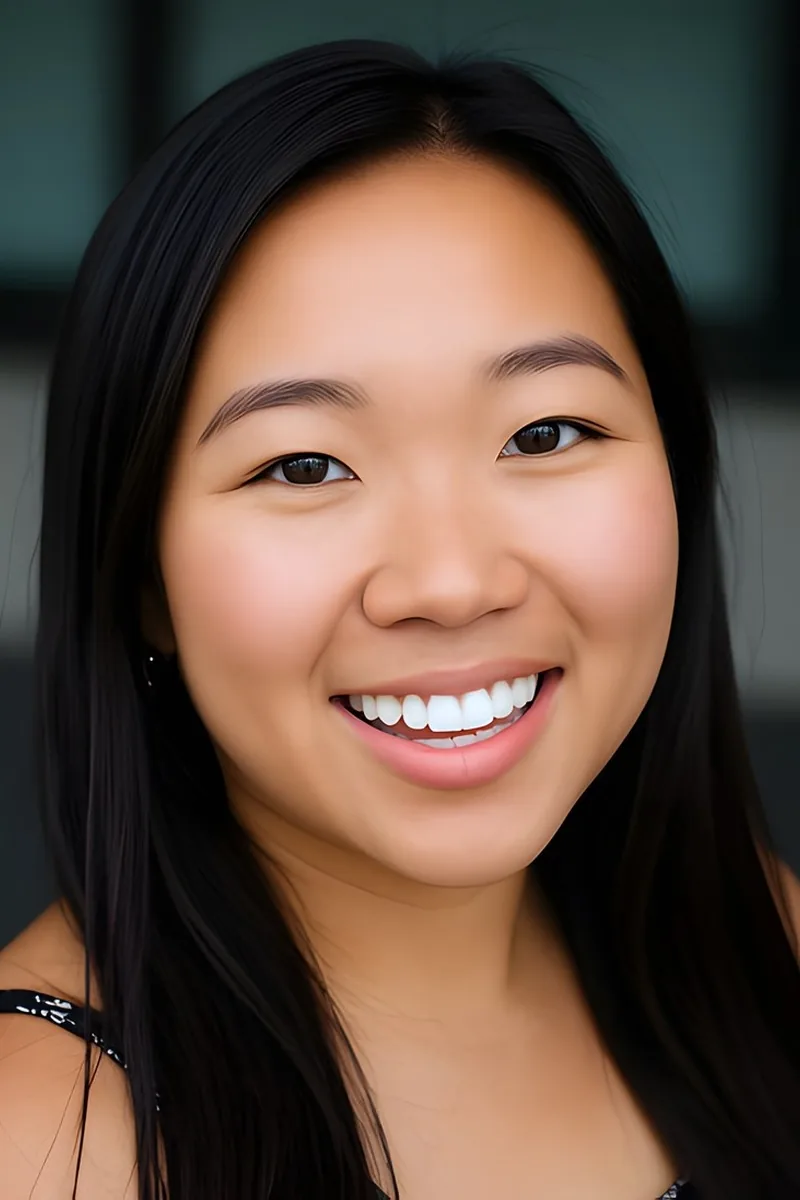
Proofs are usually where geometry students panic, so Samantha teaches them as structured arguments rather than mysterious rituals — each statement earns its place with a reason. She also digs into the spatial reasoning behind congruence, similarity, and circle theorems, connecting diagrams to the algebra students already know. Her Duke science background means she's comfortable making abstract relationships concrete.
A year as a course assistant in Harvard's math department taught Richard how to break abstract reasoning into concrete steps — a skill that pays off in geometry when students need to connect definitions, postulates, and theorems into a coherent proof. His government major, which is essentially an exercise in building airtight arguments from messy evidence, reinforces the same logical sequencing that two-column and paragraph proofs demand.
Proofs are where most geometry students stall — the leap from calculating angles to constructing logical arguments feels unfamiliar. Camille's interdisciplinary training at Duke and Columbia sharpened her ability to teach that kind of structured reasoning, and she applies it to everything from triangle congruence to circle theorems. Rated 5.0 by students.
Cornell's biological engineering program threw Mary into years of modeling physical systems — fluid flow through channels, stress on biomaterials, device dimensions — all of which demand precise geometric reasoning about shapes, cross-sections, and spatial relationships. She brings that practical fluency to topics like circle theorems, properties of quadrilaterals, and area-volume calculations, making abstract definitions feel grounded in real measurement. Rated 5.0 by students.
Economics at UChicago is surprisingly proof-heavy — Ellie's coursework in mathematical economics requires the same kind of structured, step-by-step logical reasoning that geometry proofs demand. She applies that training to help untangle the visual-to-logical leap students struggle with, particularly when translating a diagram involving circle theorems or polygon properties into a written argument. Her 1520 SAT speaks to the broader math fluency she brings to the table.
Competition math taught Tracy to look at a geometry figure and immediately spot the relationships that matter — which triangles are similar, where auxiliary lines unlock a problem, how a single angle chase can crack open a complicated diagram. That instinct, sharpened through years of math competitions and a 36 ACT, carries over directly when she teaches students to approach proofs and problem-solving with strategy instead of panic. Rated 4.9 by students.
Proofs are where most geometry students start to struggle, because suddenly math requires building logical arguments instead of just computing answers. Margaret's background in both computer science and political science at Stanford means she thinks in structured logic all day — and she brings that same rigor to angle relationships, congruence, and circle theorems.
Proofs are usually the make-or-break moment in geometry, and Brian teaches students to construct them by thinking like a detective — identifying what's given, what's needed, and which theorems bridge the gap. His Caltech training in analytical reasoning sharpens how he explains congruence, similarity, and circle theorems, turning proof-writing from intimidating to methodical.
Mechanical and aerospace engineering at Princeton means Matthew lives in a world of geometric constraints — fitting components into tight spaces, calculating load-bearing angles, reasoning about three-dimensional shapes on paper before they ever get built. He brings that same step-by-step precision to teaching triangle properties, angle relationships, and the logic behind constructions, typically demonstrating a technique and then handing students progressively harder problems until the reasoning becomes automatic.
A chemistry major at Harvard, James is used to thinking in three dimensions — molecular geometries, orbital shapes, bond angles — which gives him a natural fluency with the spatial reasoning geometry requires. He tackles circle theorems and polygon properties by encouraging students to sketch, label, and reason through diagrams before jumping to formulas, building the kind of geometric intuition that makes even multi-step problems feel manageable. Rated 4.9 by students.
Proofs trip up a lot of geometry students because they require a completely different kind of thinking — constructing logical arguments instead of just computing answers. Kirstie's liberal arts background actually strengthens her approach here, since she treats geometric proofs the way she'd treat building a persuasive essay: claim, evidence, reasoning. She also covers the computational side, from triangle congruence to circle theorems.
Testimonials
Because the right Geometry tutor makes all the difference.
Average Session Rating – Based on 3.4M Learner Ratings
Practice Geometry
Free practice tests, flashcards, and AI tutoring for Geometry
Other Honolulu Tutors
Related Math Tutors in Honolulu
Frequently Asked Questions
Many students struggle with the transition from algebra's procedural focus to geometry's emphasis on logical reasoning and proofs. Common pain points include visualizing 3D shapes, understanding why geometric theorems work (not just memorizing them), writing formal proofs, and applying geometry concepts to word problems. Personalized tutoring helps students build conceptual understanding by connecting visual representations to mathematical reasoning, making abstract concepts concrete.
Proofs require a different mindset than computational math—students need to understand logical reasoning and how to construct valid arguments. Tutors work with students to break down proof strategies, identify what information is given versus what needs to be proven, and practice building arguments step-by-step. With personalized instruction, students learn to see the underlying logic rather than viewing proofs as arbitrary exercises, building confidence and deeper understanding.
In the initial session, tutors assess your current understanding of geometry concepts, identify specific areas of struggle (whether it's proofs, coordinate geometry, or spatial reasoning), and learn about your learning style. They'll discuss your goals and curriculum to ensure alignment with what you're learning in class. This foundation allows tutors to create a personalized plan that targets your needs and builds momentum from day one.
Word problems require students to translate language into geometric diagrams and equations—a skill that takes practice. Tutors teach problem-solving strategies like drawing accurate diagrams, identifying given information, and breaking multi-step problems into manageable parts. By working through problems together and discussing different approaches, students develop confidence and learn to recognize patterns across similar problems.
Yes. Honolulu schools use various geometry programs, and tutors are familiar with different approaches and textbooks. Whether your course emphasizes traditional Euclidean geometry, coordinate geometry, or integrated approaches, tutors adapt their instruction to align with your specific curriculum and teaching style. This ensures tutoring reinforces what you're learning in class while deepening your understanding.
Absolutely. Math anxiety often stems from feeling lost or unsupported—personalized tutoring creates a low-pressure environment where students can ask questions without judgment and work at their own pace. As students experience success with difficult concepts and see patterns they previously missed, confidence grows naturally. Many students find that one-on-one instruction transforms their relationship with geometry from frustrating to manageable.
Varsity Tutors connects you with expert tutors who specialize in Geometry and understand the local curriculum. Simply reach out with information about your current level, specific challenges, and goals. You'll be matched with a tutor who fits your needs, and you can start personalized instruction that targets the concepts giving you the most trouble.
Many geometry students struggle because they can't visualize 3D shapes or spatial relationships from 2D diagrams. Tutors use multiple representations—drawings, physical models, coordinate systems, and interactive tools—to help students build mental images and understand how different geometric concepts connect. This multi-sensory approach transforms abstract ideas into concrete understanding, making theorems and properties stick.
Let’s find your perfect tutor
Answer a few quick questions. We’ll recommend the right plan and match you with a top 5% tutor.