Award-Winning AP Physics C: Electricity and Magnetism Tutors
serving Honolulu, HI
AP Physics C: Electricity and Magnetism
Tutors in Honolulu
Private 1-on-1 tutoring, weekly live classes for academic support, test prep & enrichment, practice tests and diagnostics, and more to elevate grades and test scores.
Based on 3.4M Learner Ratings
UniversitiesSchools & Universities
DeliveredHours Delivered
ProficiencyGrowth in Proficiency
Who needs tutoring?
No obligation. Takes ~1 minute.
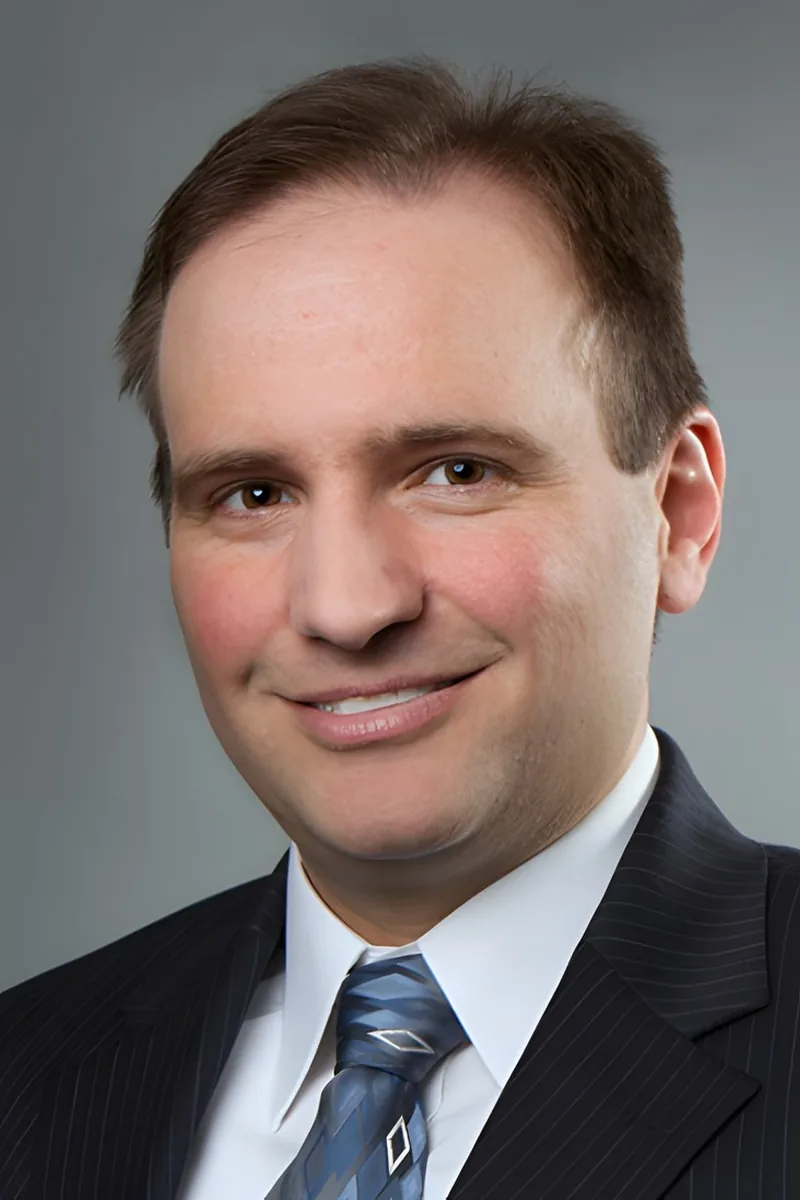
During his physics PhD, Jonathan taught E&M at the university level — not just the conceptual overview, but the full calculus-heavy treatment of Maxwell's equations, dielectric materials, and magnetic induction that AP Physics C demands. He walks students through the reasoning behind each problem setup, showing how to identify symmetry, choose the right integration path, and connect the math back to what the fields are actually doing. Rated 5.0 by students.
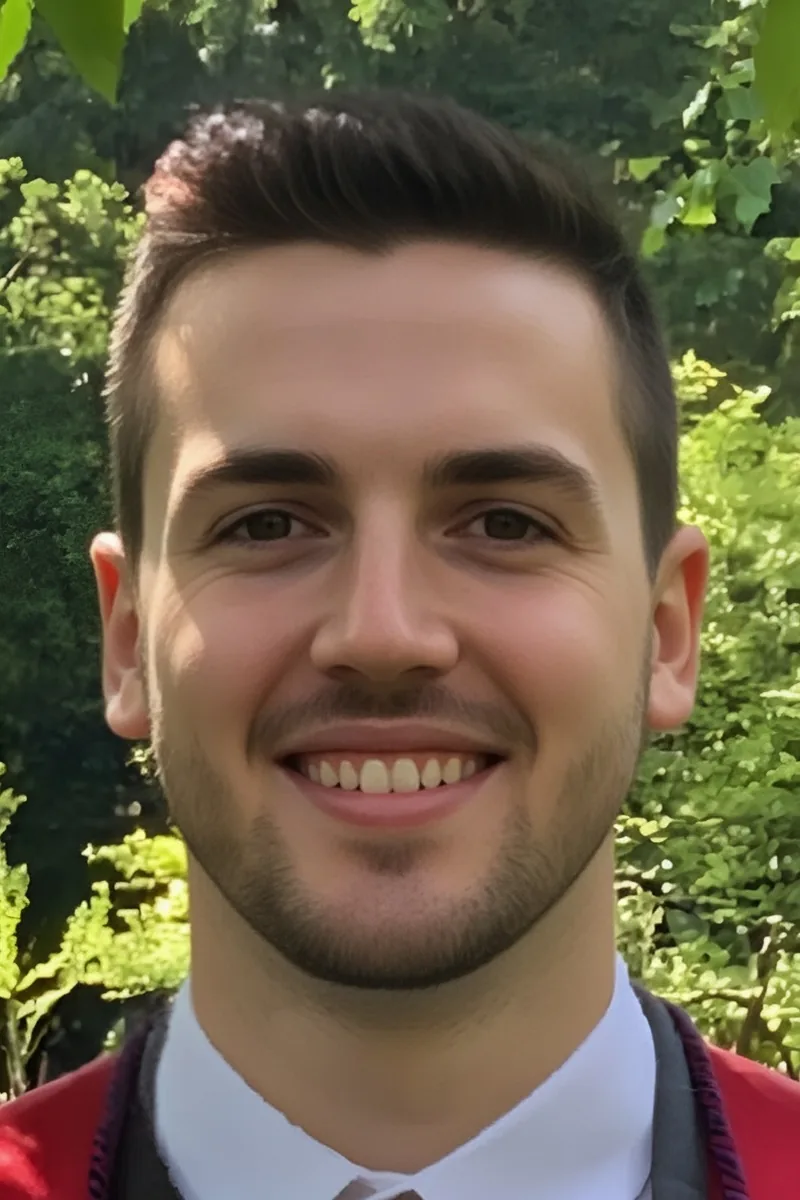
AP Physics C: E&M is where calculus meets abstract field theory, and most students struggle not with the math itself but with visualizing what's happening inside capacitors, inductors, and current-carrying loops. Aleksandar pairs his UPenn physics coursework with a structured problem-solving method — breaking each scenario into a diagram, an equation selection, and a calculus setup — that turns intimidating free-response questions into repeatable steps.
I am an Applied Physics Major with an Emphasis in Mechanical Engineering at Brigham Young University. I love to share the joy I have in the sciences and math to show truly the applications are so far-reaching.
Gauss's law, Ampère's law, RC circuits, and electromagnetic induction can feel abstract until someone connects them to physical systems. Justin's ME coursework at Illinois includes electronics and E&M-heavy physics sequences, so he unpacks Maxwell's equations and circuit analysis with the same rigor his engineering professors demand. He teaches students to sketch field diagrams first, turning intimidating integrals into manageable geometry.
I am pursuing a career in dentistry/oral surgery and will be beginning dental school at Boston University this fall. For this reason I recently took the DAT, which I am capable of assisting you with as well. During my undergraduate education, which I completed this past December, I worked in my school's tutoring center, helping my peers succeed in mathematics and science courses. Outside of my academic life, I am a big sports fan and I mostly follow the New York sports teams. For fun, I like to play basketball and golf with my friends. I am looking forward towards getting to know you and helping you with your academic needs.
Gauss's law, Ampère's law, Faraday's law — AP Physics C: E&M throws vector calculus at students who are still getting comfortable with electric fields and circuits. Will breaks each law down to its physical meaning first, then layers in the integral formulations so students understand what they're computing and why. As a current Rice physics student, he's recently worked through this exact material at the college level.
Gauss's law, Ampère's law, Faraday's law — AP Physics C: E&M asks students to think in three dimensions with vector calculus tools they've barely learned. Taha breaks down each Maxwell equation into physical intuition first, then builds up the mathematical formalism around it. His deep background in both calculus and physics lets him bridge the gap between what students see in their math classes and what the E&M exam actually demands.
Gauss's law, Ampère's law, Faraday's law — AP Physics C: E&M asks students to choose the right symmetry argument and execute a surface or line integral under time pressure. Yurok tackles this by drilling the geometric reasoning behind each law so students can recognize which tool applies before they start calculating. His physics and mathematics background at Emory keeps the vector calculus from becoming a bottleneck.
Gauss's law, Ampère's law, Faraday's law — AP Physics C: E&M asks students to wield vector calculus in the service of invisible fields, which is a genuinely difficult conceptual shift. Spencer's biomedical engineering studies require exactly this skill set, since electromagnetic principles drive technologies like MRI and neural signal processing. He unpacks each law with clear diagrams and step-by-step integral setups so the math reinforces the physics instead of obscuring it.
Gauss's law, Ampère's law, Faraday's law — E&M demands that students think in three dimensions about invisible fields, which is a fundamentally different skill than anything in Mechanics. Pratik tackles this by teaching students to visualize field lines and flux before jumping into the calculus, building geometric intuition that makes the integral setups feel natural.
AP Physics C: E&M is where calculus and electromagnetism collide, and most of the difficulty lives in translating physical setups — Gaussian surfaces, Amperian loops, RC circuits — into the right integral or differential equation. Megan's applied mathematics degree gives her deep comfort with the vector calculus and differential equations that make this course so demanding. She breaks down Gauss's law and Faraday's law problems step by step, connecting the math to the physical intuition behind each result.
Gauss's law, Ampère's law, Faraday's law — E&M asks students to visualize invisible fields and then describe them with surface and line integrals. Bryan breaks each problem into two stages: building geometric intuition about what the field looks like, then choosing the right mathematical tool to exploit symmetry. His physics degree and 5.0 student rating back up that structured approach.
Testimonials
Because the right AP Physics C: Electricity and Magnetism tutor makes all the difference.
Average Session Rating – Based on 3.4M Learner Ratings
Practice AP Physics C: Electricity and Magnetism
Free practice tests, flashcards, and AI tutoring for AP Physics C: Electricity and Magnetism
Other Honolulu Tutors
Related Science Tutors in Honolulu
Frequently Asked Questions
AP Physics C: Electricity and Magnetism focuses on electrostatics, conductors and dielectrics, electric circuits, magnetic fields, and electromagnetic induction. The course emphasizes calculus-based problem solving, requiring students to apply derivatives and integrals to physics concepts. Most students find the transition from algebra-based physics to calculus-based analysis to be the biggest adjustment, making targeted preparation essential.
Score improvement depends on your starting point and consistency with tutoring. Students who work with tutors to identify weak topics and practice regularly often see gains of 2-4 points on the 1-5 AP scale. The key is focusing on your specific challenges—whether that's setting up equations correctly, applying Gauss's Law, or managing time on the free-response section.
Students typically struggle most with Gauss's Law applications, understanding electric potential and potential energy, and visualizing magnetic field behavior around complex geometries. Additionally, the free-response section requires students to justify their reasoning and show all calculus steps—many lose points for incomplete explanations rather than incorrect physics. A tutor can help you practice these challenging topics with targeted problem sets and feedback.
Your first session focuses on understanding your current level and goals. A tutor will likely review your recent practice test scores or exams, identify which topics need the most work, and discuss your timeline before the AP exam. This diagnostic approach helps create a personalized study plan rather than generic review, so you're spending time where it matters most.
Practice tests are critical for success on this exam. They help you understand the question format, practice pacing under timed conditions, and identify weak areas before test day. Most tutors recommend taking full-length practice tests every 1-2 weeks in the final months before the exam, then reviewing mistakes thoroughly. This retrieval practice strengthens your ability to recall concepts under pressure.
Test anxiety often stems from uncertainty about whether you can solve problems under time pressure. Working through timed practice problems with a tutor builds confidence and familiarity with the exam format. Tutors can also help you develop strategies like tackling easier problems first, checking units, and managing the 45 minutes for the free-response section so you don't rush through critical steps.
Look for tutors with strong physics backgrounds—ideally with college-level physics coursework or teaching experience. Experience with AP Physics C specifically is valuable since the course's calculus-based approach differs from introductory physics. Tutors should also be familiar with the current AP exam format and able to explain both the physics concepts and the reasoning required in free-response answers.
Honolulu has 105 schools across the area, with many offering AP Physics C courses. Connecting with expert tutors who understand the AP curriculum can supplement your classroom instruction and provide personalized support tailored to your pace and learning style. Tutors can help you make the most of your school's resources while filling specific knowledge gaps.
Let’s find your perfect tutor
Answer a few quick questions. We’ll recommend the right plan and match you with a top 5% tutor.