Award-Winning Biology Tutors
serving San Jose, CA
Biology
Tutors in San Jose
Private 1-on-1 tutoring, weekly live classes for academic support, test prep & enrichment, practice tests and diagnostics, and more to elevate grades and test scores.
Based on 3.4M Learner Ratings
UniversitiesSchools & Universities
DeliveredHours Delivered
ProficiencyGrowth in Proficiency
Who needs tutoring?
No obligation. Takes ~1 minute.
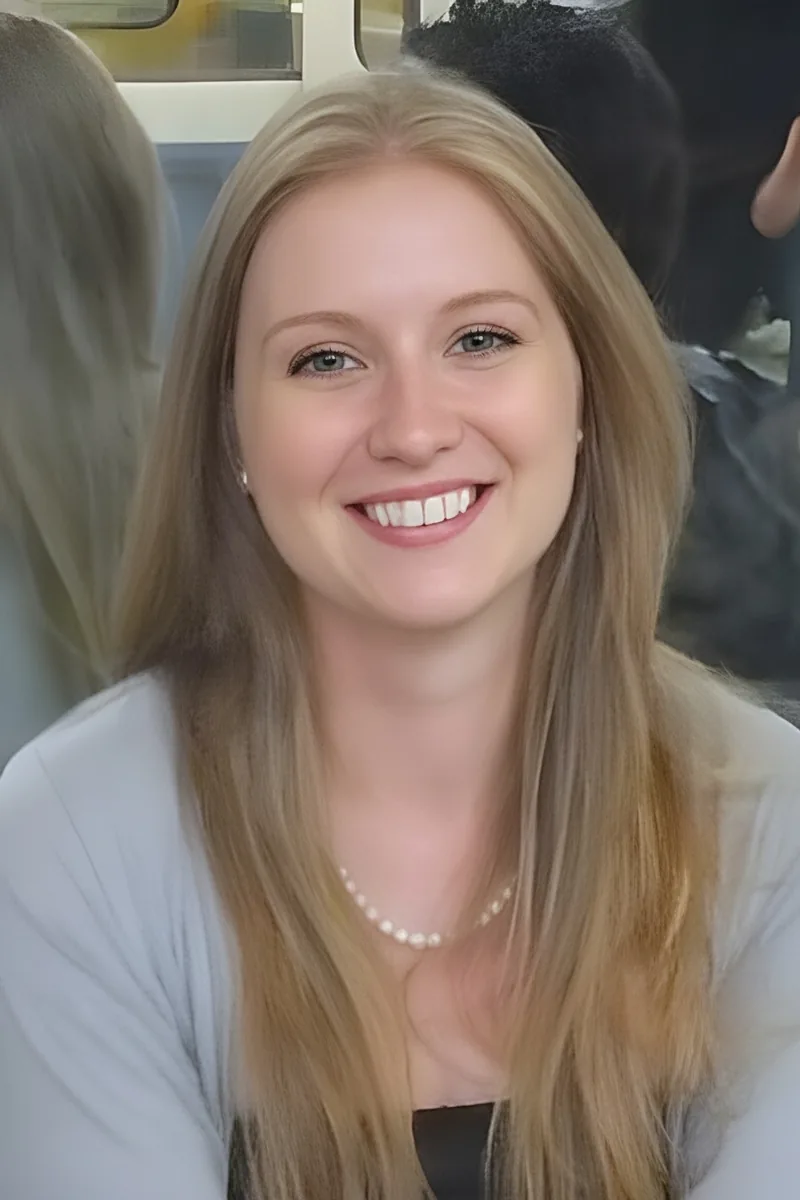
Christina's computer science background gives her an unusual edge when teaching biology — she approaches topics like genetic coding, protein synthesis, and feedback systems as logical processes with inputs, outputs, and conditional steps, which clicks for students who struggle with purely memorization-based study. Her 34 ACT composite reflects the kind of cross-disciplinary fluency that lets her move comfortably between explaining ecological relationships and walking through the molecular details of cellular respiration.
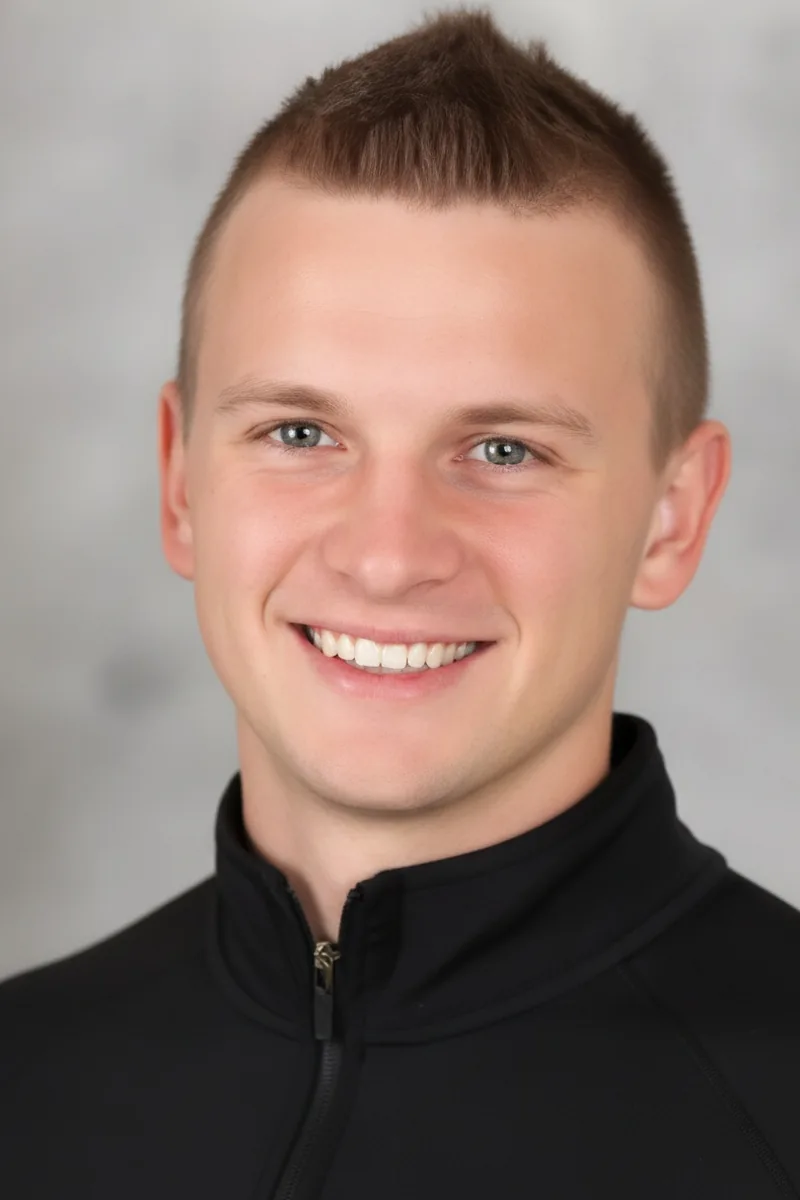
Studying Bio-Psychology at UCSB on the pre-med track means Aaron lives inside biology — from cellular respiration and signal transduction to genetics and evolutionary theory. He ends every session by having the student teach the material back to him, a technique that exposes shaky understanding before it becomes a problem on exam day. That approach has earned him a 5.0 client rating.
A current M.D. student who took AP Bio in high school and never really stopped studying the subject, Timothy connects introductory biology topics like cell structure, DNA replication, and Mendelian genetics to the bigger picture of how living systems actually function. He's especially effective at turning dense textbook diagrams — think the endomembrane system or mitosis stages — into something students can narrate from memory.
Psychobiology sits at the intersection of biology and neuroscience, which means Shant spent years at UCLA dissecting topics from cellular respiration to neural signaling pathways. He approaches biology by linking molecular-level details to whole-organism function — the kind of big-picture thinking that makes dense material click.
Between serving as an undergraduate teaching assistant for a developmental physiology course and peer-tutoring intro biology classes at UCLA, Raquel has explained topics like cell division, organ-system function, and metabolic pathways to students at every level of preparation. Her nutrition sciences degree adds a practical angle — she can ground abstract concepts like enzyme activity or nutrient absorption in the real biochemistry of how bodies actually process food. She scored a 34 on the ACT and is currently in dental school, where biology stays front and center.
Accepted to medical school after earning cum laude honors at UCLA, Nicole has the kind of science fluency that comes from pushing through pre-med biology coursework — genetics, cell biology, ecology — while simultaneously building a public health foundation that ties those concepts to real-world outcomes. Her teaching experience in middle and high school classrooms in the Philippines and Honduras sharpened her ability to explain processes like natural selection or cellular division to students with very different starting points.
John earned his B.S. in Biology from Loyola Marymount and conducted clinical oncology research at UCLA, giving him both textbook knowledge and bench-level understanding of how biological systems actually work. He digs into topics like cellular respiration, genetics, and ecology by connecting molecular details to the bigger physiological picture. That research perspective makes dense material — enzyme kinetics, gene expression, signal transduction — feel more concrete.
Holding a degree in Cellular and Molecular Biology, Janani digs into topics like cell signaling, gene expression, and membrane transport with the depth of someone who studied them at the university level — not just from a textbook summary. She connects molecular-level processes to bigger biological themes, which makes dense material like cellular respiration or DNA replication easier to retain.
Earning an honors B.S. in Biological Sciences from UC Santa Barbara means Kevin has spent serious time with everything from cell signaling and Mendelian genetics to ecology and evolutionary theory. He's especially sharp at walking through molecular biology topics — DNA replication, transcription, translation — in a way that builds a clear mental picture of what's happening inside the cell. His pre-med trajectory keeps him current with the material, which matters in a field that's always evolving.
What makes Nicholas effective in biology is his insistence on treating each topic — whether it's cellular respiration, genetic inheritance, or ecosystem dynamics — as a piece of a larger puzzle rather than an isolated chapter to memorize. His biology degree and parallel depth in chemistry and physics mean he can explain something like ATP synthesis by grounding it in the thermodynamics that actually drive it, giving students a fuller picture than the textbook diagram alone. He scored a 33 on the ACT, which speaks to the same cross-disciplinary sharpness he brings to his biology sessions.
Between a neuroscience bachelor's and a pharmacology master's, Helen has spent years inside the biological sciences at a molecular, cellular, and systems level. She's particularly sharp on topics where students tend to get lost — cell signaling pathways, membrane transport, and the relationship between genetics and protein expression.
Siavash is currently earning his M.S. in Molecular Biology at Cal State Northridge, where his research on cancer cells spans genetics, cell signaling, and biochemistry. That hands-on lab experience means he teaches biology — from cellular respiration to gene expression — as interconnected processes rather than isolated vocabulary lists.
Ari's Environmental Studies degree at Wesleyan required deep coursework in ecology, evolution, and earth systems biology — and a senior thesis that wove geobiological evolution into a 50-page epic poem proves how thoroughly those concepts took root. That interdisciplinary lens is especially useful for biology students trying to connect cellular processes to larger ecological and evolutionary patterns.
Megan earned her Bachelor of Science in Neuroscience, which means she spent years immersed in cell biology, genetics, molecular signaling, and physiology — the exact content that makes up most introductory biology courses. She unpacks dense topics like DNA replication and membrane transport by tying them back to real biological systems students can visualize. Her science background makes her especially strong at connecting individual concepts into a bigger-picture understanding of how living systems work.
Nathan's biology degree from UCLA gave him a solid grounding in the life sciences, and his additional nursing training means he's seen concepts like physiology and anatomy applied in clinical settings where getting the details right actually matters. He teaches biology as a chain of connected steps — breaking down processes like protein synthesis or nutrient cycling into sequential logic rather than isolated facts to memorize.
Studying integrative biology at UC Berkeley means Jack doesn't just know textbook biology — he's actively working through how molecular processes, evolutionary theory, and ecological systems connect at a research level. He unpacks dense topics like cellular respiration, genetics, and natural selection by tracing the logic behind each mechanism rather than asking students to memorize diagrams.
A UC Irvine biology graduate, Pooja knows the subject from the molecular scale — DNA replication, enzyme kinetics — all the way up to ecology and evolutionary theory. She teaches students to see biology as interconnected systems rather than isolated vocabulary lists, which makes exam prep far more efficient. Her experience spans both introductory and college-level biology, so she calibrates the depth of each session to what the course actually demands.
A neuroscience and physiology degree means Justin didn't just study biology — he lived inside it, from membrane potentials and synaptic transmission to organ-system integration. He brings that depth to topics like cell biology, genetics, and evolution, explaining mechanisms rather than just vocabulary. Students leave sessions understanding how biological systems actually function, which makes retention far easier than flashcard drilling.
Memorizing every metabolic pathway or cell structure is a losing strategy in biology — Kellie instead teaches students to see the underlying logic connecting, say, enzyme function to gene expression to homeostasis. She emphasizes understanding biological systems as interconnected processes, which makes exam prep far more efficient than flashcard grinding. Her parallel expertise in chemistry means she can clarify the molecular details that often trip biology students up.
From cell respiration to genetics to ecology, biology covers an enormous range of material that can feel like pure memorization without the right framework. Mark's public health science training taught him to see biological systems as interconnected — he connects DNA transcription to protein function to disease pathology so students build a narrative instead of a flashcard deck. He's rated 5.0 by students.
Tito's subject range — chemistry, physics, and biology at both the high school and college level — means he naturally teaches biological concepts through their chemical and physical underpinnings, connecting topics like osmosis to concentration gradients or muscle contraction to energy transfer. That cross-disciplinary instinct is especially useful for students who need to see how a process like aerobic respiration isn't just a biology diagram but a series of real chemical reactions. Rated 4.8 by students.
Years of science education — plus enough biology expertise to tutor everything from high school bio to MCAT and GRE subject tests — give Gabriel an unusually wide lens on the discipline. He unpacks topics like cell signaling, genetics, and ecology by tying mechanisms to the bigger "so what" question, making dense material stick. His self-described addiction to reading means he's also sharp at teaching students how to digest a biology textbook efficiently.
A neuroscience degree is essentially a biology degree with extra depth in cell signaling and physiology, so Jenna's command of genetics, cellular respiration, ecology, and organ systems runs wide and deep. She earned a biology minor on top of that, and she approaches each topic by building a visual story — tracing a molecule through a metabolic pathway or mapping how a gene becomes a protein.
Caroline's molecular and cellular biology degree from UC Berkeley means she doesn't just teach biology — she thinks in it, from DNA replication mechanics to the signaling cascades that regulate cell division. She also served as an undergraduate student instructor for Berkeley's General Biology lab, so she knows how to break down complex processes like photosynthesis and cellular respiration into steps that actually make sense.
Fady's biological sciences degree and pre-med trajectory mean he's worked through biology at the level where physiology, microbiology, and anatomy all converge — so when he teaches a topic like organ-system integration or microbial life cycles, he can pull from multiple courses worth of context rather than a single chapter. He's especially effective at turning dense material like immune response cascades or hormonal feedback loops into step-by-step sequences that stick.
Holding a bachelor's degree in Biological Sciences, Joseph digs into biology with the depth of someone who studied it as a primary discipline — not a sideline. Whether the topic is cellular respiration, Mendelian genetics, or ecological systems, he explains underlying mechanisms instead of just definitions. Students walk away understanding how biological processes connect, which makes retention far easier than flashcard memorization alone.
Studying pre-biology at UC Santa Barbara while tutoring high school and AP-level bio gives Alan a useful double perspective — he's learning the material at a collegiate depth and immediately translating it for students tackling topics like ecology, genetics, and cellular processes for the first time. He's particularly strong at connecting introductory concepts to the bigger biological picture, making chapters on things like photosynthesis or heredity feel like parts of one coherent story rather than isolated units to cram. Rated 4.7 by students.
From DNA replication to photosynthesis to phylogenetic trees, biology asks students to hold a lot of detail while still seeing the bigger picture. Jonathan studied Integrative Biology at the university level, so he's comfortable moving between molecular mechanisms and organism-level processes in the same session. He's especially effective at connecting evolutionary logic to topics that otherwise feel like pure memorization.
I am a UCLA Bioengineer. I am a well qualified tutor and have had many years of experience in both paid and unpaid roles from 6th grade to 12 grade to present. I have always excelled in academics, math, writing, and english and have scored well on all standardized tests and state tests. I have scored 800/800 in SAT 1 math, SAT 2 math. I have scored 760/800 in SAT writing. I received scores of 5/5 in AP Calculus AB and BC and have taken numerous other APs, passing the APs in Physics, Biology, Literature, Language and Composition, Environmental Science, Economics, US history, and Chemistry. I was the President of my high school's only tutoring club and only math club, Infinity Math Club, where I dedicated my time tutoring struggling students in all math levels. I was a tutor in my high school's RAMS program for all academic subjects. I love working with students and love to see them succeed in subjects that they once struggled in.
A human biology degree from Cornell means Jonathan didn't just study biology — he lived in it, from cellular respiration and DNA replication to organ system physiology and evolutionary theory. He teaches by connecting molecular-level details to big-picture biological questions, which is exactly the skill that separates students who understand biology from those who merely memorize it. Currently pursuing graduate work in human development, he keeps that knowledge sharp and current.
Studying molecular, cellular, and developmental biology in college — and now pursuing an MD at Stanford — Maggie knows biology at a level of detail that lets her explain not just what happens in a cell but why. She digs into topics like gene expression, membrane transport, and ecological relationships with the kind of mechanistic thinking that turns memorization into understanding. Her MCAT preparation experience also means she knows which biological concepts get tested hardest and how.
Few biology tutors have studied living systems from the molecular scale all the way up to tissue engineering. Kelly's research at Memorial Sloan-Kettering on cancer cell biology, combined with her biomedical engineering work at Tufts, means she can walk through everything from mitosis and gene expression to ecology and evolution with genuine depth. She's rated 5.0 by students.
Cellular and molecular biology was Pranav's original academic focus before he moved into Biomedical Engineering at Johns Hopkins, so he brings genuine depth to topics like gene expression, cell signaling, and membrane transport. He approaches biology as a set of interconnected systems rather than isolated facts, which makes dense material like metabolic pathways or the immune response easier to retain. That dual perspective — biology plus engineering — gives him a unique way of explaining how biological mechanisms actually work.
Studying biology and computer science at McGill, Hannah lives in the world of biological systems daily — from cellular respiration pathways to genetics and molecular biology. She approaches tough concepts like DNA replication or enzyme kinetics by walking through the logic step by step, drawing on cognitive science principles to make dense material easier to retain.
Judah is a biology major at Washington University in St. Louis on a pre-med track, which means he's currently immersed in the subject at the college level while the introductory material — ecology, genetics, cell structure — is still fresh enough to teach clearly. His 1580 SAT reflects sharp reading and analytical skills that translate well to biology's demand for interpreting experiments, parsing dense passages, and connecting cause to effect across biological systems.
Students who find biology's vocabulary overwhelming often do better when someone shows them the logic underneath the terms. Dennis approaches topics like cell respiration, DNA replication, and membrane transport by connecting each process to the energy and chemistry driving it — a perspective that comes naturally from his physics background and makes the material easier to retain.
Kevin's master's work in Stanford's Biocomputation track sits at the intersection of biology and computer science, which means he thinks about molecular biology, genetics, and cellular processes through a quantitative lens. He's especially sharp on topics like gene expression, protein structure, and the logic of metabolic pathways. That computational perspective often gives students a clearer framework for understanding how biological systems actually function.
Josef's undergraduate teaching assistant work in introductory biochemistry at Cornell gave him a front-row seat to the exact moments biology students stumble — particularly when topics like metabolism, enzyme function, or gene expression shift from descriptive to mechanistic. His dual science degrees and deep comfort with the chemistry underlying living systems mean he can anchor a concept like signal transduction in its molecular details without losing the biological big picture. Rated 5.0 by students.
Vinay's dual UCLA degrees — one in Molecular, Cell, & Developmental Biology, one in Mathematics-Economics — mean he learned biology with a quantitative rigor that most life science majors skip, which pays off when students hit topics like population genetics, enzyme kinetics, or any concept where the math and the biology have to click at the same time. Now a medical student, he traces those foundational ideas forward into human physiology, giving students a clear line from textbook mechanisms to how they actually play out in living systems. Rated 5.0 by students.
Currently pursuing graduate studies in health sciences while applying to medical school, Mosab lives and breathes biology daily. He unpacks topics like cellular respiration, DNA replication, and ecological interactions by tying them to real physiological scenarios — turning what often feels like rote memorization into a connected story about how living systems actually work.
Testimonials
Because the right Biology tutor makes all the difference.
Average Session Rating – Based on 3.4M Learner Ratings
Practice Biology
Free practice tests, flashcards, and AI tutoring for Biology
Nearby Biology Tutors
Other San Jose Tutors
Related Science Tutors in San Jose
Frequently Asked Questions
Tutors work with students across all major biology concepts, including cell structure and function, genetics, evolution, ecology, photosynthesis, cellular respiration, and human anatomy and physiology. Whether you're in a standard biology course, honors biology, or AP Biology, personalized instruction helps you move beyond memorization to truly understand how these systems work and connect to real-world applications like medicine, conservation, and biotechnology.
The difference between memorizing and understanding is crucial in biology—and it's where personalized tutoring makes the biggest impact. Tutors use visual models, real-world examples, and guided questioning to help you see *why* processes happen the way they do, not just *what* happens. When you understand that photosynthesis and cellular respiration are interconnected energy cycles, or that natural selection explains both antibiotic resistance and evolution, you retain the material longer and perform better on exams and labs.
Yes. Tutors help students develop strong scientific thinking skills by walking through experimental design, the scientific method, data analysis, and lab report writing. Whether you're preparing for a formal lab practical, struggling to interpret results, or need help understanding how to control variables and form hypotheses, personalized instruction builds your confidence in the lab and helps you see how theory connects to hands-on investigation.
Tutors use multiple strategies to make invisible processes visible: drawing detailed diagrams of cellular structures, using analogies to connect unfamiliar concepts to things you know, walking through step-by-step animations or models, and asking you to sketch and explain processes yourself. When you can visualize how ATP is produced in mitochondria or how DNA replicates, these abstract concepts become concrete and memorable—leading to deeper understanding and better test performance.
Students often struggle with balancing chemical equations in biochemistry, converting between different units and scales (like DNA base pairs to chromosome structure), and connecting isolated facts into coherent biological systems. Many also find it challenging to apply the scientific method to new problems or to move beyond surface-level understanding of anatomy. Personalized tutoring addresses these specific gaps and builds the reasoning skills you need to tackle unfamiliar problems confidently.
Your first session focuses on understanding your goals, current level, and specific challenges. A tutor will assess what you already know, identify gaps, and ask about your learning style so they can tailor instruction to you. You'll likely work through a concept or problem together to establish a baseline and build a personalized plan—whether that's preparing for an AP exam, improving lab skills, or mastering a unit you found confusing.
Varsity Tutors connects you with tutors who have strong backgrounds in biology—many with degrees in biology, biochemistry, medicine, or related fields, and extensive experience teaching or tutoring the subject. Tutors are selected based on their expertise, teaching ability, and ability to explain complex concepts clearly. You can discuss a tutor's specific qualifications and experience during your first session to ensure they're the right fit for your goals.
Absolutely. Tutors help AP Biology students master the full range of exam content, develop strong scientific reasoning and data interpretation skills, and practice free-response questions and multiple-choice strategies. With personalized instruction, you can focus on your weakest units, learn to think like the test makers, and build the confidence you need to perform well on exam day.
Let’s find your perfect tutor
Answer a few quick questions. We’ll recommend the right plan and match you with a top 5% tutor.