Award-Winning Pre-Calculus Tutors
serving San Jose, CA
Pre-Calculus
Tutors in San Jose
Private 1-on-1 tutoring, weekly live classes for academic support, test prep & enrichment, practice tests and diagnostics, and more to elevate grades and test scores.
Based on 3.4M Learner Ratings
UniversitiesSchools & Universities
DeliveredHours Delivered
ProficiencyGrowth in Proficiency
Who needs tutoring?
No obligation. Takes ~1 minute.
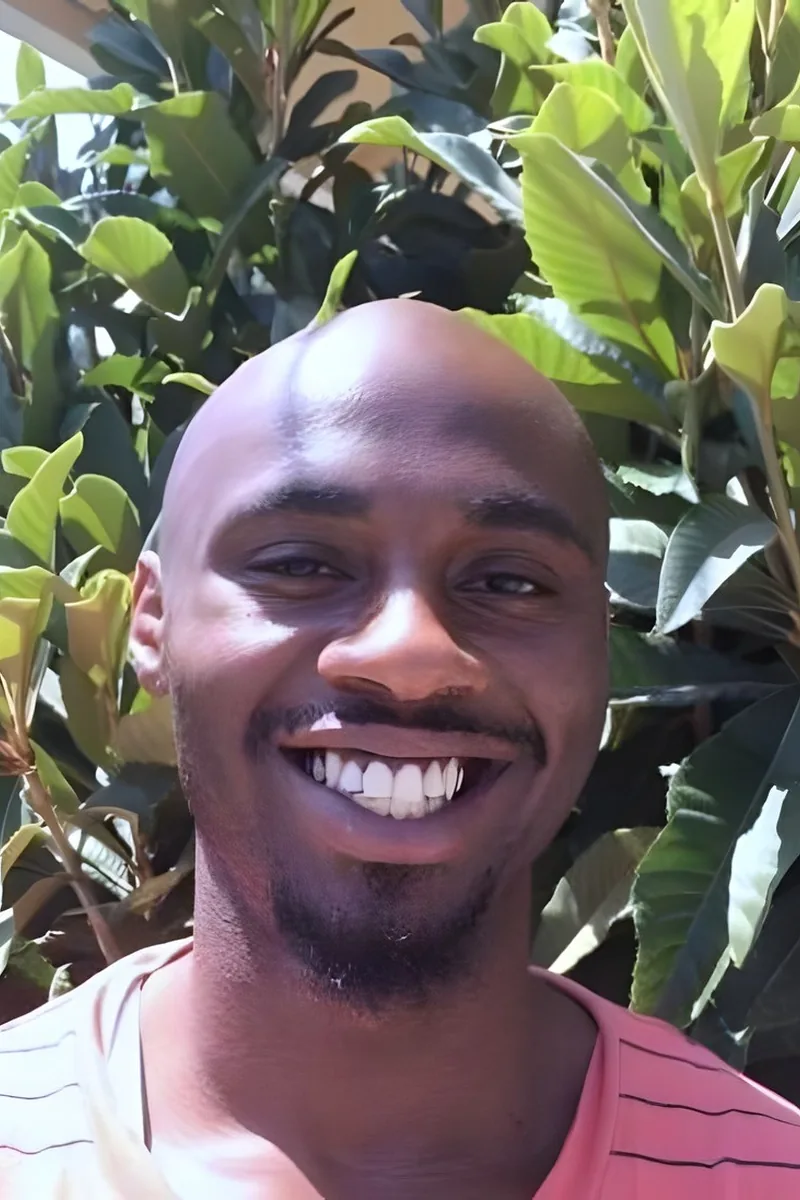
After studying economics and computer science at Caltech, Brian developed a habit of thinking about functions as machines — inputs transform into outputs through a chain of operations, and pre-calculus is where that mechanical intuition gets built. He digs into the transition points that trip students up most, like moving from polynomial behavior to rational functions where asymptotes and holes suddenly matter. His 1580 SAT reflects the kind of precision he brings to breaking down each concept.
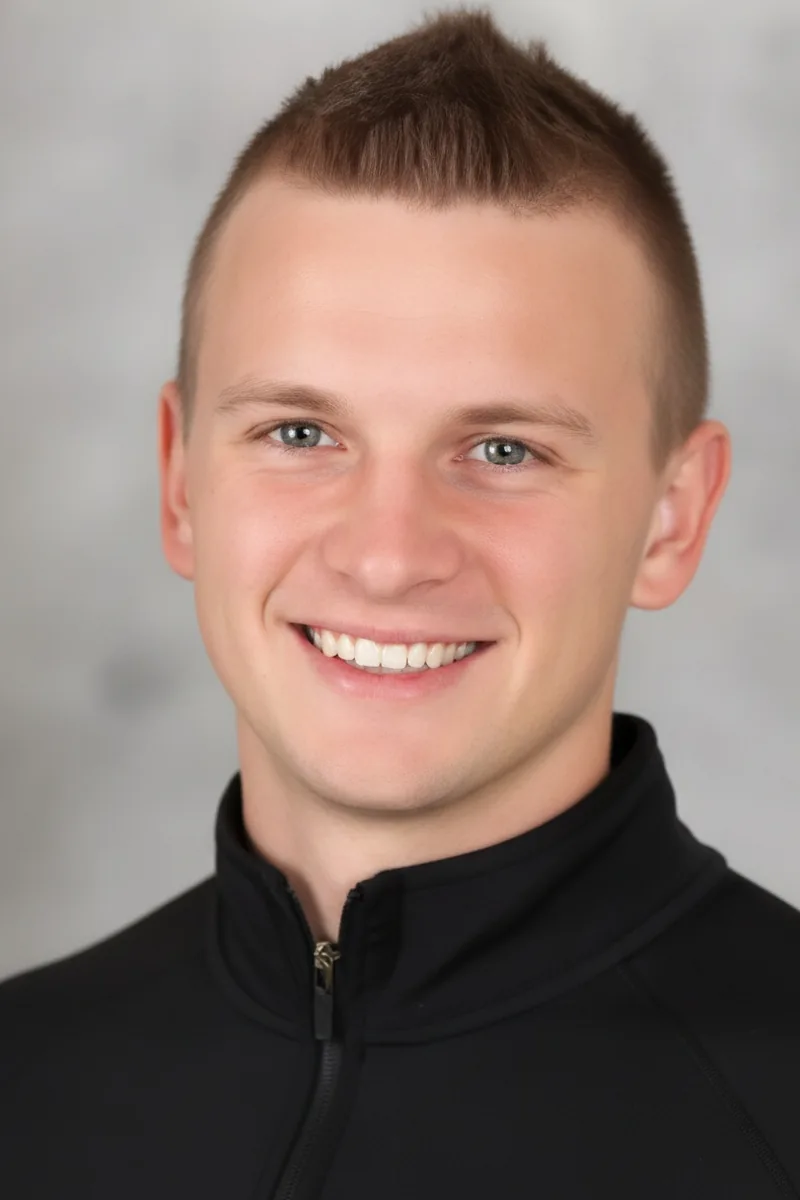
A bio-psychology major on the pre-med track, Aaron spends his UCSB coursework navigating the quantitative models — exponential decay in pharmacology, logarithmic dose-response curves — that pre-calculus is quietly preparing students for. His conversational teaching style turns topics like function transformations into back-and-forth problem-solving, where students talk through each step until they can explain the reasoning themselves. Holds a 5.0 rating and a 32 ACT.
Running a high school math club and tutoring program meant Chris spent years watching exactly where students stumble on the bridge between algebra and calculus — the shift from manipulating expressions to reasoning about function behavior, especially with trigonometric and logarithmic families. His biomedical engineering coursework at UCLA keeps those pre-calculus tools sharp, since modeling biological systems demands constant fluency with transformations, compositions, and periodic functions. An 800 SAT math score and 5s on both AP Calculus exams confirm he's built the kind of understanding he now passes along.
Four years of biology coursework at Loyola Marymount — plus clinical oncology research at UCLA — meant John was constantly solving the kinds of exponential growth, logarithmic scaling, and trigonometric problems that pre-calculus students are just starting to encounter. He tackles these topics by connecting them to the science applications where he actually uses them, turning abstract function families into something students can visualize. His 1410 SAT and upcoming medical school training at Creighton reflect the quantitative rigor behind his approach.
Mitch's general engineering degree means he didn't just pass through pre-calculus — he pressure-tested every concept in it across physics, statics, and signal analysis, where sloppy trig or shaky function intuition actually costs you. He zeroes in on the spots where students tend to fake understanding, like the shift from memorizing unit circle values to genuinely reasoning through inverse trig problems. Rated 5.0 by students.
Every mechanical engineering course Alok has taken at UC Irvine — from statics to thermodynamics — runs on the trigonometric identities, vector operations, and function transformations that pre-calculus is built around. He teaches these concepts as someone who's actively using them in design problems and force analyses, which means he can show exactly where each skill pays off rather than leaving students wondering why it matters. His engineering lens is especially useful for demystifying polar coordinates and parametric equations.
Everything in Pre-Calculus — trigonometric identities, rational functions, limits intuition, conic sections — exists to set up what comes next. Milan teaches each topic with that forward momentum, showing students why they're learning the unit circle now and how it pays off in calculus later. His computer science training reinforces a logical, step-by-step approach to proofs and function analysis that clicks for analytically minded students.
Having earned dual physics degrees and a state teaching certification, Gerardo knows exactly where pre-calculus stops being review and starts demanding new thinking — the shift from manipulating expressions to reasoning about function behavior, limits of sequences, and trigonometric models. He teaches the course as a physicist would, grounding abstract topics like polar coordinates and parametric equations in the physical scenarios that give them meaning. That bridge between concrete intuition and formal math is where his classroom experience pays off most.
Holding dual degrees in mathematics and violin from La Sierra University, Alexander understands pre-calculus the way a musician reads a score — every transformation, identity, and function family has an internal structure that becomes intuitive once you see how the pieces relate. He digs into topics like composite functions and trigonometric graphs by building the logic step by step from the algebra underneath, so students carry real understanding into calculus instead of a stack of half-remembered formulas. His 1570 SAT confirms the quantitative depth behind that approach.
Whitney's neuroscience degree from Pomona required serious quantitative chops — modeling neural firing rates with sinusoidal functions, fitting dose-response data to logarithmic curves, and composing multivariable functions long before most students see them in a textbook. She teaches pre-calculus by connecting each new function family to the intuition students already have from algebra, making the jump to abstract behavior feel like a natural next step rather than a wall. Her 1480 SAT confirms the mathematical fluency behind that approach.
As a chemistry major at Occidental College, Chandler constantly relies on the mathematical toolkit pre-calculus builds — logarithmic relationships in pH calculations, exponential models in reaction kinetics, and trigonometric functions in spectroscopy. He teaches these topics by connecting them to the science that made them click for him, turning abstract function families into something students can actually picture. His 34 ACT confirms the quantitative skill behind that approach.
The jump from algebra to pre-calculus is really a jump in how you think about functions — suddenly you're composing them, inverting them, and tracking how transformations ripple through an entire graph. Jack's integrative biology work at UC Berkeley keeps him fluent in exactly this kind of layered reasoning, since modeling ecological systems means constantly manipulating exponential, logarithmic, and trigonometric relationships. His 1590 SAT confirms the mathematical precision he brings to breaking down each concept.
Having tutored calculus and physics privately through college at UC Irvine, Pooja knows exactly which pre-calculus skills — especially rational functions, trigonometric reasoning, and function transformations — students need to have locked down before making that jump. Her biology training added another layer, since modeling population dynamics and enzyme behavior demands real comfort with exponential and logarithmic functions. She teaches each topic by connecting it to what's coming next, so the course feels like preparation rather than busywork.
Neuroscience training builds a particular comfort with the math that describes biological systems — and for Megan, that means the exponential decay, logarithmic scaling, and periodic functions at the heart of pre-calculus showed up constantly in modeling neural firing rates and sensory thresholds. She teaches these function families by connecting the algebra students already have to the graphical and analytical reasoning pre-calc demands, closing gaps before they compound in calculus. Rated 4.9 by students.
A drama degree might seem like an unlikely background for pre-calculus, but Michael's 35 ACT and deep comfort teaching everything from pre-algebra through AP Calculus BC reveal genuine mathematical range — he knows exactly how polynomial end behavior, rational asymptotes, and trigonometric graphs connect to the calculus waiting on the other side. His performer's instinct for reading an audience translates into sessions where he picks up on confusion quickly and reframes explanations on the fly. Rated 4.8 by students.
I'm an affable chemistry-loving person whose joy come from delivering knowledge :D
Studying physics and mathematics simultaneously means Drew encounters every pre-calculus concept twice — once as pure math, once as the scaffolding behind kinematics, wave equations, and force decomposition. That double exposure gives him a sharp sense of which ideas (like trigonometric identities and function transformations) students need to genuinely internalize versus which ones they can reference as needed. His 31 ACT and three years of tutoring high schoolers in math and science keep his explanations grounded at the right level.
Harvey Mudd's engineering curriculum throws students into calculus-heavy coursework from day one, which means Daniel spent years relying on the pre-calculus toolkit — rational functions, trigonometric identities, polar coordinates — as the scaffolding beneath everything else. He teaches the course with that backward clarity, zeroing in on how each concept will actually get used once calculus starts. His engineering lens is especially useful for students who need to see the structural purpose behind topics like conic sections and parametric equations.
A UCLA math degree means Alex didn't just pass through pre-calculus — he built the rest of his coursework on top of it, from calculus through upper-division analysis and mathematical economics. He's particularly sharp at bridging the gap between algebraic mechanics and the functional thinking pre-calc demands, walking students through the moment when familiar equations become transformations, compositions, and abstract behavior they need to reason about rather than just solve.
Joanne's math degree covers the full arc from arithmetic through multivariable calculus, which means she teaches pre-calculus as someone who knows exactly how each topic — polynomial end behavior, rational function asymptotes, the mechanics of the unit circle — will be used in the courses that follow. She's especially sharp at diagnosing where an algebra misconception is quietly sabotaging a student's work with logarithms or composite functions, then rebuilding that piece before moving on. Rated 5.0 by students.
Alain's plan to pursue graduate work in mathematical game theory means he's actively deepening the exact functional reasoning — optimization, strategic modeling, multi-variable relationships — that pre-calculus sets up. His UCLA math minor built rigorous comfort with polynomial behavior, composite functions, and the transition from algebraic mechanics to the kind of abstract thinking calculus demands. He teaches each concept by pressure-testing whether students can actually explain the logic back, not just execute the steps.
The jump to pre-calculus catches many students off guard because it layers trigonometric identities, polar coordinates, and limit intuition on top of everything learned in algebra. Caroline's molecular biology degree from UC Berkeley required heavy quantitative coursework, so she's comfortable connecting these abstract tools to the applied problems that make them click. She's particularly effective at demystifying function transformations and the unit circle.
Most pre-calc struggles come down to one thing: students learned algebra procedures without building the intuition for how functions actually behave — and suddenly they're expected to transform, compose, and invert them fluently. Nathan, currently pursuing his math degree, tackles that gap head-on by rebuilding the conceptual links between algebraic mechanics and functional reasoning. His 1540 SAT and 4.5 rating reflect the kind of careful, adaptive problem-solving he brings to each session.
A dual degree in physics and mathematics from Clark means Sarah didn't just pass through pre-calculus — she built on it daily, using trigonometric relationships to model wave behavior and polynomial functions to approximate physical systems. She's especially sharp on the conceptual bridges that trip students up, like connecting right-triangle trig to the unit circle or seeing why a rational function's end behavior follows from its degree. That physics background gives her a knack for making abstract function analysis feel grounded and purposeful.
Doing research in Spectral Graph Theory at MIT means Enrico encounters the full toolkit of pre-calculus — eigenvalue behavior, polynomial roots, matrix transformations — at a level where shaky fundamentals would be immediately exposed. He teaches the course by making definitions click intuitively, so that concepts like composite functions or rational expressions feel like natural extensions of algebra rather than arbitrary new rules. His 36 ACT, 1570 SAT, and 5.0 rating confirm the depth behind that intuition.
Kevin's competition math background gives him an unusual edge in Pre-Calculus — he's used to attacking problems involving sequences, series, and trigonometric manipulations from angles most textbooks never cover. That depth, combined with a 35 ACT and Stanford CS coursework heavy in mathematical foundations, means he can explain why a parametric equation behaves the way it does, not just how to graph it.
Researching cosmic ray acceleration at Princeton's astrophysics department meant Dennis had to model particle behavior using the exact toolkit pre-calculus teaches — parametric equations, vector components, and the interplay between exponential and trigonometric functions. He brings that research intuition to sessions, breaking down how and why transformations reshape a graph or how polar and rectangular forms connect, so the material clicks as a coherent system rather than a checklist. A 36 ACT and 4.7 rating back up the depth of understanding he brings.
As a Course Assistant for Harvard's introductory calculus sequence, Sanjana sees exactly where pre-calculus gaps — shaky grasp of limits intuition, weak trigonometric identities, or incomplete understanding of function transformations — trip students up once the pace accelerates. She teaches those topics with that forward view, building each concept so it holds weight in the calculus course that's coming next. Holds a 5.0 rating and a 1560 SAT.
The leap into pre-calculus often stalls around trigonometric identities, limits intuition, or the shift from polynomial to rational and logarithmic functions. Gianna's perfect SAT Math score and Princeton coursework mean she sees these topics not as isolated chapters but as the toolkit students will rely on in calculus. She connects each concept forward so students understand why they're learning it, not just how to get through the homework.
Eric's ecology and evolutionary biology background means he's modeled population dynamics with logistic curves, analyzed species distributions using exponential and logarithmic functions, and applied periodic models to seasonal data — all core pre-calculus material in a research context. He zeroes in on how function families actually behave, teaching students to read a graph's story through its asymptotes, end behavior, and transformations rather than treating each topic as an isolated formula to memorize. His 1520 SAT and 32 ACT confirm the quantitative range behind that approach.
The jump to pre-calculus often trips students up at trigonometric identities and the shift from algebraic to function-based thinking. Ellie's biomedical engineering coursework at Yale runs on these exact tools — polar coordinates, parametric equations, and limits all show up in her daily problem sets. Rated 5.0 by students, she connects each pre-calc concept to the bigger mathematical picture so the material actually sticks.
Tutoring calculus students at Penn's Tutoring Center taught Brittany exactly which pre-calculus skills matter most — she saw firsthand where gaps in trigonometric reasoning or shaky function manipulation derailed students in Gen Chem and Physics. Her psychology training also gives her a sharp read on how students get stuck, letting her adjust explanations of topics like polynomial end behavior or composite functions on the fly. She's been teaching math since her Mu Alpha Theta days in high school and hasn't stopped since.
The University of Chicago's core curriculum put Valerie through rigorous math coursework alongside her Classics and Theatre studies, giving her a working command of the function families, transformations, and trigonometric reasoning that define pre-calculus. She's particularly sharp at demystifying sequences and series — breaking the pattern logic down step by step until the formulas feel inevitable rather than arbitrary. Her 1540 SAT confirms the quantitative skill behind her approach.
The jump into pre-calculus — trigonometric identities, limits intuition, complex rational functions — is where many students realize they can't rely on memorized shortcuts anymore. Benjamin's economics coursework at the University of Chicago keeps him immersed in the kind of rigorous mathematical thinking that pre-calc demands. He connects each new concept back to its underlying logic so students actually retain it.
Todd's biology degree from UIUC built the quantitative reasoning that pre-calculus demands — modeling population dynamics with exponential and logarithmic functions, analyzing periodic phenomena with trig, interpreting rate-of-change problems that preview calculus. He draws on that science background to give function families a concrete meaning, so topics like transformations and composite functions feel like tools with a purpose rather than abstract exercises. His 33 ACT and 5.0 rating back that up.
Someone who genuinely loves puzzles and mathematical challenges tends to teach pre-calculus differently — Dylan digs into why a rational function has asymptotes where it does, or what's really happening geometrically when you compose two transformations, rather than handing students a recipe to follow. His three education-focused degrees and a 34 ACT reflect that depth, and his 5.0 rating suggests students notice the difference.
Testimonials
Because the right Pre-Calculus tutor makes all the difference.
Average Session Rating – Based on 3.4M Learner Ratings
Practice Pre-Calculus
Free practice tests, flashcards, and AI tutoring for Pre-Calculus
Nearby Pre-Calculus Tutors
Other San Jose Tutors
Related Math Tutors in San Jose
Frequently Asked Questions
Pre-Calculus marks a shift from memorizing procedures to understanding the underlying concepts—especially when working with functions, trigonometry, and complex graphing. Many students struggle with connecting these abstract ideas to real-world applications, and that's where personalized instruction helps. A tutor can break down why certain methods work, not just how to apply them, which builds both confidence and deeper understanding for the calculus concepts ahead.
Word problems require translating language into mathematical expressions—a skill that takes practice and clear strategy. Tutors work with students to develop a problem-solving framework: identifying what you know, what you're solving for, and which tools to use. By walking through problems step-by-step and asking guiding questions, tutors help students see patterns and build confidence tackling unfamiliar problems on their own.
Graphing requires visualizing abstract relationships and understanding how changes to equations affect their shape and position. Many students memorize transformation rules without grasping why they work, which makes it hard to apply them flexibly. Personalized tutoring helps students connect the equation to the graph visually, making transformations intuitive rather than something to memorize.
Trigonometry becomes clearer when you understand the unit circle and how sine, cosine, and tangent relate to angles and ratios—not just as isolated formulas. Tutors help students build this conceptual foundation by connecting trig to right triangles, the unit circle, and real applications. With guided practice and visual explanations, students develop the intuition needed to solve trig problems confidently.
During an initial session, a tutor will assess your current understanding of Pre-Calculus topics, identify specific areas where you're struggling (whether that's functions, trigonometry, or problem-solving strategies), and learn about your learning style. This helps create a personalized plan focused on your goals—whether you're aiming to improve your grade, prepare for calculus, or build confidence. The tutor will also show you strategies and problem-solving approaches tailored to how you learn best.
Yes. San Jose schools use various textbooks and approaches, and tutors are experienced working across different curricula and teaching styles. Whether your school uses traditional Pre-Calculus sequences or integrated math programs, a tutor can align their instruction with what you're learning in class, help clarify concepts your teacher introduced, and reinforce skills specific to your coursework.
Math anxiety often stems from feeling lost or falling behind, which creates a cycle of avoidance and frustration. One-on-one tutoring breaks this cycle by providing a judgment-free space to ask questions, work through problems at your own pace, and experience small wins that build confidence. As you see patterns, understand concepts, and successfully solve problems, anxiety naturally decreases and you start enjoying math more.
Varsity Tutors connects you with expert tutors who have experience teaching Pre-Calculus and understand the specific challenges students face with this subject. Once you share your goals and learning preferences, we match you with a tutor who fits your needs. Your first session is a chance to see if the fit works, and if you'd like to try someone else, we're happy to help you find a better match.
Let’s find your perfect tutor
Answer a few quick questions. We’ll recommend the right plan and match you with a top 5% tutor.