Award-Winning Algebra 2 Tutors
serving Oxnard, CA
Algebra 2
Tutors in Oxnard
Private 1-on-1 tutoring, weekly live classes for academic support, test prep & enrichment, practice tests and diagnostics, and more to elevate grades and test scores.
Based on 3.4M Learner Ratings
UniversitiesSchools & Universities
DeliveredHours Delivered
ProficiencyGrowth in Proficiency
Who needs tutoring?
No obligation. Takes ~1 minute.
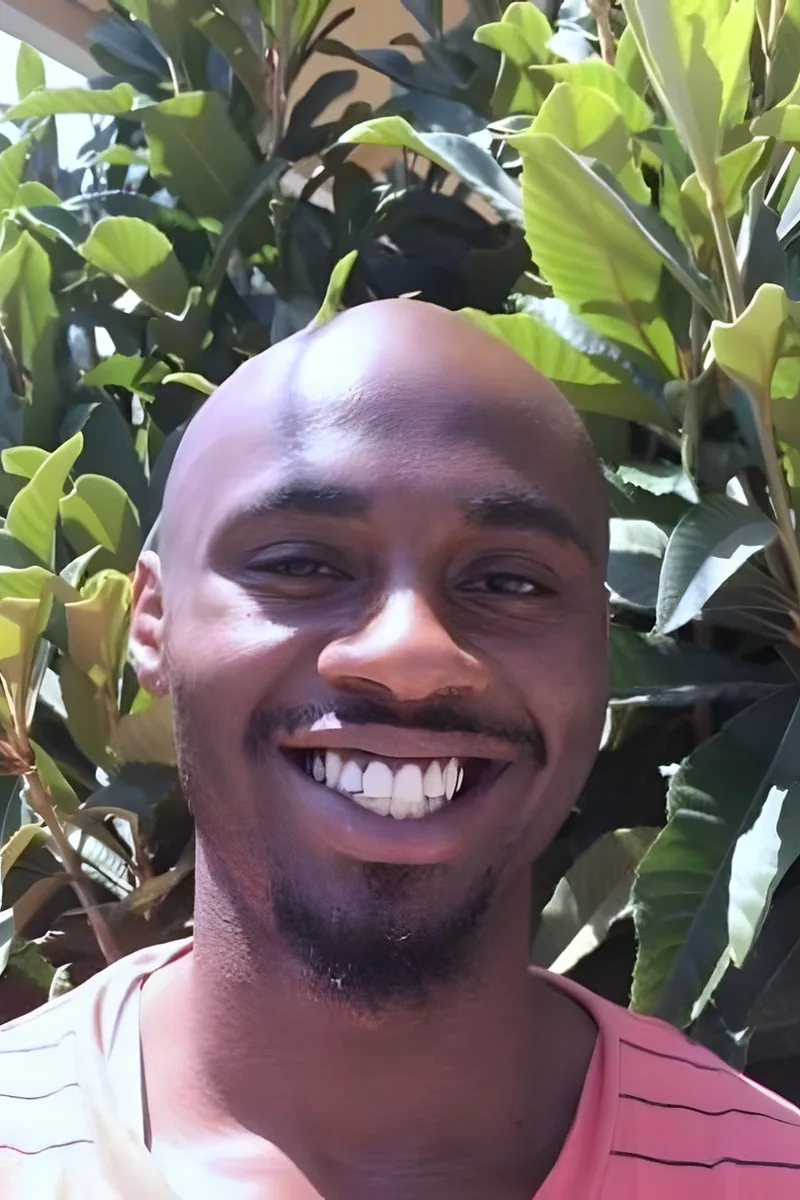
After earning a 1580 SAT and completing dual degrees in Economics and Computer Science at Caltech, Brian built the kind of algebraic fluency that makes Algebra 2 topics like systems of equations and polynomial modeling feel like second nature. He's especially effective at showing students how to think through complex expressions step by step — the same analytical approach he used across engineering, science, and econ coursework — so that techniques like factoring higher-degree polynomials or manipulating radical equations become logical rather than mechanical.

Sean covers math through Algebra 2 and knows exactly where students tend to hit friction — usually around logarithms and rational expressions, where the rules from Algebra 1 suddenly feel unreliable. His communication studies background makes him unusually deliberate about how he explains each step, breaking down symbolic leaps into plain, conversational language that keeps students from zoning out when the abstraction ramps up.
The jump to Algebra 2 is where many students first encounter logarithms, complex numbers, and polynomial behavior that no longer feels intuitive. Christina's computer science training means she thinks in functions and abstractions daily, and she uses that fluency to unpack why these concepts work — not just walk through the steps of a homework problem.
Most students struggle in Algebra 2 not because the material is harder, but because it's the first time math asks them to think in layers — exponential and logarithmic relationships, systems with three variables, sequences that build on recursive logic. Aaron approaches these topics conversationally, talking through each problem's structure until a student can explain the reasoning back in their own words, which is when he knows it's actually clicked.
Logarithmic functions, polynomial division, and conic sections all click faster when a student understands the reasoning behind each step instead of just following a formula. Timothy pairs his own strong math background — he tutors subjects from pre-algebra through calculus — with a structured, methodical approach that builds each Algebra 2 concept on what came before it.
Running into a wall with complex numbers or systems of three variables is usually a sign that something from earlier algebra didn't fully solidify — and Chris is sharp at diagnosing exactly which gap is causing the trouble. His biomedical engineering coursework at UCLA keeps him fluent in the matrix operations, polynomial modeling, and function transformations that Algebra 2 builds toward, so he can show students where each topic is actually heading. Rated 4.8 by his students.
Logarithms and rational expressions tend to be the exact point where Algebra 2 stops feeling like math students recognize. Daniel tackles that transition head-on by connecting new abstract concepts back to the linear and quadratic foundations students already understand, building each new function type as a logical extension rather than a mysterious new ruleset.
Having tutored math at every level from elementary through calculus, Shant knows exactly which gaps from earlier courses cause the biggest headaches in Algebra 2 — a shaky grasp of exponent rules, for instance, can make logarithms feel impossible instead of intuitive. His psychobiology training at UCLA required fluency with exponential models and data-driven equations, so he teaches these topics as practical tools rather than abstract exercises. Rated 5.0 by his students.
The jump from Algebra 1 to Algebra 2 is where many students lose their footing — logarithmic functions, complex numbers, and rational expressions all arrive at once. John tackles these topics by treating each new concept as a puzzle with a logical entry point, the same reframing approach that earned him a 1580 SAT and a 5.0 tutoring rating. He's particularly sharp at showing how earlier algebra skills carry forward into these more abstract topics so nothing feels like it came out of nowhere.
Four years of biology coursework at Loyola Marymount meant John was constantly solving for unknowns in exponential growth models, decay equations, and dosage calculations — all skills rooted in Algebra 2. Now headed to medical school, he tackles topics like logarithmic relationships and polynomial behavior by grounding them in the science applications where they actually show up, which tends to make the abstract notation feel less random. His 1410 SAT and years of peer tutoring for LMU Athletics back up that approach.
Engineering school taught Mitch that every Algebra 2 concept — polynomial division, complex numbers, conic sections — is something you'll actually lean on later, and he tutors with that forward-looking perspective baked in. His general engineering degree means he didn't just pass through these topics once; he kept using them in circuits, statics, and thermodynamics, so he can pinpoint exactly where a student's understanding is thin and shore it up. Rated 5.0 by his students.
I am a graduate of Duke University with a degree in Health Policy and Education Policy. While at Duke University I was a student athlete, participated in the leadership of several clubs and service groups; as well as, working as a Math and Reading tutor. After graduation I spent a year pursing a business venture allotted to me through the Elevator Pitch Competition, my senior year of college, which I won in my category - Non-Profits. After that year, I joined the Teach for America Fellowship, where I fell in love with teaching. The Teach for America Fellowship is 2 years; however, after my first year due to the recognition and growth in my classroom I was invited to start a school. I spent 2 years at that school prior to getting married and moving to California, a few months ago, with my amazing, aerospace loving, husband.
A linguistics background might seem unrelated to Algebra 2, but Naama's training in formal language structure — parsing rules, identifying patterns, building from axioms — maps surprisingly well onto symbolic manipulation and function behavior. She approaches topics like sequences and rational expressions the way a linguist approaches grammar: by teaching students to see the underlying system instead of memorizing isolated rules.
Earth Sciences and GIS coursework at USC gave Krista hands-on experience with the exponential models, polynomial curve-fitting, and coordinate transformations that sit at the heart of Algebra 2 — she's mapped real terrain data using exactly these tools. That applied perspective lets her ground topics like logarithmic equations and function behavior in tangible examples, so the abstraction feels like it's going somewhere instead of spinning in circles.
Logarithmic functions, polynomial division, and conic sections all click faster when a student sees how they actually get used — and as a mechanical engineering major at UC Irvine, Alok reaches for real applications constantly. He walks through each concept step by step, connecting Algebra 2 topics to the engineering and physics problems that depend on them.
As a state-certified teacher with a physics degree, Gerardo has spent years watching students hit the same wall in Algebra 2 — the moment exponential and logarithmic equations stop behaving like anything they've seen before. He tackles that transition by grounding each new rule in the concrete math students already trust, building up from familiar algebraic moves until the abstraction feels earned rather than dropped on them out of nowhere.
Logarithmic functions, polynomial division, and complex numbers tend to be the exact spots where Algebra 2 students lose their footing. Whitney tackles these topics by connecting abstract rules back to the reasoning behind them, drawing on the rigorous quantitative training she built through her neuroscience coursework at Pomona College. Her 1480 SAT score speaks to the kind of math fluency she brings to every session.
The biology curriculum Nicholas completed required him to model population dynamics, enzyme kinetics, and gene expression — all built on the exponential, logarithmic, and polynomial reasoning that Algebra 2 introduces. That science background means he can pull out a concrete example whenever a student stalls on an abstract rule, turning 'why do I need this' into a specific, visible application. His 33 ACT confirms the mathematical grounding behind those explanations.
A dual degree in mathematics and violin from La Sierra — followed by graduate work at Juilliard and a doctorate at USC — means Alexander has spent years moving between two disciplines that both demand rigorous pattern recognition and comfort with abstraction. That combination pays off in Algebra 2, where he unpacks topics like logarithmic relationships and polynomial behavior by emphasizing the structural logic underneath rather than drilling isolated procedures. His 1570 SAT speaks to the mathematical fluency backing every session.
Taking Differential Equations and multiple statistics courses as electives — for fun — while earning a psychology degree at Rice says something about how Judy's mind works: she genuinely enjoys the puzzle of abstract math. That makes her especially effective with the Algebra 2 topics where students first hit real abstraction, like building intuition for why logarithmic and exponential relationships behave the way they do. Her 1520 SAT and years of math competition experience back up that fluency.
Logarithmic functions, polynomial division, and complex numbers stop feeling abstract when there's someone who actually uses advanced math in research every day. Siavash's work modeling biological data in his molecular biology graduate program at Cal State Northridge keeps him fluent in the exact algebraic reasoning that Algebra 2 demands, and he unpacks each concept step by step so the logic clicks.
Biology coursework at UCLA meant Nathan was constantly solving exponential growth and decay problems — population models, enzyme kinetics, dosage calculations — all built on the logarithmic and exponential reasoning that defines Algebra 2. That applied math background gives him a practical toolkit for unpacking topics like function transformations and systems of equations, grounding each one in problems that actually mean something. He takes a deliberate, step-by-step approach that keeps students from skipping past the logic they'll need later in calculus.
Jack's integrative biology coursework at UC Berkeley means he's constantly working with exponential models, growth curves, and systems of equations — so when he teaches Algebra 2 topics like logarithmic functions or polynomial behavior, he can ground each abstraction in problems he's actually solved. His 1590 SAT score reflects serious mathematical fluency, and he uses it to walk students through the symbolic reasoning that makes this course feel like a genuine leap from Algebra 1.
A neuroscience and physiology degree means Justin has modeled everything from neural firing rates to drug concentration curves — math that runs on exactly the exponential, logarithmic, and polynomial reasoning Algebra 2 covers. He's especially good at unpacking the moment a topic like function transformations or sequences stops feeling intuitive, then rebuilding the logic in a way that makes the next step obvious. Rated 4.8 by his students.
An improv performer and drama graduate from NYU's Tisch School, Michael might not be the obvious pick for Algebra 2 — but his 35 ACT and deep roster of math subjects (through AP Calculus BC and competition math) tell a different story. He's especially good at teaching the conceptual leaps around complex numbers and polynomial division, using the same quick-on-your-feet thinking that improv demands to find the explanation that actually lands for each student.
A chemistry major at Occidental College, Chandler regularly works with exponential and logarithmic relationships in contexts like reaction rates and equilibrium calculations — the same concepts that trip up most Algebra 2 students when they first appear as pure math. He turns that chemistry intuition into concrete examples that make topics like log rules and exponential growth feel less abstract and more like tools with an obvious purpose. His 34 ACT confirms the mathematical fluency behind those explanations.
I'm an affable chemistry-loving person whose joy come from delivering knowledge :D
Kellie's chemistry background gives her a practical handle on the exponential and logarithmic relationships that trip up most Algebra 2 students — she's used those tools to model decay rates and reaction equilibria, so she can explain what the math is actually doing instead of just how to solve it. She pairs that conceptual approach with heavy practice on the mechanics, making sure students can handle function transformations and polynomial operations fluently under test pressure. Her 1520 SAT and 33 ACT back up that dual emphasis on understanding and execution.
Harvey Mudd's engineering curriculum threw Daniel into matrix algebra, complex exponentials, and polynomial modeling from day one — so the Algebra 2 topics that feel like a sudden leap for most students are tools he's been reaching for constantly. He's especially good at demystifying logarithms and rational functions by grounding them in the engineering problems where they naturally appear, turning 'why do I need this' into an obvious answer.
After earning a math degree at UCLA with an economics minor, Alex picked up a habit of framing Algebra 2 concepts through practical lenses — showing how exponential growth models compound interest or how systems of inequalities map out real constraints. That grounding makes topics like logarithms and piecewise functions feel less like abstract hurdles and more like tools with a clear purpose. His experience tutoring across age groups and skill levels means he can quickly identify the specific gap holding a student back.
Dual-majoring in physics and mathematics, Drew constantly leans on Algebra 2 skills like systems of equations and exponential modeling to solve real problems in his coursework — so he can point to exactly where each topic shows up again and why it matters. He's been tutoring math for three years, long enough to recognize that the students who struggle most with, say, logarithms usually have a specific gap in their exponent reasoning that a few targeted exercises can fix.
Joanne's math degree means she's worked through the full arc from basic algebra to multivariable calculus, so she can pinpoint exactly where an Algebra 2 concept like logarithmic equations or rational functions is heading — and why mastering it now matters for what comes next. She's particularly effective at diagnosing which earlier algebraic habits are causing confusion when new abstractions don't click, then rebuilding that specific piece until the rest follows. Rated 5.0 by her students.
The jump from Algebra 1 to Algebra 2 is where many students first encounter truly abstract thinking — logarithms, polynomial division, complex numbers. Gabriel's math background extends through calculus and quantitative reasoning, which means he can explain not just how to solve a system of three equations but why the method works and where it leads. He holds a 5.0 client rating.
An English degree might not scream 'math tutor,' but Thomas has taught everything from arithmetic through calculus, and that range means he knows exactly which Algebra 1 habits break down when students hit logarithms or rational expressions for the first time. He approaches each topic almost like close reading — pulling apart the structure of a problem until the logic underneath becomes visible and repeatable.
Having tutored across the full math sequence from pre-algebra through calculus, Lizzy knows exactly which gaps from earlier courses cause the biggest headaches in Algebra 2 — a shaky grasp of function notation, for instance, can make logarithmic and piecewise problems feel impossible when they're really just unfamiliar packaging on familiar ideas. She's particularly good at untangling those hidden prerequisites so that new material stops feeling like a foreign language and starts building naturally on what a student already knows.
Alain's plan to pursue graduate work in mathematical game theory means he's already thinking several levels beyond Algebra 2 — but his math minor at UCLA kept him grounded in the specific mechanics of polynomial division, complex numbers, and systems of equations that define the course. He's especially good at demystifying the leap from Algebra 1 thinking to Algebra 2 thinking, where suddenly a single problem might require chaining together logarithmic properties, function composition, and careful algebraic manipulation.
As a math major currently deep in upper-level coursework, Nathan knows exactly which Algebra 2 habits — like how you handle rational expressions or interpret function transformations — will either help or haunt you in calculus. He scored a 1540 SAT and teaches across the full algebra sequence, so he's sharp at diagnosing whether a stumbling block in Algebra 2 traces back to a shaky concept from Algebra 1 or is genuinely new territory. Rated 4.5 by his students.
Pre-med life means Fady encounters exponential growth models, logarithmic pH scales, and polynomial dose-response curves almost daily in his biology and chemistry coursework — so he teaches Algebra 2 concepts with the kind of fluency that comes from actually using them. He's particularly good at untangling the moment when students confuse similar-looking rules, like mixing up power rules with log properties, because he remembers exactly where those wires crossed for him the first time around.
Having worked through the full math sequence from pre-algebra to calculus, Joseph knows exactly where Algebra 2 concepts like logarithms and rational expressions tend to break down — usually because a shaky rule from earlier algebra is being stretched in ways a student didn't expect. His biological sciences training keeps him grounded in practical applications, so he can show how exponential and polynomial relationships actually behave outside the textbook when a student needs a concrete reason to push through the abstraction.
Aerospace engineering at the master's level means Hugo has pushed well past Algebra 2 — but he still remembers exactly where concepts like logarithmic equations and conic sections tripped him up, which makes him sharp at diagnosing where a student's understanding breaks down. He approaches each topic by tying the algebra back to tangible problems, like how exponential models describe real physical systems, so the abstractions feel earned rather than random. Holds a 5.0 rating.
Testimonials
Because the right Algebra 2 tutor makes all the difference.
Average Session Rating – Based on 3.4M Learner Ratings
Practice Algebra 2
Free practice tests, flashcards, and AI tutoring for Algebra 2
Nearby Algebra 2 Tutors
Other Oxnard Tutors
Related Math Tutors in Oxnard
Frequently Asked Questions
Varsity Tutors matches Oxnard students with expert Algebra 2 tutors for 1-on-1 instruction. We pair each student with a tutor based on their specific needs, learning style, and goals.
Whether you need homework help, exam prep, or want to get ahead, our Algebra 2 tutors are ready to help.
Common challenges include gaps from earlier material, difficulty with specific concepts, and trouble applying learning to new problems. These issues can snowball quickly in Algebra 2.
A tutor identifies where you're stuck, fills in gaps, and provides targeted practice. The 1-on-1 format means you get help exactly where you need it.
Tutors work with your student's actual coursework—homework assignments, class notes, and upcoming tests. This keeps tutoring directly relevant to what's happening in the classroom.
When you share information about your student's school and curriculum, we can match you with a tutor who has relevant experience.
All tutors complete background checks, credential verification, and teaching evaluation. Many of our Algebra 2 tutors hold advanced degrees or have years of teaching experience.
You can review tutor profiles to find someone with the right background for your student's level and needs.
Many students see improved grades within a few weeks, along with better understanding of Algebra 2 concepts and more confidence tackling challenging material.
Tutors track progress and adjust their approach to ensure continued improvement.
Most students benefit from 1-2 sessions per week. More frequent sessions help if your student is significantly behind or has an important exam coming up.
Your tutor can recommend a schedule based on your student's specific situation and goals.
Tutoring is purchased in packages of hours, with rates varying by tutor experience. Varsity Tutors offers several options to fit different budgets and needs.
You can discuss pricing during your consultation to find what works best.
Your tutor will assess where your student is, discuss goals, and start working on priority areas. Most students bring current homework or upcoming test material to focus on.
By the end, you'll have a clear sense of how the tutor can help and a plan for moving forward.
Let’s find your perfect tutor
Answer a few quick questions. We’ll recommend the right plan and match you with a top 5% tutor.