Award-Winning Finite Mathematics Tutors
serving Indio, CA
Finite Mathematics
Tutors in Indio
Private 1-on-1 tutoring, weekly live classes for academic support, test prep & enrichment, practice tests and diagnostics, and more to elevate grades and test scores.
Based on 3.4M Learner Ratings
UniversitiesSchools & Universities
DeliveredHours Delivered
ProficiencyGrowth in Proficiency
Who needs tutoring?
No obligation. Takes ~1 minute.
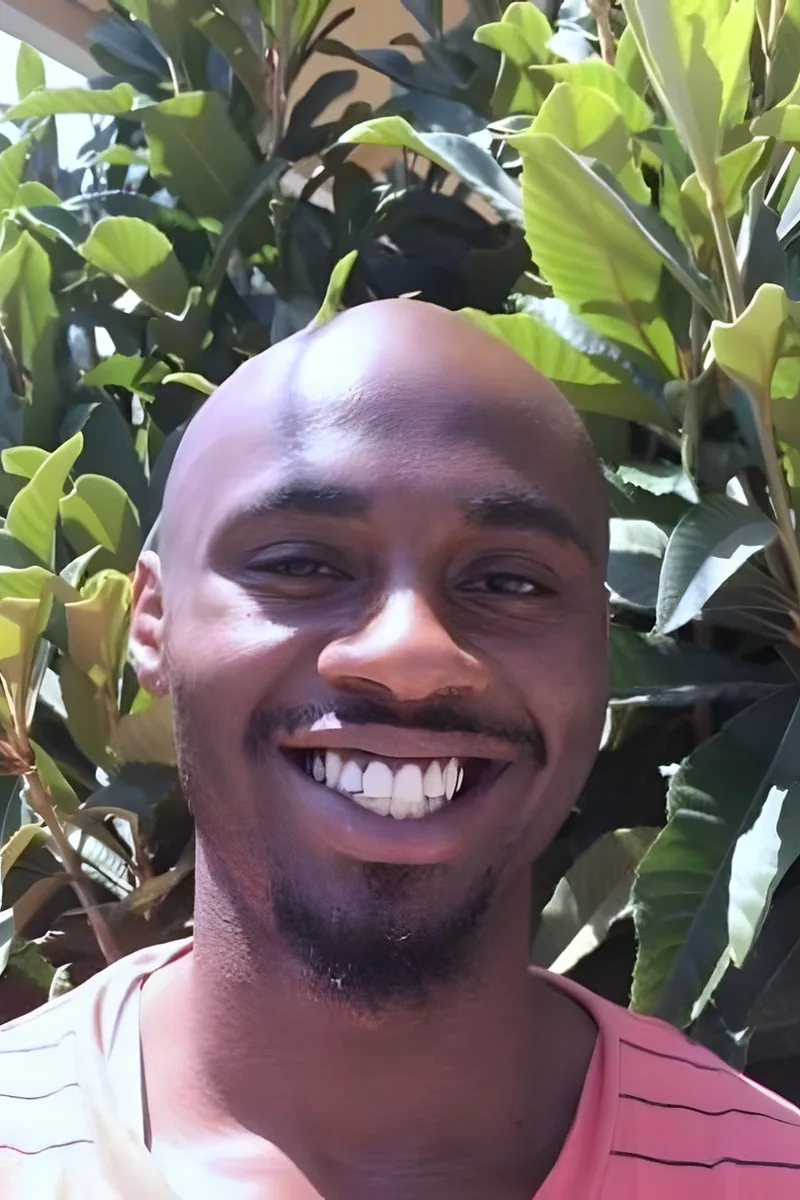
Caltech's economics curriculum put Brian through heavy doses of matrix algebra, optimization under constraints, and probability — the exact toolkit finite mathematics courses test. He approaches linear programming and counting problems by connecting them to the economic modeling contexts where he first learned them, which gives students a concrete anchor for topics that can otherwise feel like disconnected chapters.
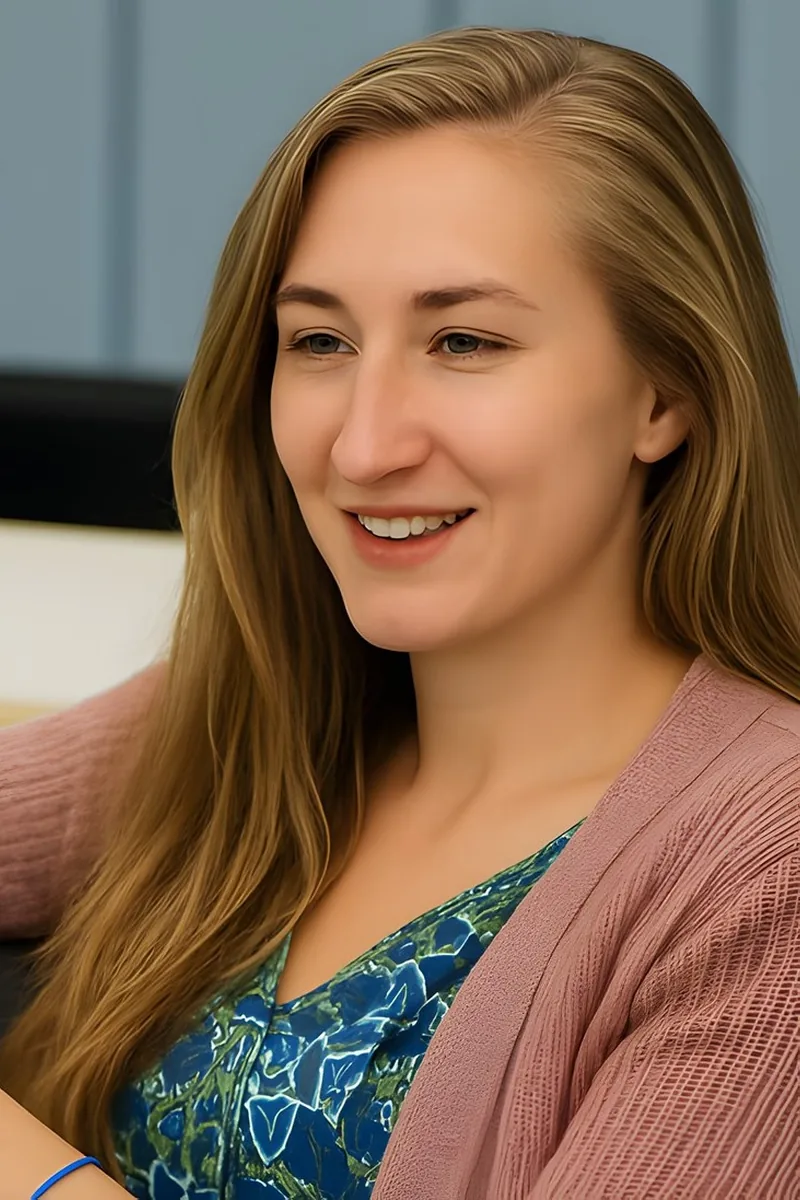
Anna's policy analysis PhD at Pardee RAND means she uses matrix algebra, probability models, and optimization daily — the same toolkit that finite mathematics courses test in a more compressed format. She unpacks linear programming and decision-theory problems by tying them to the real policy scenarios where these methods actually get applied, which makes abstract setups feel less arbitrary.
Dual honors degrees in mathematics and violin from La Sierra University might seem like an unusual combination, but the math side gave Alexander thorough grounding in the discrete structures and probability reasoning that finite mathematics courses revolve around. He's particularly sharp at unpacking problems where students need to build a matrix or set up a system of inequalities from a dense word problem, slowing down on the translation step so the algebra that follows actually makes sense.
Biology majors don't always expect to use math after graduation, but Nathan's coursework leaned heavily on the probability and statistics side — population modeling, genetics ratios, and data analysis — which overlaps directly with the counting techniques and probability units in finite mathematics. He breaks down word-heavy problems into clear step-by-step setups, especially when students struggle to figure out whether they're looking at a permutation, a combination, or a conditional probability question.
Game theory — Alain's intended graduate focus — runs on the same payoff matrices, probability calculations, and optimization logic that finite mathematics courses test every week. His UCLA business economics major with a math minor means he's built and solved these models in both theoretical and applied settings, from strategic decision frameworks to linear programming problems. He's especially sharp at translating messy word problems into clean matrix setups where students can see exactly what each entry represents.
Linear programming, matrix operations, and probability models can feel disconnected from the rest of a student's math experience, which is part of what makes finite mathematics so tricky. Alan's mathematics degree and teaching background let him tie these topics together into a coherent framework rather than treating each chapter as an isolated unit. He's particularly effective at translating word-heavy application problems into clear mathematical setups.
Most finite mathematics students hit a wall not on the computation but on knowing which tool to reach for — is this a matrix problem, a linear programming setup, or a counting argument? Demirhan's master's degree in mathematics and years teaching college-level courses mean he can quickly diagnose where the confusion lives and unpack the underlying logic until the right approach becomes obvious. Rated 5.0 by students.
Engineering programs at UC Irvine don't let students skip the discrete side of math — Wesley's biomedical engineering degree required matrix algebra, probability, and systems of linear equations as everyday tools for modeling biological systems and optimizing designs. That applied background makes him especially effective at teaching the linear programming and probability chapters in finite mathematics, where translating a real scenario into a correct mathematical setup is the hardest part.
Currently pursuing a graduate degree in mathematics while holding an applied math bachelor's, Drisana has worked through the matrix algebra, linear programming, and probability that finite math courses pile on — and she's done it from both the theoretical and computational sides. She's especially sharp at unpacking the logic behind setting up systems of inequalities, where most students can follow the arithmetic but struggle to build the model from a word problem. Rated 5.0 by students.
Emma's combination of a neurobiology major and economics minor at Harvard meant heavy exposure to the exact topics that define finite mathematics — probability, matrices, linear programming, and combinatorics. She teaches students to recognize which model fits a given problem, then walks through the setup step by step so the logic is clear. Her 5.0 rating speaks to how well that structured approach translates for students.
Victor's applied mathematics master's work means topics like matrix operations, linear programming, and probability aren't isolated textbook chapters for him — they're tools he's used repeatedly in modeling and optimization contexts. He's especially sharp at unpacking the algebra behind systems of inequalities, where students often set up constraints incorrectly because they rush past the translation from words to math. Rated 5.0 by students.
Linear programming, matrix operations, and probability models can feel disconnected from each other until someone ties them back to real decision-making problems. David spent years as an actuary doing exactly that — applying finite math tools to model risk and optimize outcomes — so he teaches these topics with concrete context that makes the theory click.
Linear programming, matrix operations, and combinatorics can feel like disconnected topics thrown into one course. Yuanxin ties them together through her engineering training, where finite math concepts like Markov chains and optimization actually drive real-world decision-making. Her 4.9 rating speaks to how clearly she makes those connections click.
William's applied statistics master's work and biomedical engineering background mean he's built and manipulated the matrices, probability models, and optimization setups that finite mathematics courses test — but in the context of real engineering and data problems. He's especially sharp at teaching students how to translate messy word problems into clean linear programming constraints or probability frameworks, since that translation step is where most errors actually happen. Rated 4.8 by students.
Alex's finance master's means he didn't just study matrix algebra and linear programming in the abstract — he used them to build financial models, price assets, and optimize portfolios. That real-world fluency translates directly when teaching students to set up objective functions or work through payoff matrices in a finite mathematics course. Rated 5.0 by students.
Physics training builds a particular kind of comfort with matrices and systems of equations — Erik used them constantly for modeling physical systems, which translates directly into the matrix algebra and linear programming that finite mathematics courses test. He unpacks each problem by clarifying the structure first, making sure students see how to organize constraints or set up a payoff table before jumping into computation.
Three years as a peer tutor at American University's Academic Support Center meant Aaron regularly helped classmates bridge the gap between biology-track math and the discrete topics — counting techniques, probability, and matrix operations — that finite mathematics courses actually test. His calculus and statistics background gives him the algebraic fluency to unpack word problems cleanly, especially when students need to set up a system of equations or figure out whether a question calls for a combination versus a conditional probability formula.
Testimonials
Because the right Finite Mathematics tutor makes all the difference.
Average Session Rating – Based on 3.4M Learner Ratings
Nearby Finite Mathematics Tutors
Other Indio Tutors
Related Math Tutors in Indio
Frequently Asked Questions
Varsity Tutors matches Indio students with expert Finite Mathematics tutors for 1-on-1 instruction. We pair each student with a tutor based on their specific needs, learning style, and goals.
Whether you need homework help, exam prep, or want to get ahead, our Finite Mathematics tutors are ready to help.
Common challenges include gaps from earlier material, difficulty with specific concepts, and trouble applying learning to new problems. These issues can snowball quickly in Finite Mathematics.
A tutor identifies where you're stuck, fills in gaps, and provides targeted practice. The 1-on-1 format means you get help exactly where you need it.
Tutors work with your student's actual coursework—homework assignments, class notes, and upcoming tests. This keeps tutoring directly relevant to what's happening in the classroom.
When you share information about your student's school and curriculum, we can match you with a tutor who has relevant experience.
All tutors complete background checks, credential verification, and teaching evaluation. Many of our Finite Mathematics tutors hold advanced degrees or have years of teaching experience.
You can review tutor profiles to find someone with the right background for your student's level and needs.
Many students see improved grades within a few weeks, along with better understanding of Finite Mathematics concepts and more confidence tackling challenging material.
Tutors track progress and adjust their approach to ensure continued improvement.
Most students benefit from 1-2 sessions per week. More frequent sessions help if your student is significantly behind or has an important exam coming up.
Your tutor can recommend a schedule based on your student's specific situation and goals.
Tutoring is purchased in packages of hours, with rates varying by tutor experience. Varsity Tutors offers several options to fit different budgets and needs.
You can discuss pricing during your consultation to find what works best.
Your tutor will assess where your student is, discuss goals, and start working on priority areas. Most students bring current homework or upcoming test material to focus on.
By the end, you'll have a clear sense of how the tutor can help and a plan for moving forward.
Let’s find your perfect tutor
Answer a few quick questions. We’ll recommend the right plan and match you with a top 5% tutor.