Award-Winning Finite Mathematics Tutors
serving Fresno, CA
Award-Winning
Finite Mathematics
Tutors in Fresno
Private 1-on-1 tutoring, weekly live classes for academic support, test prep & enrichment, practice tests and diagnostics, and more to elevate grades and test scores.
Based on 3.4M Learner Ratings
UniversitiesSchools & Universities
DeliveredHours Delivered
ProficiencyGrowth in Proficiency
Who needs tutoring?
No obligation. Takes ~1 minute.
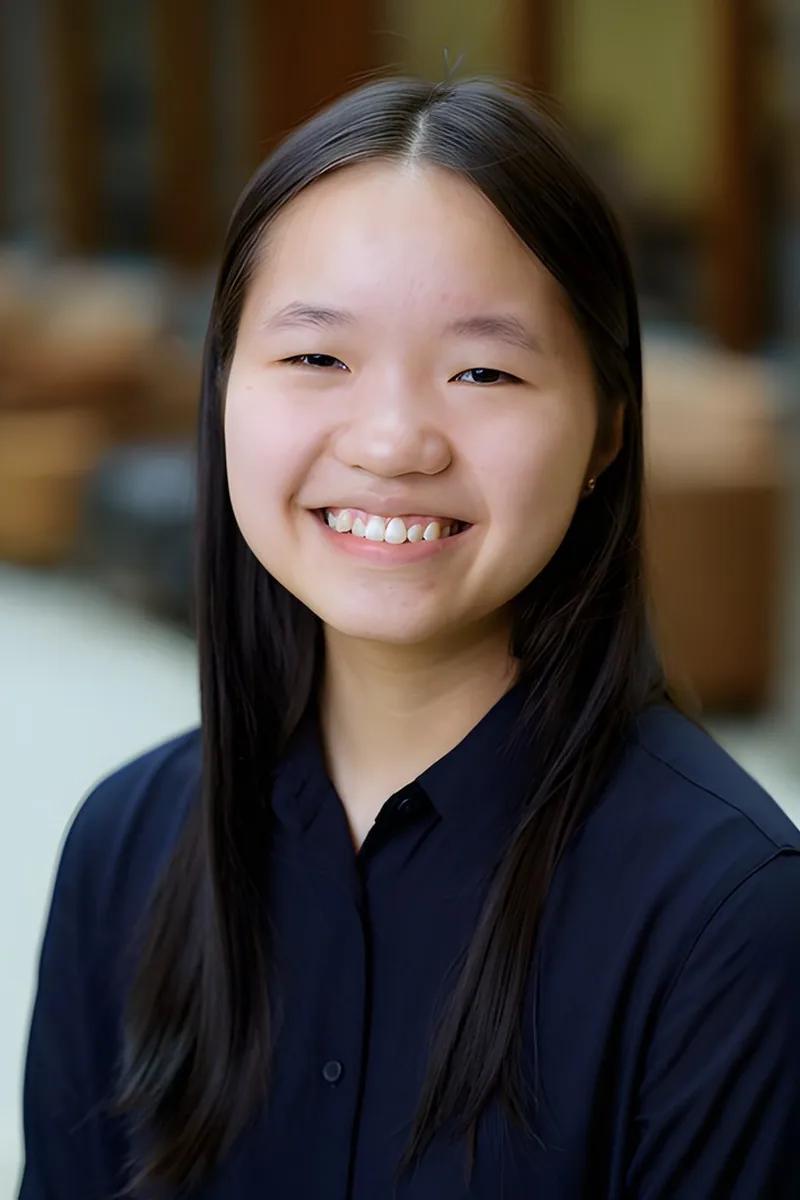
Biomedical engineering at Northwestern means Ingrid has worked through matrix algebra, probability, and optimization in contexts where the math had to produce real answers — modeling biological systems, analyzing experimental data, and solving constrained design problems. She's particularly strong at helping students translate messy word problems into clean mathematical setups, especially in linear programming and counting units where knowing what to formalize matters more than the computation itself.
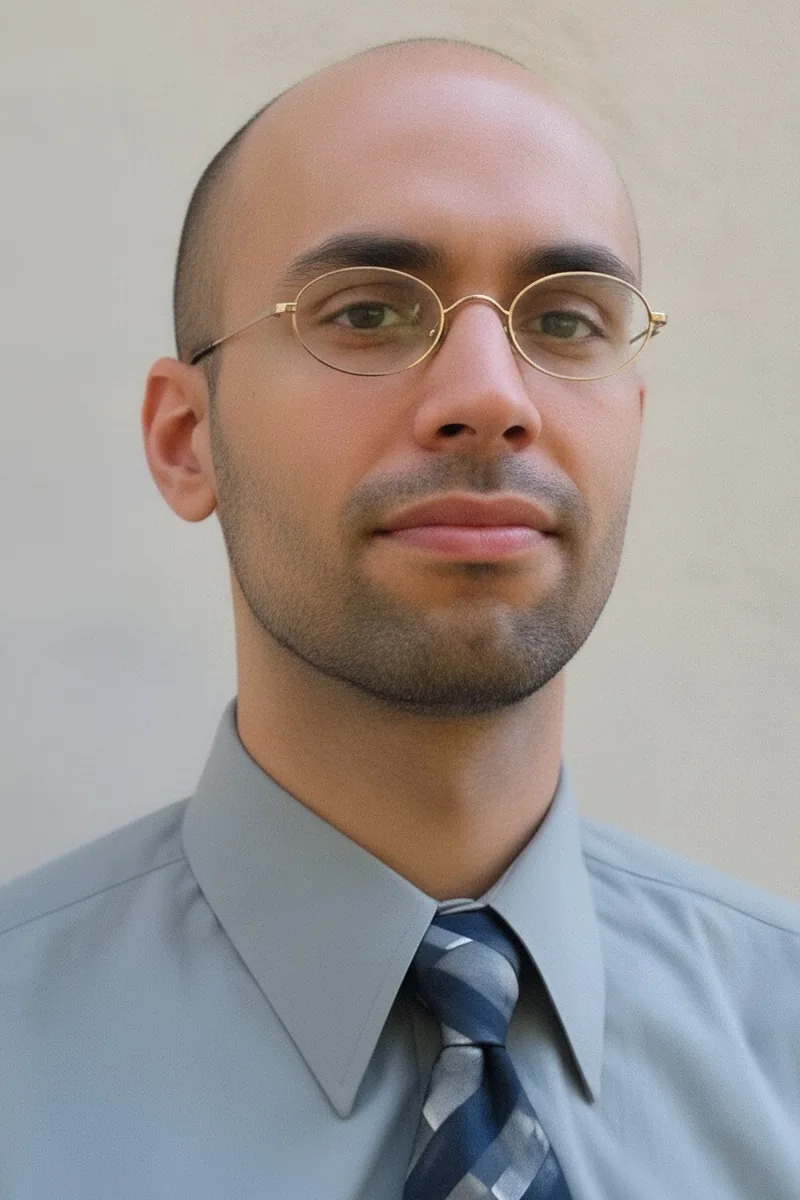
Sam's PhD in statistics means the probability and matrix algebra chapters in finite mathematics are second nature — he taught and applied those tools at a graduate level long before they showed up in an undergrad syllabus. His biomedical engineering background adds a practical edge when explaining how to set up linear programming problems or interpret a Markov chain, since he's used those models to solve real optimization and modeling questions. Rated 4.9 by students.
Pursuing a statistics and machine learning certificate at Princeton alongside her philosophy degree means Julie regularly works with the probability, combinatorics, and matrix operations that finite mathematics courses are built around — but her philosophy training also sharpens the logical reasoning that makes set theory and counting arguments click. She's especially strong at unpacking problems where the challenge isn't computation but figuring out how to structure the setup in the first place. Rated 4.9 by students.
Caltech's economics curriculum put Brian through heavy doses of matrix algebra, optimization under constraints, and probability — the exact toolkit finite mathematics courses test. He approaches linear programming and counting problems by connecting them to the economic modeling contexts where he first learned them, which gives students a concrete anchor for topics that can otherwise feel like disconnected chapters.
Economics training at the undergraduate level means Simon spent real time inside the linear programming and matrix models that finite mathematics courses test — building objective functions, interpreting shadow prices, and optimizing under constraints weren't abstract exercises but core tools for economic analysis. He's especially useful when students need to connect the algebra of systems of inequalities to what the solution actually means in context.
Until age 16, Viktor thought math was just blind memorization — then a series of teachers at the right moment revealed the logic underneath, and he ended up majoring in mathematics at UChicago. That conversion story matters for finite mathematics, where topics like counting techniques and set operations look arbitrary until someone shows you why the rules work the way they do. His 1600 SAT and current master's work in computer science at NYU keep him sharp on the discrete reasoning these courses demand.
Emma's combination of a neurobiology major and economics minor at Harvard meant heavy exposure to the exact topics that define finite mathematics — probability, matrices, linear programming, and combinatorics. She teaches students to recognize which model fits a given problem, then walks through the setup step by step so the logic is clear. Her 5.0 rating speaks to how well that structured approach translates for students.
Studying finance at Notre Dame means Charles is actively using the probability, matrix algebra, and linear programming that finite mathematics courses cover — present value calculations, portfolio optimization, and risk modeling all draw on the same toolkit. He breaks down the business-flavored word problems that trip students up, especially when translating a scenario into the right system of equations or figuring out which counting technique applies.
Economics PhD work at Yale means Anthony uses matrix algebra, linear programming, and probability models as everyday research tools — not just textbook exercises to get through. He unpacks the logic behind setting up objective functions and constraint systems so students see the structure of a problem before they start computing. Rated 5.0 by students.
Three engineering degrees — including one in applied mathematics — mean Rahi has used matrix operations, optimization setups, and probability computations as everyday working tools, not just textbook exercises. He unpacks the logic behind each problem type, whether it's building a system of inequalities for linear programming or organizing information in a counting argument, so the structure is clear before any calculation begins.
Graduating from an IB high school with top marks gave Zofia early exposure to the discrete reasoning and probability logic that finite mathematics courses revisit at the college level — and her Brown math degree deepened that foundation considerably. She's especially sharp at unpacking matrix operations and translating messy real-world scenarios into clean systems of equations, making the algebraic setup feel less arbitrary and more deliberate.
Linear programming, Markov chains, and matrix operations can feel disconnected from anything practical — until someone ties them to real decision-making problems. Rithi's quantitative training across neuroscience and biotechnology gives her a natural way to ground Finite Mathematics in applied contexts that make the material stick.
Graduate work in computational and applied mathematics at Rice means Sakibul regularly uses matrix operations, optimization techniques, and discrete structures — the exact toolkit finite mathematics courses are built around. He's served as a teaching assistant for multiple calculus and chemistry courses, which sharpened his ability to break down multi-step problems for students who can see the answer but can't organize the path to get there. That experience is especially useful in linear programming and probability setups, where translating a messy word problem into clean constraints is half the battle.
Most finite mathematics students hit a wall not on the computation but on knowing which tool to reach for — is this a matrix problem, a counting argument, or a linear programming setup? Tessa's mathematics major at Yale means she can trace the connections between these topics instead of treating each chapter as isolated, which makes the decision-making step click. Rated 4.9 by students.
Qualifying for the AIME and MIT's Math Prize for Girls required exactly the kind of combinatorial and logical reasoning that finite mathematics courses test — counting arguments, set operations, and probability setups where one wrong assumption derails the whole problem. Lainie, now a biological engineering student at MIT, brings that competition-trained precision to breaking down whether a problem calls for a permutation or a conditional probability framework. Rated 5.0 by students.
Teaching gifted students daily means Esteban regularly adapts math concepts for learners who move fast but sometimes skip over foundational reasoning — a habit that causes real trouble in finite mathematics when a counting problem demands careful distinction between ordered and unordered selections. His math degree and education training at Harvard give him both the technical depth and the pedagogical instinct to catch those gaps quickly, especially in probability and matrix units where sloppy setup leads to wrong answers. Rated 5.0 by students.
MBA coursework at Tulane and an undergraduate business background mean Juliana regularly works with the matrix algebra, probability, and optimization models that finite mathematics courses cover — she's encountered them as practical tools for management decisions, not just textbook exercises. She's especially effective at translating messy word problems into clean setups, particularly in linear programming and counting units where students struggle to identify what the variables actually represent. Rated 5.0 by students.
Three years as a peer tutor at American University's Academic Support Center meant Aaron regularly helped classmates bridge the gap between biology-track math and the discrete topics — counting techniques, probability, and matrix operations — that finite mathematics courses actually test. His calculus and statistics background gives him the algebraic fluency to unpack word problems cleanly, especially when students need to set up a system of equations or figure out whether a question calls for a combination versus a conditional probability formula.
Linear programming, matrix operations, and probability models can feel disconnected from the rest of a student's math experience, which is part of what makes finite mathematics so tricky. Alan's mathematics degree and teaching background let him tie these topics together into a coherent framework rather than treating each chapter as an isolated unit. He's particularly effective at translating word-heavy application problems into clear mathematical setups.
Engineering coursework at MIT means Natasha has used matrix operations, linear systems, and optimization methods as everyday tools — not just textbook exercises — which maps directly onto the core of most finite mathematics syllabi. She's especially sharp at translating messy word problems into clean constraint inequalities for linear programming, a step where many students lose the thread between the scenario and the math. Rated 4.9 by students.
Physics training builds a particular kind of comfort with matrices and systems of equations — Erik used them constantly for modeling physical systems, which translates directly into the matrix algebra and linear programming that finite mathematics courses test. He unpacks each problem by clarifying the structure first, making sure students see how to organize constraints or set up a payoff table before jumping into computation.
Licensed middle and high school math teacher with a mathematics degree, Jacob has drilled the algebraic scaffolding — systems of equations, inequalities, basic matrix operations — that finite mathematics builds on, across hundreds of students in classroom and tutoring settings. He's especially sharp at slowing down on the translation step where a word problem becomes a mathematical setup, whether that's defining variables for a linear programming model or organizing information for a counting argument. Rated 5.0 by students.
Notre Dame's Natural Sciences program puts Mark through enough applied math — probability models, matrix operations, data analysis — that the core of a finite mathematics course isn't unfamiliar territory. He breaks down counting and probability setups by asking students to identify what's being counted and why before reaching for any formula, which clears up the permutation-versus-combination confusion that derails most homework sets. Rated 4.8 by students.
Most finite mathematics students come from non-STEM majors and hit a wall when the course suddenly demands matrix operations or formal counting arguments — Andrea's physics training at MIT means she can strip those topics down to their underlying logic without overcomplicating the explanation. Her double major in literature also sharpens how she unpacks the dense, word-heavy probability scenarios that trip students up when they can't figure out what the problem is actually asking. Rated 5.0 by students.
Victor's applied mathematics master's work means topics like matrix operations, linear programming, and probability aren't isolated textbook chapters for him — they're tools he's used repeatedly in modeling and optimization contexts. He's especially sharp at unpacking the algebra behind systems of inequalities, where students often set up constraints incorrectly because they rush past the translation from words to math. Rated 5.0 by students.
Jacob's computer science master's work gave him daily practice with the graph theory, combinatorics, and algorithm design that underpin much of a finite mathematics course — so when he teaches topics like counting techniques or matrix operations, he can show exactly how each one functions inside a larger system. His 5.0 rating and ACT score of 35 speak to the precision he brings to breaking down multi-step setups, especially the probability and logic problems that tend to snowball when the initial framing is off.
As a current statistics grad student with a sociology background, Evan has spent real time with the probability distributions, matrix operations, and data modeling that finite mathematics courses build around — and he's used them to analyze actual social science datasets, not just textbook exercises. He unpacks counting problems and set operations by connecting them to the logic behind survey design and population analysis, which makes the abstract notation feel grounded. Rated 5.0 by students.
Monika's math training runs from Delhi University through IIT Bombay to a PhD program at the University of Memphis — a path that built serious fluency with the matrix algebra, set theory, and probability that finite mathematics courses revolve around. She unpacks each topic by connecting it to the broader mathematical structure underneath, which is especially useful when students hit the wall on translating a word problem into a system of inequalities or a properly defined sample space.
Most finite mathematics students hit a wall not on the computation but on knowing which tool to reach for — is this a matrix problem, a linear programming setup, or a counting argument? Rudy's physics background means he learned these techniques as practical modeling tools, and his master's in math education sharpened how he explains the decision-making process behind each problem type. Rated 4.8 by students.
Michael's double major in mathematics and finance means he learned topics like linear programming and probability not as abstract exercises but as decision-making tools — optimizing portfolios, modeling risk, building payoff matrices with real dollar signs attached. That practical grounding makes him especially effective at teaching the setup behind systems of inequalities and expected value calculations, where knowing what the numbers represent matters as much as crunching them.
Linear programming, matrix operations, and combinatorics can feel disconnected from the rest of math until someone ties them together. Maggie's engineering background means she regularly uses these tools — from optimization models in her PhD research to probability applied in biomedical data analysis. She teaches Finite Mathematics by anchoring each topic in a concrete decision-making scenario.
Linear programming, matrix operations, and probability models can feel disconnected from each other until someone ties them back to real decision-making problems. David spent years as an actuary doing exactly that — applying finite math tools to model risk and optimize outcomes — so he teaches these topics with concrete context that makes the theory click.
Graph theory and group theory drove Benjamin's master's dissertation at the University of Essex, and both sit squarely inside the discrete, structure-focused thinking that finite mathematics requires — counting arguments, set operations, and matrix manipulations all draw on that same toolkit. He's especially strong on problems where students need to organize information using systematic logic rather than brute-force computation, whether that's building a transition matrix or setting up a combinatorics framework.
Currently pursuing a graduate degree in mathematics while holding an applied math bachelor's, Drisana has worked through the matrix algebra, linear programming, and probability that finite math courses pile on — and she's done it from both the theoretical and computational sides. She's especially sharp at unpacking the logic behind setting up systems of inequalities, where most students can follow the arithmetic but struggle to build the model from a word problem. Rated 5.0 by students.
Quantitative policy analysis at Duke means Matt spends his days translating messy real-world problems into the exact mathematical frameworks finite mathematics teaches — setting up linear programs for resource allocation, building probability models for risk assessment, and using matrices to compare policy outcomes. His undergraduate math degree gives him the formal grounding, while the policy work gives him a ready supply of concrete examples that make topics like systems of inequalities and expected value calculations feel purposeful. Rated 5.0 by students.
Pursuing an MS in Statistics at Portland State while having tutored the full calculus series, differential equations, and algebra at PCC since 2013, Danny brings unusual range to finite mathematics — a course that pulls from probability, matrix algebra, and counting techniques all at once. He unpacks each topic by connecting it to the statistical reasoning he uses daily in his graduate work, which is especially useful when students hit the probability and expected value chapters and can't see how the pieces fit together.
Mechanical engineering at Brown means Roni regularly uses matrix operations and optimization techniques in design and analysis coursework — the same linear algebra and linear programming concepts that finite mathematics exams test. She breaks down the translation step that trips most students up: turning a paragraph-long scenario into a clean objective function or a properly structured matrix equation, so the computation feels straightforward once the setup is right.
I am currently an adjunct professor of chemistry at a small liberal arts college in the Chicago area. Previously, I worked in the chemical industry for several years as a researcher, but I've found that the most satisfying moments have come when I am able to share my expertise with someone else. Similarly, I very much enjoyed the four semesters in the graduate school when I was a teaching assistant. It gave me the opportunity to work with students and help them develop an understanding for the subject. These are the primary reasons that I have decided to go into teaching.
Most finite mathematics students hit a wall when the course jumps from matrix operations to applied problems — suddenly they need to set up a linear system from scratch or model a real scenario with a payoff matrix. Moe's nuclear and electrical engineering training means he built and solved these kinds of models routinely, translating messy real-world constraints into clean mathematical formulations. Rated 4.9 by students.
Daniel's applied mathematics degree and computer science graduate work mean he's implemented the matrix operations, set logic, and combinatorial reasoning that finite mathematics courses cover — not just on paper, but in actual code where getting the structure wrong produces immediate, visible errors. That precision carries over when he teaches students to set up systems of inequalities or work through probability problems, because he insists on nailing the logical framework before any computation begins. Rated 5.0 by students.
Testimonials
Because the right Finite Mathematics tutor makes all the difference.
Average Session Rating – Based on 3.4M Learner Ratings
Nearby Finite Mathematics Tutors
Other Fresno Tutors
Related Math Tutors in Fresno
Frequently Asked Questions
Finite Mathematics focuses on mathematical topics with practical, real-world applications—including linear programming, probability, statistics, matrices, and logic. Unlike calculus, which deals with continuous change, finite math emphasizes discrete structures and decision-making problems. It's essential for students pursuing business, economics, computer science, or social sciences, and many colleges require it as a prerequisite for advanced coursework.
Students often struggle with translating word problems into mathematical models, understanding when to apply different techniques (like matrix operations or linear programming), and seeing how abstract concepts connect to real situations. Building confidence with multi-step problems and developing strong problem-solving strategies are key areas where personalized tutoring makes a difference, especially for students in Fresno navigating different textbook approaches across school districts.
Personalized 1-on-1 instruction allows tutors to focus on your specific gaps—whether that's setting up equations from word problems, understanding matrix applications, or mastering probability concepts. A tutor can show you multiple solution strategies, help you see patterns and connections between topics, and build your confidence by breaking complex problems into manageable steps. This targeted approach is especially valuable in Finite Mathematics, where conceptual understanding directly impacts your ability to solve applied problems.
During your first session, a tutor will assess your current understanding of key Finite Mathematics concepts, identify specific areas where you need support, and discuss your goals—whether that's improving your grade, preparing for an exam, or building foundational skills. This helps the tutor create a personalized plan tailored to your learning style and pace, ensuring every session builds on your strengths while addressing the concepts that challenge you most.
Word problems require you to translate real-world scenarios into mathematical language—a skill that takes practice and strategic thinking. Tutors teach you how to break down complex problems, identify what information matters, choose the right mathematical tools (like linear programming or probability models), and verify your solutions make sense in context. With guided practice and feedback, you'll develop confidence in tackling unfamiliar problem types and see how the math applies beyond the textbook.
Absolutely. Math anxiety often stems from feeling rushed, confused about concepts, or worried about making mistakes. Personalized tutoring creates a low-pressure environment where you can ask questions freely, work at your own pace, and build understanding step-by-step. As you see yourself successfully solving problems and grasping difficult concepts, your confidence grows naturally—and that confidence directly improves your performance in class and on exams.
Yes. With 28 school districts across Fresno, different schools use different textbooks and approaches to teaching Finite Mathematics. Varsity Tutors connects you with tutors who understand various curricula and can align their instruction with what you're learning in class—whether your school emphasizes applications, proofs, or specific software tools. This ensures you get support that matches your actual coursework.
Yes. Tutors can help you review key concepts, practice problem-solving strategies under timed conditions, identify your weak spots, and build a study plan that targets what you need most. Whether you're preparing for a midterm, final exam, or a college placement test, personalized instruction ensures you focus your preparation time effectively and approach exam day with confidence and solid understanding.
Let’s find your perfect tutor
Answer a few quick questions. We’ll recommend the right plan and match you with a top 5% tutor.