Award-Winning Finite Mathematics Tutors
serving Riverside, CA
Finite Mathematics
Tutors in Riverside
Private 1-on-1 tutoring, weekly live classes for academic support, test prep & enrichment, practice tests and diagnostics, and more to elevate grades and test scores.
Based on 3.4M Learner Ratings
UniversitiesSchools & Universities
DeliveredHours Delivered
ProficiencyGrowth in Proficiency
Who needs tutoring?
No obligation. Takes ~1 minute.
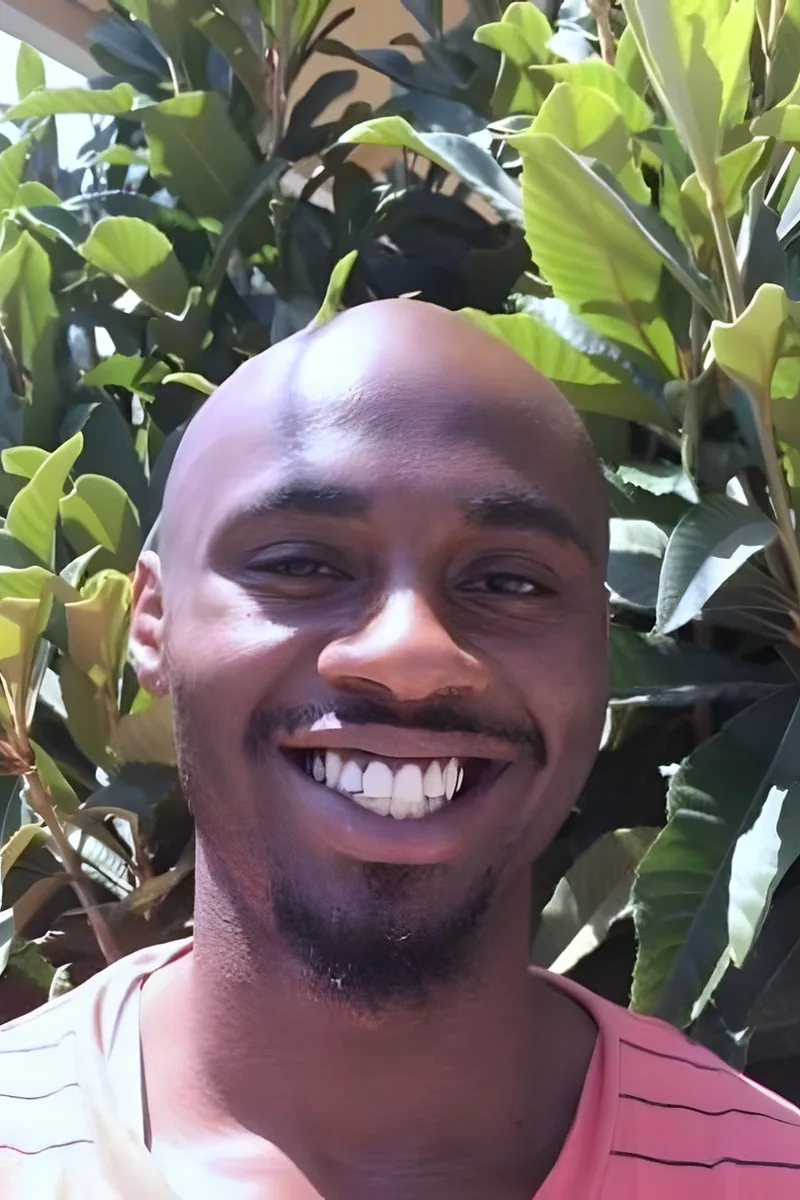
Caltech's economics curriculum put Brian through heavy doses of matrix algebra, optimization under constraints, and probability — the exact toolkit finite mathematics courses test. He approaches linear programming and counting problems by connecting them to the economic modeling contexts where he first learned them, which gives students a concrete anchor for topics that can otherwise feel like disconnected chapters.
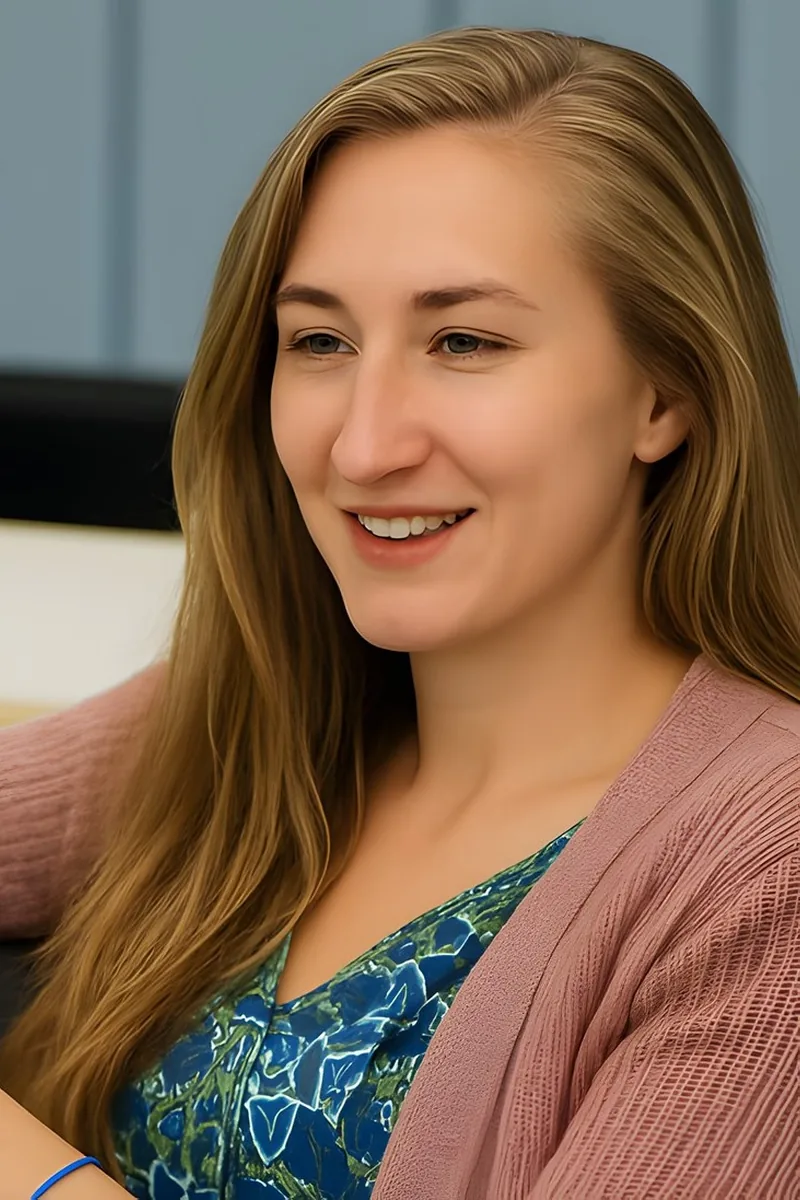
Anna's policy analysis PhD at Pardee RAND means she uses matrix algebra, probability models, and optimization daily — the same toolkit that finite mathematics courses test in a more compressed format. She unpacks linear programming and decision-theory problems by tying them to the real policy scenarios where these methods actually get applied, which makes abstract setups feel less arbitrary.
Dual honors degrees in mathematics and violin from La Sierra University might seem like an unusual combination, but the math side gave Alexander thorough grounding in the discrete structures and probability reasoning that finite mathematics courses revolve around. He's particularly sharp at unpacking problems where students need to build a matrix or set up a system of inequalities from a dense word problem, slowing down on the translation step so the algebra that follows actually makes sense.
Biology majors don't always expect to use math after graduation, but Nathan's coursework leaned heavily on the probability and statistics side — population modeling, genetics ratios, and data analysis — which overlaps directly with the counting techniques and probability units in finite mathematics. He breaks down word-heavy problems into clear step-by-step setups, especially when students struggle to figure out whether they're looking at a permutation, a combination, or a conditional probability question.
Game theory — Alain's intended graduate focus — runs on the same payoff matrices, probability calculations, and optimization logic that finite mathematics courses test every week. His UCLA business economics major with a math minor means he's built and solved these models in both theoretical and applied settings, from strategic decision frameworks to linear programming problems. He's especially sharp at translating messy word problems into clean matrix setups where students can see exactly what each entry represents.
Most finite mathematics students hit a wall not on the computation but on knowing which tool to reach for — is this a matrix problem, a linear programming setup, or a counting argument? Rudy's physics background means he learned these techniques as practical modeling tools, and his master's in math education sharpened how he explains the decision-making process behind each problem type. Rated 4.8 by students.
Working in both Colby's Mathematics Department and its Writing Center gave Alexander an unusual skill for finite mathematics: he can unpack the logic behind counting problems and probability setups in plain language, not just notation. His math degree means the combinatorics and matrix algebra are second nature, but his real strength is translating a dense word problem into a clear structure before any formulas come out. Rated 5.0 by students.
Preparing for medical school meant Serena spent serious time with the probability, statistics, and data analysis that finite mathematics courses revolve around — her biology degree at UCLA required exactly the kind of systematic counting and matrix reasoning that trips students up on exams. She breaks down word-heavy problems by identifying whether a question is really about combinations, conditional probability, or set operations before touching any formulas. Rated 5.0 by students.
Graduate-level biostatistics and plant biology research forced Dan to live inside the probability, matrix algebra, and data modeling that finite mathematics courses cover — except he was applying them to real population genetics and ecological datasets. He breaks down counting problems and probability setups by connecting them to the quantitative reasoning he uses daily, which tends to make abstract notation feel less arbitrary. Rated 5.0 by students.
Licensed middle and high school math teacher with a mathematics degree, Jacob has drilled the algebraic scaffolding — systems of equations, inequalities, basic matrix operations — that finite mathematics builds on, across hundreds of students in classroom and tutoring settings. He's especially sharp at slowing down on the translation step where a word problem becomes a mathematical setup, whether that's defining variables for a linear programming model or organizing information for a counting argument. Rated 5.0 by students.
Quantitative policy analysis at Duke means Matt spends his days translating messy real-world problems into the exact mathematical frameworks finite mathematics teaches — setting up linear programs for resource allocation, building probability models for risk assessment, and using matrices to compare policy outcomes. His undergraduate math degree gives him the formal grounding, while the policy work gives him a ready supply of concrete examples that make topics like systems of inequalities and expected value calculations feel purposeful. Rated 5.0 by students.
Alex's finance master's means he didn't just study matrix algebra and linear programming in the abstract — he used them to build financial models, price assets, and optimize portfolios. That real-world fluency translates directly when teaching students to set up objective functions or work through payoff matrices in a finite mathematics course. Rated 5.0 by students.
Physics training builds a particular kind of comfort with matrices and systems of equations — Erik used them constantly for modeling physical systems, which translates directly into the matrix algebra and linear programming that finite mathematics courses test. He unpacks each problem by clarifying the structure first, making sure students see how to organize constraints or set up a payoff table before jumping into computation.
Linear programming, matrix operations, and probability models can feel disconnected from each other until someone ties them back to real decision-making problems. David spent years as an actuary doing exactly that — applying finite math tools to model risk and optimize outcomes — so he teaches these topics with concrete context that makes the theory click.
Sam's PhD in statistics means the probability and matrix algebra chapters in finite mathematics are second nature — he taught and applied those tools at a graduate level long before they showed up in an undergrad syllabus. His biomedical engineering background adds a practical edge when explaining how to set up linear programming problems or interpret a Markov chain, since he's used those models to solve real optimization and modeling questions. Rated 4.9 by students.
Applied math majors don't just pass through finite mathematics — topics like linear programming, matrix operations, and combinatorics are foundational to the optimization and modeling work Roel trained in throughout his degree. He's especially sharp at teaching students how to set up and interpret systems of linear inequalities, connecting the algebraic steps to what the feasible region actually represents on a graph.
Economics training at the undergraduate level means Simon spent real time inside the linear programming and matrix models that finite mathematics courses test — building objective functions, interpreting shadow prices, and optimizing under constraints weren't abstract exercises but core tools for economic analysis. He's especially useful when students need to connect the algebra of systems of inequalities to what the solution actually means in context.
Testimonials
Because the right Finite Mathematics tutor makes all the difference.
Average Session Rating – Based on 3.4M Learner Ratings
Nearby Finite Mathematics Tutors
Other Riverside Tutors
Related Math Tutors in Riverside
Frequently Asked Questions
Finite Mathematics covers practical mathematical topics like linear programming, matrices, probability, and counting methods—skills essential for business, economics, and social sciences. Many Riverside high schools and community colleges require Finite Math as an alternative to calculus for students pursuing non-STEM majors. It emphasizes real-world problem-solving rather than abstract theory, making it valuable for understanding everything from voting systems to financial decisions.
Students often struggle with translating word problems into mathematical models, understanding when to apply different techniques (like matrices vs. linear programming), and working through multi-step problems that require both setup and calculation. Many also find it difficult to visualize abstract concepts like feasible regions or probability distributions. With Riverside's average student-teacher ratio of 22.8:1, personalized 1-on-1 instruction can help you work through these challenges at your own pace and build conceptual understanding alongside computational skills.
Expert tutors work with you to identify where your understanding breaks down—whether it's setting up equations, choosing the right method, or interpreting results. They can show you how different topics connect (like how matrices relate to systems of equations) and teach you problem-solving strategies that work across different question types. This personalized approach builds both confidence and mastery, helping you move from memorizing procedures to truly understanding the concepts.
Word problems require breaking down what information you're given, identifying what you need to find, and choosing the right mathematical tools. Tutors help you develop a systematic approach: reading carefully, defining variables clearly, setting up equations or models correctly, and checking whether your answer makes sense in context. With practice and feedback on your reasoning (not just your final answer), you'll build the pattern recognition skills to tackle unfamiliar problems confidently.
Yes. Riverside's 7 school districts and various community colleges use different textbooks and approaches to Finite Mathematics. Tutors who work with students in Riverside are familiar with multiple curricula and can adapt their teaching to match your specific course materials, whether you're using a traditional textbook, online platform, or hybrid approach. They can also help bridge gaps if you're switching between different textbooks or instructional styles.
Your first session focuses on understanding where you are in the course and what's most challenging for you. A tutor might review a recent assignment or test, ask you to work through a problem while explaining your thinking, and identify specific concepts that need clarification. This helps them create a personalized plan for future sessions, whether you need foundational review, help with current topics, or test preparation.
Absolutely. Math anxiety often stems from feeling lost or unsupported, and personalized 1-on-1 instruction addresses both the skill gaps and the confidence issues. Working with a tutor in a low-pressure environment lets you ask questions without judgment, take time to understand concepts, and celebrate small wins. As you see yourself solving problems successfully and understanding the 'why' behind methods, your confidence naturally builds.
Varsity Tutors connects you with expert tutors who work with students in Riverside and understand the local curriculum and student needs. You can share your specific challenges, course materials, and schedule preferences, and we'll match you with a tutor who's a great fit. From there, you'll work together to build a personalized learning plan and start seeing improvement in your understanding and grades.
Let’s find your perfect tutor
Answer a few quick questions. We’ll recommend the right plan and match you with a top 5% tutor.