Award-Winning Finite Mathematics Tutors
serving Concord, CA
Finite Mathematics
Tutors in Concord
Private 1-on-1 tutoring, weekly live classes for academic support, test prep & enrichment, practice tests and diagnostics, and more to elevate grades and test scores.
Based on 3.4M Learner Ratings
UniversitiesSchools & Universities
DeliveredHours Delivered
ProficiencyGrowth in Proficiency
Who needs tutoring?
No obligation. Takes ~1 minute.
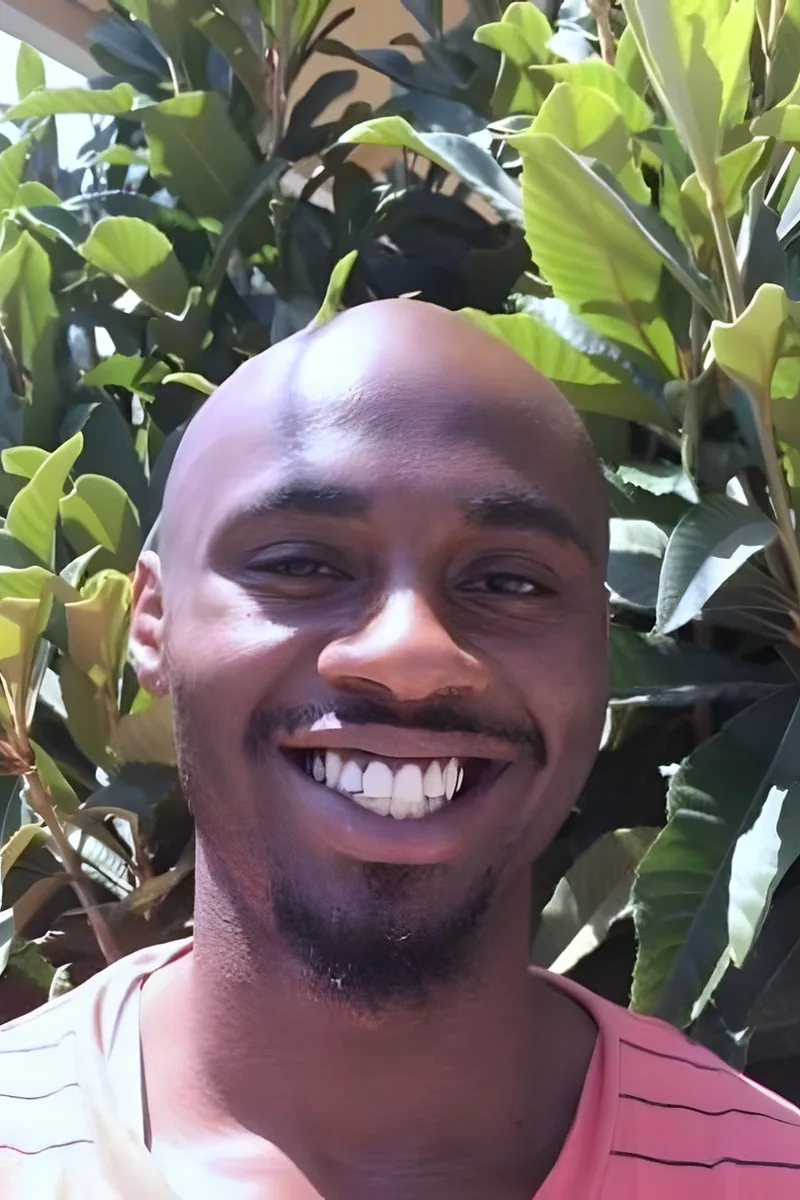
Caltech's economics curriculum put Brian through heavy doses of matrix algebra, optimization under constraints, and probability — the exact toolkit finite mathematics courses test. He approaches linear programming and counting problems by connecting them to the economic modeling contexts where he first learned them, which gives students a concrete anchor for topics that can otherwise feel like disconnected chapters.
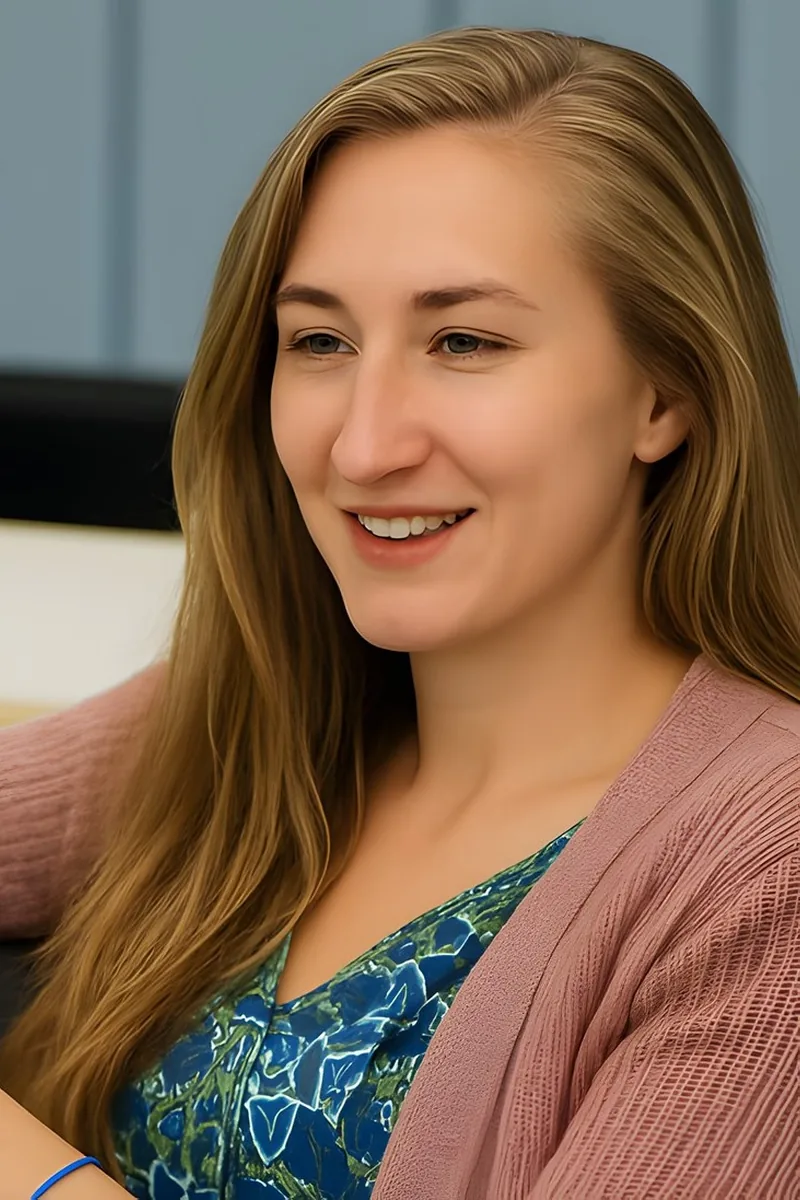
Anna's policy analysis PhD at Pardee RAND means she uses matrix algebra, probability models, and optimization daily — the same toolkit that finite mathematics courses test in a more compressed format. She unpacks linear programming and decision-theory problems by tying them to the real policy scenarios where these methods actually get applied, which makes abstract setups feel less arbitrary.
Dual honors degrees in mathematics and violin from La Sierra University might seem like an unusual combination, but the math side gave Alexander thorough grounding in the discrete structures and probability reasoning that finite mathematics courses revolve around. He's particularly sharp at unpacking problems where students need to build a matrix or set up a system of inequalities from a dense word problem, slowing down on the translation step so the algebra that follows actually makes sense.
Biology majors don't always expect to use math after graduation, but Nathan's coursework leaned heavily on the probability and statistics side — population modeling, genetics ratios, and data analysis — which overlaps directly with the counting techniques and probability units in finite mathematics. He breaks down word-heavy problems into clear step-by-step setups, especially when students struggle to figure out whether they're looking at a permutation, a combination, or a conditional probability question.
Game theory — Alain's intended graduate focus — runs on the same payoff matrices, probability calculations, and optimization logic that finite mathematics courses test every week. His UCLA business economics major with a math minor means he's built and solved these models in both theoretical and applied settings, from strategic decision frameworks to linear programming problems. He's especially sharp at translating messy word problems into clean matrix setups where students can see exactly what each entry represents.
Graduate-level biostatistics and plant biology research forced Dan to live inside the probability, matrix algebra, and data modeling that finite mathematics courses cover — except he was applying them to real population genetics and ecological datasets. He breaks down counting problems and probability setups by connecting them to the quantitative reasoning he uses daily, which tends to make abstract notation feel less arbitrary. Rated 5.0 by students.
Linear programming, matrix operations, and combinatorics can feel disconnected from the rest of math until someone ties them together. Maggie's engineering background means she regularly uses these tools — from optimization models in her PhD research to probability applied in biomedical data analysis. She teaches Finite Mathematics by anchoring each topic in a concrete decision-making scenario.
Quantitative policy analysis at Duke means Matt spends his days translating messy real-world problems into the exact mathematical frameworks finite mathematics teaches — setting up linear programs for resource allocation, building probability models for risk assessment, and using matrices to compare policy outcomes. His undergraduate math degree gives him the formal grounding, while the policy work gives him a ready supply of concrete examples that make topics like systems of inequalities and expected value calculations feel purposeful. Rated 5.0 by students.
MBA coursework at Tulane and an undergraduate business background mean Juliana regularly works with the matrix algebra, probability, and optimization models that finite mathematics courses cover — she's encountered them as practical tools for management decisions, not just textbook exercises. She's especially effective at translating messy word problems into clean setups, particularly in linear programming and counting units where students struggle to identify what the variables actually represent. Rated 5.0 by students.
Business administration coursework at Texas A&M puts Cyrus squarely in the territory finite mathematics covers — he's actively using probability, matrix operations, and linear programming in his own classes for things like supply chain models and decision analysis. That firsthand context makes him effective at explaining why you're building a payoff matrix or setting up constraints, not just how to crunch the numbers. Rated 5.0 by students.
Most finite mathematics students already know basic algebra — the trouble starts when a problem asks them to build a matrix from scratch or figure out whether a counting scenario needs combinations or conditional probability. John's math degree gives him the formal grounding to explain the why behind each setup, and he's particularly effective at bridging the gap between arithmetic comfort and the abstract logic these courses actually test.
Most finite mathematics students hit a wall not on the computation but on knowing which tool to reach for — is this a matrix problem, a linear programming setup, or a counting argument? Carson, a math major at the University of Chicago heading toward a doctorate, has the algebraic range to connect those topics rather than treat them as disconnected chapters. He unpacks each problem type by showing how set theory, probability, and optimization share underlying structure.
Michael's double major in mathematics and finance means he learned topics like linear programming and probability not as abstract exercises but as decision-making tools — optimizing portfolios, modeling risk, building payoff matrices with real dollar signs attached. That practical grounding makes him especially effective at teaching the setup behind systems of inequalities and expected value calculations, where knowing what the numbers represent matters as much as crunching them.
I like helping students. I am very patient. I have experience teaching Calculus classes at the University of Miami. I have done private tutoring for all levels of math up to Calculus, as well as Statistics, Business Math, and Math Finance. I have worked in the actuarial field. I have an undergraduate degree in mathematics from Michigan State University and a Master's degree in mathematics from the University of Miami. I worked for The Princeton Review as a tutor for the SAT. I did very well on both the SAT and ACT, and like teaching students how to do better on those. I like history, too, and always find it fun to tutor history.
Monika's math training runs from Delhi University through IIT Bombay to a PhD program at the University of Memphis — a path that built serious fluency with the matrix algebra, set theory, and probability that finite mathematics courses revolve around. She unpacks each topic by connecting it to the broader mathematical structure underneath, which is especially useful when students hit the wall on translating a word problem into a system of inequalities or a properly defined sample space.
Physics training builds a habit of translating real situations into mathematical frameworks — exactly the skill that trips students up in finite mathematics when they're staring at a word problem about scheduling, resource allocation, or probability and can't figure out where the math starts. Cory uses that same translation instinct to teach students how to set up matrices, identify constraints for linear programming, and organize counting problems before jumping to computation. Rated 4.9 by students.
As a current statistics grad student with a sociology background, Evan has spent real time with the probability distributions, matrix operations, and data modeling that finite mathematics courses build around — and he's used them to analyze actual social science datasets, not just textbook exercises. He unpacks counting problems and set operations by connecting them to the logic behind survey design and population analysis, which makes the abstract notation feel grounded. Rated 5.0 by students.
Testimonials
Because the right Finite Mathematics tutor makes all the difference.
Average Session Rating – Based on 3.4M Learner Ratings
Nearby Finite Mathematics Tutors
Other Concord Tutors
Related Math Tutors in Concord
Frequently Asked Questions
Finite Mathematics covers practical mathematical topics like linear equations, matrices, probability, statistics, and optimization—skills widely used in business, economics, and social sciences. Many students take it as an alternative to calculus or as a prerequisite for college business and science programs. Unlike calculus, which focuses on continuous change, finite math deals with discrete systems and real-world problem-solving that doesn't require advanced calculus concepts.
Students often struggle with translating word problems into mathematical equations, understanding when to apply different methods (like linear programming or matrix operations), and connecting abstract concepts to real-world applications. Many also find it difficult to organize multi-step solutions and show their work clearly—skills that are essential for earning full credit on exams and assignments. A personalized tutor can help you identify which concepts are causing confusion and build a systematic approach to problem-solving.
Effective word problem solving starts with breaking the problem into steps: identify what you know, define your variables clearly, translate the situation into equations, solve, and check your answer against the original problem. Many students skip the setup phase or rush through it, leading to errors. Tutors can teach you to recognize problem patterns (optimization, probability, systems of equations) and develop a consistent strategy for each type, which builds both accuracy and confidence.
Yes. Varsity Tutors connects you with tutors who are familiar with the major Finite Mathematics textbooks and curricula used across Concord's school districts. Whether your course emphasizes applied optimization, probability and statistics, or linear algebra, tutors can align their instruction with your specific course materials and expectations. This ensures that practice problems, examples, and explanations match what you're learning in class.
Showing work demonstrates your reasoning process and helps teachers identify where errors occur—you might get partial credit even if your final answer is wrong. In Finite Mathematics, clear work also helps you catch mistakes in setting up equations or choosing the wrong method. Tutors emphasize organizing solutions step-by-step, labeling variables and operations, and explaining your logic, which not only improves grades but deepens your understanding of the material.
Math anxiety often stems from feeling rushed or confused about why methods work, not from lack of ability. Personalized tutoring creates a low-pressure environment where you can ask questions, work through problems at your own pace, and see patterns and connections that make concepts feel less mysterious. As you successfully solve problems and understand the 'why' behind each step, confidence naturally builds. Many students find that one-on-one instruction transforms their relationship with math.
Your first session is an assessment and planning meeting. The tutor will ask about your current grade, specific topics that are challenging, your learning style, and your goals (improving a grade, preparing for an exam, or mastering a particular unit). You'll likely work through a problem or two together to identify gaps and establish a baseline. From there, you'll develop a personalized plan focusing on your priorities.
Many Finite Mathematics topics are interconnected—linear equations appear in systems, optimization, and matrices; probability concepts connect to statistics and decision-making. Tutors help you recognize these patterns by working with you on multiple problem types, highlighting similarities in approach, and showing how one concept builds on another. This deeper understanding makes the subject feel more cohesive and helps you retain information longer than memorization alone.
Let’s find your perfect tutor
Answer a few quick questions. We’ll recommend the right plan and match you with a top 5% tutor.