Award-Winning Science Tutors
serving Lincoln, NE
Science
Tutors in Lincoln
Private 1-on-1 tutoring, weekly live classes for academic support, test prep & enrichment, practice tests and diagnostics, and more to elevate grades and test scores.
Based on 3.4M Learner Ratings
UniversitiesSchools & Universities
DeliveredHours Delivered
ProficiencyGrowth in Proficiency
Who needs tutoring?
No obligation. Takes ~1 minute.
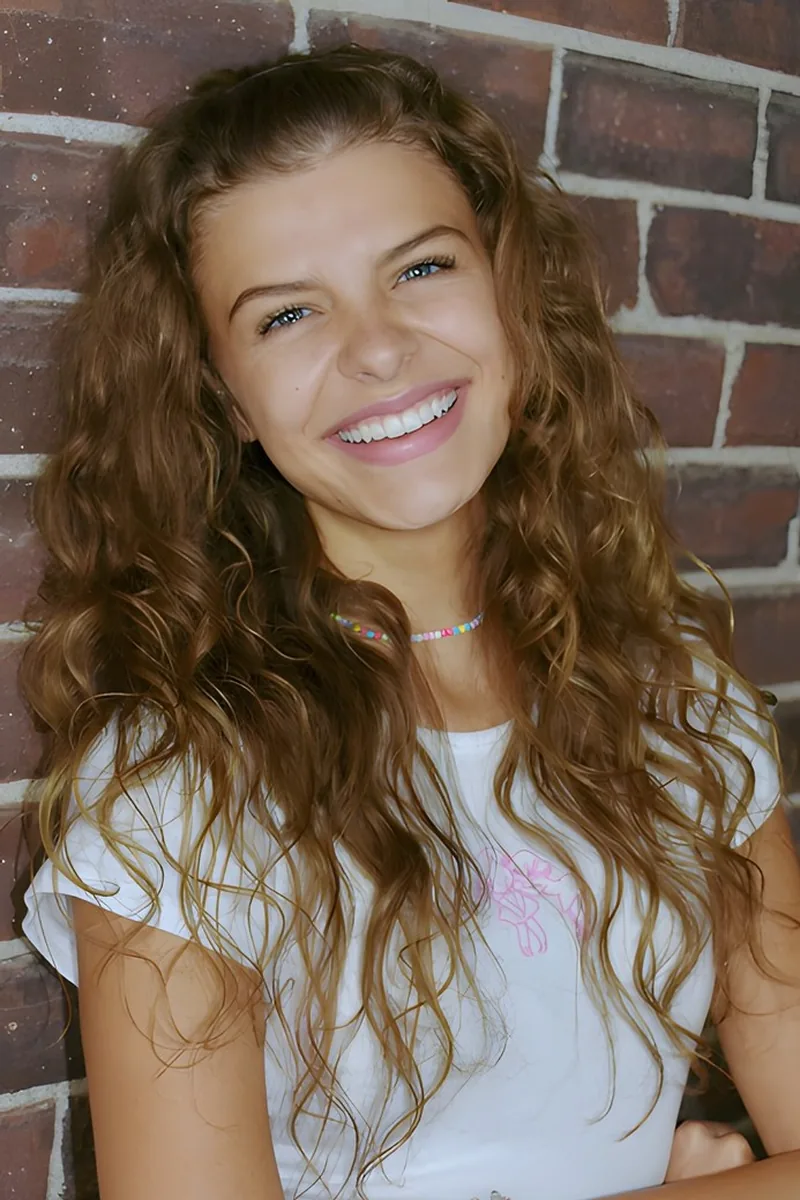
As a Music Industry major at USC, Ingrid might not seem like an obvious pick for science — but her 35 ACT means she crushed the Science section, which is really a test of graph reading, data comparison, and spotting trends across conflicting experiments. She teaches students to stop overthinking the content and start treating science problems as puzzles where the answer is almost always sitting in the figure or table.
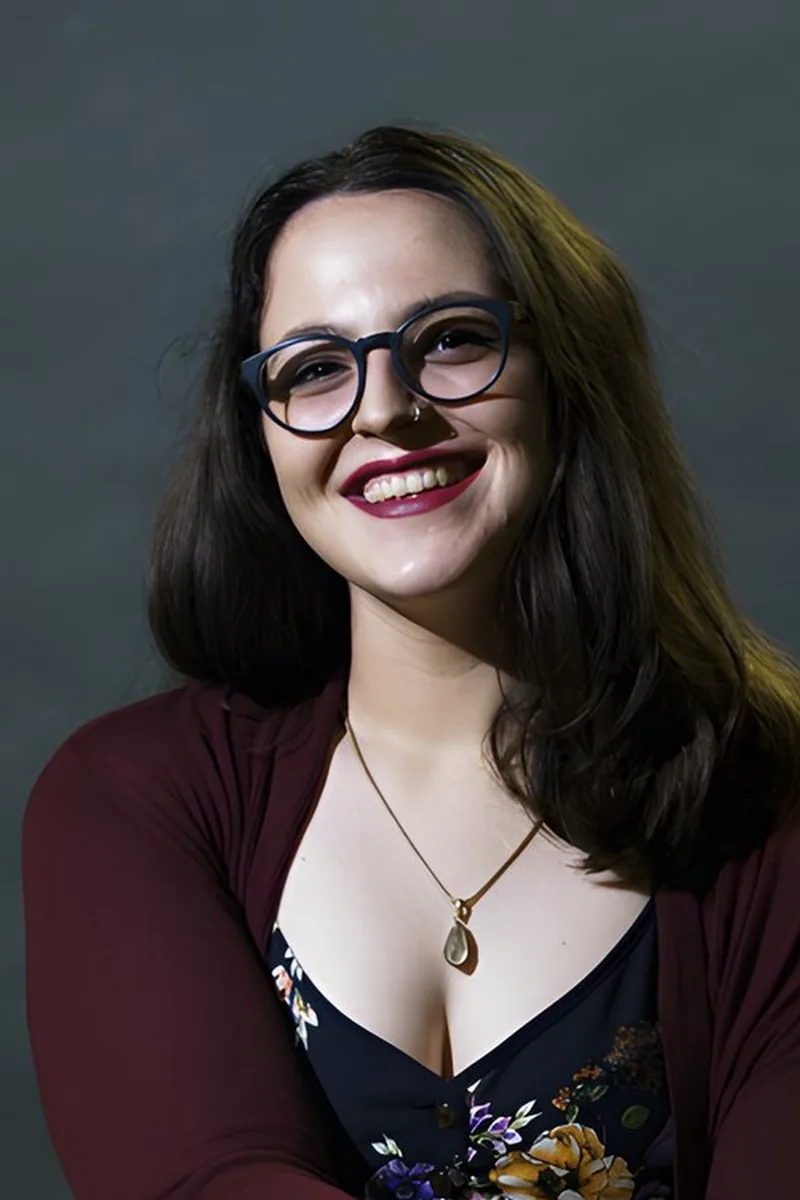
Film and animation work requires more applied science than most people realize — Michaela's 3D animation training involved physics simulations, understanding how light behaves across surfaces, and modeling natural phenomena with mathematical precision. That technical foundation makes her well-suited to explain concepts like force, motion, and energy transfer through visual and spatial reasoning that clicks for students who learn better by seeing than by reading. Rated 5.0 by students.
Rachel approaches science the way she approaches a difficult text: by slowing down, identifying what the question is actually asking, and organizing information before jumping to conclusions. Her strength is in teaching students how to read scientific problems carefully and pull out what matters, which is often the skill that's actually holding grades back.
Studying neuroscience at Vanderbilt means Avi lives at the intersection of biology, chemistry, and physics every day. He unpacks scientific concepts — whether it's balancing chemical equations, interpreting force diagrams, or tracing energy through an ecosystem — by grounding each one in real-world examples that make the material stick.
A double major in geology and biochemistry gives Aaron unusual range across the sciences — he can walk through cell biology one session and explain mineral classification or plate tectonics the next. He ties scientific vocabulary and processes back to real observations, whether that's interpreting rock layers in a road cut or tracing energy flow through an ecosystem.
Studying chemical engineering at Michigan means Edward lives in the overlap of chemistry, physics, and applied math every day. He unpacks scientific concepts — whether it's stoichiometry, thermodynamics, or unit analysis — by connecting them to real processes students can visualize. That engineering lens makes abstract science topics feel concrete and logical rather than arbitrary.
I am my strongest and best self when helping others. As an enthusiastic, passionate, and dependable teacher, I am consistently working to share and engage with the material I love.
Physics is where Oluwatosin's expertise runs deepest — as an electrical engineer, he built his career on applying scientific principles like electromagnetism, thermodynamics, and circuit analysis to real systems. He unpacks scientific concepts by tying them to tangible examples, making abstract ideas like wave behavior or energy conservation click for students who need more than a textbook definition.
Being on a pre-med track while studying engineering at the University of Nebraska–Lincoln means Guillermo lives in both the physical and biological sciences every day. He breaks down topics like cell biology, force diagrams, and chemical reactions by tying them to real-world applications — the kind of concrete examples that make abstract concepts stick.
An Engineering Technology degree requires heavy coursework in physics, chemistry, and applied sciences, so Jeremy knows how to break down lab concepts, unit conversions, and data interpretation from firsthand experience. He's particularly good at teaching students how to connect formulas to what's actually happening in a physical system rather than treating equations as abstract puzzles.
While science isn't Erika's primary field, her psychology training involved heavy exposure to research design, data interpretation, and the scientific method. She tackles science coursework by teaching students to read experiments the way a researcher would — identifying variables, evaluating controls, and drawing conclusions from data.
A classical languages degree means Zachary spent years dissecting Latin scientific terminology at its roots — a skill that makes vocabulary-heavy science material far less intimidating for students encountering terms like "photosynthesis" or "endothermic" for the first time. He also brings strong quantitative chops (1480 SAT, 32 ACT) and uses his background in systematic grammar analysis to teach students how to read dense textbook passages and extract the key relationships between concepts.
Computer science trains you to think in systems — how inputs become outputs, how variables interact, how small changes cascade — and that mindset translates directly to understanding scientific concepts like energy transfer, cell processes, and experimental design. Matthew applies that structured thinking when walking through lab data or explaining how forces act on an object. His 32 ACT, including the Science section, backs up his comfort across disciplines.
Erika's math-heavy teaching background — from arithmetic through calculus — means she's comfortable with the quantitative backbone of science: unit conversions, interpreting graphs, and working through rate calculations that often trip students up in physical science and biology. She brings a lighthearted, read-the-room approach to topics that can feel intimidating, adjusting her explanations on the fly until the concept actually lands. Her 33 ACT confirms she can handle the cross-disciplinary reasoning science coursework demands.
Psychology is fundamentally a science degree — James spent his undergraduate training learning experimental design, statistical analysis, and how to evaluate peer-reviewed research. Now pursuing a Ph.D. in School Psychology, he brings that research literacy to science tutoring, breaking down how to form testable hypotheses, control for variables, and draw conclusions from data. Rated 5.0 by students.
Having studied chemistry, physics, and calculus alongside his computer science degree at Grinnell College, Oen brings genuine STEM fluency to science tutoring — he doesn't just know the vocabulary, he understands the math and logic underneath it. He's especially strong at walking students through quantitative problems like balancing equations, interpreting motion graphs, or converting units, treating each one as a puzzle with a clear sequence of steps rather than a formula to memorize.
A chemistry degree and pre-med coursework mean Natalie can move fluidly between biology, chemistry, and physics concepts — connecting, say, how chemical bonding principles explain enzyme behavior in living systems. She breaks down the scientific method and data interpretation skills that underpin every science class, making cross-disciplinary connections that stick. Rated 4.8 by her students.
Hi! I'm Ronit, and I'm a PhD student in Biostatistics with a passion for helping students build confidence and truly understand what they're learningnot just memorize steps. I have experience teaching and tutoring students across a range of levels and enjoy breaking difficult concepts into clear, manageable pieces. My strengths are in mathematics, statistics, data analysis, and quantitative problem solving, but I also enjoy helping students develop study strategies, prepare for exams, and improve long-term academic skills. Whether you're trying to raise a grade, prepare for a big test, or finally understand a topic that hasn't clicked yet, I aim to create a supportive and personalized learning environment. I believe good tutoring should feel collaborative and low-pressure. I adapt my teaching style to each student and focus on helping them become more independent and confident over time. I'm excited to work together and help you reach your goals!
Hello! My name is Himanshu and I've been a private tutor for over 7 years specializing in chemistry, biology, math, and English literature/composition. I attended the University of Nebraska-Lincoln with a major in Microbiology and minors in Biochemistry, Math, and English. I am now working towards my Doctor of Pharmacy (PharmD) degree at the University of Nebraska Medical Center, as well as my MBA in Medical Administration and Management. I have a great success rate when it comes to tutoring, especially with students who are encountering new topics or unfamiliar concepts. I am a firm believe in the "see-one, do-one, teach-one" strategy for teaching, with a very heavy emphasis on showing the logic behind problem-solving methods. Basically, I like to break down topics in ways that keep my students engaged and help them understand the "why" with the "how". I look forward to helping your student achieve their academic goals!
As a curriculum developer building courses for middle and high schoolers, Elena knows exactly how to make dense material click — including the scientific vocabulary, classification systems, and cause-and-effect reasoning that science coursework demands. Her Religious Studies training at McGill involved rigorous textual analysis and structured argumentation, skills she now channels into teaching students how to read scientific texts carefully, interpret what an experiment actually shows, and explain their reasoning clearly.
As a mechanical engineering student at Harvard, Christopher lives at the intersection of physics and chemistry daily — calculating forces, analyzing material properties, and modeling energy systems. That applied perspective makes him especially effective at showing students why scientific concepts matter beyond the textbook, turning abstract formulas into concrete, intuitive ideas.
A biomedical engineering major at Brown, Phillip lives at the intersection of biology, chemistry, and physics — which means he can explain how cellular respiration connects to thermodynamics or why force diagrams matter in anatomy. He tackles science by linking concepts across disciplines so students see the bigger picture instead of memorizing isolated facts.
An economics degree means Simon spent years building and testing models — controlling for variables, interpreting data sets, and figuring out whether the numbers actually support a conclusion or just look like they do. That same process underpins every science class, from setting up a controlled experiment to reading a graph and explaining what it reveals. His 1540 SAT confirms the quantitative and analytical chops to back it up.
Speech-language pathology graduate training at Columbia is surprisingly science-heavy — anatomy, neuroscience, research design — and Sherry brings that clinical lens to teaching students how biological systems work and how experiments should be structured. Her UChicago psychology and linguistics background also means she's comfortable with everything from statistical reasoning to breaking apart dense scientific terminology using morphological roots. Rated 5.0 by students.
Henry's Harvard thesis on John Dewey's philosophy of education was fundamentally about how people learn through inquiry and experimentation — the same cycle of questioning, testing, and revising that sits at the heart of the scientific method. He teaches science by grounding abstract concepts in that inquiry process, pushing students to ask why an experiment is designed a certain way before worrying about memorizing the outcome. His 1530 SAT confirms he can handle the quantitative and analytical reasoning science coursework demands.
As a medical student at Northwestern's Feinberg School of Medicine, Anna lives inside scientific reasoning every day — forming hypotheses, interpreting data, and connecting biological systems to real outcomes. She brings that same structured thinking to general science topics like the scientific method, ecosystems, and basic chemistry, making each concept feel purposeful rather than random.
A statistics and machine learning certificate at Princeton means Julie spends her coursework building models, testing hypotheses against real data, and evaluating whether results are statistically meaningful — all of which is applied scientific reasoning. She brings that quantitative rigor to science tutoring, especially when students need to move from memorizing definitions to actually interpreting experiments, reading graphs, and explaining what their data means. Her 4.9 rating suggests the approach lands.
Applied math and computer science at Johns Hopkins means Sabira spends her days quantifying patterns and testing models — the same core loop students encounter in science when they're asked to measure, predict, and explain. She's particularly strong on the computational side of science: reading data tables, graphing relationships, and working through the math embedded in physics or chemistry problems. Holds a 5.0 rating.
Undergraduate research in Northwestern's John Rogers Lab and a biomedical engineering curriculum gave Ingrid hands-on experience with biology, chemistry, physics, and thermodynamics. She explains scientific concepts by connecting them to real applications — like how drug delivery systems depend on diffusion or why cells respond to mechanical forces — which makes abstract ideas stick.
While science isn't Valerie's primary discipline, the University of Chicago's core curriculum required her to take rigorous coursework in the natural sciences alongside her Classics major. She's also trained in Emergency Medical Services, which gave her hands-on fluency with anatomy, physiology, and clinical reasoning that she brings to science tutoring sessions.
Running a tutoring program at a charter middle school meant Liz wasn't just teaching science content — she was figuring out how to make vocabulary-heavy units on cells, ecosystems, and states of matter land for students with dyslexia, ADHD, and other learning differences. Her special education master's gave her a toolkit of concrete strategies for breaking down dense nonfiction text and multi-step processes, which is where most science students actually get stuck. She holds a 4.7 rating across her subjects.
Testimonials
Because the right Science tutor makes all the difference.
Average Session Rating – Based on 3.4M Learner Ratings
Practice Science
Free practice tests, flashcards, and AI tutoring for Science
Nearby Science Tutors
Other Lincoln Tutors
Related Science Tutors in Lincoln
Frequently Asked Questions
Varsity Tutors matches Lincoln students with expert Science tutors for 1-on-1 instruction. We pair each student with a tutor based on their specific needs, learning style, and goals.
Whether you need homework help, exam prep, or want to get ahead, our Science tutors are ready to help.
Common challenges include gaps from earlier material, difficulty with specific concepts, and trouble applying learning to new problems. These issues can snowball quickly in Science.
A tutor identifies where you're stuck, fills in gaps, and provides targeted practice. The 1-on-1 format means you get help exactly where you need it.
Tutors work with your student's actual coursework—homework assignments, class notes, and upcoming tests. This keeps tutoring directly relevant to what's happening in the classroom.
When you share information about your student's school and curriculum, we can match you with a tutor who has relevant experience.
All tutors complete background checks, credential verification, and teaching evaluation. Many of our Science tutors hold advanced degrees or have years of teaching experience.
You can review tutor profiles to find someone with the right background for your student's level and needs.
Many students see improved grades within a few weeks, along with better understanding of Science concepts and more confidence tackling challenging material.
Tutors track progress and adjust their approach to ensure continued improvement.
Most students benefit from 1-2 sessions per week. More frequent sessions help if your student is significantly behind or has an important exam coming up.
Your tutor can recommend a schedule based on your student's specific situation and goals.
Tutoring is purchased in packages of hours, with rates varying by tutor experience. Varsity Tutors offers several options to fit different budgets and needs.
You can discuss pricing during your consultation to find what works best.
Your tutor will assess where your student is, discuss goals, and start working on priority areas. Most students bring current homework or upcoming test material to focus on.
By the end, you'll have a clear sense of how the tutor can help and a plan for moving forward.
Let’s find your perfect tutor
Answer a few quick questions. We’ll recommend the right plan and match you with a top 5% tutor.