Award-Winning SAT Math Tutors
serving Pittsburgh, PA
SAT Math
Tutors in Pittsburgh
Private 1-on-1 tutoring, weekly live classes for academic support, test prep & enrichment, practice tests and diagnostics, and more to elevate grades and test scores.
Based on 3.4M Learner Ratings
UniversitiesSchools & Universities
DeliveredHours Delivered
ProficiencyGrowth in Proficiency
Who will be getting tutoring?
No obligation. Takes ~1 minute.

I am happy to accommodate and work with learners on the spectrum.
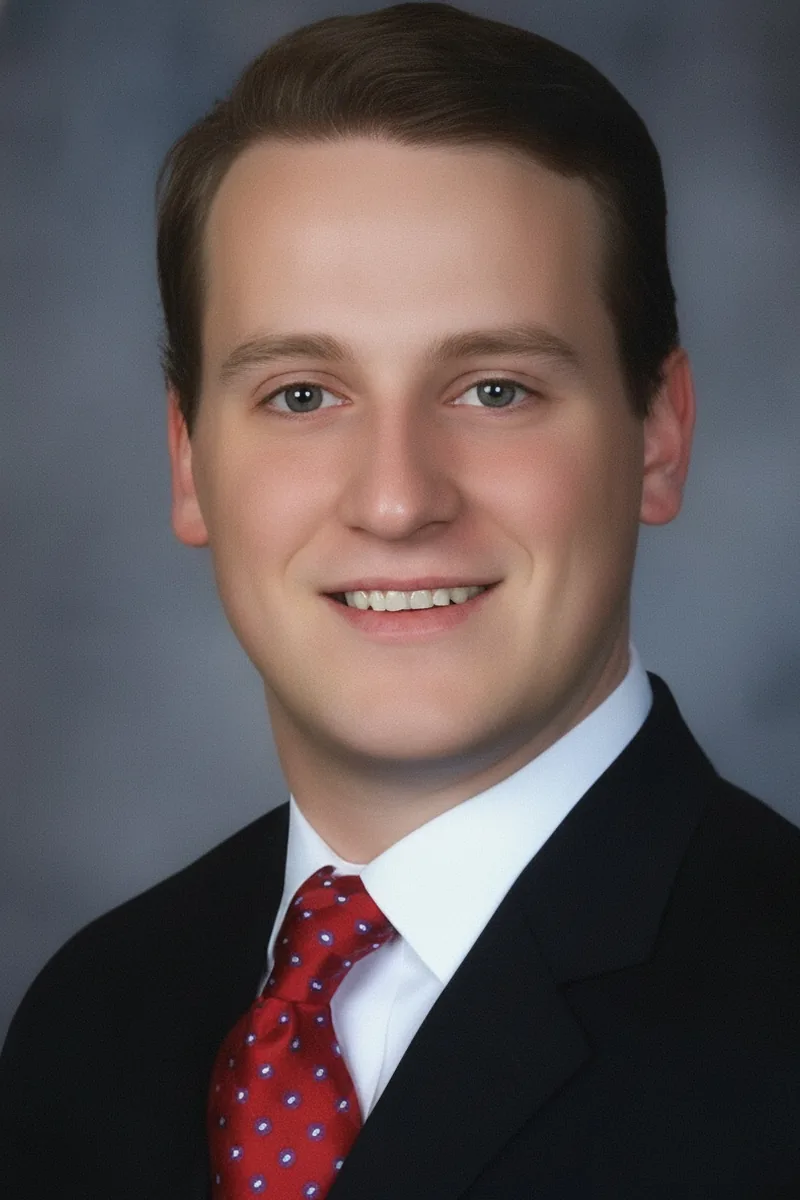
A math degree from Georgetown plus a 1580 SAT means Peter doesn't just know the content — he knows which algebraic shortcuts and graph-reading strategies actually save time under pressure. He breaks the SAT Math section into pattern categories so students recognize problem types within seconds and spend their energy solving, not deciphering. Rated 5.0 by students.
I am in my second year at MIT studying mathematics, and I am currently doing a research project in Spectral Graph Theory. I have been a tutor since my junior year in high school, and I enjoy teaching all levels of math; everything from pre-algebra through calculus and linear algebra! I focus primarily on making sure that the definitions and processes given in class make intuitive sense, so that math can begin to feel like second nature.
Three semesters teaching ESL gave Danielle an unusually sharp instinct for breaking down dense, wordy problems — a skill that pays off on SAT Math, where half the battle is translating a convoluted setup into a clean equation before any calculating begins. Her 1550 SAT and biology-to-med-school math background mean she's fluent in the geometry, statistics, and algebraic reasoning the test actually emphasizes. Rated 5.0 by students.
Scoring a 1560 on the SAT, Ben knows exactly where the math section tries to trip students up — especially on systems of equations, quadratic modeling, and data interpretation questions that look harder than they are. He teaches a problem-solving approach that emphasizes identifying question types quickly so students spend their time on execution, not confusion. Rated 5.0 by students.
Naomi scored a 1480 on the SAT and breaks the Math section down by question type — heart of algebra, passport to advanced math, and problem solving with data analysis — so students know exactly where to focus their prep time. She teaches efficient strategies for grid-in questions and multi-step word problems that cut through the noise and get to the math quickly.
Mary's chemistry TA work at Pitt means she's spent a year and a half watching students make algebraic errors in real time — sign flips, distribution mistakes, sloppy fraction work — which are exactly the mistakes that cost points on SAT Math's no-calculator section. She scored a 1550 on the SAT herself and uses that experience to teach students how to attack the quadratic and systems questions methodically instead of rushing to an answer. Rated 4.8 by students.
I am anticipating starting a master's program in the fall. When I'm not working I enjoy playing and watching basketball, reading and exercise. I love learning and I am eager to share my skills and knowledge with others.
Most SAT Math mistakes aren't actually math mistakes — they're misreads of what the question is asking, especially on the multi-step "Heart of Algebra" problems that dominate the scoring. Samuel, who scored a 1590 on the SAT while studying applied mathematics, teaches students to convert wordy setups into stripped-down equations before solving, treating each problem like a modeling exercise rather than a computation drill. His applied math background means he can show students exactly how quadratic, linear, and exponential structures behave — so pattern recognition replaces guesswork on test day.
I am a current Sophomore Mechanical Engineering student at Messiah College in Mechanicsburg, PA. I graduated Upper St. Clair High School in 2018, and took just about every AP math and science course there is. I have extensive knowledge in these subjects, and enjoy helping others to understand them! In my free time, I enjoy running cross country and track, playing percussion, and hanging out with my friends!
I am currently an undergraduate studying Statistics and Machine Learning + Computer Science at Carnegie Mellon University. At CMU, I am an undergraduate research assistant for the AI for Intelligent Tutoring Systems Team, and I am a teaching assistant for Fundamentals of Programming. My teaching philosophy centers on fostering a supportive learning environment where students feel empowered to tackle challenging concepts. I believe in using real-world applications to make math relatable and engaging, which helps my students build confidence and achieve academic success. I am passionate about tutoring because I enjoy seeing students overcome obstacles and progress over time, while developing a love for the subject. Outside of tutoring, I enjoy tennis, playing violin in an orchestra, and delving into literary classics.
I am a third-year undergraduate student at Carnegie Mellon University studying Voice and Opera Performance with minors in Music Education and French and Francophone Studies. My ultimate goal is to become a teacher because I love working with students to help them achieve mastery of their subject(s)!
Most SAT Math mistakes aren't about not knowing the math — they're about misreading what the question wants or picking a slow solution path under pressure. Matthew, a math and CS student at Harvard with a 1520 SAT, teaches students to exploit the structural patterns in the test's algebra and advanced-math questions, using the same systematic thinking his programming background demands: define the problem precisely, then execute the cleanest approach. Rated 4.9 by students.
Most SAT Math mistakes aren't about not knowing the math — they're about misreading what the question wants, especially on the grid-in and multi-step passport-to-advanced-math problems. Rishi, a math major at Yale with a 1590 SAT, teaches students to slow down for five seconds on setup so they can speed up everywhere else, turning sloppy errors into recovered points. Rated 5.0 by students.
I am a graduate of Carnegie Mellon University with a Master's of Entertainment Technology. I tutor a wide range of subjects, but my focus areas are Computer Science, Game Development, creative writing, and both SAT and ACT test prep. I think students are at their best when they embrace both their technical and creative sides, and I want to guide students in how to achieve that for themselves. Outside of tutoring, I create games in my free time, as well as write.
Lawrence scored a 1540 SAT composite, and his math tutoring experience spans algebra through precalculus — exactly the range the SAT draws from. He zeroes in on the specific question patterns that trip students up, like multi-step word problems involving systems of equations or interpreting nonlinear graphs under time pressure. Rated 4.8 by students.
I'm a recent graduate of the University of Chicago (AB'17) where I studied English Language and Literature, and Linguistics. I have experience coaching students writing and editing college essays, resume/cover letters, and academic papers of all kinds. I was a content writer for a small Chicago start-up and later worked as a game designer for the University's game lab. I enjoy writing, dancing, reading, roller blading, and playing video games in my free time.
I am a current undergraduate student at the University of Pittsburgh, studying Political Science and Psychology with a minor in Spanish. I have ample experience in tutoring and working with children ranging from preschool to 12th grade. Through the Bev Hickman Writing Center at Catonsville High School, I received a full school year's worth of intense writing tutoring training, including AP essays, college applications, cover letters, resumes, and other class assignments. I have also gained experience in childcare through Trinity Summer Camp, where I worked as a counselor for ages 3.5 to 5 for 7 weeks; we focused on creating an enriching environment for education and fun, managing a wide array of behaviors and personalities.
As a mechanical engineering student at Carnegie Mellon, Vincent uses SAT-level algebra, data analysis, and coordinate geometry almost daily — these aren't abstract test topics for him. His 1490 SAT composite backs up a targeted approach that zeroes in on the handful of concept gaps costing students the most points. He's especially sharp on the no-calculator section, where number sense and strategic setup matter more than grinding through arithmetic.
I am a student at Carnegie Mellon University (CMU). I have spent a large portion of my life outside of the United States and am fluent in Spanish and currently studying Arabic as well. I was homeschooled for much of my life and loved it, but completed my last three years of high school in a public school and am thus well acquainted with the various forms of standardized testing. When I'm not studying I like singing and theatre, reading, playing the piano, climbing trees and doing anything outdoors. I have been tutoring Spanish at CMU for a year now, and am also well versed in History, Geography, and Math. I look forward to working with.
I am a graduate from Rochester Institute of Technology with a master's in Game Design and Development. My passions lie in everything related to games and mathematics. In the past, I have tutored various subjects in mathematics throughout high school and college, including but not limited to Algebra, Algebra II, Trigonometry, Calculus, Discrete Mathematics, Mathematics of Graphical Simulation, and Linear Algebra. As for technology, I am more than happy to reach out for help in Web Development (HTML, CSS, Javascript) or C# programming. I believe that every person can learn any topic. While every individual has different tastes, strengths, and weaknesses, there is no such thing as an "incapability" to know a subject. Education often possesses a guise of anti-fun, but I can promise you that all topics can be engaging, and I am willing to show you how engaging mathematics and technology can be. As a Game Designer, I have a deep interest in both playing games and making games. This includes games of all kinds: video games, board games, tabletop role-playing games, trading card games, miniatures, and even some sports like tennis or ping pong. Games act as a fantastic teaching tool. They teach by design without users recognizing. It is always a satisfying moment when somebody says "I learned that word from Magic" or "D&D taught me that." Remember: you can succeed. If something is important to you, then it's always worthwhile.
I am currently a resident physician at Northwestern Hospital.
I am a first year medical student at the Sidney Kimmel Medical College at Thomas Jefferson University. I have been a private tutor in the past in subjects such as math, biology, chemistry, and the SATs and every single one of my more than twenty students have shown significant improvement. Most importantly, I have a passion for teaching, and your needs and preferences as the learner will always be paramount. I hope to help every one of my students reach every bit of their potential, and along the way, to utterly shatter any self-induced limitations that have been placed upon what they can accomplish.
I am currently studying molecular biology and I hope to work at a pediatric hospital after graduating from medical school. As an undergraduate, I am involved in volunteering organizations, photography, dance companies, and Asian-American political organizations.
I am a senior with a Neuroscience major at Swarthmore College. My favorite subjects include Biology and Psychology. I am interested in teaching students how to develop a better grasp of their academic material, improve their learning skills, and succeed in whatever course they take. Outside of the classroom, I enjoy playing violin, reading, and traveling. I also have extensive community service experience and have traveled to China, Kenya, and the Dominican Republic to engage in volunteer work.
Scoring a 1550 on the SAT, Mahitha went through intensive prep and came away with specific strategies for the Math section — particularly for the no-calculator portion, where number sense and algebraic shortcuts matter most. She passes along the timing techniques and problem-type recognition that moved her own score up, rather than relying on generic practice alone.
Scoring 1580 on the SAT gave Kate firsthand knowledge of the traps the math section sets — especially on those final grid-in questions where a misread of a quadratic or a sign error on an inequality costs critical points. She breaks the section into concept clusters like functions, ratios, and data analysis so students know exactly where their weak spots are. Each session targets specific problem types rather than generic review.
Matthew scored a 1580 on the SAT, and his approach to the Math section is built around recognizing which of the ~15 recurring problem types you're looking at before you start solving. He's particularly effective at demystifying the harder passport-to-advanced-math questions — quadratic and exponential reasoning, systems with no solution — that separate a 700 from an 800. His background as the child of two math professors means explaining quantitative concepts clearly is practically genetic.
I'm currently pursuing an MFA in Creative Writing at Temple University. I love working with children and young adults, and I'm thrilled to be spending some time tutoring this spring.
I am friendly, reliable, and most importantlycommitted to helping you learn! It is my top priority to create a positive learning experience that will help boost your test scores without boring you to tears. After all, shouldn't learning be fun?
I'm a recent Georgetown University graduate originally from San Diego, CA. I hold a Bachelor of Science in Human Science, and I graduated with Honors with Distinction. While at Georgetown, I completed the pre-medical track and minored in Math. I'm an experienced standardized test taker, and I am passionate about helping students achieve their academic potential! I have tutored elementary school through college students in reading comprehension, math, SAT prep, and chemistry, and even started an afterschool engineering program for elementary school students. I am a strong proponent of framing intelligence as a muscle that is strengthened over time rather than an innate characteristic. While I'm not tutoring, I enjoy cooking, reading, and playing with dogs.
I am a college instructor with ten years experience in the classroom as a teacher and tutor. Originally from South Carolina, I went to school in Pennsylvania and currently live in Alabama. I believe that students learn best through practice and approaching learning through a relaxed lens, thinking about the larger, structural questions behind their concerns in order to gain a broader and more inclusive understanding of the subject matter. My tutoring philosophy stems from the belief that students and tutors are peers, and that collaboration is the best means for students to learn, not just reciting or memorizing what I might suggest. Working together, and making sure students take ownership and pride in their work, leads to a stronger educational foundation, both in our tutoring sessions and the student's future.
I'm a recent graduate from Brown University where I studied Linguistics and French. I teach French at all levels, including AP and SAT subject test prep. I started learning French when I was 5 and it's been an important part of my life so I hope to help others appreciate the language as much as I do! I studied abroad in Senegal, West Africa where I spoke nothing but French for a semester. In college I was a French TA for several semesters.
Ryan scored 1510 on the SAT and brings an engineer's precision to the Math section — breaking down multi-step word problems, data analysis questions, and passport-to-advanced-math items into repeatable strategies. He teaches students to spot which concept each question is really testing, which cuts through the SAT's tendency to disguise straightforward algebra and geometry behind tricky wording.
Scoring 1590 on the SAT means Katherine lost almost nothing on the math sections, and she's turned that into a repeatable method for tackling both the Heart of Algebra and Passport to Advanced Math question categories. She zeroes in on the specific question types a student consistently misses — whether that's systems of inequalities, quadratic modeling, or data interpretation — and drills those until they become automatic.
Scoring 1550 on the SAT required Jennifer to master the specific math the College Board emphasizes — passport-to-advanced-math questions involving polynomial manipulation, quadratic-linear systems, and function transformations. She unpacks each problem type with shortcuts picked up from her own engineering coursework, giving students efficient strategies that hold up when the clock is ticking.
I'm interested in running, reading, and teaching overseas someday in the future.
I am most passionate about music, French, and English. I love the potential for communication and creativity that languages and the arts provide.
I am currently a second year medical student. I was a Physiological Sciences major at UCLA (class of 2015), and pursued research during my gap year between undergrad and medical school.
Mathematical economics at Temple means Andreas spends his days building and solving the exact types of equations — linear systems, inequalities, functions — that the SAT Math section leans on hardest. His 1550 SAT gives him a tested sense of which shortcuts actually work under time pressure, especially on the "Heart of Algebra" and "Passport to Advanced Math" questions that together drive most of the score. Rated 4.8 by students.
Testimonials
Because the right SAT Math tutor makes all the difference.
Average Session Rating – Based on 3.4M Learner Ratings
Practice SAT Math
Free practice tests, flashcards, and AI tutoring for SAT Math
Other Pittsburgh Tutors
Related Test Prep Tutors in Pittsburgh
Frequently Asked Questions
Score improvement depends on your starting point and commitment level, but most students see meaningful gains within 8-12 weeks of consistent preparation. Students who work with a tutor typically improve 80-120 points on the Math section by focusing on their specific weak areas—whether that's algebra, geometry, or test-taking strategy. Your first session will help identify exactly where you're losing points so a tutor can create a targeted plan.
The SAT Math section gives you 80 minutes for 58 questions, which means pacing is critical. Expert tutors teach students to spend 30-45 seconds on easier questions and flag harder ones to revisit, rather than getting stuck early. Practice with full-length tests under timed conditions is essential—this trains your brain to recognize question types quickly and builds confidence so you're not rushing through careless mistakes on test day.
The biggest struggles are typically pacing (running out of time), misunderstanding what a question is asking, and weak foundational algebra skills. Many students also struggle with the no-calculator section because they haven't practiced mental math strategies. A tutor can pinpoint which of these areas is holding you back by reviewing your practice tests and working through problems with you to identify patterns in your mistakes.
Taking a full-length practice test under timed conditions is the best way to see where you're struggling. After you complete it, review every question you missed or found difficult—categorize them by topic (algebra, geometry, trigonometry, etc.) to spot patterns. Varsity Tutors connects you with tutors who can analyze your practice tests in detail, break down exactly which concepts need work, and create a focused study plan so you're not wasting time on topics you already know.
Most students benefit from 8-12 weeks of focused preparation, though this varies based on your starting score and target goal. If you're aiming for a 650+, plan for 10-15 hours of study per week; for 750+, you may need 15-20 hours weekly. Starting with a diagnostic test helps you understand your baseline, and working with a tutor keeps you accountable and ensures you're studying the right material rather than spinning your wheels on topics you've already mastered.
Take a full-length practice test every 2-3 weeks to track progress and get comfortable with the test format and timing. Between full tests, do focused practice on specific topics (20-30 minutes daily) to build skills. Tutors recommend reviewing every practice test thoroughly—understanding why you missed questions matters more than the score itself. This approach prevents burnout while keeping you sharp and building the test-taking stamina you need for test day.
Test anxiety often stems from feeling unprepared or unfamiliar with the question format. Practicing under timed, test-like conditions repeatedly desensitizes you to the pressure and builds confidence. Tutors also teach breathing techniques and mental strategies—like reminding yourself that you can skip hard questions and come back to them—that help you stay calm. Many students find that working through difficult problems with a tutor before test day reduces anxiety significantly because they've already seen similar challenges.
Look for tutors with strong math backgrounds, proven SAT Math teaching experience, and familiarity with the current test format. Ideally, they should have scored well on the SAT themselves and understand both the content and test-taking strategy. When you connect with Varsity Tutors, you'll be matched with experienced tutors who specialize in SAT Math and can explain complex concepts clearly while helping you develop the pacing and strategy skills that lead to real score improvements.
Let’s find your perfect tutor
Answer a few quick questions. We’ll recommend the right plan and match you with a top 5% tutor.