Award-Winning Physiology Tutors
serving Spokane, WA
Physiology
Tutors in Spokane
Private 1-on-1 tutoring, weekly live classes for academic support, test prep & enrichment, practice tests and diagnostics, and more to elevate grades and test scores.
Based on 3.4M Learner Ratings
UniversitiesSchools & Universities
DeliveredHours Delivered
ProficiencyGrowth in Proficiency
Who needs tutoring?
No obligation. Takes ~1 minute.
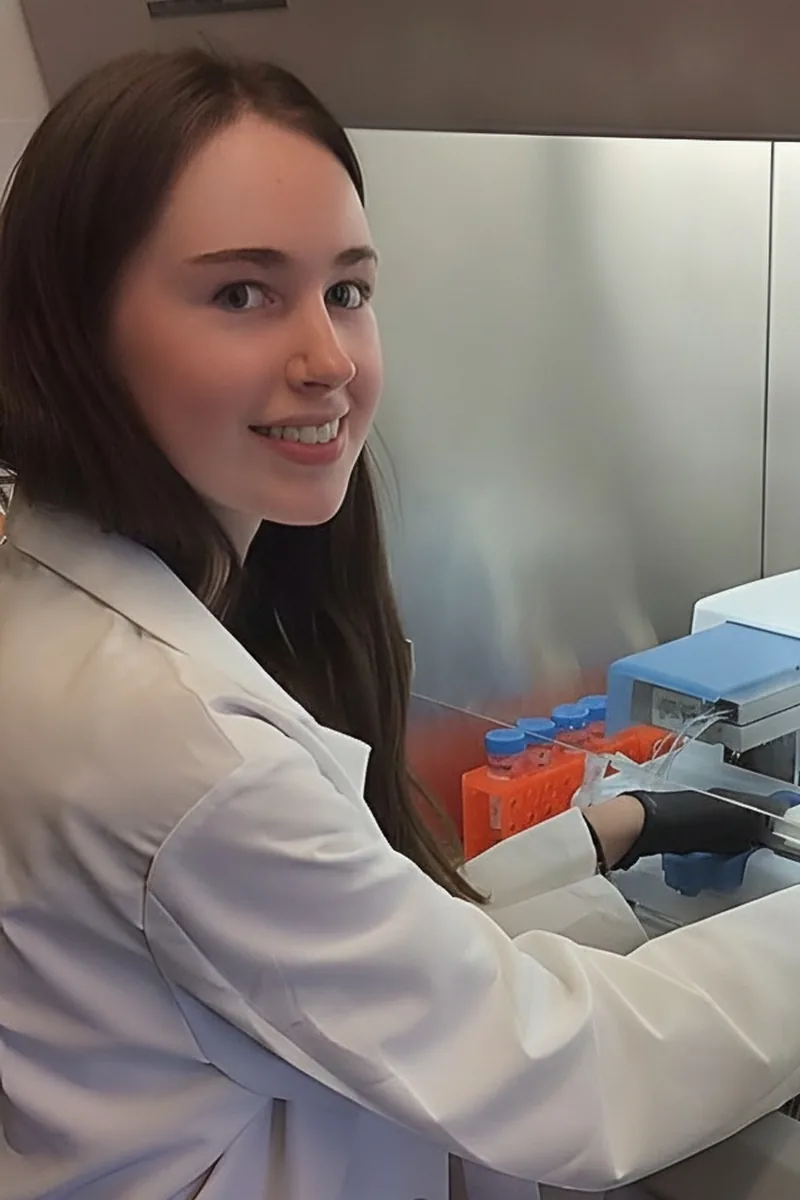
I'm especially passionate about math and science and work in a research lab at Oregon Health and Sciences University. I love helping students do well on tests such as the ACT, SAT, SSAT and the HSPT especially. I am attending Johns Hopkins University and majoring in Biomedical Engineering.
Understanding how organ systems regulate themselves — from cardiac output adjustments during exercise to the hormonal feedback loops controlling blood glucose — requires more than memorizing diagrams. Nathan earned his biology degree at UCLA and went on to study nursing at Concordia, giving him both the academic foundation and the clinical perspective to unpack how the body actually functions at a systems level.
Understanding how the body maintains homeostasis — from cardiac output regulation to renal filtration mechanics — requires more than memorizing diagrams. Jean earned her Doctor of Medicine at Harvard Medical School, where she spent four years connecting physiological systems to real clinical cases, making concepts like action potentials and gas exchange intuitive rather than abstract.
Understanding physiology means thinking in systems — how a change in cardiac output ripples through blood pressure, renal filtration, and hormonal feedback all at once. James approaches each organ system by teaching students to trace cause-and-effect chains rather than memorize isolated facts, drawing on the integrative thinking his medical training demands daily.
Medical school is essentially an advanced physiology course, and Meghan applies that daily immersion to teaching concepts like action potentials, renal filtration, and cardiac cycle mechanics. She connects organ-system function to the underlying cellular biology, so students see how individual mechanisms produce whole-body outcomes.
Clinical internships at a transplant institute and abroad in Tanzania gave Eric firsthand exposure to how organ systems function — and malfunction — in real patients. He teaches physiology concepts like cardiac output, renal filtration, and neuronal signaling by grounding them in the chemistry and physics that explain why the body works the way it does.
I am also a first year medical student at the Tufts University School of Medicine in Boston. I have extensive experience with premedical classes and have taken and tutored the MCAT exam. I placed in the 97th percentile of the MCAT exam and I understand what the test takers want students to know and how to bridge the gap between knowing the material and doing well on the test. I am always excited when a student finally has that "ah-ha" moment and declares that they now can see how all of these seemingly separate scientific topics are actually all related. The MCAT no longer seems scary, but turns into a means of truly learning this material and providing a strong foundation for the future.
Studying physiology at Morehouse School of Medicine, Eugene lives inside the material he teaches — cardiac output equations, renal filtration mechanics, and the feedback loops that keep the body in homeostasis. He unpacks each organ system by linking structure to function, so students see the logic behind processes like action potentials or gas exchange rather than treating them as isolated facts.
I am currently working towards a doctorate in medicine from New Jersey Medical School. Throughout high school, college, and graduate school, I have tutored students ranging in age from elementary school to college freshmen in a variety of subjects particularly math and science. My favorite subject to tutor is math because it is very methodical and visual. Having a passion to help others, I am drawn to tutoring for the opportunity to share my knowledge with others. My family and friends have described me as being patient, compassionate, and personableall of the qualities that I believe I bring to my students. Outside of tutoring, I like Notre Dame football, dogs (especially my family's German Shepherd!), yoga, cooking, and reading.
Understanding physiology means moving beyond memorizing organ systems and grasping the feedback loops that keep them running — why baroreceptors adjust heart rate, how nephrons regulate fluid balance, what happens at the neuromuscular junction. As a current medical student, Jamie encounters these mechanisms in clinical context every week and translates that into vivid, analogy-driven explanations that make homeostasis and system integration click.
Understanding how the body actually functions — from cardiac output regulation to renal filtration — is something Josh engages with daily in his dental medicine program at Penn. He teaches physiology by connecting each mechanism to a real clinical scenario, so concepts like action potentials and gas exchange become intuitive rather than just memorized diagrams.
Understanding physiology means tracing cause and effect across organ systems — how a drop in blood pH triggers respiratory compensation, or how ion channels generate an action potential. Amin's biophysics PhD and clinical research at MGH ground his teaching in the molecular mechanisms behind each physiological process, making it easier to reason through unfamiliar scenarios on exams.
Emily's cell and molecular biology concentration at Duke means she learned physiology from the inside out — starting with ion channel behavior and membrane dynamics before ever reaching the organ-system level. Now in medical school at Columbia, she teaches topics like action potential propagation, glomerular filtration, and endocrine signaling with the mechanistic detail that separates surface-level understanding from real comprehension. Rated 5.0 by students.
Testimonials
Because the right Physiology tutor makes all the difference.
Average Session Rating – Based on 3.4M Learner Ratings
Other Spokane Tutors
Related Science Tutors in Spokane
Frequently Asked Questions
Varsity Tutors matches Spokane students with expert Physiology tutors for 1-on-1 instruction. We pair each student with a tutor based on their specific needs, learning style, and goals.
Whether you need homework help, exam prep, or want to get ahead, our Physiology tutors are ready to help.
Common challenges include gaps from earlier material, difficulty with specific concepts, and trouble applying learning to new problems. These issues can snowball quickly in Physiology.
A tutor identifies where you're stuck, fills in gaps, and provides targeted practice. The 1-on-1 format means you get help exactly where you need it.
Tutors work with your student's actual coursework—homework assignments, class notes, and upcoming tests. This keeps tutoring directly relevant to what's happening in the classroom.
When you share information about your student's school and curriculum, we can match you with a tutor who has relevant experience.
All tutors complete background checks, credential verification, and teaching evaluation. Many of our Physiology tutors hold advanced degrees or have years of teaching experience.
You can review tutor profiles to find someone with the right background for your student's level and needs.
Many students see improved grades within a few weeks, along with better understanding of Physiology concepts and more confidence tackling challenging material.
Tutors track progress and adjust their approach to ensure continued improvement.
Most students benefit from 1-2 sessions per week. More frequent sessions help if your student is significantly behind or has an important exam coming up.
Your tutor can recommend a schedule based on your student's specific situation and goals.
Tutoring is purchased in packages of hours, with rates varying by tutor experience. Varsity Tutors offers several options to fit different budgets and needs.
You can discuss pricing during your consultation to find what works best.
Your tutor will assess where your student is, discuss goals, and start working on priority areas. Most students bring current homework or upcoming test material to focus on.
By the end, you'll have a clear sense of how the tutor can help and a plan for moving forward.
Let’s find your perfect tutor
Answer a few quick questions. We’ll recommend the right plan and match you with a top 5% tutor.