Award-Winning Physiology Tutors
serving Seattle, WA
Physiology
Tutors in Seattle
Private 1-on-1 tutoring, weekly live classes for academic support, test prep & enrichment, practice tests and diagnostics, and more to elevate grades and test scores.
Based on 3.4M Learner Ratings
UniversitiesSchools & Universities
DeliveredHours Delivered
ProficiencyGrowth in Proficiency
Who needs tutoring?
No obligation. Takes ~1 minute.
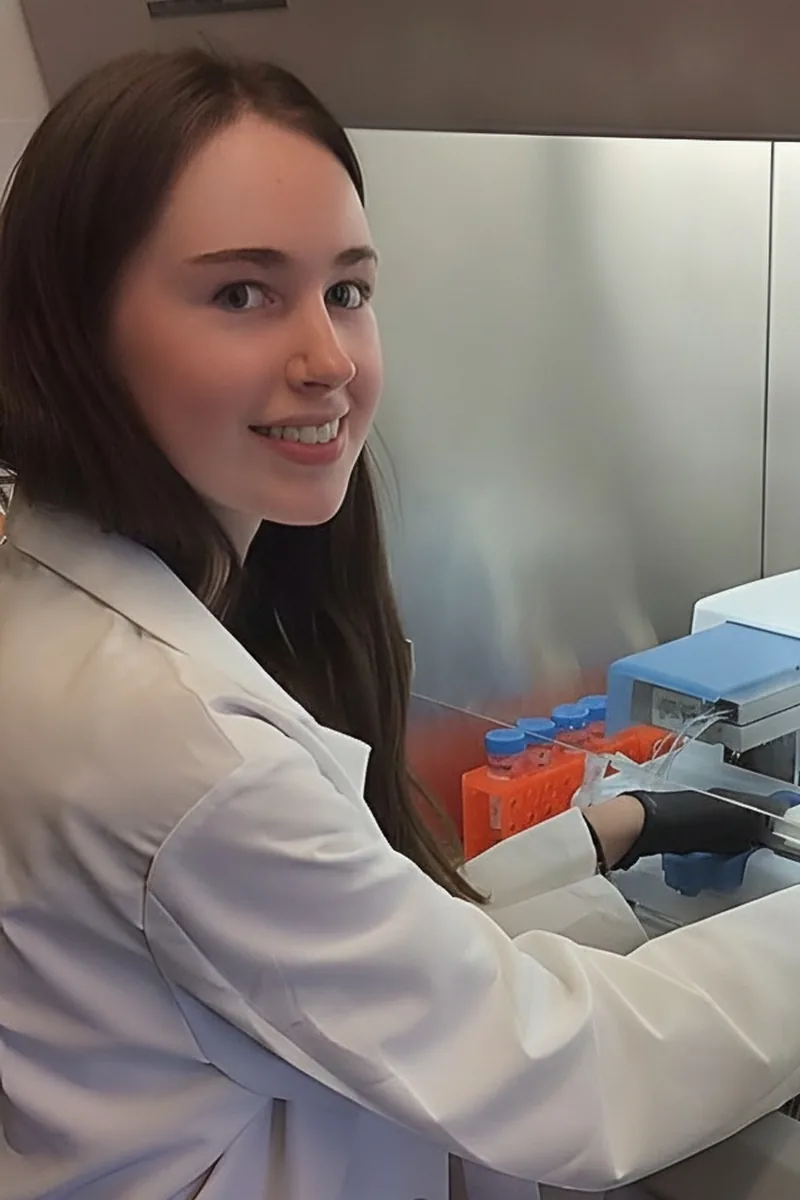
I'm especially passionate about math and science and work in a research lab at Oregon Health and Sciences University. I love helping students do well on tests such as the ACT, SAT, SSAT and the HSPT especially. I am attending Johns Hopkins University and majoring in Biomedical Engineering.
Understanding physiology means tracing cause and effect across organ systems — why a drop in blood pH triggers faster breathing, or how the nephron maintains electrolyte balance under stress. Garrett's biology degree gives him the depth to walk through these feedback loops at the molecular, cellular, and systems level. He connects mechanisms to each other so students aren't memorizing isolated facts.
Studying how toxins disrupt normal body function means Joseph learned physiology by learning exactly how it breaks. His Cornell training in pharmacology and immunology gave him deep knowledge of organ-system integration — from renal clearance mechanisms to autonomic nervous system signaling. He walks through each system by tying structure to function and then to what happens when that function fails.
Laura's dual biology and anthropology degree from Fordham gave her an interesting vantage point on physiology — she learned human body systems both through the molecular lens of biology courses and through the evolutionary, whole-organism perspective that anthropology demands. Now pursuing her MPH in environmental health sciences at Columbia, she's especially sharp on how external factors interact with physiological processes like respiratory gas exchange or immune response cascades. Rated 5.0 by students.
Understanding how organ systems regulate themselves — from cardiac output adjustments during exercise to the hormonal feedback loops controlling blood glucose — requires more than memorizing diagrams. Nathan earned his biology degree at UCLA and went on to study nursing at Concordia, giving him both the academic foundation and the clinical perspective to unpack how the body actually functions at a systems level.
Understanding how the body maintains homeostasis — from cardiac output regulation to renal filtration mechanics — requires more than memorizing diagrams. Jean earned her Doctor of Medicine at Harvard Medical School, where she spent four years connecting physiological systems to real clinical cases, making concepts like action potentials and gas exchange intuitive rather than abstract.
Understanding physiology means tracing cause and effect across organ systems — why a drop in blood pH triggers faster breathing, or how the nephron maintains electrolyte balance. Paul's pre-med biology training at Brown gave him a systems-level view of the human body, and he teaches each mechanism by linking structure to function rather than treating chapters as isolated units.
Studying physiology in dental school meant mastering everything from cardiac output equations to nerve signal propagation in the trigeminal system. Daniel unpacks organ system functions by tying each mechanism back to a clinical scenario — how the kidneys regulate blood pressure, why the sympathetic nervous system triggers specific responses — so the logic behind each process becomes memorable.
Studying physiology at Morehouse School of Medicine, Eugene lives inside the material he teaches — cardiac output equations, renal filtration mechanics, and the feedback loops that keep the body in homeostasis. He unpacks each organ system by linking structure to function, so students see the logic behind processes like action potentials or gas exchange rather than treating them as isolated facts.
Understanding how organ systems actually function — cardiac output regulation, nephron filtration, or the hormonal feedback loops controlling metabolism — requires more than memorizing diagrams. Aamod studied Cell Biology and Neuroscience as a pre-med undergraduate, giving him a deep grasp of the molecular mechanisms that drive physiological processes and the ability to explain them in plain language.
Studying therapies for Alzheimer's and Parkinson's disease as a research scientist, Anthony encounters organ-system physiology daily — from neuronal signaling cascades to cardiovascular regulation. He teaches concepts like action potentials, renal filtration, and endocrine feedback loops by connecting textbook diagrams to what actually happens in a working lab.
Understanding physiology means tracing cause and effect across organ systems — why a drop in blood pressure triggers a specific hormonal cascade, or how the nephron maintains electrolyte balance. Amanda's dual background in biology and anthropology gives her a unique lens for connecting physiological mechanisms to the bigger picture of how human bodies adapted over time. Rated 4.9 by students, she breaks down feedback loops and homeostatic processes into logic chains that actually stick.
Studying physiology means understanding how organ systems talk to each other — why a drop in blood pressure triggers the renin-angiotensin-aldosterone system, or how action potentials propagate along a myelinated axon. Daniel's PhD work in neuroscience at Rockefeller gives him deep, research-level fluency with these mechanisms, and his medical training at Weill Cornell ties every concept back to clinical relevance.
Testimonials
Because the right Physiology tutor makes all the difference.
Average Session Rating – Based on 3.4M Learner Ratings
Other Seattle Tutors
Related Science Tutors in Seattle
Frequently Asked Questions
Physiology requires understanding how complex systems interact—from cellular processes to whole-body regulation—which many students struggle to visualize without hands-on support. Students often find it difficult to connect anatomical structures to their functions, master the terminology, and apply concepts to real-world scenarios. Personalized 1-on-1 instruction helps break down these interconnected systems into manageable pieces, allowing you to ask questions in real-time and build genuine understanding rather than just memorizing facts.
In a classroom with a 15.4:1 student-teacher ratio, it's challenging for instructors to address individual learning gaps or adjust pacing to your needs. Personalized 1-on-1 instruction focuses entirely on your learning style, allowing tutors to use diagrams, animations, practice problems, and explanations tailored specifically to how you learn best. This targeted approach helps you move past confusion faster and develop deeper conceptual understanding of how body systems work together.
Tutoring covers the full range of Physiology content, including cellular physiology, nervous system function, muscle contraction, cardiovascular and respiratory systems, kidney function, endocrine regulation, and digestive processes. Whether you're in an introductory high school course, AP Biology, or a college-level human physiology class, tutors can align instruction with your specific curriculum and help you master both foundational concepts and advanced applications like homeostasis and organ system integration.
Your first session is designed to assess your current understanding, identify specific areas where you need support, and establish a personalized learning plan. The tutor will ask diagnostic questions, review your course materials, and discuss your goals—whether that's improving test scores, understanding difficult concepts, or preparing for exams. This foundation ensures that all future sessions are targeted and efficient, focusing on what matters most to your success.
Many students notice improved clarity and confidence within the first few sessions as concepts that seemed confusing become more understandable. Measurable improvements in test scores or assignment grades typically follow within 2-4 weeks of consistent tutoring, depending on your starting point and how frequently you meet. The key is regular practice combined with expert guidance—this combination helps concepts stick through retrieval practice and spaced repetition, which are proven learning strategies.
Varsity Tutors connects you with expert tutors who have strong backgrounds in Physiology, often including degrees in biology, pre-medicine, nursing, or related health sciences fields. Tutors are selected based on their subject expertise, teaching ability, and track record of helping students succeed. When you connect with a tutor, you can review their background and experience to ensure they're the right fit for your learning needs.
Yes—tutoring is particularly effective for exam preparation because tutors can focus on high-yield concepts, teach test-taking strategies, and provide targeted practice with released exam questions. For AP Biology, this includes mastering the circulatory, nervous, and endocrine systems at the depth required by the exam. For college-level Physiology courses, tutors help you develop the analytical skills needed to apply concepts to new scenarios, which is what most exams test.
Getting started is simple—tell Varsity Tutors about your Physiology course, your goals, and your preferred schedule. You'll be matched with an expert tutor who fits your needs, and you can begin personalized instruction right away. The process is designed to be quick and straightforward so you can start getting the support you need without delay.
Let’s find your perfect tutor
Answer a few quick questions. We’ll recommend the right plan and match you with a top 5% tutor.