Award-Winning Math Tutors
serving St. Paul, MN
Math
Tutors in St. Paul
Private 1-on-1 tutoring, weekly live classes for academic support, test prep & enrichment, practice tests and diagnostics, and more to elevate grades and test scores.
Based on 3.4M Learner Ratings
UniversitiesSchools & Universities
DeliveredHours Delivered
ProficiencyGrowth in Proficiency
Who needs tutoring?
No obligation. Takes ~1 minute.
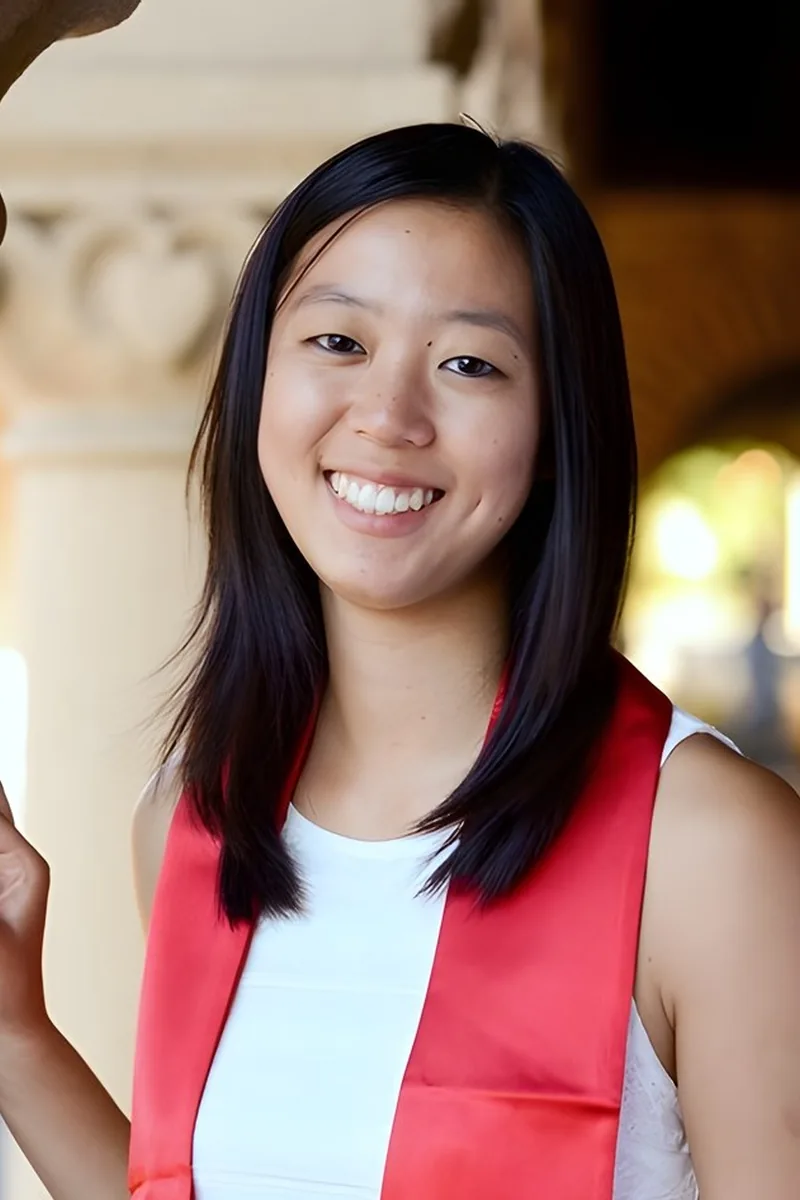
From fraction operations in pre-algebra to integration techniques in calculus, Caroline has taught across the full math spectrum and knows where the conceptual gaps tend to hide. Her mechanical engineering training means she can show students why a formula works — not just how to use it — which makes each new topic easier to absorb. Rated 4.5 by students.

From pre-algebra through multivariable calculus, Nicholas covers the full math pipeline — and as a current math graduate student at Illinois, he's still immersed in it daily. He's especially skilled at identifying the specific conceptual gap holding a student back, whether that's fraction operations in middle school math or limit definitions in early calculus. Rated 4.9 by students, he makes abstract ideas tangible by connecting them to problems that actually matter.
Kari's math tutoring spans arithmetic through calculus, but she's especially effective at the moment students shift from computation to problem-solving — translating word problems, interpreting graphs, and reasoning through multi-step solutions. She teaches students to slow down and map out what a problem is actually asking before reaching for a formula.
Eva's pre-med coursework at Columbia keeps her sharp on the math fundamentals — from algebraic manipulation to early calculus concepts — that younger students are encountering for the first time. She unpacks word problems step by step so students learn to translate English into equations before reaching for a formula.
I'm a fourth year veterinary student at the University of Minnesota College of Veterinary Medicine. I graduated from SUNY Binghamton University in May 2019, with a BA in Biology, and a minor in Biological Anthropology.
Between competition math experience and a Stanford cognitive science degree that included heavy quantitative coursework, David approaches math problems by teaching the reasoning behind each step — whether that's factoring polynomials or setting up related rates in calculus. His 1570 SAT speaks to the precision he brings to mathematical thinking at every level.
Most math tutors stopped at calculus — Ryne completed linear algebra and multivariable calculus through the University of Minnesota Talented Youth Math Program before finishing high school. That depth means he can explain not just how to solve a problem but why a method works, whether a student is tackling fraction operations in pre-algebra or integration techniques in calculus. He adapts his explanations to each student's level without oversimplifying the underlying ideas.
From arithmetic properties through precalculus concepts like function transformations and trigonometric identities, Vania connects each new idea back to the reasoning behind it so students can solve unfamiliar problems, not just familiar ones. Her 1590 SAT and engineering coursework mean she's tackled math at every level and knows exactly where conceptual gaps tend to hide.
Emma's 1500 SAT and 34 ACT demonstrate strong quantitative chops, and her analytical training as a Classics major at Carleton means she approaches math problems by breaking them into logical steps rather than relying on rote formulas. She's comfortable covering algebra fundamentals through early calculus concepts, connecting each technique to the reasoning behind it.
Scoring a 34 ACT composite required Allison to be sharp across every math domain, from proportional reasoning to trigonometric identities. She pinpoints the specific concept causing a student's mistakes — whether it's distributing negatives, misreading function notation, or setting up word problems — and addresses that gap directly instead of re-teaching an entire chapter.
Angela's business and international trade training kept her anchored in applied math — percentages, ratios, unit conversions, and data interpretation all showed up in coursework and real-world projects. She unpacks word problems step by step, teaching students to identify what a question is actually asking before jumping into operations.
From arithmetic fundamentals through algebra and into early calculus, Nisarg teaches math by connecting each new concept to what a student already understands. His 34 ACT composite — which includes the math section — reflects genuine comfort with quantitative reasoning, and his neuroscience coursework keeps him actively working through applied math problems every week.
Eric treats math problems like logical puzzles — breaking each one into smaller pieces until the solution path clicks. Studying computer science at Washington University in St. Louis means he uses math daily, from discrete structures to calculus, and he brings that applied perspective to topics like proportional reasoning, number properties, and multi-step problem solving.
While history and writing are Seth's primary strengths, his 32 ACT composite demonstrates solid quantitative reasoning across math fundamentals. He approaches math the way he approaches any subject — by making sure a student understands the logic behind a method before drilling practice problems.
Scoring a 1570 on the SAT required George to master the kind of math that trips students up most — rate problems, function interpretation, and data analysis under time pressure. He applies that same precision to general math tutoring, walking through each problem type until the underlying logic clicks rather than just the memorized steps.
Having tutored K-12 math across Minneapolis and Paris, Anniessa adapts her explanations to match how each student actually thinks about numbers — whether that means drawing visual models for fractions or walking through word problems step by step. Her approach to elementary and middle school math emphasizes understanding the reasoning behind operations, not just memorizing procedures.
From fraction operations to function transformations, math builds on itself in ways that make gaps in earlier material show up fast. Harry is a math and economics double major at Carleton, so he can trace a concept like slope from its arithmetic roots all the way through calculus applications. He earned a 35 ACT composite, and he approaches each session by identifying the specific point where understanding breaks down and rebuilding from there.
From basic arithmetic through calculus, Kushal's math tutoring zeroes in on the reasoning behind each step rather than rote procedure. His experience prepping students for both the SAT and ACT math sections means he knows exactly where conceptual gaps — like misunderstanding fractions or misapplying order of operations — tend to snowball into bigger problems. Rated 4.9 by students.
Adam tutors math across algebra and calculus and brings a structured, step-by-step approach to problem-solving that works well for students who feel lost staring at a worksheet. His 31 ACT composite reflects strong quantitative reasoning, and he applies that same logical thinking to break word problems and multi-step equations into pieces students can actually follow. He's especially effective with students who understand concepts in class but freeze up on tests.
Sarah covers math fundamentals from arithmetic through early algebra and geometry, tackling the concepts — like fractions, proportional reasoning, and basic equation solving — that trip students up when they're not solidified early. As a multi-media artist, she often sketches out visual explanations and spatial models that make abstract number relationships click for visual learners.
Emily's teaching master's and her daily work with diverse learners mean she knows exactly where students tend to get stuck in math — whether it's place value, fractions, or the jump to pre-algebraic thinking. She uses concrete models and step-by-step reasoning to make sure a student genuinely understands a concept before moving on to the next one.
Travis brings a structured, logical mindset to math — his political science training required heavy quantitative reasoning, from statistical analysis to formal logic, and he applies that same systematic thinking to arithmetic, algebra, and beyond. Rated 5.0 by students, he's especially effective at slowing down and unpacking the *why* behind each step so that procedures stop feeling arbitrary.
From basic arithmetic through pre-algebra and into calculus concepts, Katie covers a wide range of math levels and knows where students tend to get stuck — fractions, negative numbers, setting up word problems. She scored a 35 on the ACT, which includes a rigorous math section covering algebra, geometry, and trigonometry under tight time pressure. Her approach is patient and methodical, breaking multi-step problems into pieces a student can follow and replicate independently.
From basic arithmetic operations through pre-algebra concepts like order of operations and integer rules, Amrit builds each lesson around understanding the reasoning behind a procedure. His engineering coursework at Georgia Tech means he can show younger students where these foundational skills actually lead — making fractions and decimals feel purposeful rather than arbitrary.
Aerospace engineering at the University of Minnesota means Ethan uses math daily — from linear equations and unit conversions to the trigonometry and algebraic modeling that underpin rocket trajectory calculations. He teaches concepts by working through problems alongside students, building intuition for when and why specific techniques apply. Rated 5.0 by students.
Studying both Product Design and Mathematics at the University of Minnesota means Lillian constantly translates between abstract math and real-world problem solving — figuring out how equations model physical objects, proportions, and spatial relationships. She breaks down everything from fractions and ratios to algebraic reasoning by connecting the concept to something tangible, which makes the logic click faster.
From arithmetic fundamentals to early algebra concepts, Marika breaks math problems into logical steps that make the reasoning visible. Her science background means she's constantly connecting math to real-world applications — unit conversions, data interpretation, proportional reasoning — which gives students a reason to care about the procedures they're learning.
A math degree from Grinnell College means Audrey doesn't just know the procedures — she understands the underlying logic connecting arithmetic, proportional reasoning, and algebraic thinking into a coherent whole. She spent time in Grinnell's math lab breaking down everything from fractions to functions, and she brings that same clarity to students at any level. Rated 5.0 by students.
Danny teaches math from elementary arithmetic through calculus, which means he understands how early gaps — a shaky grasp of fractions, or confusion about order of operations — quietly compound into bigger problems later. He pinpoints exactly where a concept broke down and rebuilds understanding from that point, connecting each new skill to the reasoning behind it so students aren't just memorizing procedures.
Celestine's quantitative training runs deep — her Ph.D. in Applied Economics required heavy use of calculus, linear algebra, and statistical methods daily. She applies that experience to teaching math topics like equation solving, functions, and graphing, connecting abstract procedures to the reasoning behind them.
From long division to derivatives, Richard has taught every level of math on the K-through-college spectrum — and that range matters, because a student stuck in calculus often has a gap hiding back in algebra or trigonometry. He diagnoses exactly where the confusion starts and rebuilds understanding from that point, whether the topic is factoring polynomials, unit circle values, or integration techniques.
Scoring a 36 ACT and 1570 SAT required David to be fluent across arithmetic, algebra, geometry, and data analysis — and he brings that same cross-topic fluency to his math tutoring. Rather than drilling isolated procedures, he connects ideas so that a student who understands proportional reasoning can extend it to similar triangles, unit conversions, or rate problems without starting from scratch.
From arithmetic fundamentals through calculus, Brian's approach to math centers on understanding why a method works before drilling how to execute it. His summer school teaching experience in Rochester, MN, gave him practice identifying exactly where a student's reasoning breaks down — whether that's fraction operations, solving systems of equations, or setting up word problems. Rated 4.9 by students.
Currently earning her degree in Mathematics Education for grades 5–12, Michelle has spent five semesters as a teaching assistant watching exactly where students get stuck — whether it's fractions, proportional reasoning, or early algebraic thinking. She explains concepts by building up from what a student already understands rather than jumping straight to procedures.
Jaya scored a 1530 SAT and 35 ACT, reflecting strong quantitative skills she's continued to sharpen through the statistics and calculus required in her genetics program. She tackles math by connecting procedures to the reasoning behind them — explaining, for instance, why cross-multiplication works or how a graph reveals what an equation alone doesn't.
Rohit's 35 ACT demonstrates strong quantitative skills, and his economics coursework keeps him fluent in algebra, functions, and applied problem-solving. He's particularly good at teaching students how to set up word problems — translating a real-world scenario into an equation — which is where many math students lose points. Rated 5.0 by students.
Cleo's subject range includes algebra and calculus alongside her humanities expertise, which means she can tackle math with the same emphasis on clear, step-by-step reasoning she applies to writing. She's particularly good at translating word problems into equations — a skill that comes naturally from years of analytical work in political economy. Students who feel stuck on a concept get explanations that build understanding rather than just procedures to memorize.
From long division to linear equations, Anna covered math on a double-accelerated track through middle and high school, which means she's encountered every stumbling block early learners face — and remembers how she got past each one. She's especially sharp at connecting arithmetic fundamentals to the algebraic thinking students will need next. Rated 5.0 across her tutoring sessions.
Brita's psychology training — hypothesis testing, research design, interpreting statistical output — means she's spent years doing math in context, even if her degree doesn't say 'mathematics' on it. That applied experience makes her especially effective at grounding abstract operations in concrete reasoning, walking through the why behind each step so a student can reconstruct the logic on their own instead of relying on memorized procedures.
A science degree requires fluency in math that most students don't expect — from the algebraic modeling in genetics to the calculus underlying biological systems. Ami uses that applied perspective to make abstract math concepts feel purposeful, whether a student is working through linear equations, function behavior, or rate-of-change problems. She's particularly good at identifying the specific step where understanding breaks down.
Testimonials
Because the right Math tutor makes all the difference.
Average Session Rating – Based on 3.4M Learner Ratings
Practice Math
Free practice tests, flashcards, and AI tutoring for Math
Nearby Math Tutors
Other St. Paul Tutors
Related Math Tutors in St. Paul
Frequently Asked Questions
Varsity Tutors matches St. Paul students with expert Math tutors for 1-on-1 instruction. We pair each student with a tutor based on their specific needs, learning style, and goals.
Whether you need homework help, exam prep, or want to get ahead, our Math tutors are ready to help.
Common challenges include gaps from earlier material, difficulty with specific concepts, and trouble applying learning to new problems. These issues can snowball quickly in Math.
A tutor identifies where you're stuck, fills in gaps, and provides targeted practice. The 1-on-1 format means you get help exactly where you need it.
Tutors work with your student's actual coursework—homework assignments, class notes, and upcoming tests. This keeps tutoring directly relevant to what's happening in the classroom.
When you share information about your student's school and curriculum, we can match you with a tutor who has relevant experience.
All tutors complete background checks, credential verification, and teaching evaluation. Many of our Math tutors hold advanced degrees or have years of teaching experience.
You can review tutor profiles to find someone with the right background for your student's level and needs.
Many students see improved grades within a few weeks, along with better understanding of Math concepts and more confidence tackling challenging material.
Tutors track progress and adjust their approach to ensure continued improvement.
Most students benefit from 1-2 sessions per week. More frequent sessions help if your student is significantly behind or has an important exam coming up.
Your tutor can recommend a schedule based on your student's specific situation and goals.
Tutoring is purchased in packages of hours, with rates varying by tutor experience. Varsity Tutors offers several options to fit different budgets and needs.
You can discuss pricing during your consultation to find what works best.
Your tutor will assess where your student is, discuss goals, and start working on priority areas. Most students bring current homework or upcoming test material to focus on.
By the end, you'll have a clear sense of how the tutor can help and a plan for moving forward.
Let’s find your perfect tutor
Answer a few quick questions. We’ll recommend the right plan and match you with a top 5% tutor.