Award-Winning Math Tutors
serving Ann Arbor, MI
Math
Tutors in Ann Arbor
Private 1-on-1 tutoring, weekly live classes for academic support, test prep & enrichment, practice tests and diagnostics, and more to elevate grades and test scores.
Based on 3.4M Learner Ratings
UniversitiesSchools & Universities
DeliveredHours Delivered
ProficiencyGrowth in Proficiency
Who needs tutoring?
No obligation. Takes ~1 minute.
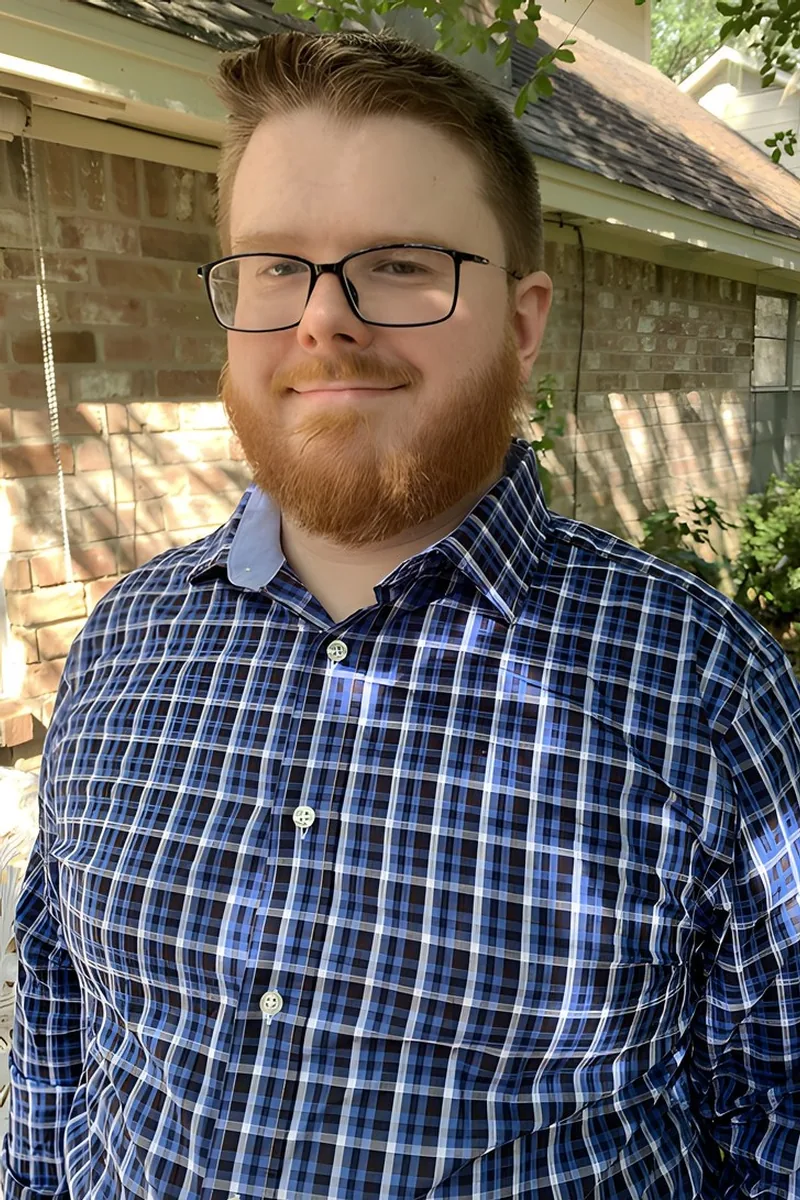
A physics PhD means living inside math every day — calculus, linear algebra, differential equations, and everything that builds up to them. Michael connects abstract math procedures back to concrete reasoning, so when a student encounters a new type of equation or word problem, they understand the structure behind it rather than relying on pattern-matching alone.

While Skyler's primary expertise is in language and writing, she also tutors math and scored a 1510 on the SAT, which requires strong quantitative reasoning. She's particularly effective with students who consider themselves "not math people" — her background in linguistics gives her a knack for explaining arithmetic, pre-algebra, and foundational concepts in plain, precise language.
Psychology research is surprisingly math-heavy — probability, descriptive statistics, and algebraic reasoning show up constantly in Martha's PhD work at Michigan. She applies that practical perspective when teaching math concepts, connecting abstract operations to tangible problems so students see why a technique matters before drilling it. Rated 5.0 by students, she's comfortable across topics from fractions and proportions through introductory calculus.
While English is Sophia's home base, her 36 ACT composite means she performed at the top percentile on the math section as well. She's a strong fit for students who need to solidify core concepts — algebraic manipulation, word problems, proportional reasoning — especially when those gaps are holding back standardized test scores.
Scoring a 1570 SAT and 35 ACT reflects real fluency with math at every level, from fraction operations to function analysis. Megan's engineering background means she doesn't just show students the steps — she explains the underlying logic so that new problem types feel approachable rather than unfamiliar. She holds a 5.0 rating across her sessions.
From arithmetic fundamentals through calculus, Suzie connects math concepts to the reasoning behind them so students aren't just following steps blindly. Her engineering background means she's used every branch of math in applied settings — calculating reaction rates, modeling biological systems, optimizing processes — and she brings that practical fluency to every session. Rated 5.0 by students.
Between her biology and pre-med coursework, Ruth has used math as a working tool — applying algebra to dosage calculations, statistics to research data, and calculus to rate-of-change problems in the sciences. She explains mathematical concepts by connecting them to tangible applications, which is especially useful for students who wonder when they'll ever use what they're learning.
Megan's undergraduate biology degree from the University of Michigan required a strong math foundation — calculus sequences, statistics, and quantitative reasoning were daily tools. While her doctoral focus shifted to literature, she still brings that analytical precision to math tutoring, particularly for students who need someone to explain concepts verbally and contextually rather than purely through notation. She's a good fit for students in pre-algebra through early calculus who benefit from a patient, language-oriented teaching style.
I am a learner for life and I love sharing my knowledge with others. I have tutored middle-school students for one year and university students for two years. My focus is mainly on mathematics, chemistry, and related fields. I have degrees in both mathematics and biomedical engineering so I cover a lot of ground in the physiological sciences, computer programming, and statistics as well. Taking tests is one of my strong points and I have some killer strategies to share!
From arithmetic fundamentals through calculus, Ajay's approach is to make sure a student understands the reasoning behind each step rather than just replicating a procedure. His biochemistry background at Michigan keeps him fluent in applied math — unit conversions, proportional reasoning, and interpreting graphs — which grounds abstract concepts in problems students can actually visualize. Rated 4.5 by students.
From arithmetic fundamentals through calculus, Kerry adapts her approach based on where a student's understanding actually breaks down — whether that's fraction operations, function notation, or integration techniques. Her 33 ACT composite reflects the kind of broad math fluency that lets her explain the same concept multiple ways until one clicks.
A computer science major uses math constantly — from discrete structures to calculus-based proofs — and Henry leans on that daily practice when tutoring. He's particularly strong at connecting abstract math concepts like functions, sequences, and algebraic reasoning to tangible problems students can visualize and solve step by step.
From fractions and ratios to linear equations and basic geometry, Jason breaks math problems into clear, repeatable steps that students can apply on their own. His business background means he's constantly using quantitative reasoning — percentages, proportions, data interpretation — and he brings that practical fluency into every session.
Eva scored a 1530 SAT and 35 ACT, both of which required serious math chops, and she tutors algebra and calculus alongside her English-heavy course load. She's a particularly good fit for students who think of themselves as "English people" struggling with math, because she knows how to translate abstract procedures into logical, step-by-step reasoning that makes sense to verbal thinkers.
From fraction operations in elementary school to limits in calculus, Nikitha covers the full math pipeline and knows exactly where each concept feeds into the next. She leans on discussion over drill, asking students to explain their reasoning so gaps in understanding surface before they snowball. Her 5.0 rating speaks to how well that approach clicks.
Scoring a 35 ACT and heading to the University of Michigan as a math major, Phil has the kind of deep numerical fluency that lets him explain concepts multiple ways until one clicks. Whether a student is struggling with fraction operations in middle school or tackling function transformations in high school, he pinpoints exactly where understanding breaks down and rebuilds from that spot.
Having struggled with math herself through middle and high school, Surina knows exactly what it feels like when a concept refuses to click — and she knows which foundational gaps are usually the culprit. Her science-heavy path through microbiology and into dental school kept her doing quantitative work (dosage calculations, data analysis, research statistics) long after her last formal math class, so she's comfortable across everything from arithmetic through calculus. She holds a 5.0 rating and a 1520 SAT.
From fraction operations in elementary school to derivatives in calculus, Trishani has tutored math across every level and earned a 1400 SAT along the way. She pinpoints exactly where a concept breaks down — whether it's setting up word problems, manipulating algebraic expressions, or understanding what a graph is actually saying — and rebuilds from that specific gap. Her 5.0 rating speaks to how well that targeted approach works.
Breaking down multi-step problems into smaller, manageable chunks is second nature for Rachel, whose special education training taught her to identify exactly where a student's understanding breaks down — whether it's place value, fractions, or the transition from arithmetic to algebraic thinking. She uses concrete manipulatives and visual models before moving to abstract notation, building genuine number sense rather than rote procedure.
From fraction operations in fifth grade to function notation in tenth, Rebekah has tutored math across a wide span of levels and knows exactly where common misunderstandings tend to pile up. Her approach treats every stuck moment as a puzzle worth reframing — if one explanation doesn't click, she'll find a different angle until the concept lands. Rated 5.0 by students.
While math isn't Ceren's primary focus, her analytical training and ACT score of 31 mean she's comfortable tackling foundational and intermediate concepts like fractions, proportions, and basic algebraic reasoning. She brings a patient, step-by-step approach that's especially useful for students who feel more at home with words than numbers.
Before diving into biochemistry and medicine, Uchenna built his quantitative skills through years of math coursework — and he scored a 1510 on the SAT. He tackles everything from fraction operations and order of operations to early algebraic thinking, connecting each concept to concrete examples so younger learners see the logic behind the steps.
Whether a student is wrestling with fraction operations in pre-algebra or tackling integrals in calculus, William adapts his explanations to the specific concept causing trouble. His engineering science degree required math at every level, so he understands how each topic — ratios, linear equations, polynomial functions — feeds into the next. That big-picture view makes it easier to show students why a technique matters, not just how to execute it.
From pre-algebra through calculus, Samantha has tutored every level of the math pipeline and knows where students typically stall — the leap from arithmetic to variable thinking, or the moment trig identities stop feeling intuitive. Her science background at the University of Michigan means she constantly ties abstract math to real applications, which tends to make concepts like rate of change or systems of equations click faster.
From simplifying algebraic expressions to tackling early calculus concepts, Kirby approaches math as a language that builds on itself — so she pinpoints exactly where a gap formed before stacking new material on top. Her quantitative coursework in biochemistry and biostatistics keeps her sharp across the topics that trip students up most, like fractions, word problems, and graphing.
From fraction operations in middle school to derivatives in calculus, Alexandra has taught across the full math spectrum and knows exactly where conceptual gaps tend to hide. Her psychology background gives her a sharp read on how individual students process quantitative reasoning, so she adapts her explanations — visual, verbal, or step-by-step — to match. Rated 5.0 by students.
From fraction operations in middle school to integration techniques in college, Haley has lived the full math pipeline as a chemical engineering student at Michigan and genuinely enjoys every level of it. She's especially good at identifying the exact spot where a concept stopped making sense — whether that's order of operations, ratios, or early function notation — and rebuilding understanding from there.
Tyler's math instruction grows directly out of his chemistry coursework, where calculus, algebra, and statistical analysis aren't abstract exercises — they're tools for solving real problems. He unpacks concepts like equation manipulation, proportional reasoning, and graphing by connecting each one to a tangible application so the logic sticks.
Whether a student is working through fraction operations or tackling polynomial expressions, Vikhyathi breaks problems into smaller reasoning steps so the logic becomes visible. Her science background at Michigan means she constantly uses math as a tool, which gives her a practical perspective on why each concept matters beyond the worksheet.
Engineering coursework means Nikki uses math every day — not as an abstract exercise but as a tool for solving real problems involving forces, motion, and design. She breaks down everything from fraction operations and ratios to early algebra so that each concept has a clear reason for existing. Her 5.0 rating speaks to how well that practical approach lands with students.
From basic operations and fractions through pre-algebra concepts like order of operations and integer rules, Anna covers the math fundamentals that trip students up before they ever reach higher-level courses. Her elementary and middle school teaching background means she knows exactly where conceptual gaps tend to hide — and how to close them before they compound.
A biochemistry degree from the University of Michigan means Nicholas solves math problems daily — from algebraic manipulations in reaction kinetics to calculus-based modeling of molecular behavior. He brings that applied perspective into tutoring, connecting arithmetic, fractions, ratios, and equations to real scenarios so the "why" behind each operation actually lands.
From fraction operations in pre-algebra to integration techniques in calculus, Alec covers the full math pipeline and knows exactly where common gaps hide — like students who can solve equations mechanically but freeze when a word problem reframes the same concept. His chemical engineering training at Michigan means math is his daily language, and he explains it with the kind of intuition that comes from constant use. Rated 5.0 by students.
Juliane's applied physics degree required serious math — calculus, linear algebra, differential equations — so she brings real problem-solving context to topics that can otherwise feel abstract. Whether a student is working through fractions or tackling integration techniques, she traces each concept back to why it works rather than just drilling the procedure. She's rated 4.9 across her subjects.
From fraction operations in pre-algebra to derivatives in calculus, Jack teaches across the full math sequence and knows exactly where each concept feeds into the next. That big-picture view means he can spot the specific gap — maybe it's negative exponents, maybe it's distributing correctly — that's causing a student to stall. His 1510 SAT score speaks to the kind of precision he brings to quantitative problem-solving.
From pre-algebra through calculus and discrete math, Vazrik covers the full spectrum — but what sets his approach apart is tying abstract procedures to tangible engineering problems he encounters in his doctoral research. When a student asks "why does this matter," he has a concrete answer ready, which tends to make the mechanics click faster.
While Julia's primary expertise is in English and writing, her teaching repertoire includes math fundamentals like arithmetic operations, fractions, and basic algebraic reasoning. She approaches math the way she approaches writing — by slowing down to make sure each step makes logical sense before moving on. Her structured, patient style is especially useful for students who feel intimidated by numbers.
Scoring in the 99th percentile on SAT Math wasn't natural talent — Timothy built that skill through a structured self-study regimen the summer before college. He tackles everything from fraction operations and proportional reasoning to quadratic functions, emphasizing the problem-solving logic underneath each procedure so students can adapt when a question looks unfamiliar.
Studying business at the University of Michigan means Sarnath lives in spreadsheets, financial models, and quantitative analysis daily — which keeps his math sharp across everything from algebraic manipulation to the calculus concepts that underpin economic forecasting. He scored a 33 on the ACT and teaches the full range from pre-algebra through calculus, with a knack for showing students how a problem's structure points toward its solution before any formulas get involved.
Tiffany's time tutoring precalculus and algebra at the University of Michigan's SuccessConnects program meant working with students who were hitting real walls — not just forgetting formulas but losing the thread of why a procedure works in the first place. She's strongest at rebuilding that logical chain, especially in algebra and geometry, where one shaky concept can quietly sabotage everything that follows. Her political science training sharpened her ability to construct and follow structured arguments, which turns out to be exactly what multi-step math problems demand.
Testimonials
Because the right Math tutor makes all the difference.
Average Session Rating – Based on 3.4M Learner Ratings
Practice Math
Free practice tests, flashcards, and AI tutoring for Math
Other Ann Arbor Tutors
Related Math Tutors in Ann Arbor
Frequently Asked Questions
Varsity Tutors matches Ann Arbor students with expert Math tutors for 1-on-1 instruction. We pair each student with a tutor based on their specific needs, learning style, and goals.
Whether you need homework help, exam prep, or want to get ahead, our Math tutors are ready to help.
Common challenges include gaps from earlier material, difficulty with specific concepts, and trouble applying learning to new problems. These issues can snowball quickly in Math.
A tutor identifies where you're stuck, fills in gaps, and provides targeted practice. The 1-on-1 format means you get help exactly where you need it.
Tutors work with your student's actual coursework—homework assignments, class notes, and upcoming tests. This keeps tutoring directly relevant to what's happening in the classroom.
When you share information about your student's school and curriculum, we can match you with a tutor who has relevant experience.
All tutors complete background checks, credential verification, and teaching evaluation. Many of our Math tutors hold advanced degrees or have years of teaching experience.
You can review tutor profiles to find someone with the right background for your student's level and needs.
Many students see improved grades within a few weeks, along with better understanding of Math concepts and more confidence tackling challenging material.
Tutors track progress and adjust their approach to ensure continued improvement.
Most students benefit from 1-2 sessions per week. More frequent sessions help if your student is significantly behind or has an important exam coming up.
Your tutor can recommend a schedule based on your student's specific situation and goals.
Tutoring is purchased in packages of hours, with rates varying by tutor experience. Varsity Tutors offers several options to fit different budgets and needs.
You can discuss pricing during your consultation to find what works best.
Your tutor will assess where your student is, discuss goals, and start working on priority areas. Most students bring current homework or upcoming test material to focus on.
By the end, you'll have a clear sense of how the tutor can help and a plan for moving forward.
Let’s find your perfect tutor
Answer a few quick questions. We’ll recommend the right plan and match you with a top 5% tutor.