Award-Winning Math Tutors
serving Grand Rapids, MI
Math
Tutors in Grand Rapids
Private 1-on-1 tutoring, weekly live classes for academic support, test prep & enrichment, practice tests and diagnostics, and more to elevate grades and test scores.
Based on 3.4M Learner Ratings
UniversitiesSchools & Universities
DeliveredHours Delivered
ProficiencyGrowth in Proficiency
Who needs tutoring?
No obligation. Takes ~1 minute.
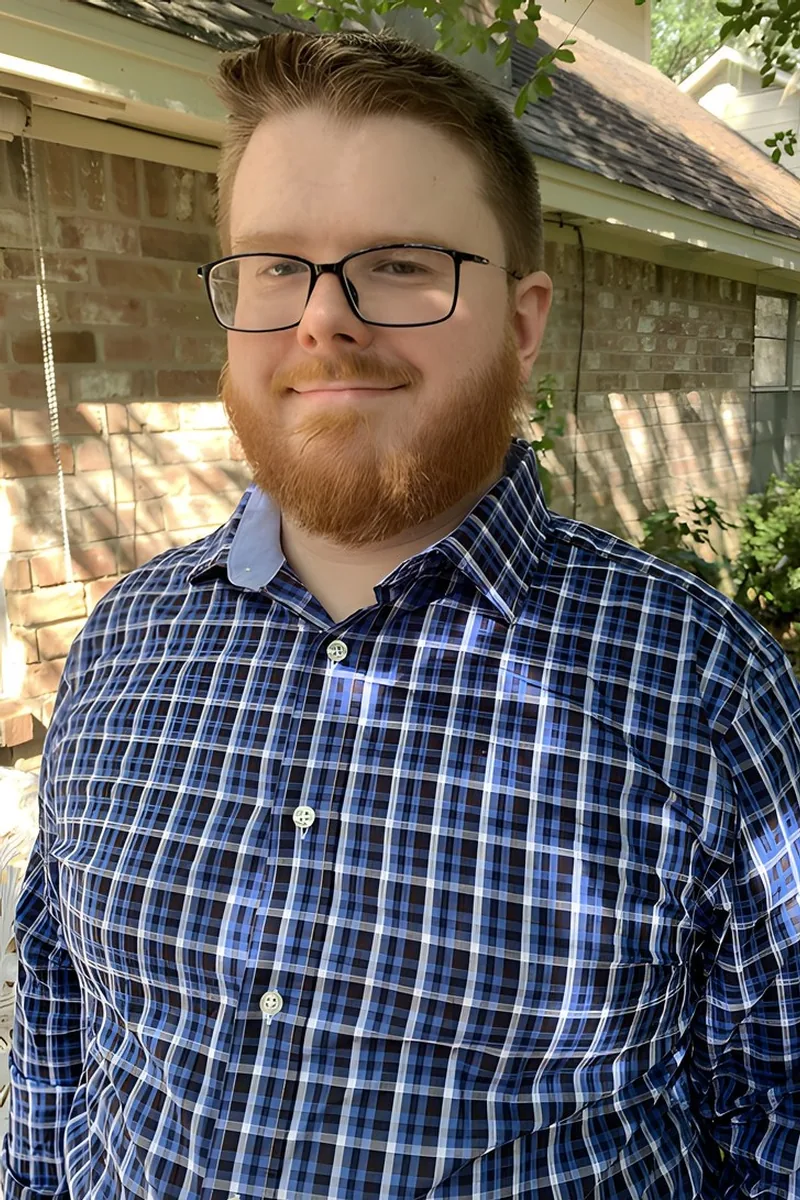
A physics PhD means living inside math every day — calculus, linear algebra, differential equations, and everything that builds up to them. Michael connects abstract math procedures back to concrete reasoning, so when a student encounters a new type of equation or word problem, they understand the structure behind it rather than relying on pattern-matching alone.

While Skyler's primary expertise is in language and writing, she also tutors math and scored a 1510 on the SAT, which requires strong quantitative reasoning. She's particularly effective with students who consider themselves "not math people" — her background in linguistics gives her a knack for explaining arithmetic, pre-algebra, and foundational concepts in plain, precise language.
Psychology research is surprisingly math-heavy — probability, descriptive statistics, and algebraic reasoning show up constantly in Martha's PhD work at Michigan. She applies that practical perspective when teaching math concepts, connecting abstract operations to tangible problems so students see why a technique matters before drilling it. Rated 5.0 by students, she's comfortable across topics from fractions and proportions through introductory calculus.
While English is Sophia's home base, her 36 ACT composite means she performed at the top percentile on the math section as well. She's a strong fit for students who need to solidify core concepts — algebraic manipulation, word problems, proportional reasoning — especially when those gaps are holding back standardized test scores.
Scoring a 1570 SAT and 35 ACT reflects real fluency with math at every level, from fraction operations to function analysis. Megan's engineering background means she doesn't just show students the steps — she explains the underlying logic so that new problem types feel approachable rather than unfamiliar. She holds a 5.0 rating across her sessions.
From fraction operations in middle school to early algebraic reasoning, Israa builds each concept visually before moving to abstract notation. Her science background means she constantly ties math back to real measurement and problem-solving contexts, which tends to click for students who wonder when they'll ever use this stuff.
Certified in secondary math and experienced across everything from pre-algebra through calculus, Rebecca is the kind of tutor who can trace a student's confusion back to the exact earlier concept that didn't click. She teaches math as a connected chain of ideas — showing, for instance, how proportional reasoning in middle school becomes the foundation for slope and eventually derivatives.
From arithmetic fundamentals through calculus, Suzie connects math concepts to the reasoning behind them so students aren't just following steps blindly. Her engineering background means she's used every branch of math in applied settings — calculating reaction rates, modeling biological systems, optimizing processes — and she brings that practical fluency to every session. Rated 5.0 by students.
Lulu's background spans psychology, accounting, and education — all fields that lean heavily on quantitative reasoning. She tackles math by connecting procedures to their purpose, whether that means showing why order of operations matters in a real calculation or explaining how fractions and ratios show up in everyday financial problems.
A civil engineering degree means Ashley didn't just study math — she used it daily to solve real structural and environmental problems. She covers everything from fractions and ratios through algebraic reasoning, connecting each concept to practical scenarios that make abstract operations feel purposeful.
Teaching math from pre-algebra through calculus, David spots the exact concept — whether it's fraction operations, function notation, or rate-of-change reasoning — where a student's understanding breaks down. His chemistry degree required heavy quantitative problem-solving, so he's comfortable translating abstract math into concrete applications that make the "why" behind a procedure visible. That range across math levels, rated 4.9 by students, means he can meet a wide variety of needs.
A linguistics degree trains you to see structure in everything — and Nicole applies that same structural thinking to math, breaking down word problems and multi-step operations into their underlying logic. Her MA in Education and years teaching across languages mean she's practiced at explaining abstract concepts multiple ways until one lands. Rated 4.9 by her students.
From fraction operations in middle school to integration techniques in college calculus, Andrew covers the full spectrum of math — and his 1550 SAT score confirms the fundamentals are rock-solid. Studying mechanical engineering at Yale keeps him applying math daily, which means he can show students exactly where each concept leads.
Philosophy PhD training is essentially applied logic — constructing proofs, identifying formal fallacies, working through symbolic notation that overlaps directly with algebraic and set-theoretic reasoning. Anthony leans on that rigor when tutoring math, treating each problem as an argument where every step needs justification, which tends to click for students who struggle with the "just follow the procedure" approach.
Between her biology and pre-med coursework, Ruth has used math as a working tool — applying algebra to dosage calculations, statistics to research data, and calculus to rate-of-change problems in the sciences. She explains mathematical concepts by connecting them to tangible applications, which is especially useful for students who wonder when they'll ever use what they're learning.
Eric covers math from pre-algebra through calculus, but his real strength is diagnosing exactly where a concept broke down and rebuilding from that point. Whether a student is struggling with fraction operations or tackling limits for the first time, his approach is methodical — he connects each new idea to something the student already understands.
From basic fraction operations through early calculus concepts, Raveena covers a wide range of math and zeroes in on the step where a student's understanding actually breaks down. Her mathematics minor and experience tutoring elementary through high school students means she can adjust explanations on the fly — using visual models for younger learners and algebraic reasoning for older ones. Rated 4.9 by students.
From arithmetic fundamentals to pre-algebra and beyond, Ashley has tutored students across grades 1–8 in hands-on settings like robotics workshops and FIRST Tech Challenge teams. That experience taught her to spot exactly where a student's understanding breaks down — whether it's fractions, ratios, or order of operations — and rebuild from that point.
Teaching math across elementary through calculus levels, Rae adapts her explanations to wherever a student is struggling — whether that's long division, solving systems of equations, or understanding derivatives. Her economics background keeps her grounded in applied math, so she naturally connects abstract procedures to problems that have a point.
From basic algebra through AP Calculus BC, Pratik covers a wide range of math and knows where the stumbling blocks tend to hide — sign errors in factoring, confusion around limits, or the jump from arithmetic to abstract reasoning. His 1550 SAT and 35 ACT reflect genuine comfort with quantitative thinking, and he tailors each session to the specific concept a student is stuck on rather than re-teaching an entire chapter.
From fraction operations in middle school to integrals in college, Lane covers the full math pipeline and knows exactly where the common stumbling blocks sit at each level. His mechanical engineering degree required calculus, linear algebra, and differential equations daily, so he can explain not just how to solve a problem but why the method works — which makes the next problem easier too.
While math isn't Joanne's primary discipline, she teaches algebra and calculus with the same clarity she brings to her English instruction — breaking word problems into manageable steps and translating abstract notation into plain language. Her 1450 SAT score speaks to her own comfort with quantitative reasoning across subjects.
Eric's approach to math leans on the same structured problem-solving he used throughout his academic career — identifying what a problem is actually asking before jumping to procedures. He's particularly effective at walking through word problems and algebraic reasoning, where careful reading and organization matter as much as computation.
I am a learner for life and I love sharing my knowledge with others. I have tutored middle-school students for one year and university students for two years. My focus is mainly on mathematics, chemistry, and related fields. I have degrees in both mathematics and biomedical engineering so I cover a lot of ground in the physiological sciences, computer programming, and statistics as well. Taking tests is one of my strong points and I have some killer strategies to share!
From arithmetic fundamentals through calculus, Ajay's approach is to make sure a student understands the reasoning behind each step rather than just replicating a procedure. His biochemistry background at Michigan keeps him fluent in applied math — unit conversions, proportional reasoning, and interpreting graphs — which grounds abstract concepts in problems students can actually visualize. Rated 4.5 by students.
Biomedical engineering at Michigan means Nikhil lives in math daily — differential equations modeling biological systems, linear algebra for signal processing, statistics for lab data — so the algebra and calculus he tutors are tools he actually uses, not just textbook exercises. That engineering mindset shows up in how he teaches: every formula has a reason, every step in a derivation connects to something concrete. Rated 5.0 by students.
Sreya's chemistry and computer science coursework at Michigan means she uses math daily in contexts that go well beyond textbook exercises — from stoichiometric calculations to algorithmic logic. She's particularly sharp with algebra, functions, and the kind of multi-step problem solving where students know individual steps but can't string them together. A 36 ACT and 1580 SAT back up her comfort across the full range of high school math.
Megan's undergraduate biology degree from the University of Michigan required a strong math foundation — calculus sequences, statistics, and quantitative reasoning were daily tools. While her doctoral focus shifted to literature, she still brings that analytical precision to math tutoring, particularly for students who need someone to explain concepts verbally and contextually rather than purely through notation. She's a good fit for students in pre-algebra through early calculus who benefit from a patient, language-oriented teaching style.
From arithmetic fundamentals through calculus, Kerry adapts her approach based on where a student's understanding actually breaks down — whether that's fraction operations, function notation, or integration techniques. Her 33 ACT composite reflects the kind of broad math fluency that lets her explain the same concept multiple ways until one clicks.
Whether a student is struggling with fractions or pushing through precalculus, the real challenge in math is usually the same: building confidence that each step makes sense before moving to the next. Audrey earned a 35 ACT and approaches math by asking students to explain their reasoning out loud, which quickly reveals exactly where understanding breaks down. From there, she rebuilds the logic piece by piece until the process feels natural.
I am a undergraduate freshman of the University of Michigan, studying business at the Ross School of Business. Working together with students and having a good time while seeing steady improvements has proven to provide me great joy. I believe that communication and relationship building is crucial for students to open up about their struggles and also for me to identify problems they don't realize they can improve on, so this is a key aspect of all of my lessons. During my free time, I enjoy playing sports or snacking on desserts while binge-watching Friends!
From basic fraction operations to calculus-level integration, Douglas covers the full math pipeline with the fluency that comes from an engineering degree built on applied mathematics. He's especially effective at showing students why a method works — not just the steps — so that when a problem looks slightly different on a test, they aren't thrown off.
Sierra's primary expertise is in writing and communications, but her journalism training required enough data literacy — interpreting charts, working with percentages, understanding basic statistical claims — that she's comfortable tutoring foundational math concepts. She's especially useful for students who struggle with word problems, since her entire career revolves around translating between plain language and structured information.
As an honors mathematics major at Notre Dame, Matthew has the depth to tutor everything from fraction operations in middle school to limits and derivatives in calculus. He zeroes in on where a student's understanding actually breaks down — whether that's setting up word problems, manipulating algebraic expressions, or interpreting graphs — and rebuilds the reasoning from that exact point.
From early arithmetic through algebra and into calculus, Arianna has tutored nearly every level of math — and she knows that gaps in foundational skills like fractions or order of operations are usually what makes later topics feel impossible. She's a Dartmouth-trained problem solver who traces confusion back to its source rather than just re-explaining the current lesson. Her 4.8 rating speaks to how well that approach works.
From fractions and ratios to linear equations and basic geometry, Jason breaks math problems into clear, repeatable steps that students can apply on their own. His business background means he's constantly using quantitative reasoning — percentages, proportions, data interpretation — and he brings that practical fluency into every session.
Griffin teaches math by slowing down at the exact moments most students rush — translating word problems into equations, choosing the right operation, and checking whether an answer actually makes sense in context. His 33 ACT composite reflects strong quantitative reasoning, and he applies that same structured thinking to algebra, pre-algebra, and arithmetic concepts.
From elementary arithmetic through calculus, Jack treats math as a connected language rather than a set of isolated procedures. His engineering background at Michigan means he can show students why a concept matters — how fractions feed into ratios, how ratios feed into proportional reasoning, and how all of it builds toward the quantitative thinking they'll need later. He scored a 33 on the ACT and has tutored math across every grade level.
A biomedical sciences degree requires serious quantitative coursework, and Naveena applies that foundation when tackling everything from fraction operations to algebraic equations. She's particularly good at translating word problems into mathematical setups — the step where most students stall out. Her approach emphasizes understanding why a method works so students can recognize when to use it on unfamiliar problems.
Eva scored a 1530 SAT and 35 ACT, both of which required serious math chops, and she tutors algebra and calculus alongside her English-heavy course load. She's a particularly good fit for students who think of themselves as "English people" struggling with math, because she knows how to translate abstract procedures into logical, step-by-step reasoning that makes sense to verbal thinkers.
Testimonials
Because the right Math tutor makes all the difference.
Average Session Rating – Based on 3.4M Learner Ratings
Practice Math
Free practice tests, flashcards, and AI tutoring for Math
Other Grand Rapids Tutors
Related Math Tutors in Grand Rapids
Frequently Asked Questions
During the first session, a tutor will assess your current math level, understand your specific challenges (whether it's word problems, equations, or conceptual gaps), and learn about your learning style. This helps the tutor create a personalized plan that targets your needs and builds on your strengths, so you'll see progress from day one.
Expert tutors focus on helping you see the "why" behind math, not just the "how." Instead of just following steps, you'll learn to recognize patterns, understand relationships between concepts, and apply them to new problems. This deeper understanding makes it easier to tackle unfamiliar problems and builds real confidence in math.
Word problems require breaking down language into mathematical steps—a skill many students find challenging. Tutors teach you strategies to identify what you're solving for, translate words into equations, and organize multi-step solutions. With guided practice, you'll develop a systematic approach that turns confusing word problems into manageable steps.
Showing work helps you catch mistakes, explains your thinking to others, and is required on most tests and assignments. Tutors model clear problem-solving strategies and help you develop organized, step-by-step solutions. This skill also helps identify exactly where you might be going wrong, so corrections are easier to make.
Math anxiety is common, and personalized tutoring directly addresses it by building competence through small wins and patient instruction. When you understand concepts deeply and solve problems successfully, anxiety naturally decreases. Tutors create a judgment-free space where you can ask questions, make mistakes, and learn at your own pace.
Yes. Varsity Tutors connects you with tutors who are familiar with different math curricula and textbooks used in Grand Rapids schools. Before your first session, let your tutor know which textbook or approach your school uses, and they'll align instruction with your classroom material so concepts reinforce what you're learning in class.
Multi-step problems require organizing information and executing procedures correctly—both areas where students often struggle. Tutors break these problems into manageable chunks, teach you to check your work at each step, and help you develop strategies to avoid careless mistakes. Over time, you'll build the confidence to tackle increasingly complex problems independently.
Simply tell us about your math goals and challenges, and we'll match you with an expert tutor who fits your needs. You'll have flexibility in scheduling personalized sessions that work with your school and family commitments. Most students see noticeable improvement within a few weeks of consistent tutoring.
Let’s find your perfect tutor
Answer a few quick questions. We’ll recommend the right plan and match you with a top 5% tutor.