Award-Winning Essay Editing Tutors
serving Tacoma, WA
Essay Editing
Tutors in Tacoma
Private 1-on-1 tutoring, weekly live classes for academic support, test prep & enrichment, practice tests and diagnostics, and more to elevate grades and test scores.
Based on 3.4M Learner Ratings
UniversitiesSchools & Universities
DeliveredHours Delivered
ProficiencyGrowth in Proficiency
Who needs tutoring?
No obligation. Takes ~1 minute.
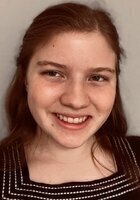
I'm a current PhD student in the history department at Georgetown University who is also an experienced instructor with Varsity Tutors. As a recipient of several degrees, the most recent being a BA in history from Hillsdale College and a MA in Russian, East European, and Eurasian Studies from Stanford University, I have long sought to make teaching my profession. Meanwhile, as a volunteer grade school teacher and a tutor with this company, I have many years' experience helping students reach their full potential. I am capable of teaching students in many subjects, including reading, mathematics, test prep, Latin, and especially writing, history, and literature. In practice, I am comfortable adapting to different learning styles and specific student preferences. Outside of my academic and career endeavors, I enjoy cooking, reading, and listening to and making music.
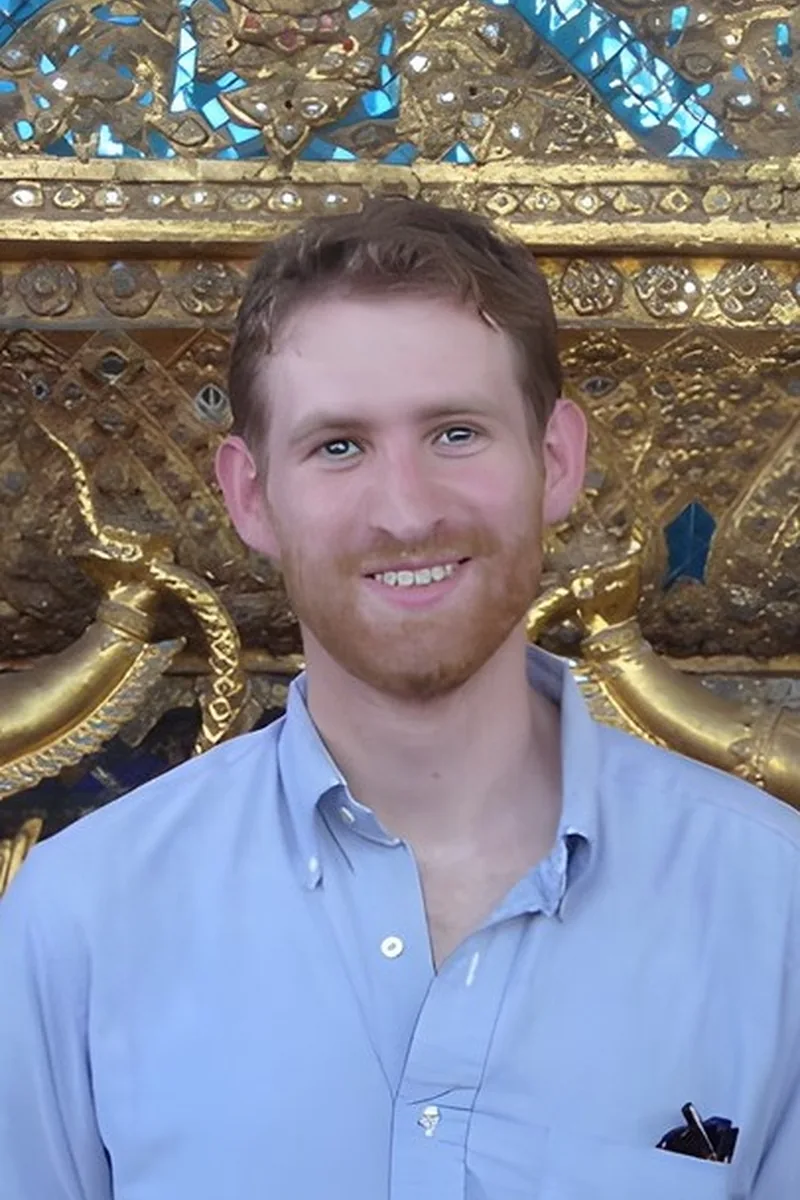
Editing is more than catching typos — it's rethinking whether a paragraph earns its place, whether a transition actually connects two ideas, whether the opening sentence of an essay does real work. Alex brings a PhD-level editorial eye to student writing across disciplines, from humanities papers to lab reports. He marks up drafts with specific, actionable feedback rather than vague comments like "clarify" or "awkward."
Years of writing and revising academic papers across two master's programs taught Moayad how to tighten an argument, cut unnecessary repetition, and make every paragraph earn its place. He applies that same structural discipline to student essays, walking through thesis clarity, paragraph transitions, and evidence integration one draft at a time.
Good editing is more than catching comma splices — it's about tightening an argument so every paragraph earns its place. Najja's graduate training in history at the University of Washington means he's spent years revising dense, thesis-driven writing, and he applies that same structural eye to student essays across subjects.
Alice has spent over a year editing college admissions essays professionally, refining drafts for students who went on to top programs like CalTech and Northwestern. She tackles essays at the structural level first — argument flow, paragraph transitions, redundancy — before moving into sentence-level clarity and word choice. Editing samples are available on request for anyone who wants to see her markup style.
Good essay editing goes deeper than fixing typos — it means tightening arguments, cutting redundancy, and making sure each paragraph earns its place. Helen reads drafts with an engineer's eye for structure, checking whether the logic of each section actually supports the thesis. She provides concrete, line-level feedback that students can apply to future papers on their own.
Cory's physics background means he reads essays the way a scientist reads a proof — checking whether each paragraph logically supports the thesis and whether evidence actually connects to the claim. He zeroes in on argument structure, transitions, and clarity, making sure every draft communicates its point without unnecessary filler.
Years of reviewing admissions essays at Yale taught Moses to spot the moment a draft stops persuading — a buried thesis, a paragraph that restates instead of advances, a transition that breaks the reader's momentum. He marks up each piece with specific revision instructions, showing students exactly how to restructure and tighten their writing. Rated 5.0 by students.
A draft isn't finished just because it meets the word count. Marie's editing sessions tackle structure and argument first — reorganizing paragraphs, tightening thesis statements, cutting filler — then move to sentence-level clarity and grammar. Rated 5.0, she brings the same revision process she uses with her AP English students to any essay that needs sharpening.
Good editing goes beyond catching typos — it means reworking a paragraph so the argument actually lands, cutting sentences that repeat themselves, and tightening transitions between ideas. Maria approaches each draft structurally first, identifying where the logic breaks down, then moves to sentence-level clarity and tone so the final version reads as one cohesive piece.
Most student essays lose points not on ideas but on execution — vague thesis statements, paragraphs that drift, transitions that don't actually connect anything. Clare approaches editing as a logic problem, tracing whether each claim follows from evidence and whether the overall arc of the piece holds together. Her philosophy background makes her especially sharp at spotting arguments that sound persuasive but don't actually prove the point.
Good essay editing goes beyond catching typos; it restructures weak thesis statements, tightens paragraph transitions, and cuts filler that dilutes the argument. Xiansheng reads each draft with an eye toward logical flow, questioning whether every sentence earns its place. He adapts his feedback style depending on whether a student needs broad structural overhaul or fine-grained line editing.
Good editing goes deeper than catching comma splices. Chica reads drafts at the structural level first — examining thesis clarity, paragraph transitions, and whether the evidence actually supports the argument — then moves into sentence-level revision for tone and precision.
Good essay editing goes deeper than catching typos — it means evaluating whether each paragraph earns its place and whether the argument actually builds. Kourtney reviews drafts at the structural level first, tightening thesis statements and transitions, then zooms in on sentence-level clarity and tone. She's edited everything from five-paragraph essays to graduate application materials.
Good editing is more than fixing commas — it's rethinking whether a paragraph earns its place in the argument. Elizabeth approaches each draft by first identifying the essay's central claim and then evaluating whether every section actually supports it, tightening transitions and cutting filler along the way. Her English major gives her a sharp eye for both structural logic and sentence-level clarity.
Good editing isn't about fixing typos — it's about seeing where an argument loses the reader, where a paragraph buries its own point, or where transitions create logical gaps. Avalon sharpened this skill through USC's honors writing curriculum, where revision was treated as the real work of writing. She walks through drafts at both the structural and sentence level, teaching students to become their own best editors.
A draft that's 80% there but somehow still doesn't land usually has a structural problem hiding under decent sentences — Tsering is sharp at spotting those buried thesis issues, weak transitions, and paragraphs that argue against themselves. Her research background at institutions like NIH and Emory means she's edited everything from personal statements to scientific manuscripts. She tightens prose without flattening a writer's voice.
A sharp essay isn't about adding more — it's about cutting what doesn't serve the argument and tightening what does. Angela treats editing as a teachable skill, walking through structure, transitions, and clarity line by line so students learn to revise their own work independently. Rated 5.0 by students.
An avid writer outside the classroom, Jon treats essay editing as more than fixing commas — he walks through argument structure, transition logic, and whether each paragraph actually earns its place in the draft. His approach is to read an essay the way an admissions officer or professor would, then show the student exactly where clarity breaks down.
A good editor doesn't just fix commas — they see what the writer was trying to say and show them how to say it more clearly. Grant's English degree trained him in close reading and revision, so he can pinpoint where an argument loses focus, where a paragraph buries its point, and where a single restructured sentence changes everything.
A good essay usually isn't rewritten — it's restructured. Madyson zeroes in on thesis clarity, paragraph transitions, and argument flow, treating each draft as a puzzle where the pieces just need rearranging. Her experience in ESL classrooms also sharpened her ability to spot where a writer's intent isn't landing on the page.
Good editing is about more than catching comma splices — it's about tightening an argument so every paragraph earns its place. Daniel sharpened this skill writing technical reports in his engineering program at Stevens and now applies that same precision to student essays, targeting unclear thesis statements, weak transitions, and paragraphs that drift from their claims.
Currently, I am a Research Technician at New Mexico State University in Las Cruces, NM. I have tutored as an undergraduate student, and I have been the lead TA for General Chemistry courses at UC Berkeley. Chemistry is one of my passions, and I would love to share my experience!
Editing an essay well requires seeing both the big picture — argument, structure, flow — and the sentence-level details like clarity and word choice. Matthew approaches revision methodically, walking students through their drafts in layers: first tightening the thesis and organization, then sharpening individual paragraphs and transitions.
Law school at the University of Chicago has made Elena a relentless editor — she knows how to tighten a thesis, restructure a muddled argument, and cut the filler sentences that dilute a paper's impact. Rather than rewriting a student's draft, she reads it aloud with them, asking targeted questions that reveal where the logic gaps and unclear transitions are so the student learns to self-edit.
Editing an essay well requires more than catching comma splices — it means evaluating whether each paragraph earns its place in the argument. Andrew approaches revision structurally, teaching students to tighten thesis statements, cut filler, and strengthen transitions before polishing at the sentence level. His own extensive writing experience through a doctoral program makes him especially sharp at spotting where logic gaps hide.
Sydny treats essay editing as a thinking exercise, not just a grammar cleanup. She walks through argument structure, evidence integration, and paragraph-level logic, showing students how to tighten a thesis and cut the filler that weakens their claims. Years of writing for science and humanities courses gave her a sharp eye for clarity across disciplines.
Good editing is more than fixing typos — it means rethinking paragraph transitions, tightening thesis statements, and cutting the sentences a writer loves but the argument doesn't need. Ingrid approaches each draft with the analytical rigor of her engineering training and the narrative instincts she's developed writing scholarship applications, research abstracts, and admissions essays of her own.
Good editing goes beyond fixing commas — it means restructuring arguments, tightening transitions, and cutting the sentences a writer loves but the essay doesn't need. Akarsh's scientific writing background trained him to be ruthlessly clear, and he applies that same precision when walking students through revision of academic papers, personal statements, and research essays.
Good editing goes beyond catching typos; it means tightening an argument, smoothing transitions, and making sure every paragraph earns its place. Sherry's experience at 826, a literacy education organization, gave her years of practice reading student drafts across genres and skill levels. She pinpoints exactly where a piece loses clarity and shows the writer how to fix it — whether it's a high school research paper or a graduate school application.
Good editing is more than fixing typos — it's restructuring a paragraph so the argument actually builds, cutting sentences that repeat themselves, and tightening language until every word earns its place. Christopher reads student drafts with a structural eye first and a line-editing eye second, which tends to produce cleaner, more confident revisions.
A strong draft becomes a polished piece when someone can identify where the argument drifts, where transitions fail, and where a sentence tries to do too much. Emily's editing approach tackles structure first — thesis clarity, paragraph cohesion, evidence integration — before moving to sentence-level revision. Her own writing background across scientific and humanities disciplines gives her range across essay types.
Brittney's comparative literature training at Princeton means she's spent years dissecting how writers across genres build arguments, control tone, and structure ideas — skills she now turns on student drafts. She digs into the logic of each essay before touching a single comma, showing writers how to identify their own weak transitions and sharpen claims that aren't pulling their weight.
Editing isn't just about catching comma splices — it's about reshaping an argument so each paragraph earns its place. Jessica was certified through Penn's Critical Writing Department specifically to provide professional-level feedback on student papers, from thesis clarity to paragraph-level transitions to sentence rhythm. She approaches each draft by identifying the one or two structural issues that, once fixed, make everything else click into place.
Good editing isn't about fixing commas — it's about asking whether each paragraph earns its place. Kathy's background in both academic writing (economics research, art history analysis) and creative work (photography, painting, personal essays) means she can tighten an argument's logic and its prose at the same time, whether the piece is a term paper or a personal statement.
Testimonials
Because the right Essay Editing tutor makes all the difference.
Average Session Rating – Based on 3.4M Learner Ratings
Other Tacoma Tutors
Related English Tutors in Tacoma
Frequently Asked Questions
Varsity Tutors matches Tacoma students with expert Essay Editing tutors for 1-on-1 instruction. We pair each student with a tutor based on their specific needs, learning style, and goals.
Whether you need homework help, exam prep, or want to get ahead, our Essay Editing tutors are ready to help.
Common challenges include gaps from earlier material, difficulty with specific concepts, and trouble applying learning to new problems. These issues can snowball quickly in Essay Editing.
A tutor identifies where you're stuck, fills in gaps, and provides targeted practice. The 1-on-1 format means you get help exactly where you need it.
Tutors work with your student's actual coursework—homework assignments, class notes, and upcoming tests. This keeps tutoring directly relevant to what's happening in the classroom.
When you share information about your student's school and curriculum, we can match you with a tutor who has relevant experience.
All tutors complete background checks, credential verification, and teaching evaluation. Many of our Essay Editing tutors hold advanced degrees or have years of teaching experience.
You can review tutor profiles to find someone with the right background for your student's level and needs.
Many students see improved grades within a few weeks, along with better understanding of Essay Editing concepts and more confidence tackling challenging material.
Tutors track progress and adjust their approach to ensure continued improvement.
Most students benefit from 1-2 sessions per week. More frequent sessions help if your student is significantly behind or has an important exam coming up.
Your tutor can recommend a schedule based on your student's specific situation and goals.
Tutoring is purchased in packages of hours, with rates varying by tutor experience. Varsity Tutors offers several options to fit different budgets and needs.
You can discuss pricing during your consultation to find what works best.
Your tutor will assess where your student is, discuss goals, and start working on priority areas. Most students bring current homework or upcoming test material to focus on.
By the end, you'll have a clear sense of how the tutor can help and a plan for moving forward.
Let’s find your perfect tutor
Answer a few quick questions. We’ll recommend the right plan and match you with a top 5% tutor.