Award-Winning Economics Tutors
serving Minneapolis, MN
Economics
Tutors in Minneapolis
Private 1-on-1 tutoring, weekly live classes for academic support, test prep & enrichment, practice tests and diagnostics, and more to elevate grades and test scores.
Based on 3.4M Learner Ratings
UniversitiesSchools & Universities
DeliveredHours Delivered
ProficiencyGrowth in Proficiency
Who needs tutoring?
No obligation. Takes ~1 minute.
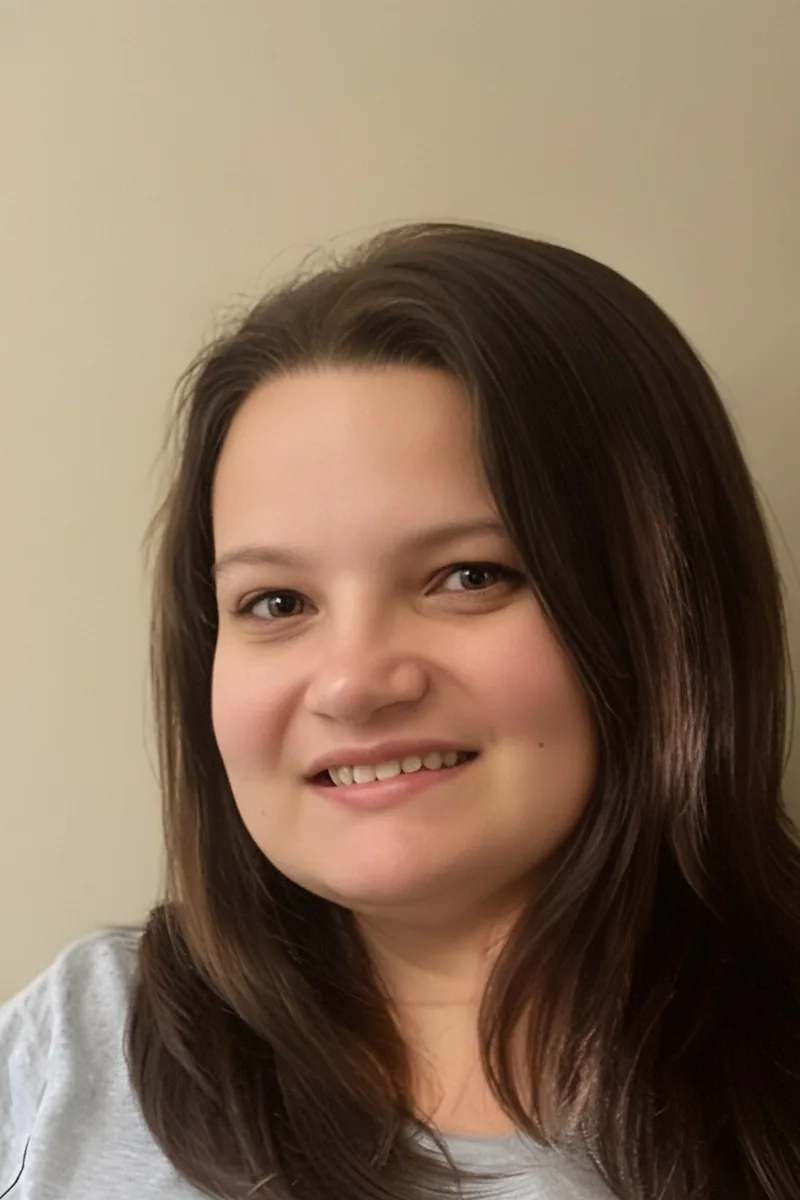
Emily's political science and social studies background gives her a practical lens on economics — she connects concepts like supply and demand, opportunity cost, and market structures to real policy decisions students can see playing out in the news. Her teaching style keeps abstract models grounded in concrete examples that actually stick.
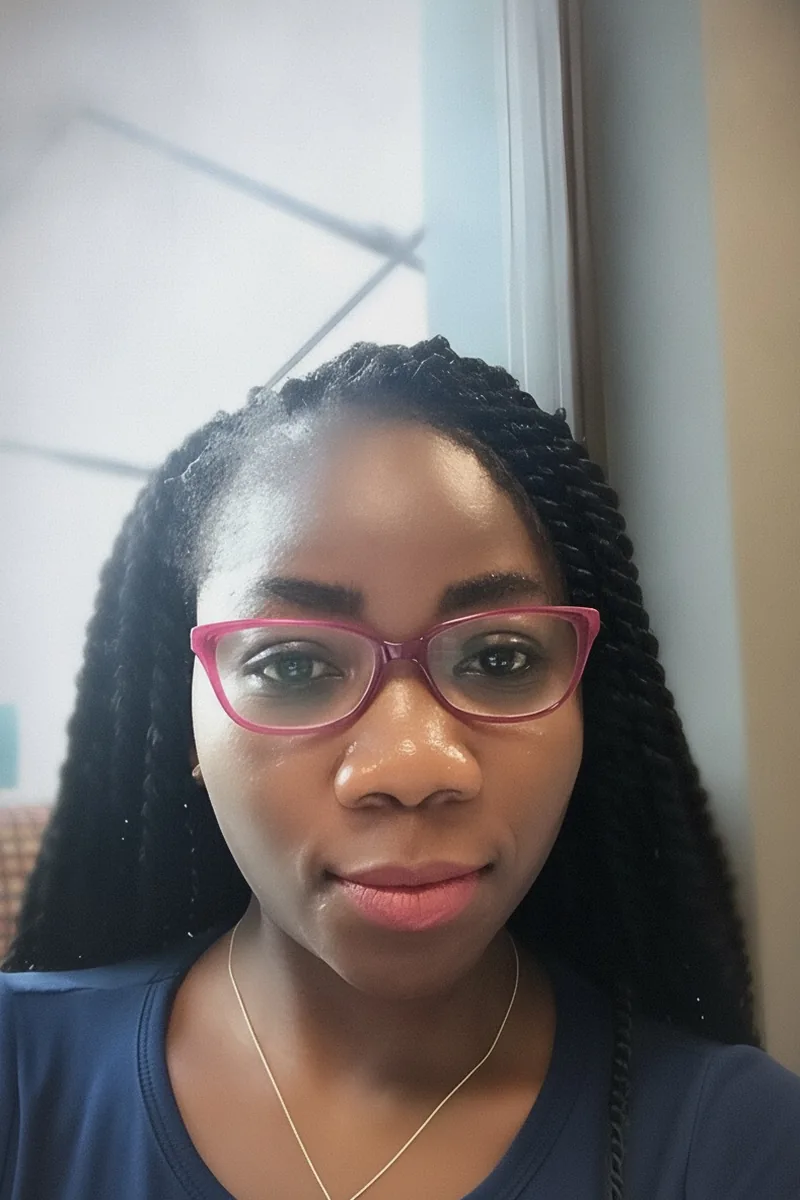
Celestine's PhD in Applied Economics means she doesn't just teach concepts like GDP growth models or market equilibrium — she's built and tested them using real data through econometric research. That depth lets her unpack the quantitative machinery behind topics like consumer optimization and policy analysis in ways that make the theory feel grounded rather than abstract.
Debate coaching sharpens a very specific skill: building an argument with evidence under pressure — which is exactly what economics asks students to do when analyzing how policies create winners and losers or why markets fail. Rohit's political science and economics degree means he can teach micro and macro concepts while training students to reason through trade-offs the way economists actually think. Rated 5.0 by his students.
Studying economics at the University of Minnesota means Parsan is immersed in supply-and-demand models, GDP analysis, and fiscal policy debates right now — not recalling them from years ago. He unpacks graphs and equilibrium concepts by tying them to current events, so ideas like inflation targeting or trade deficits feel concrete instead of theoretical.
I'm a freshman here at the University of Minnesota, Twin Cities. I graduated from Wayzata High, and I'm currently pursuing a Bachelor's of Science in neuroscience. At the University, I'm usually in class, studying, hanging out with my friends, or at club meetings! In my free time, I love to breakdance, write poetry, debate politics and economics, and participate in practically every nerdy endeavor possible (huge Star Wars fan!!). I love to talk and will talk your ear off if you let me! I love trying new things, exploring the city, and traveling. My teaching philosophy is that teaching is a responsibility and a privilege; I'll put 110% into teaching if you put the same effort into learning. With hard work and patience, anything is possible!
As an economics prefect and TA for introductory courses at Carleton College, Reed spent semesters breaking down supply-and-demand models, elasticity, and market equilibrium for classrooms of undergrads. That experience means he's already diagnosed the exact points where most students get stuck — like the jump from graphical intuition to mathematical analysis — and knows how to bridge them.
Double-majoring in economics and math at Carleton means Harry is working through micro and macro theory right now — not recalling it from years ago — so he explains concepts like indifference curves, production possibilities, and multiplier effects the way a sharp classmate would, in language that actually lands. His math chops make the quantitative side of econ click, especially when courses start layering in optimization and graphical analysis. Rated 4.8 by his students.
Studying political science means studying how economic forces shape policy outcomes — why governments tax certain goods, how trade agreements redistribute wealth, and what happens when monetary policy collides with political incentives. Travis brings that policy-first lens to economics concepts like market intervention, fiscal spending, and regulatory trade-offs, making the material feel less like abstract graphs and more like the debates it actually fuels. Rated 5.0 by his students.
Daniel holds a bachelor's degree in Economics, giving him deep familiarity with concepts like GDP measurement, monetary policy, trade theory, and market equilibrium — not just as textbook definitions but as tools for interpreting real-world events. He connects abstract models to current headlines so that supply-and-demand diagrams and IS-LM curves actually mean something. Rated 4.9 by students.
I am a Sophomore at the University of St. Thomas. I am working towards a degree in Actuarial Science with a Mathematics minor.
I am a great resource for students preparing for similar tests. Having taken numerous standardized exams so recently, I am very familiar with the subject matters tested, as well as with strong study habits, time management, and test taking strategies.
I am currently working in a Bronx Public School as a teaching apprentice in Algebra. I have four years of experience tutoring one on one with students of all ages.
Three engineering degrees — including one in applied mathematics — mean Rahi is fluent in the quantitative side of economics that often catches students off guard: optimization problems, marginal analysis, and the calculus lurking behind supply and demand curves. He also tutors macroeconomics and accounting, so he can connect microeconomic theory to the bigger fiscal picture and the financial statements where these forces show up in practice.
Natalie's Health Care Management minor at Penn exposed her to microeconomic principles like supply and demand, cost-benefit analysis, and market structures — all through the lens of real industries. She breaks down economic models by connecting them to concrete examples students can actually picture, whether it's pricing decisions or how incentives shape behavior.
Studying economics and finance at Wharton means Samica encounters micro and macroeconomic theory daily — supply and demand curves, market structures, GDP modeling — and can translate those concepts into clear, intuitive explanations. She connects abstract ideas like elasticity or comparative advantage to real-world business cases, which makes the material stick far better than rote definition review.
Studying both engineering and economics at Duke gave Natalie a quantitative lens on economic reasoning — she's comfortable moving between supply-and-demand intuition and the math behind elasticity, optimization, and equilibrium. She digs into the "why" behind each model so students can apply concepts to unfamiliar problems, not just textbook examples.
Public policy analysis at the University of Chicago meant Noel spent his undergraduate years dissecting how economic principles — budget trade-offs, incentive design, cost-benefit frameworks — actually drive government decisions. That training makes him especially sharp on the macro side of economics, where fiscal policy and public spending aren't abstract textbook topics but the real-world problems he studied daily. Rated 4.9 by his students.
As an economics major at Northwestern, Sarah digs into the same core principles — scarcity, opportunity cost, market equilibrium, elasticity — that introductory students encounter for the first time. She translates abstract models into concrete examples, making supply-and-demand curves and production possibilities frontiers feel intuitive rather than mechanical.
Supply and demand curves are simple enough on the surface, but economics gets tricky fast once students hit elasticity, market structures, or macroeconomic models. Emma minored in economics at Harvard, so she can unpack concepts like comparative advantage or fiscal policy with real-world examples that make the math and the theory click together. She holds a 5.0 client rating.
As an economics major at Dartmouth, Mia engages with concepts like market equilibrium, elasticity, and game theory on a daily basis. She unpacks the intuition behind graphs and models so that supply-and-demand curves and GDP calculations actually make sense instead of feeling like abstract formulas to memorize.
An MBA from the University of Chicago and an undergraduate economics degree mean David has encountered the full spectrum of economic reasoning — from microeconomic models of firm behavior to the macroeconomic policy debates that shape real markets. Running a startup gives him a founder's perspective on how concepts like pricing strategy, marginal cost, and competitive dynamics actually play out when you're the one making the decisions.
Kevin's Philosophy, Politics, and Economics major at the University of Pennsylvania means he studies economics not as an isolated discipline but as something deeply entangled with policy decisions and ethical trade-offs. He breaks down concepts like market equilibrium, elasticity, and game theory by connecting them to real political and social questions that make the logic behind the models click.
I am a graduate of Cornell University's College of Arts and Sciences. I received my Bachelor of Arts in Chemistry with Distinction in 2015. Since graduation, I was a physics/chemistry teacher and soccer coach at a private school in Virginia for a year, where I led the soccer team to an undefeated season. Before teaching and coaching professionally, I was a Teaching Assistant for the Cornell Math and Physics Departments, where I taught many subjects including calculus, mechanics, electromagnetism. Throughout my time at Cornell and as a teacher, I tutored subjects ranging from the SAT to AP Physics and Algebra II, which is where my true talents lie: in small group or one-on-one settings where I can give students the full attention they deserve and tailor my approach specifically to their learning styles. This is why I am now pursuing tutoring as a part-time occupation at Varsity Tutors. I embrace teaching all math and science subjects, especially physics and calculus, at both the college and high school level and will go above and beyond to make sure all of my students succeed, according to their definition of success. In my spare time, I enjoy playing league soccer, basketball, tennis and guitar, and also like to travel and see as much of the world as I can.
Testimonials
Because the right Economics tutor makes all the difference.
Average Session Rating – Based on 3.4M Learner Ratings
Nearby Economics Tutors
Other Minneapolis Tutors
Related Business Tutors in Minneapolis
Frequently Asked Questions
Economics courses in Minneapolis schools typically follow Minnesota state standards, covering foundational concepts like supply and demand, market structures, and macroeconomic principles. Tutors work with students to master these core topics while adapting to each student's specific course requirements—whether that's high school economics, AP Economics, or college-prep coursework. This personalized approach ensures students aren't just memorizing concepts; they're developing the analytical skills needed to apply economic thinking to real-world scenarios.
Many students struggle with abstract economic concepts like elasticity, opportunity cost, and market equilibrium—topics that require strong quantitative reasoning and visualization skills. Others find it difficult to connect theory to real-world applications or to interpret graphs and data effectively. Personalized 1-on-1 instruction helps students work through these conceptual barriers at their own pace, breaking down complex ideas and building confidence through targeted practice and concrete examples.
Tutoring is available for students taking Economics at various levels—from introductory high school Economics (typically grades 10-12) to AP Microeconomics and AP Macroeconomics for college-bound students. Whether a student needs foundational support in basic economic principles or advanced preparation for standardized tests, tutors can tailor instruction to match grade-level expectations and individual learning goals.
Economics relies heavily on interpreting supply and demand curves, production possibility frontiers, and other visual representations of economic data. Many students find these graphs intimidating until they understand what each line and axis represents. Tutors break down graph analysis step-by-step, helping students develop systematic approaches to interpreting economic models and building the visual literacy skills essential for success in the subject.
In a typical Minneapolis classroom with a 17.6:1 student-teacher ratio, economics instruction moves at a pace designed for average learners. Personalized tutoring allows students to slow down on difficult concepts like market equilibrium or fiscal policy, ask questions without time pressure, and spend extra time on areas where they're struggling. Tutors can also customize examples and practice problems to match individual interests, making economics feel more relevant and engaging.
Yes. AP Microeconomics and AP Macroeconomics require students to master both conceptual understanding and problem-solving skills within a compressed timeline. Tutors can help students build the analytical frameworks needed to tackle free-response questions, interpret economic scenarios, and perform calculations accurately. Through targeted review and practice with released exam questions, students develop confidence in their ability to perform well on test day.
Progress in Economics can be tracked through improved performance on unit tests, quizzes, and homework assignments, as well as stronger conceptual understanding demonstrated in class discussions and problem-solving exercises. For AP students, progress is measured by increasing accuracy on practice exams and released test questions. Tutors work with students to set specific goals—whether that's raising a grade, mastering a particular concept, or achieving a target AP exam score—and regularly assess progress toward those goals.
Let’s find your perfect tutor
Answer a few quick questions. We’ll recommend the right plan and match you with a top 5% tutor.