Award-Winning Computer Science Tutors
serving Chicago, IL
Computer Science
Tutors in Chicago
Private 1-on-1 tutoring, weekly live classes for academic support, test prep & enrichment, practice tests and diagnostics, and more to elevate grades and test scores.
Based on 3.4M Learner Ratings
UniversitiesSchools & Universities
DeliveredHours Delivered
ProficiencyGrowth in Proficiency
Who needs tutoring?
No obligation. Takes ~1 minute.

A doctorate that spans both mathematics and computer science gives Irene unusual depth across the theoretical side of CS — from graph theory and combinatorics to algorithm analysis and discrete structures. She unpacks abstract concepts like Big-O notation and recursion by grounding them in the mathematical reasoning underneath.
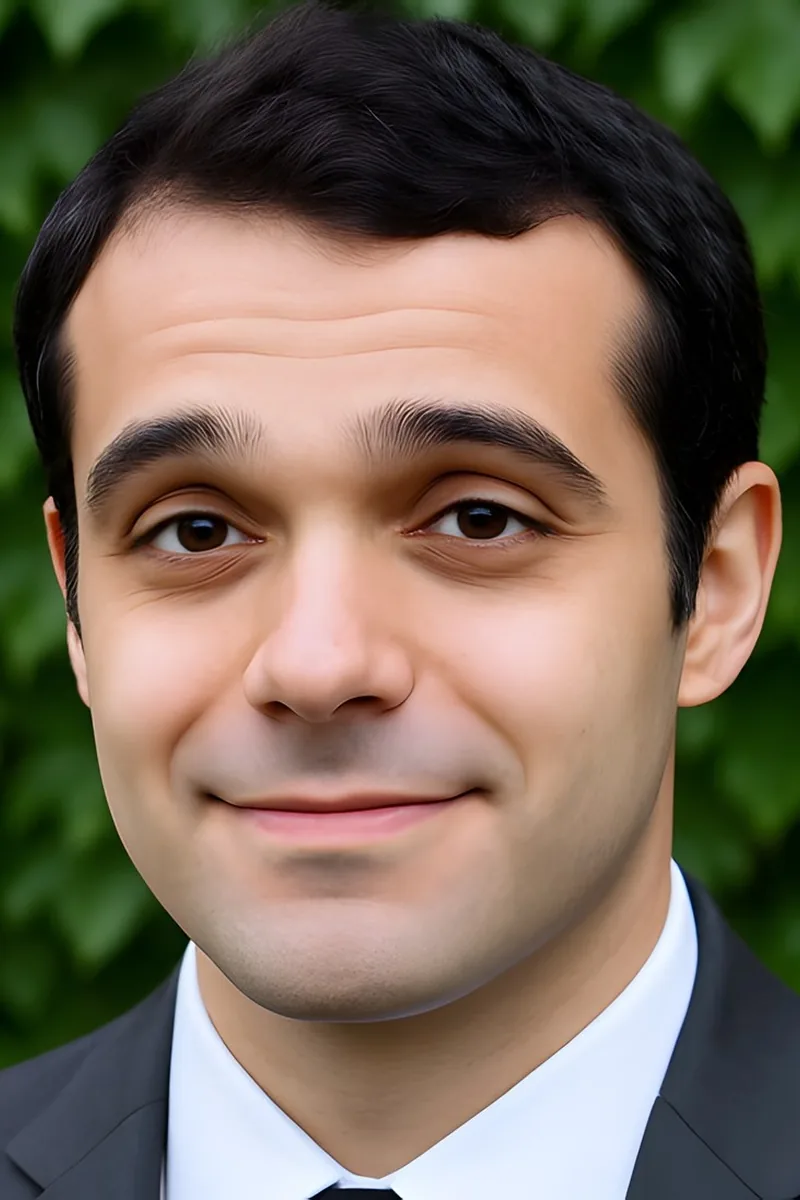
Currently pursuing a Master's in Computer Science at DePaul, Ignacio teaches core CS concepts — data structures, algorithms, and object-oriented design — with the perspective of someone actively working through advanced coursework. His environmental science background also means he can connect abstract computing ideas to real-world applications like data modeling and simulation.
Though English and writing are Eliza's strongest suits, her coursework in AP Computer Science Principles and coding gives her a solid handle on the conceptual side of CS — how data is represented, how algorithms are designed, and how the internet actually works. She approaches these topics the way she approaches essay structure: by teaching students to organize their thinking clearly before executing, which translates surprisingly well to debugging and program design.
From Big-O analysis to recursion to finite automata, computer science is really applied mathematical reasoning — and that's exactly where Joseph's strengths converge. His math degree at the University of Chicago gives him a rigorous foundation in the proofs and logic that underpin CS theory, while his programming experience across multiple languages keeps the practical side grounded.
Holding a bachelor's degree in computer science, Charles digs into everything from introductory programming logic to data structures and algorithm design. He emphasizes understanding why a particular approach works — tracing through loops, recursion, and memory allocation step by step — so students can debug their own thinking, not just their code.
From data structures and algorithm efficiency to the basics of how operating systems manage memory, computer science covers a huge range of concepts that build on each other fast. Daniel is pursuing his CIS degree right now, which means the material is fresh and he knows exactly where students tend to hit walls — particularly around recursion, sorting algorithms, and Big-O analysis.
From data structures and algorithms to object-oriented design, Muntaser covers computer science fundamentals with the perspective of someone who uses them daily as a software engineer. His two years as a university-level Java TA sharpened his ability to explain concepts like recursion, linked lists, and sorting in ways that click on the first pass rather than the fifth.
Matt's computer science degree means he can walk through everything from basic control flow and data structures to algorithm analysis and object-oriented design. He teaches programming the way he learned it — by building things, breaking them, and understanding why the fix works.
I am a Molecular Engineering major at the University of Chicago, I am currently taking time off to focus on other aspects of my career but I don't want to stop tutoring outside college campus!. I am a child of immigrants and have spent my life tutoring my siblings and younger students, and I loved working with them! See y'all in class!
As a Ph.D. student in Computational and Applied Mathematics at the University of Chicago, with a Bachelor's in Mathematics from MIT, I am passionate about making mathematics accessible and engaging for all learners. My experience as a teaching assistant for calculus courses has honed my ability to design effective problem sets and lead dynamic recitations, while also providing personalized support through office hours and one-on-one tutoring. I specialize in subjects such as Algebra I & II, AP Calculus, Differential Equations, and Linear Algebra. I strive to create a supportive learning environment where students feel comfortable asking questions and exploring concepts. My teaching philosophy centers on patience, encouragement, and tailored lessons that align with each student's unique goals and learning style. I am dedicated to helping students build both their mathematical skills and their confidence, ensuring they can tackle challenges with a sense of accomplishment.
I am a second-year student at the University of Michigan-Ann Arbor and I am in the College of Engineering. I am not exactly sure as to what I want to do after College, but I do know that I would like to do something that involves Physics, Chemistry, and Computer Science. In High School, I would teach/tutor elementary school students at a tutoring center in Chicago called Ivy Garden. I tutor many High School Math and Science subjects (including AP courses) as well as Math and Science test prep for the ACT. My favorite subjects to tutor are Calculus and Physics because they are applicable with many things in your daily life. I am inspired to tutor those who are struggling in Math and Science courses because people are very discouraged while studying these subjects and I feel that, with the proper instruction, not only will people get better at those subjects; but they will become more confident in themselves. I believe that understanding something conceptually is ten times more valuable than knowing how to use an equation and I like using real world examples when I am tutoring. On my free time I enjoy playing NBA 2K and actual basketball.
Benjamin's finance and economics training at Notre Dame means he learned to code as a problem-solving tool — building models, analyzing datasets, and automating calculations — rather than through a traditional CS curriculum. That pragmatic entry point makes him effective at teaching programming logic and computational thinking to students who want to understand how code actually gets used in business and quantitative fields. Rated 5.0 by students.
Engineering science at Vanderbilt means Ethan writes code to solve real problems — simulations, data analysis, algorithm design — not just textbook exercises. He breaks down core concepts like recursion, data structures, and object-oriented design by connecting them to projects that actually do something interesting.
Currently pursuing a Computer Science degree, Michael digs into the concepts that trip students up most — recursion, data structures like linked lists and trees, and algorithm efficiency using Big-O notation. He codes across multiple languages including Java, C++, and JavaScript, so he can adapt explanations to whatever language a student's course uses.
From data structures and algorithm complexity to the theory behind how compilers and operating systems work, Devanshi covers computer science with the depth her own BS program demanded. She's particularly sharp on discrete math foundations — graph theory, recursion, Big-O analysis — that underpin so much of upper-level coursework. Rated 5.0 by students.
From recursion and sorting algorithms to data structures like trees and hash maps, Nicholas tackles computer science as a discipline built on logical reasoning — the same reasoning his physics degree drilled into him. He walks students through not just how an algorithm works but how to derive its time complexity and recognize which approach fits a given problem.
Debugging a program you wrote at 2 a.m. teaches you things a lecture never will — and Shivam's CS degree means he's been through that cycle hundreds of times. He unpacks core topics like data structures, algorithm complexity, and object-oriented design by writing and breaking real code alongside students.
Blake's computer science minor covers data structures, algorithms, and systems-level thinking, and his professional web development work means he applies those concepts daily. He unpacks topics like recursion, sorting efficiency, and memory management by tying abstract ideas to code students can actually run and modify. Rated 4.9 by students.
I'm a former Stanford grad, where I majored in Math and History. I've also spent a few years working as a software developer.
I am currently studying Computer Engineering at the University of Illinois at Urbana-Champaign. I have had experience tutoring students of all ages through programs at my school and the local library. I also teach private percussion lessons to help students prepare for auditions and concerts. While I tutor many subjects, I especially enjoy helping students with math, physics, computer science, and music. In my free time, I enjoy playing percussion (much to my neighbors dismay) and tinkering with robotics. I also enjoyed scouting as a kid and still love hiking and exploring the outdoors.
I am a software programmer who specializes in Python applications and some web design. I have a deep understanding of mathematics and how computers work, but software development also allows room for creativity and exploration of an endless supply of tools available online. I like to think I bring this versatility to every aspect of life, including tutoring. Another example of this is my affinity for realistic drawing; by using proportions and geometry to analyze a scene as well as incorporating different techniques,
Studying Computer Science alongside Math/Stats at Carleton College, Thomas lives at the intersection of algorithms, data structures, and mathematical reasoning. He digs into topics like recursion, sorting algorithms, and object-oriented design by building understanding from first principles rather than rote code memorization.
As a computer science major at Boston University, Irene is immersed in the subject daily — from data structures and algorithms to object-oriented design. She breaks down abstract programming concepts into concrete steps, walking through how to trace logic, debug code, and think like a developer rather than just memorize syntax.
From data structures and algorithms to systems-level thinking, computer science covers enormous ground. John earned a BS in Computer Science and codes in Java, C++, and SQL, giving him the range to dig into whatever topic is causing trouble — whether that's recursion, Big-O analysis, or database design.
Isabella TA'd multiple computer science courses at MIT, so she's seen exactly where students get stuck — whether it's tracing recursive calls, understanding how data structures like linked lists and trees actually work in memory, or debugging logic errors in their code. She explains the underlying concepts so that writing correct programs becomes intuitive rather than trial-and-error. Rated 5.0 by students.
Between his coursework at Rice and his background in algorithms, Daniel tackles computer science from both the practical and theoretical sides — writing clean code and understanding why one sorting algorithm outperforms another for a given dataset. He's especially strong at breaking down recursion, data structures, and algorithmic complexity into steps that build logically on each other.
Recursion, data structures, algorithmic complexity — these topics trip up students who try to memorize patterns without understanding why they work. Kevin holds both a bachelor's and master's in computer science from NYU, and he's the kind of tutor who will explain a concept three different ways until the logic genuinely lands. Rated 4.8 by students.
Jeff tackles computer science by connecting abstract concepts like recursion, data structures, and algorithmic complexity to concrete problem-solving steps students can follow. His science background means he's comfortable with the mathematical logic underlying CS, from Boolean algebra to Big-O analysis.
Holding both a B.S. in Computer Science from the University of Kentucky and a game development master's in progress at SCAD, Evan covers the full stack of CS fundamentals: data structures, algorithm analysis, object-oriented design, and software architecture. He connects abstract concepts like Big-O complexity or recursion to concrete implementations in C, C++, and Java so the theory actually sticks.
Eric treats coding problems the same way he treats logical puzzles — by breaking them apart, finding the pattern, and building a solution step by step. As a CS major at Washington University in St. Louis, he's deep in Java and JavaScript right now, which means he can walk students through everything from writing their first function to structuring a full object-oriented program. His approach emphasizes learning to think through problems algorithmically before jumping to syntax.
From recursion and sorting algorithms to Big-O analysis and object-oriented design, Ethan covers core computer science concepts with the rigor of someone studying it as a second major alongside aerospace engineering. He emphasizes understanding why an algorithm works — tracing through execution step by step — so students can adapt their thinking to new problems on exams and in projects.
From computer architecture and theory to parallel computing and machine learning, Brandon's master's coursework at RIT covers the full stack of computer science concepts. His two years of professional industry experience mean he can connect abstract topics — algorithm complexity, concurrency models, data structures — to how they actually show up in production code. Students rated him 4.9, which tracks with his ability to make dense CS material feel approachable.
Madeline's physics PhD work at Carnegie Mellon means she writes code daily — Python, Java, MATLAB, and Mathematica — to model complex systems and crunch data, which is a very different entry point into computer science than a pure software track. That scientific computing background makes her especially effective at teaching programming logic, debugging strategies, and algorithmic thinking to students who need CS skills for STEM applications rather than just app development.
Testimonials
Because the right Computer Science tutor makes all the difference.
Average Session Rating – Based on 3.4M Learner Ratings
Nearby Computer Science Tutors
Other Chicago Tutors
Related Technology and Coding Tutors in Chicago
Frequently Asked Questions
Your first session is an opportunity to discuss your current skill level, coding experience, and specific goals—whether you're learning Python basics, preparing for AP Computer Science, or building web applications. A tutor will assess what you're working on in class or on personal projects, identify areas where you're struggling (like debugging or understanding algorithms), and create a personalized plan to help you progress. This initial conversation ensures the tutoring experience is tailored to your needs.
Debugging is one of the most valuable skills in computer science, and it's often where students get stuck. A tutor can walk you through systematic debugging techniques—like reading error messages carefully, using print statements or debuggers, and testing small sections of code in isolation. Rather than just fixing errors for you, tutors help you develop the problem-solving mindset to identify root causes and prevent similar mistakes in the future.
Syntax is the specific rules of a programming language (like how to write a for loop in Python), while logic is the algorithmic thinking behind solving problems (like deciding when and why to use a loop). Many students memorize syntax but struggle with logic—knowing how to write code doesn't mean knowing what code to write. Tutors focus on building both: they help you understand the "why" behind algorithms and data structures, not just the "how" of language syntax.
Absolutely. Project-based learning is one of the best ways to develop computer science skills, and tutors can guide you through the entire process—from planning your project architecture to writing code, debugging issues, and optimizing performance. Whether you're building a web app, game, or data analysis tool, a tutor provides code review, suggests improvements, and helps you learn industry practices. This hands-on approach builds confidence and a portfolio you can be proud of.
Yes. Computer science has many paths—web development, game development, data science, artificial intelligence, and more—and tutors can specialize accordingly. When you connect with a tutor, you can discuss which area interests you most, whether you're exploring options or committed to a specific direction. Tutors adapt their teaching to your goals, whether that's building frontend skills, learning data structures for competitive programming, or understanding machine learning concepts.
Algorithmic thinking—breaking problems into steps and choosing efficient solutions—is the foundation of computer science. Tutors help you move beyond memorizing data structures (arrays, linked lists, trees) to understanding when and why to use them. Through practice problems, code walkthroughs, and real-world examples, you'll develop intuition for choosing the right approach. This is especially helpful for students preparing for technical interviews or advanced CS courses.
Varsity Tutors connects you with tutors who understand the computer science standards taught across Chicago's schools—whether that's introductory coding, AP Computer Science Principles, AP Computer Science A, or specialized electives. With 12 school districts and hundreds of schools across Chicago, curriculum can vary, but tutors are experienced in helping students succeed in their specific courses and can align support with what you're learning in class.
In a classroom with a 17.7:1 student-teacher ratio, it's hard for teachers to address individual learning gaps—especially in computer science, where concepts build on each other. With personalized 1-on-1 instruction, a tutor moves at your pace, spends extra time on concepts that confuse you (like recursion or object-oriented programming), and skips material you've already mastered. This targeted approach helps you progress faster and build genuine understanding rather than just keeping up with the class.
Let’s find your perfect tutor
Answer a few quick questions. We’ll recommend the right plan and match you with a top 5% tutor.