Award-Winning Biology Tutors
serving Mesa, AZ
Biology
Tutors in Mesa
Private 1-on-1 tutoring, weekly live classes for academic support, test prep & enrichment, practice tests and diagnostics, and more to elevate grades and test scores.
Based on 3.4M Learner Ratings
UniversitiesSchools & Universities
DeliveredHours Delivered
ProficiencyGrowth in Proficiency
Who needs tutoring?
No obligation. Takes ~1 minute.
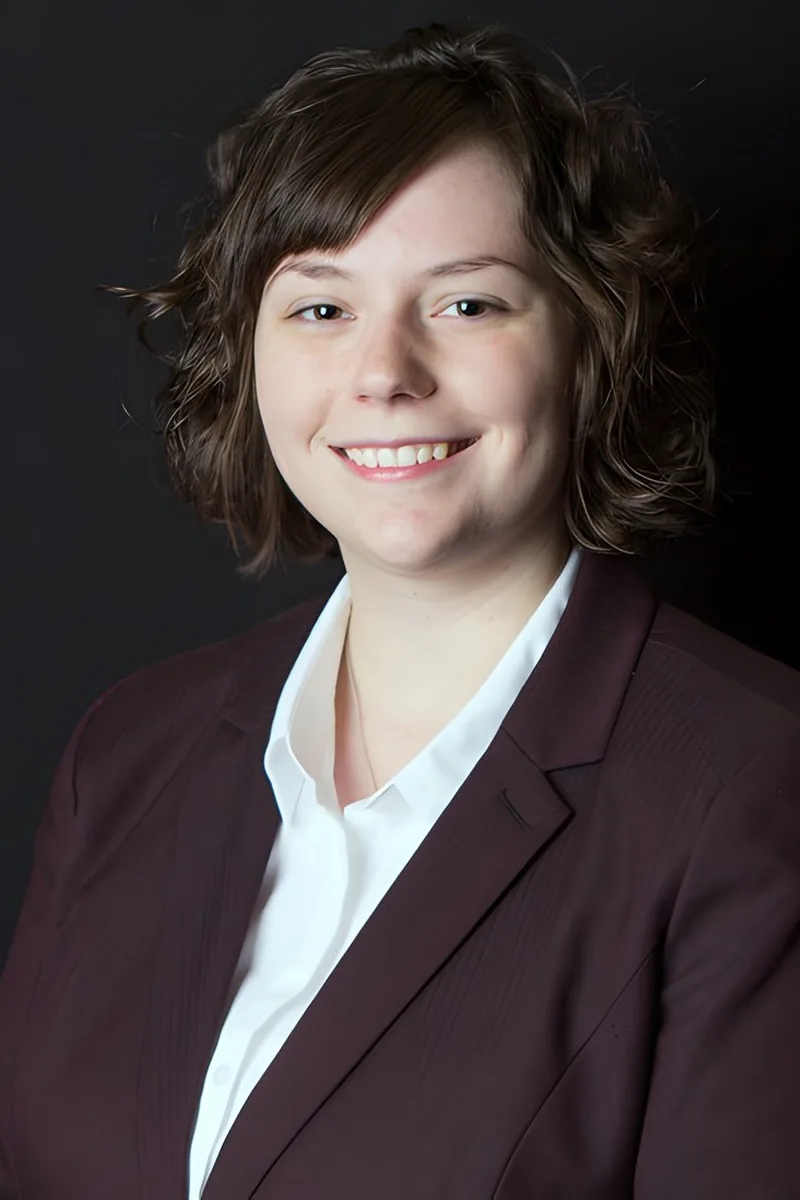
A BS in Biology with a Biochemistry minor gives Lindsay the depth to connect topics that textbooks often treat in isolation — linking cellular respiration to ecology, or tying protein structure back to gene expression. She approaches each concept by building the story of how biological systems actually work, which makes details easier to retain than rote memorization ever could.
Spencer approaches biology by anchoring every new topic — whether it's cellular respiration, genetics, or ecology — to a clear cause-and-effect chain so students can reason through problems instead of relying on rote memorization. His broad coursework in science and his knack for translating technical language into everyday terms make dense biology content far more approachable.
Between her Nutritional Sciences major and Biochemistry minor at the University of Arizona, Atley lives in biology daily — from cellular respiration and enzyme kinetics to genetics and human physiology. She's also tutored biology one-on-one and knows which topics (like mitosis vs. meiosis or DNA replication) tend to blur together without careful explanation. Her approach is to unpack the underlying mechanism so each concept connects to the next.
Biochemistry sits right at the intersection of biology and chemistry, so Charles spent his undergraduate years at Arizona State deep in cell biology, genetics, and metabolic pathways. He unpacks dense topics like DNA replication and ecological systems by linking each concept back to a concrete example students can visualize.
From cell respiration to population genetics, biology covers an enormous range — and Courtney has touched nearly all of it. Her MS in Biology and active research in aquatic ecology mean she can unpack everything from enzyme kinetics to evolutionary adaptation with the depth of someone who uses these concepts daily, not just someone who memorized them for an exam.
Michelle's strength in biology comes from an unexpected angle — her history training taught her to build arguments from evidence, which translates directly into how she teaches students to reason through topics like natural selection, ecological relationships, and inheritance patterns instead of just memorizing vocabulary lists. She also tutors the SAT and ACT science sections, so she's practiced at connecting biological concepts to the data-interpretation and passage-analysis skills that show up on exams. Rated 5.0 by students.
Cell biology, genetics, and ecology can feel like three separate subjects crammed into one course. Daniel's microbiology degree and dental science training gave him a unified view of how biological systems connect — from DNA replication at the molecular level to how organisms interact in larger ecosystems — and he teaches students to see those threads instead of treating each chapter as isolated material.
Studying cellular and molecular biology at Yale, Alice lives in the details of how organisms actually work — from signal transduction pathways to gene expression regulation. She teaches biology by connecting molecular-level mechanisms to the bigger physiological picture, which makes dense material like membrane transport or central dogma far easier to retain.
Philosophy trained Rachelle to break complex arguments into their smallest logical pieces — a skill that transfers surprisingly well to biology, where understanding a process like cellular respiration or the flow of energy through an ecosystem requires the same step-by-step reasoning. Her Summa Cum Laude academic record at Arizona State reflects genuine discipline across subjects, and she brings that same rigor to teaching biological concepts that reward careful, structured thinking over rote memorization.
As a current medical student at the University of Arizona, Alex is immersed in biology daily — from cellular respiration pathways to Mendelian genetics and ecological systems. He connects textbook diagrams to real physiological examples, which makes topics like mitosis, DNA replication, and natural selection far more intuitive for students encountering them for the first time.
Arshia earned her biology degree from UCLA and then applied that knowledge in clinical settings, performing glucose screenings and working with patients at a free clinic in South Los Angeles. That real-world experience gives her a way to teach cell biology, genetics, and human physiology that connects textbook diagrams to how living systems actually behave. She's rated 5.0 across her sessions.
Teaching general biology at Marquette and running organic chemistry lab sections gave Elise a front-row seat to the concepts students struggle with most — genetics problem sets, enzyme kinetics, and the sheer volume of cellular processes in a single semester. She connects each topic back to how living systems actually function, drawing on clinical knowledge from her medical degree to turn textbook diagrams into something students can reason through on an exam.
I am Arizona born and raised, my education includes an NYC law school degree with an undergraduate BS degree from University of Miami. In college I majored in Health Sciences with minors in Psychology and Public Health while in law school I leaned into corporate law and finance. Between law school and college I've pretty much covered every topic under the sun! In my spare time, I enjoy reading (especially mystery novels), pretending I'm a chef, and meditating.
Currently on the pre-med track at Duke, Thara is taking university-level biology and chemistry courses right now — which means topics like enzyme regulation, membrane transport, and gene expression are things she's actively working through, not distant memories. That proximity to the material lets her break down tough concepts using the same strategies and frameworks she's applying in her own coursework this semester.
Amanda's dual undergraduate training in both anthropology and biology gives her an unusual angle on the life sciences — she naturally connects evolutionary theory and ecological concepts to the broader story of how organisms, including humans, adapted over time. That perspective is especially useful for students wrestling with topics like natural selection, population genetics, or comparative anatomy, where seeing the 'why' behind biological diversity makes the details stick. Rated 4.9 by students.
Trained at Stanford, Rebia brings deep scientific literacy to biology tutoring, whether the topic is cellular respiration, Mendelian genetics, or protein synthesis. She treats biology as a set of interconnected systems rather than isolated vocabulary lists, which means students learn to predict and reason through unfamiliar questions. Her 5.0 rating speaks to how well that approach lands.
A conservation biology degree from ASU means River spent four years immersed in everything from molecular genetics and cell signaling to ecosystem dynamics and population ecology. He explains processes like photosynthesis or DNA replication by tracing the actual flow of energy and information, which makes memorization far less painful. Students come away understanding how biological systems connect rather than treating each chapter as an isolated list of terms.
Preparing for nursing school while finishing an applied math degree meant Madeleine took biology seriously — not just memorizing organelles and metabolic pathways, but understanding how cellular processes connect to real physiological outcomes. She's especially strong at breaking down topics like cell signaling, genetics, and enzyme kinetics where quantitative reasoning and biology overlap. Rated 5.0 by students.
A summa cum laude biology degree from ASU plus an honors thesis on hormonal regulation gave Claire the kind of broad-and-deep biology background that's hard to fake. She unpacks everything from genetics and evolution to ecology and physiology, and her current role tutoring medical students at Midwestern keeps those fundamentals razor-sharp.
Graduating summa cum laude with a 4.0 in Biochemistry from Arizona State's Honors College, Hritik built his understanding of biology from the molecular level up — protein structure, metabolic regulation, gene expression — before zooming out to the organism-level concepts that introductory students typically encounter first. That top-down fluency means he can anchor a topic like cellular respiration in the actual chemistry driving each step, turning what feels like arbitrary memorization into a logical sequence. Rated 4.7 by students.
Cameron's PhD in Genetics means topics like inheritance patterns, gene expression, and population genetics aren't abstract textbook sections — they're the territory he's spent years researching at the doctoral level. That depth lets him teach biology with a geneticist's eye, connecting Mendelian crosses to molecular mechanisms and showing how DNA-level changes ripple through organisms and ecosystems.
A current medical student with a premed degree and a psychology background, Hanna brings an unusually deep understanding of biology — from cellular respiration and DNA replication to organ-system physiology and genetics. She explains biological processes as interconnected stories rather than isolated facts, which makes topics like signal transduction or the immune response far easier to retain for exams.
As a biology honors student at Emory on the pre-med track, Arpita lives inside this material daily — from cellular respiration pathways to gene expression and ecological systems. She leads biology review sessions for classmates and has built a teaching style around diagrams and layered explanations that turn dense textbook content into something students can actually reason through on an exam. Her goal is always to close gaps in understanding before adding new complexity.
From cellular respiration pathways to Mendelian genetics crosses, biology rewards students who can organize large amounts of information into systems that make sense together. Maurice tackles this by teaching students to build concept maps — linking, say, DNA replication to protein synthesis to gene expression — so each new topic reinforces what came before. His Special Education training also means he adapts explanations quickly when a particular framing isn't landing.
As a genetics and cell development major at Arizona State, Alexa lives inside the material most biology students are trying to learn — from DNA replication and gene expression to membrane transport and cellular signaling. She unpacks dense topics by mapping out processes step by step, turning what looks like a wall of vocabulary into a logical sequence. Rated 5.0 by students.
As a biology major at the University of Houston, Pooja digs into cell biology, genetics, and ecology every semester — so the material is fresh and detailed in a way that textbook summaries can't match. She's particularly strong at teaching genetics problems, from Punnett squares through linked genes and chi-square analysis, making inheritance patterns logical instead of memorization-heavy. Rated 5.0 by students.
A Chemical Biology degree means Yuxuan studied biology through a molecular lens — cell signaling, gene regulation, metabolism — and he brings that same precision to introductory and high school biology topics. Whether a student is struggling with mitosis vs. meiosis or trying to connect photosynthesis to the Calvin cycle, he explains the underlying chemistry that makes each biological process click.
Working at ASU's tutoring center exposed Musa to the specific places where biology students stall out — the jump from memorizing vocabulary to actually reasoning through processes like gene expression or ecological energy flow. His biological sciences coursework and MCAT preparation mean he's recently wrestled with those same concepts at both the introductory and advanced level, which keeps his explanations grounded in what the material actually demands. Rated 5.0 by students.
Biomedical engineering and medical school mean Ekta doesn't just know biology — she uses it daily, from cellular respiration pathways to genetics and protein synthesis. She breaks dense topics like mitosis, DNA replication, and ecological relationships into clear, sequential steps that build on each other. Rated 4.9 by students.
A biology degree taught Paul not just content but how to think like a scientist — designing experiments, interpreting data, and connecting molecular details to whole-organism function. He unpacks topics from cellular respiration to genetics by tracing cause-and-effect chains, so students understand the why behind each process rather than cramming disconnected facts. Rated 5.0 by students.
Jack's strength in biology comes from the same skill set that drives his journalism background — breaking a complex topic into its key moving parts and explaining how they connect in plain language. He tackles subjects like ecology, genetics, and cell processes by building the narrative logic behind each system, so students can reconstruct answers on a test instead of relying on rote memorization. Rated 4.8 by students.
The best part of tutoring is promoting students' long-term success through mastery of reading, writing, math, study skills, organization, and critical thinking. In particular, I enjoy helping students build test-taking strategies and core skills for the ACT, SAT, and other admissions tests. I also support pre-K and K-12 students learning math and ELA. Before joining Varsity, I tutored in a Reading and Writing Lab for university students with learning disabilities where I earned a College Reading and Learning Association (CRLA) certification. Since joining Varsity, I have completed continuing education through the Lastinger Center for Learning. I graduated from the University of Arizona in 2021 with a BA in Cultural Anthropology. In addition to tutoring, I have worked as an instructional aide for an art program, an applied anthropology researcher, and a nonprofit program coordinator. Out of all these experiences, I enjoy tutoring the most. I look forward to working with you!
Gordon's biological sciences degree from Arizona State, combined with years mentoring pre-med undergraduates through their foundational coursework, means he's taught topics like cellular respiration, genetics, and ecology to students at every level from middle school through college. He approaches biology as a system of cause-and-effect chains — tracing how a mutation alters a protein, how that protein disrupts a pathway, and how that pathway shapes an organism — so the material builds logically instead of feeling like disconnected facts to memorize.
Studying Molecular and Cellular Biology at the University of Arizona means Kylianne doesn't just know the textbook version of topics like gene expression or organelle function — she's working through them at the molecular level in her coursework right now. Her experience as a long-term substitute teacher also gave her a feel for pacing explanations so that a concept like mitosis or protein structure builds logically instead of landing all at once.
I am a fourth-year medical student at a U.S. MD program with plans to pursue a career in cardiology. I am passionate about working with learners and helping them reach their academic goals. My strengths include standardized test preparation for the ACT, MCAT, and USMLE Step 1 and Step 2, as well as core subjects such as medicine, anatomy, physiology, pharmacology, biology, chemistry, biochemistry, physics, psychology, etc. In addition, I have extensive experience helping students craft compelling essays for college and medical school applications. I look forward to supporting you in achieving your next academic milestone!
As a recent graduate and experienced tutor with a summa cum laude Bachelor's degree in Molecular Biology from Colorado College, I bring over five years of tutoring experience across a variety of subjects, including high school biology and chemistry (regular, honors, and AP), as well as physics, writing, math, and general study skills. My strong foundation in the sciences, built through extensive coursework and research in molecular biology, biochemistry, and genetics, allows me to explain complex topics with clarity and enthusiasm. Further, my long-standing passion for reading and literature has helped me develop strong writing skills, which I enjoy sharing with students. My teaching philosophy centers on patience, empathy, and personalized support. I strive to create a calm, encouraging, and collaborative environment where students feel comfortable asking questions and exploring ideas deeply together. Each lesson is tailored to the student's learning style and goals, with a focus on developing true understanding rather than rote memorization. I believe that when students feel supported and confident, they're able to reach their full potential. Ultimately, my goal as a tutor is to help students build both knowledge and confidence, empowering them to succeed academically and develop a lasting curiosity for learning.
As an aspiring physician currently pursuing my Bachelor's in Physiology and Medical Sciences at the University of Arizona, I am passionate about empowering students to achieve their academic and personal aspirations. With over 5 years of tutoring experience across a diverse range of subjects including ACT, SAT, AP exams, and college application essays. I have developed a keen understanding of the unspoken rules that govern these assessments. My approach is student-centered and adaptive; I tailor my strategies to meet individual learning styles, whether that means incorporating engaging games for those with attention challenges or allowing self-directed learners to guide our sessions. Having recently navigated the same academic landscape as my students, I am intimately familiar with the pressures they face, and I strive to demystify the testing process. I am particularly excited about tutoring AP Biology, AP Calculus, and college applications, as these areas require not just content mastery but also strategic insight into what admissions officers are truly seeking. Outside of tutoring, I enjoy cooking, 3D printing, and weightlifting, all of which enrich my perspective and foster a supportive learning environment. Through tutoring, my goal is not just to teach but to mentor, equipping students with the tools they need to thrive in their educational journeys.
From cell division to ecological systems, biology requires connecting processes across wildly different scales. Kristin's BA in Biological Sciences from the University of Chicago gave her deep fluency with molecular biology, genetics, and physiology — and her current nursing program at Penn keeps that knowledge sharp and clinically relevant.
A molecular biology major at Yale who spends his research hours investigating gene expression and stem cell dynamics, Maxwell teaches biology with the depth of someone immersed in the field. He's particularly strong on genetics, cellular processes, and ecology, and he draws on current scientific literature to make concepts like DNA replication and natural selection feel immediate and relevant. Rated 5.0 by students.
Testimonials
Because the right Biology tutor makes all the difference.
Average Session Rating – Based on 3.4M Learner Ratings
Practice Biology
Free practice tests, flashcards, and AI tutoring for Biology
Other Mesa Tutors
Related Science Tutors in Mesa
Frequently Asked Questions
Biology requires both memorization and deep conceptual understanding—students often struggle with balancing these two demands. Many find it difficult to visualize abstract concepts like cellular processes, molecular structures, and ecosystem interactions. Additionally, connecting theoretical knowledge to real-world applications and lab work can be challenging without personalized guidance. Varsity Tutors connects students with tutors who help bridge the gap between memorization and true comprehension.
Your first session is about understanding where you are and what you need. The tutor will assess your current understanding of key concepts, identify specific areas of struggle (whether it's cellular biology, genetics, ecology, or lab skills), and learn about your learning style. From there, they'll develop a personalized plan to address gaps and build confidence. Most students find this initial conversation clarifies what's been confusing and sets a clear path forward.
Absolutely. Tutors help students understand the scientific method, design experiments, interpret data, and connect lab observations to theoretical concepts. Whether you're preparing for a lab practical, struggling to understand experimental procedures, or trying to make sense of your results, personalized instruction makes the connection between hands-on work and underlying biology much clearer. This support is especially valuable for students preparing for AP Biology or college-level courses.
Effective Biology tutoring focuses on building understanding rather than rote memorization. Tutors use visual aids, real-world examples, and guided practice to help you grasp how systems work—from photosynthesis to immune response—so you retain information naturally. When you understand the 'why' behind biological processes, you remember the facts longer and can apply them to new problems. This deeper learning approach also prepares you better for exams and future science courses.
Many Biology concepts—like protein synthesis, mitosis, or how the nervous system works—are hard to grasp without visualization. Tutors use diagrams, animations, physical models, and step-by-step walkthroughs to make abstract processes concrete and easier to understand. They can also help you develop your own visual strategies for remembering complex structures and processes. This visual approach is especially helpful for students who struggle with textbook descriptions alone.
Tutors support students across the full Biology curriculum, including cell structure and function, genetics and heredity, evolution, ecology, human body systems, and biochemistry. Whether you're in a standard Biology course, Honors Biology, AP Biology, or a college-level course, tutors can tailor instruction to your specific curriculum and learning goals. They also help with standardized test preparation and lab skills needed for success in advanced science courses.
Many students notice improved understanding and confidence within the first few sessions, especially once they grasp how concepts connect. Grade improvement typically follows as understanding deepens—usually within 2-4 weeks of consistent tutoring. The timeline depends on your starting point, the specific topics you're working on, and how frequently you meet with your tutor. Regular practice between sessions accelerates progress significantly.
Varsity Tutors connects students with tutors who have strong backgrounds in Biology—many hold degrees in Biology, Biochemistry, or related sciences, and several have teaching experience or advanced certifications. All tutors are vetted for subject expertise and teaching ability. When you connect with a tutor, you'll know their qualifications and can discuss their experience with the specific topics you need help with.
Let’s find your perfect tutor
Answer a few quick questions. We’ll recommend the right plan and match you with a top 5% tutor.