Award-Winning Calculus Tutors
serving Mesa, AZ
Calculus
Tutors in Mesa
Private 1-on-1 tutoring, weekly live classes for academic support, test prep & enrichment, practice tests and diagnostics, and more to elevate grades and test scores.
Based on 3.4M Learner Ratings
UniversitiesSchools & Universities
DeliveredHours Delivered
ProficiencyGrowth in Proficiency
Who needs tutoring?
No obligation. Takes ~1 minute.

Annelisa's academic home is art and political journalism at Yale, not mathematics, so she's honest that calculus isn't her deepest subject. That said, her 1570 SAT demonstrates serious quantitative ability, and her interdisciplinary training — analyzing how variables interact across complex systems — gives her a useful framework for walking through early concepts like limits and the intuition behind derivatives.
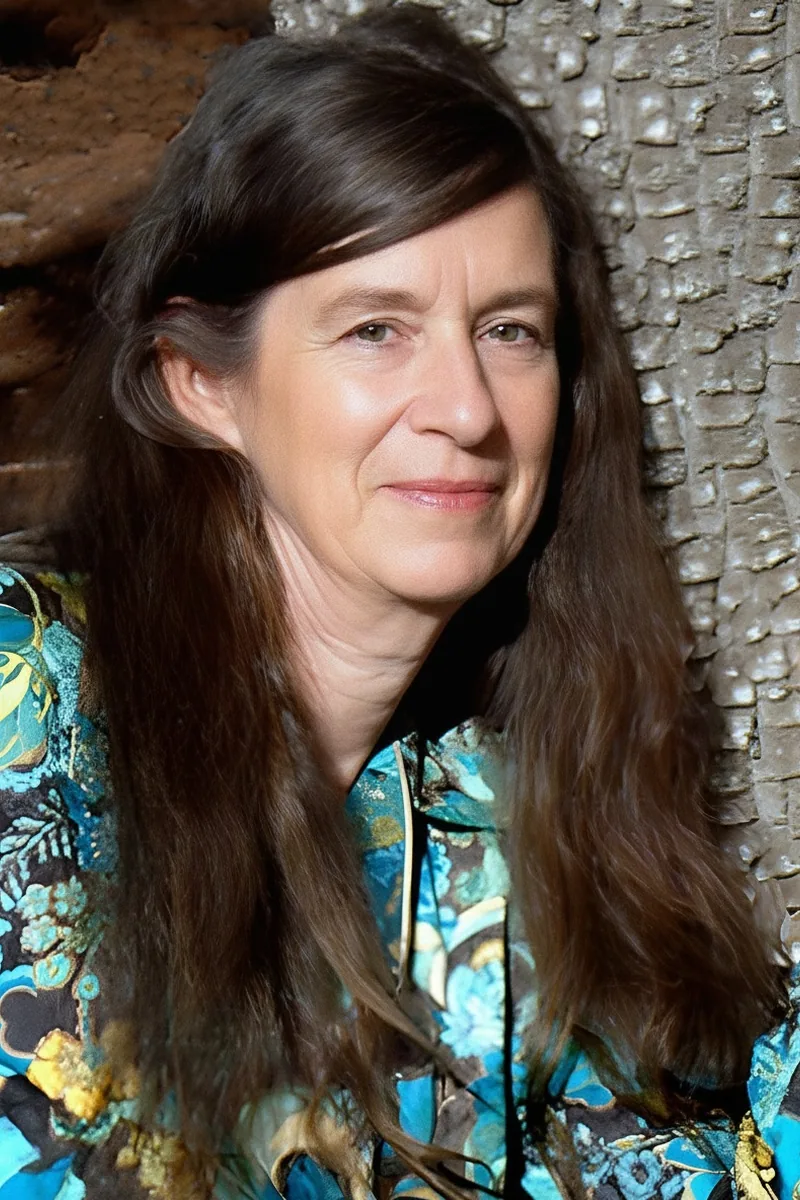
After earning her BA in Philosophy from Stanford and completing MA coursework at Brown, Diana spent years tutoring math at the college level — arithmetic through calculus — and describes algebra as detective work, which is exactly the mindset that makes calculus click. She teaches derivatives and integrals by emphasizing the reasoning behind each step, adapting her explanations to how a particular student thinks rather than defaulting to a single method. Rated 4.9 by students.
Limits, derivatives, and integrals each demand a different kind of thinking, and the shift between them trips up even strong math students. Steven walks through each concept with the precision of someone trained to track every detail — a habit sharpened by years of advanced accounting work at Notre Dame and ASU. He's especially effective at connecting differentiation rules to their underlying logic so students can handle unfamiliar problems on exams.
Designing houses is applied calculus — Aaron calculates load distributions, models curved roof lines, and optimizes material use, all of which demand fluency with derivatives and integrals in a physical context. His architectural engineering degree means he can walk through integration techniques or related-rates problems by sketching the real structures where those calculations matter. Rated 5.0 by students.
Calculus isn't Jessica's core teaching area, but her math coursework and structured approach to problem-solving translate well for students who need patient, step-by-step walkthroughs of derivatives and integrals. She's especially effective at slowing down the chain rule or related rates problems that textbooks tend to rush through.
Studying biology at the University of Arizona meant Lindsay used calculus constantly — modeling enzyme kinetics with derivatives, calculating areas under pharmacokinetic curves, analyzing rates of ecological change. That applied perspective lets her explain integration techniques and differential equations through problems that actually matter, not just textbook exercises. Students rated her 4.9 out of 5.0 appreciate how she connects the math to something tangible.
An MBA in International Business means Spencer has worked through the quantitative side of decision-making — optimization problems, marginal analysis, and the derivative-based logic that drives strategic modeling. He teaches early calculus by connecting the abstraction to those practical frameworks, so concepts like rates of change and accumulation have a purpose beyond the textbook. Rated 4.9 by students.
Biochemistry at Arizona State meant Charles didn't just take calculus — he used it, working through reaction rate equations, enzyme kinetics models, and the integration problems that describe how biological systems change over time. Eight years of tutoring middle and high school math means he knows exactly where students stumble on the conceptual jump from pre-calc to derivatives, and he builds that bridge by connecting each new rule to something concrete.
Pursuing Nutritional Sciences with a Biochemistry minor at the University of Arizona means Atley uses calculus constantly — modeling reaction rates, interpreting area under curves, and applying derivatives to biological systems. She brings that applied perspective to tutoring, connecting limits, integrals, and differentiation rules to tangible problems so the concepts stick. Students get someone who sees calculus as a tool, not just a course to survive.
Cognitive science sits at the intersection of math, logic, and modeling how the mind processes information — so Rochelle's degree means she's worked with the quantitative reasoning that underpins calculus, particularly how rates of change and accumulation describe real systems. She brings that analytical framework to teaching concepts like derivatives and integration, making the notation feel like a language to read rather than a code to crack. Rated 5.0 by students.
Hello! I'm Alexis Kelley! In Louisiana, I have begun volunteering with Baton Rouge Youth Coalition where I help senior students complete the college application process from finding fit to writing essays. Having just recently gone through this process and successfully navigating elite admissions like Columbia, Cornell, and Duke I feel equipped (and excited!) to share my advice. Whether this looks like help putting your story into words on the common application essay or determining the best colleges to apply to, I would love to be a part of this process. All through high school I was a math tutor ranging in topics from basic elementary math to AP Calculus! I really enjoy teaching math (especially algebra and calculus!!). I would also be more than happy to help with any standardized testing prep. I want to help students reach their maximum potential and achieve the target scores they're looking for! I am super eager to meet you and get started!
Preparing for medical school meant Niabari couldn't avoid calculus — her health care delivery coursework required understanding rate-based models like disease spread curves and resource utilization trends, where derivatives and integrals carry real meaning. She teaches those early concepts by connecting the math to the systems it actually describes, so formulas feel less abstract and more like tools with a purpose. Rated 5.0 by students.
Philosophy trains you to take a dense, intimidating argument and pull it apart until every step is justified — which is exactly what early calculus demands when students hit limits, continuity proofs, or the formal definition of a derivative. Galen's philosophy degree and 34 ACT composite show he can pair that logical rigor with genuine quantitative ability, even though math isn't his primary field. His approach treats each calculus rule as a claim that needs to be understood and defended, not just applied.
Tutoring math from fifth-grade fundamentals through geometry and SAT-level problem solving means Alexis has walked the full path that leads students to calculus — she knows exactly which algebra and pre-calc gaps trip people up when they first encounter limits and continuity. Her 1470 SAT and 32 ACT confirm strong quantitative chops, and her coaching-style approach emphasizes repeated practice with specific problem types until the mechanics of differentiation become second nature. Rated 5.0 by students.
Environmental sciences and biology research both run on calculus — population growth models, nutrient flux rates, and the differential equations behind ecosystem dynamics are tools Courtney uses in her own aquatic ecology work. That hands-on fluency means she can teach derivatives and integrals as things that describe real change in real systems, not just abstract symbol manipulation. Rated 5.0 by students.
Her 1500 SAT shows Elizabeth can handle quantitative reasoning well, and her political science graduate work — which involved statistical modeling and data analysis in Chinese politics — required the kind of analytical rigor that translates to breaking down calculus concepts. She teaches early topics like limits and derivative rules by emphasizing the logical chain connecting each step, making sure students understand the reasoning before moving to computation. Rated 5.0 by students.
Two philosophy degrees train you to follow an argument step by step and know exactly where the logic breaks — which is precisely what students need when a limit definition or chain rule derivation stops making sense. Linda applies that same rigorous analytical structure to early calculus concepts, walking through each piece of notation until the reasoning behind it is clear. Rated 5.0 by students.
Between a 1490 SAT and coursework spanning quantitative reasoning and science, Michelle has genuine comfort with the math that underpins calculus — though her degrees are in the arts and history, not mathematics. She's strongest at the early conceptual territory: unpacking what a derivative actually represents as a rate of change, or why the area-under-a-curve idea behind integration makes intuitive sense, before the heavy computation kicks in. Rated 5.0 by students.
Having served as a multivariable calculus teaching assistant for Harvard's Mathematics Department while earning her dual astrophysics degree, Kristi has taught the subject from both sides — the pure math and the physics where it lives. She digs into concepts like integration techniques and series convergence with the intuition of someone who's used them daily in orbital mechanics and planetary science research. Rated 5.0 by students.
Political science at the graduate level involves more quantitative analysis than most people expect — regression models, game theory payoffs, and the rate-of-change logic that underpins democratic transition modeling all draw on calculus concepts. Ivanna's master's work in comparative democracies gave her hands-on experience with that analytical toolkit, and she applies it to make early calculus ideas like derivatives and accumulation feel purposeful rather than abstract. Rated 5.0 by students.
Dental school coursework demands fluency in calculus — from modeling drug absorption rates to understanding the curves behind physiological data. Daniel brings that applied perspective to derivatives, integrals, and limit problems, connecting abstract notation to scenarios where the math actually matters.
Understanding what a derivative actually measures — not just how to compute one — changes everything about how a student handles applied calculus problems. Jake connects each new concept back to rate-of-change intuition, so when students hit the chain rule or integration by parts, the mechanics have meaning behind them. He's rated 4.9 across his subjects.
Cellular and molecular biology at Yale means Alice has used calculus as a working tool — modeling reaction rates, analyzing enzyme kinetics curves, and interpreting the differential relationships that govern how cells grow and divide. A perfect 36 ACT composite backs up that quantitative fluency, and she teaches derivatives and integrals by connecting them to the biological systems where they actually do something.
Twenty-five years of engineering work means Tim hasn't just studied calculus — he's used it daily, from modeling physical systems to optimizing real-world processes. His physics degree grounds him in the full sequence from limits through multivariable calculus and differential equations, so he can teach each concept with the context of where it actually leads. That depth lets him unpack ideas like the chain rule or integration by parts as tools with purpose, not just procedures to memorize.
Limits, derivatives, and integrals each require a different kind of intuition, and Rachelle's approach is to build that intuition one concept at a time before layering on computation. Her philosophy training makes her especially effective at unpacking the epsilon-delta definitions and chain rule logic that textbooks often rush through.
Chemical engineering at Washington and Lee meant Alex lived in calculus — integration techniques, differential equations, and multivariable applications were daily tools, not abstract exercises. He breaks down concepts like the chain rule and related rates by connecting them to tangible problems, making the logic behind each step click rather than feel like rote symbol-pushing.
John's path from a history and law background into tech entrepreneurship might seem far from calculus, but building software products demands constant work with rates of change, optimization, and algorithmic thinking. He tackles problems like related rates and definite integrals by emphasizing the logical structure behind each step — a habit sharpened by years of legal reasoning. Rated 5.0 by students.
A biology degree might seem unrelated to calculus, but Arshia's coursework at UCLA required fluency in derivatives, integrals, and rate-of-change problems applied to biological systems like population growth and enzyme kinetics. She teaches limits and integration techniques by grounding them in real scenarios, which makes abstract rules like the chain rule or u-substitution feel purposeful.
Kyle's global management master's involved quantitative modeling — forecasting, optimization, and the kind of rate-of-change analysis that is calculus applied to real decisions. That background lets him ground derivatives and integrals in practical scenarios rather than leaving them as abstract symbol manipulation. His 32 ACT confirms solid quantitative reasoning across the board.
Four years of peer tutoring in calculus and statistics during high school, followed by a computer science program at Harvey Mudd, means Megan has used derivatives and integrals as everyday tools — from analyzing algorithm efficiency to computing areas under probability distributions. That CS context gives her a practical vocabulary for explaining concepts like the chain rule or Riemann sums, connecting each technique to problems where it actually does something.
I am Arizona born and raised, my education includes an NYC law school degree with an undergraduate BS degree from University of Miami. In college I majored in Health Sciences with minors in Psychology and Public Health while in law school I leaned into corporate law and finance. Between law school and college I've pretty much covered every topic under the sun! In my spare time, I enjoy reading (especially mystery novels), pretending I'm a chef, and meditating.
Limits, derivatives, and integrals aren't just coursework for Alex — they're the language of his chemical engineering research, where he applies calculus to model heat transfer, fluid flow, and reaction kinetics every week. He walks through each new rule by tying it to the graphical intuition behind it, so the chain rule or integration by parts feels logical rather than mechanical.
I am a graduate student at Arizona State University studying Human and Social Dimensions of Science and Technology, and am passionate about the value of education at all levels. Previously I worked at the US Department of Energy on energy technology in Washington, DC. I have enjoyed setting up roots in Phoenix over the past few years, and am excited about sharing my knowledge and passion for learning with others in the area.I have a knack for explaining complicated ideas to people in simple terms, enjoy deepening people's understandings of issues, and value education highly. All of these characteristics make me an ideal tutor for Varsity Tutors, and I look forward to the opportunity to share my academic experiences and skills with tutees. In addition, I can give an expert's perspective on a wide range of topics including political science, public policy, various topics in science and technology, as well as an academic success-oriented mindset.
Between biomedical sciences coursework and medical school, Elise has used calculus the way it's meant to be used — modeling drug absorption rates, interpreting physiological curves, and working through the math that underpins how the body changes over time. She teaches derivatives and integrals by connecting them to those real systems, so the chain rule or an area-under-the-curve problem has a tangible reason to exist. Rated 4.9 by students.
Pre-med at Duke means Thara is taking calculus in the context it actually gets used — reaction rates in chemistry, growth models in biology, dosage curves in pharmacology. That hands-on exposure to derivatives and integrals as tools for describing real biological change gives her a way to teach the material that connects each rule to something tangible rather than leaving it as pure abstraction.
Having taken AP Calculus AB at Brophy College Preparatory and continued into a Computer Science program at Barrett Honors College, Ken has worked through calculus both as a standalone math course and as the engine behind algorithms and computational modeling. That dual exposure means he can explain concepts like derivatives and integration techniques from a pure math angle or show how they power the code and systems students encounter in STEM. Rated 4.8 by students.
Law school sharpens one skill that transfers directly to early calculus: building an argument step by step, where each logical move depends on the one before it. Jeff applies that same sequential reasoning to walking through limits and derivative rules, treating each problem like a case where you have to justify every step. His 31 ACT confirms solid quantitative ability, even though his degrees are in history and law rather than mathematics.
Jamila's background is in Industrial and Labor Relations rather than mathematics, so she's honest that calculus isn't her deepest subject — but years of teaching math across grade levels means she understands the algebraic scaffolding that makes or breaks a student's entry into calculus. She's particularly effective at reinforcing the function behavior and graphing intuition that early calculus topics like limits and derivatives demand. Rated 5.0 by students.
Psychology research at the graduate level is surprisingly calculus-adjacent — Robert's work with statistical modeling means he regularly encounters derivatives in the context of curve fitting, rate-of-change interpretations in longitudinal data, and the integral logic underlying probability distributions. That gives him a data-science angle on early calculus that connects each rule to something measurable rather than purely abstract.
An economics degree from Northwestern means Andrew spent serious time with calculus — marginal analysis, optimization problems, and the derivative-driven reasoning that underpins microeconomic theory all require genuine fluency with the material. His law training added another layer of structured, logical thinking that he applies to walking through proofs and multi-step problems where each line needs to justify the next. Rated 4.9 by students.
Testimonials
Because the right Calculus tutor makes all the difference.
Average Session Rating – Based on 3.4M Learner Ratings
Other Mesa Tutors
Related Math Tutors in Mesa
Frequently Asked Questions
Many students struggle with the transition from algebra and precalculus to calculus because it requires both procedural fluency and conceptual understanding. Common pain points include understanding limits and continuity, applying derivative and integral rules correctly, connecting symbolic notation to real-world applications, and tackling multi-step word problems that require setting up equations before solving. Personalized tutoring helps students see the underlying patterns and connections so calculus concepts stick, rather than just memorizing formulas.
Your first session is designed to understand your current level, learning style, and specific goals—whether you're preparing for the AP Calculus exam, working through a college course, or building foundational understanding. The tutor will likely review recent assignments or exams to identify knowledge gaps and areas where you need the most support. From there, you'll develop a personalized plan that focuses on your biggest challenges, whether that's grasping conceptual foundations or mastering problem-solving strategies.
Showing work in Calculus isn't just about getting the right answer—it reveals your reasoning process and helps identify exactly where misconceptions occur. A tutor can guide you through proper notation, explain why each step matters, and help you develop organized problem-solving strategies that make complex calculations manageable. This approach builds both confidence and the ability to tackle unfamiliar problems independently.
Word problems require translating real-world scenarios into mathematical language—a skill that improves with guided practice and feedback. Tutors help you develop a systematic approach: identifying what you're solving for, translating the problem into equations, choosing the right calculus tools (derivatives for rates of change, integrals for accumulation), and checking whether your answer makes sense in context. Breaking problems into smaller, manageable steps reduces anxiety and builds problem-solving confidence.
Yes. Mesa students use different textbooks and curricula depending on their school and whether they're in AP Calculus, honors Calculus, or college-level courses. Tutors are experienced working with various approaches and can align their instruction with your specific course materials, whether you're using Stewart, Larson, or another standard text. This ensures that tutoring directly supports what you're learning in class.
Math anxiety often stems from feeling lost or unsupported, especially in a challenging course like Calculus. One-on-one instruction creates a judgment-free space where you can ask questions, work through mistakes, and see incremental progress. When you understand the 'why' behind concepts and develop reliable problem-solving strategies, confidence naturally follows. Many students find that breaking calculus into manageable pieces makes the subject feel far less intimidating.
Varsity Tutors connects you with tutors who have deep expertise in Calculus and experience helping students at your level. You'll be matched based on your specific needs—whether you need help with limits and derivatives, integrals and applications, or exam preparation. The process is straightforward: share your goals and challenges, get matched with a qualified tutor, and start personalized instruction that fits your schedule and learning style.
Graphing connects the abstract symbolic world of calculus to visual, intuitive understanding. When you see how a derivative represents the slope of a tangent line or how an integral represents area under a curve, the concepts become concrete rather than just formulas. Tutors help you develop strong graphing skills and teach you to interpret graphs to solve problems, which deepens your overall understanding and makes calculus more accessible.
Let’s find your perfect tutor
Answer a few quick questions. We’ll recommend the right plan and match you with a top 5% tutor.