Award-Winning Japanese Tutors
serving Mesa, AZ
Japanese
Tutors in Mesa
Private 1-on-1 tutoring, weekly live classes for academic support, test prep & enrichment, practice tests and diagnostics, and more to elevate grades and test scores.
Based on 3.4M Learner Ratings
UniversitiesSchools & Universities
DeliveredHours Delivered
ProficiencyGrowth in Proficiency
Who needs tutoring?
No obligation. Takes ~1 minute.
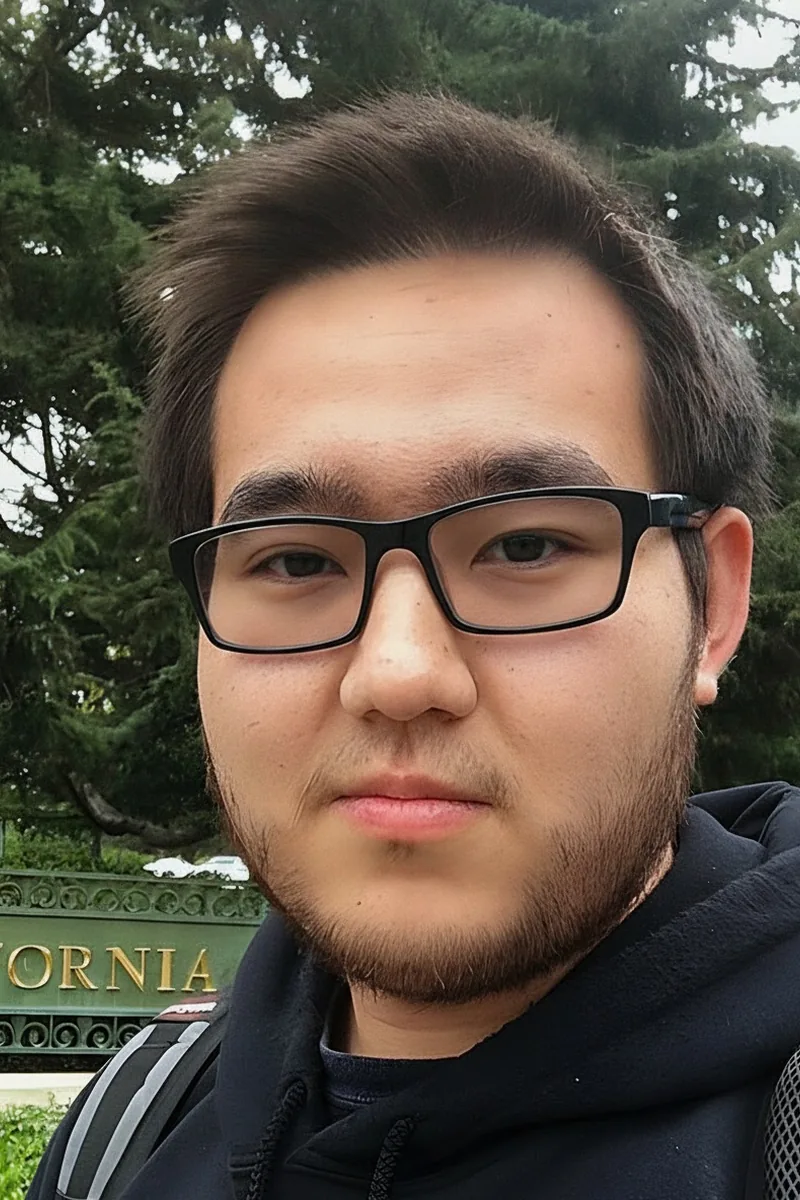
I am studying Chemical Biology in UC Berkeley. One of my passions is Organic Chemistry, which I used to loath but now enjoys after taking a year of it. Also, because I like helping others, I enjoys tutoring/teaching students who are struggling. During high school, I have tutored other high students after school on various subjects such as Math, Physics, Chemistry, and Latin. During college, I have held informal review sessions for General Chemistry and Organic Chemistry for my underclassmen. I tutored my roommate and one of my underclassmen in Organic Chemistry. Finally, with a Graduate Student TA, I co-taught a Organic Chemistry Lab class section , where I answer questions regarding lab material and demonstrate lab techniques. Currently, I am interested in tutoring Organic Chemistry, General Chemistry, Biochemistry, Physics, and Calculus
I am a great tutor because not only are my fundamental verbal and quantitative skills strong, but I am able to communicate my reasoning and problem solving skills quickly and clearly.
Studying Japanese as a minor at Columbia — with plans to eventually work in Japan's renewable energy sector — Shin uses the language as a living tool, not just a classroom exercise. He teaches everything from hiragana and katakana basics to intermediate grammar patterns like ~てしまう and ~ことにする, adjusting to each student's level and building real conversational confidence alongside written accuracy.
Sho teaches Japanese with attention to the details that trip up English speakers most — particle usage, verb conjugation groups, and the shift between casual and polite registers. Whether a student is learning hiragana for the first time or working through intermediate kanji and grammar patterns, he brings structured practice to a language that rewards consistency.
Rachel's International Relations coursework exposes her to multiple language systems and cross-cultural communication, which she channels into teaching Japanese fundamentals like hiragana recognition, basic particle usage, and everyday vocabulary. Her relaxed, adaptive style — reflected in a 5.0 rating — is especially useful for beginners who tense up when faced with an entirely new writing system and unfamiliar grammar order.
Having prepared for and taken the SAT Subject Test in Japanese with Listening, Dylan brings practical fluency in grammar structures like particle usage, verb conjugation groups, and honorific registers. He tackles reading comprehension by teaching students to decode kanji compounds in context rather than relying purely on rote memorization. Rated 5.0 by students.
Earning a full bachelor's degree in Japanese — not just a minor or a few semesters — means Jina can teach well beyond survival phrases into kanji readings, grammar particles like は vs. が, and the nuances of keigo (formal speech). She brings the same analytical rigor from her science training to breaking down sentence structure and verb conjugation patterns.
As an Asian Studies major at Duke, Caitlin engages with Japanese language in an academic context that goes beyond textbook dialogues — she understands how kanji, hiragana, and katakana each function within the writing system and why particles like は and が trip up English speakers. She walks through sentence structure and honorific levels with cultural context that makes the grammar patterns memorable.
Having majored in Japanese at SUNY Albany, James doesn't just know the language — he understands the grammar architecturally, from particle usage and verb conjugation tiers to the nuances of honorific speech. He teaches reading and writing through cultural context, connecting kanji compounds to their historical roots so students retain them long-term rather than cramming and forgetting. Rated 4.9 by students.
Mechanical engineering at the University of Dayton doesn't obviously connect to Japanese, but Nicholas's systematic problem-solving mindset lends itself well to breaking down kanji radicals, verb conjugation groups, and particle logic into repeatable patterns. He's also genuinely social and talkative — a trait that matters more than you'd think when practicing conversational Japanese, where comfort with speaking aloud is half the battle.
Most students learning Japanese hit a wall somewhere between mastering hiragana and actually constructing sentences with particles, verb conjugations, and counters. Kai has been teaching Japanese through the student organization meetings on campus, building lessons that move learners from basic self-introductions to reading short passages and holding simple conversations.
A drama degree might not scream Japanese fluency, but John's literary work — he's a section editor for the Los Angeles Review of Books and literary manager for two theater companies — means he's deeply attuned to how language shapes meaning, tone, and register. That sensitivity to nuance transfers directly to navigating Japanese's layered politeness levels and context-dependent sentence endings. Rated 5.0 by students.
Learning Japanese means juggling three writing systems, unfamiliar sentence structures, and layers of politeness that don't exist in English. Aki breaks down hiragana, katakana, and basic kanji recognition alongside grammar patterns like particle usage and verb conjugation, building reading and conversational skills in parallel.
Testimonials
Because the right Japanese tutor makes all the difference.
Average Session Rating – Based on 3.4M Learner Ratings
Other Mesa Tutors
Related Languages Tutors in Mesa
Frequently Asked Questions
Your first session is all about understanding your goals and current level. A tutor will assess your reading, writing, speaking, and listening skills, discuss what you want to achieve—whether that's conversational fluency, exam preparation, or cultural understanding—and create a personalized learning plan. This foundation helps ensure every session after builds exactly what you need.
In a typical classroom with Mesa's average student-teacher ratio of 15.7:1, students get limited speaking time. With personalized 1-on-1 instruction, you get consistent, real-time conversation practice where a tutor can correct pronunciation, model natural phrasing, and respond to your questions immediately. This active speaking practice is essential for developing confidence and fluency that classroom settings alone can't provide.
Japanese verb conjugation is complex because verbs change based on tense, politeness level, and context—far more than in English. A tutor breaks this down systematically, showing you patterns rather than just rules, and gives you targeted practice with feedback. Over time, conjugation becomes intuitive rather than something you have to think through every time.
Effective vocabulary retention uses spaced repetition—reviewing words at increasing intervals—combined with context and active use. Tutors help you build vocabulary through real conversations and reading materials relevant to your interests, making words stick better than memorization lists alone. They also teach kanji in meaningful groups rather than isolation, connecting characters to their components and common usage patterns.
Language and culture are deeply connected—understanding cultural context helps you use grammar correctly, choose appropriate politeness levels, and communicate naturally. Tutors can incorporate cultural discussions, media, and real-world scenarios into lessons, giving you insight into why Japanese works the way it does. This immersion-style approach makes learning more meaningful and helps you sound more authentic when speaking.
Yes—this is one of the biggest advantages of 1-on-1 tutoring. A tutor can hear exactly where your pronunciation differs from native speakers, correct it in the moment, and show you how to adjust your mouth position or intonation. Regular feedback on pitch accent, vowel length, and consonant clarity helps you develop a natural-sounding accent much faster than self-study.
A good tutor assesses which skills matter most for your goals and tailors lessons accordingly. If you need conversational fluency, more time goes to speaking and listening; if you're preparing for the JLPT exam, reading and writing get more focus. Personalized instruction means all four skills develop at the right pace for you, rather than following a one-size-fits-all curriculum.
Pricing typically depends on the tutor's experience level, whether you need specialized preparation (like JLPT or AP Japanese exam), and how frequently you meet. Varsity Tutors connects you with tutors at different price points, so you can find someone who fits your budget and learning goals. Many students find that investing in even a few sessions per month accelerates progress significantly.
Let’s find your perfect tutor
Answer a few quick questions. We’ll recommend the right plan and match you with a top 5% tutor.