Award-Winning Writing Tutors
serving Trenton, NJ
Writing
Tutors in Trenton
Private 1-on-1 tutoring, weekly live classes for academic support, test prep & enrichment, practice tests and diagnostics, and more to elevate grades and test scores.
Based on 3.4M Learner Ratings
UniversitiesSchools & Universities
DeliveredHours Delivered
ProficiencyGrowth in Proficiency
Who needs tutoring?
No obligation. Takes ~1 minute.
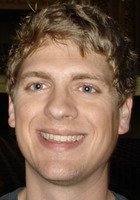
Strong writing starts with clear thinking, which is why Grant treats every assignment — whether it's a research paper, a personal narrative, or an argumentative essay — as an exercise in organizing ideas before polishing prose. He teaches at a New Jersey community college and draws on his background in both philosophy and English to show students how to build paragraphs around evidence and connect them with purposeful transitions. The result is writing that actually says something, not just fills a page count.
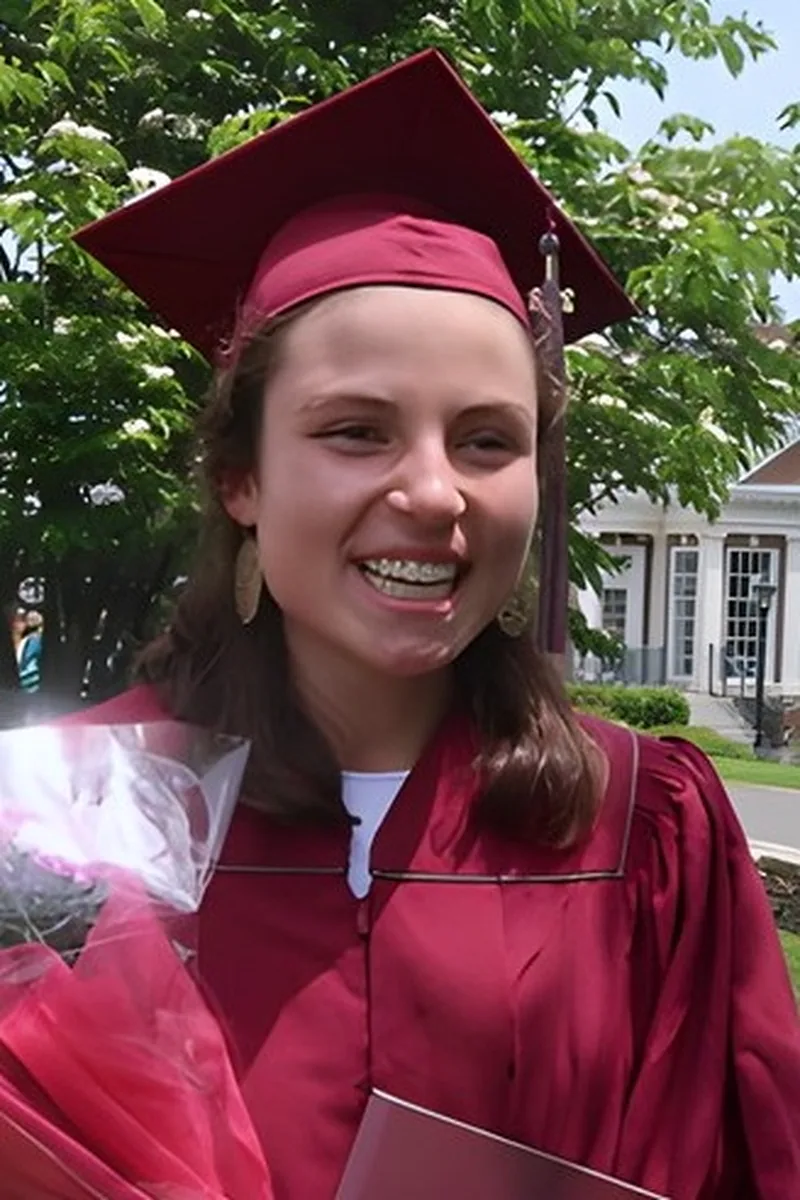
I'm a rising junior at Stanford University majoring in International Relations and minoring in Education, and Comparative Studies in Race and Ethnicity. I am most passionate about history, but I really enjoy math and writing too. I've been working extensively in educational settings for the past two years, working as a middle school TA and after school program academic classroom director/tutor. In my free time, I love having conversations with my friends and students, reading, dancing, listening to music, and hanging out with my younger sisters. My mission is to work my hardest to make learning and tutoring truly fun, so that it doesn't feel like a chore or obligation for anyone. I would love to work with you on SAT preparation, math tutoring, history tutoring, writing tutoring, or any other subject you would like to work on!
I am pursuing a career in dentistry/oral surgery and will be beginning dental school at Boston University this fall. For this reason I recently took the DAT, which I am capable of assisting you with as well. During my undergraduate education, which I completed this past December, I worked in my school's tutoring center, helping my peers succeed in mathematics and science courses. Outside of my academic life, I am a big sports fan and I mostly follow the New York sports teams. For fun, I like to play basketball and golf with my friends. I am looking forward towards getting to know you and helping you with your academic needs.
Years as a writing consultant taught Renee that the hardest part of writing isn't grammar — it's figuring out what you're actually trying to argue. She walks students through the full arc from messy brainstorm to polished draft, with particular attention to building paragraphs that each do real work toward a central claim.
Getting ideas onto the page is often the hardest part, and Erika treats outlining and drafting as real skills worth practicing — not just steps to rush through before "the real writing" starts. Her policy school training required writing concise, evidence-driven arguments under tight deadlines, a discipline she now brings to students working on everything from five-paragraph essays to research papers. She's rated 5.0 across her students.
Kyle has been a storyteller since before he could write, and studying English at Yale turned that instinct into craft. He walks students through the full arc of a writing project — from generating ideas and building an outline to revising for voice, transitions, and argument — whether the assignment is a five-paragraph essay or a research paper.
Clear writing starts with knowing what you actually want to argue — something Scott drills into every draft session before touching a single sentence. His anthropology training at Washington University in St. Louis taught him to build layered arguments from evidence, and he applies that same structure to thesis development, paragraph organization, and revision strategy. Rated 4.8 by students.
Clear writing starts with clear thinking, and that's exactly where Alex's math training pays off — he treats every paragraph like a proof, asking whether each sentence logically supports the next. Whether a student is working on a persuasive essay, a research paper, or a personal narrative, he zeroes in on thesis development and paragraph structure first, then polishes voice and word choice. Rated 4.8 by students.
Strong writing starts with having something specific to say and knowing how to organize it so a reader follows your thinking. River tackles the craft at the sentence level — showing students how to vary syntax, sharpen thesis statements, and build paragraphs that develop a single idea with real evidence. Her daily writing load at the University of Chicago keeps these skills sharp.
Every writing assignment is really two challenges: figuring out what you want to say and learning how to say it clearly. Alex's training at Brown — where he studied English Literature and produced creative work in Theatre Arts — means he's comfortable coaching everything from persuasive essays and research papers to personal narratives, always pushing for sharper arguments and more vivid prose.
Paige treats writing as a craft with learnable moves — thesis construction, paragraph architecture, the rhythm of short and long sentences. Her training in dramatic writing at Yale sharpened her ear for voice and pacing, skills she now applies to everything from argumentative essays to personal narratives.
Strong writing starts with knowing what you actually want to argue, and Czarina spends real time on that pre-writing stage before a single draft sentence gets typed. From there she walks through thesis construction, evidence integration, and paragraph-level cohesion — skills she sharpened across AP English courses and her own college coursework at Johns Hopkins. Rated 5.0 by students.
Strong writing starts with a clear argument, not a five-paragraph formula. Isaiah teaches students to build essays from a genuine thesis outward, tackling everything from evidence selection to transitions to voice. His 1590 SAT score speaks to the precision he brings to language on the page.
Getting ideas onto the page is one challenge; organizing them into something a reader can follow is a completely different one. Amy breaks the writing process into concrete stages — brainstorming, outlining, drafting, revising — so students build a repeatable method they can use independently. As an English major who writes constantly, she brings real familiarity with everything from personal narratives to research-based arguments.
Thirty years of professional writing — two published books, journal articles, poetry, magazine features — means Mati has practiced nearly every form a student will encounter, from argumentative essays to narrative nonfiction. She teaches writing as a process of thinking on paper, where outlining and drafting are tools for discovering what you actually want to say. Her doctoral research on learning differences also informs how she adapts instruction for students who find the blank page paralyzing.
Crafting a strong essay means more than having good ideas — it means structuring an argument so each paragraph builds toward a clear thesis. Joyce sharpened her own writing through Brown University's rigorous coursework in public health and biology, where translating complex data into persuasive prose is a daily requirement. She teaches students to outline effectively, tighten their sentence-level clarity, and revise with purpose.
Whether the assignment is a personal narrative, a persuasive op-ed, or a research paper, Lauren zeroes in on the skill most student writers struggle with: structuring an argument so each paragraph earns its place. Her experience ranges from creative writing with younger students to college-level persuasive essays, and she's particularly sharp at teaching students how to find and develop their own voice. Rated 4.9 by students.
Years of writing research papers, grant proposals, and technical reports gave Jared a practical framework for clear, organized prose. He applies that same logic to student writing: nail the thesis, build each paragraph around one claim, and cut anything that doesn't move the argument forward.
Most writing struggles aren't really about grammar — they're about not knowing what you're trying to say yet. Michele walks students through the messy process of generating ideas, organizing an argument, and revising for clarity and voice. Her psychology background sharpens her ability to ask the right questions when a student is stuck staring at a blank page.
Every writing assignment, from a five-paragraph essay to a research paper, comes down to one skill: making a clear claim and supporting it with evidence. Noah studied Philosophy, Politics, and Economics — three disciplines that each demand rigorous written argumentation — and he brings that cross-disciplinary perspective to thesis development, outlining, and revision. Students leave sessions with concrete strategies for organizing their ideas before they start drafting.
Jenny treats every writing assignment as a chance to build an argument — identifying a clear thesis, selecting evidence that actually supports it, and revising until each paragraph earns its place. Her cultural anthropology studies at WashU in St. Louis sharpen that process, since the discipline demands precise, evidence-driven prose across research papers, personal narratives, and analytical essays alike.
Between her creative writing minor and her daily work at Princeton's writing center, Emily lives inside the writing process — outlining arguments, drafting under pressure, and revising until the structure actually supports the idea. She's particularly effective at teaching students how to move from a blank page to a coherent first draft, which is often the hardest leap. Rated 4.8 by students.
Getting ideas onto the page is one challenge; organizing them into something compelling is another entirely. Alison tackles both by teaching students to outline with purpose, draft without self-censoring, and revise with an eye toward audience and argument. Her dual background in literature and performance means she treats writing as a craft built through practice, not a talent you either have or don't.
Good writing isn't about following a formula — it's about learning to shape an argument, control tone, and revise with purpose. Peace earned her English degree doing exactly that, and she brings a workshop-style approach to everything from persuasive essays to personal narratives. Her background editing college application essays means she knows how to push a draft from decent to compelling.
Most writing struggles aren't really about grammar — they're about not knowing what you're trying to argue until you're halfway through a draft. Jeff tackles that problem early, teaching students to build a working thesis and outline before committing to full paragraphs. From there, he digs into paragraph-level cohesion, evidence selection, and how to write introductions that don't waste the reader's time.
Good writing starts with having something specific to say, but the mechanics — clear thesis statements, logical paragraph structure, varied sentence rhythm — are what make the reader actually follow along. Shalin treats writing as a craft with learnable techniques, drawing on his own experience as a dedicated reader and writer to show students how strong sentences are built. He digs into everything from argumentative essays to creative pieces, depending on what a student needs.
Roshan approaches writing as a discipline that rewards clear thinking over fancy vocabulary — if a student can explain an idea out loud, he can teach them to get it onto the page with the same clarity. His sessions tackle everything from paragraph architecture to evidence integration, using analogies and visual mapping to make the drafting process less intimidating.
Teaching middle school Language Arts daily means Jonathan sees exactly where young writers lose their footing — muddled thesis statements, body paragraphs that wander, and conclusions that just restate the intro. He breaks drafting and revision into concrete, repeatable steps so students internalize the process rather than relying on someone else's red ink. His history degree from Providence College also sharpened his ability to teach evidence-based argumentative writing, where every claim needs specific support.
Strong writing starts with having something specific to say, so Belinda spends real time on outlining and thesis development before a student types a word. From there she teaches the mechanics that make arguments land — paragraph architecture, evidence integration, and how to vary sentence structure so prose doesn't flatten out. She's worked with writers at every level, from middle schoolers drafting their first essays to college students tackling research papers.
Mackenzie treats writing as a craft with learnable moves — how to build a thesis that actually argues something, how to use evidence without letting quotes do all the talking, how to transition between ideas without clunky "furthermore" bridges. Her training at Boston College required constant analytical writing across political science and French, so she's comfortable coaching students through persuasive essays, research papers, and creative pieces alike.
Clear writing starts with clear thinking, and Sam treats every assignment as a chance to sharpen both. Her training spans scientific writing from a biomedical science master's program and argumentative writing from a history of science degree, so she can adapt to virtually any genre a student encounters. She digs into thesis construction, evidence integration, and paragraph-level logic rather than surface-level corrections.
Crafting a clear argument is a skill Noah honed through years of writing analytical papers in international relations — synthesizing competing sources, building a thesis, and structuring evidence so it actually persuades. He breaks the writing process into concrete steps, from brainstorming and outlining to revision, so students internalize a repeatable method rather than staring at a blank page.
Classical rhetoric — invention, arrangement, style, memory, delivery — still provides the clearest framework for producing strong writing in any context. Skylar teaches students to outline an argument before drafting, choose evidence strategically, and revise with purpose, drawing on the same methods that earned a 5 on AP English Language. The result is writing that's organized, specific, and genuinely persuasive.
I am looking to tutor in the areas of: Math, English, and for test prep. I was an honors student in High School, scored very well on all my tests, and have now earned a scholarship to go to Rutgers University for the Honors Program.
Legal training rewires how you think about writing — every claim needs support, every transition needs logic, every sentence needs to justify its length. Jonathan applies that discipline to academic essays, personal narratives, and research papers, teaching students to outline with precision before drafting a single paragraph.
Getting ideas onto the page is often the hardest part, especially for younger or less experienced writers who freeze at a blank screen. Jessica breaks the writing process into small, manageable steps — brainstorming with graphic organizers, drafting without self-editing, then revising with a clear checklist. As someone who reads and writes constantly, she brings genuine enthusiasm to every stage of the craft.
Clear writing starts with clear thinking, which is why Sai spends time on outlining and thesis development before a student types a single draft sentence. His economics background at Emory sharpened his ability to construct evidence-based arguments — a skill he now applies to everything from persuasive essays to research papers.
I am a rising senior and Psychology Major at Washington University in St. Louis. I hope to receive a PhD in Pediatric Clinical Neuropsychology and am well-versed in the neural and cognitive mechanisms of mental illness. Reading and writing are my life-long passions. I have extensive experience tutoring elementary school and middle school children in these subjects. Currently, I am working on an Honors Thesis about early emotional development, completing my Writing Minor and am taking an online class in fiction writing. I took the GRE standardized test two months ago and am familiar with the pandemic's altered testing protocol. My favorite subjects to teach are English, Writing, Psychology and History. Above all, my tutoring philosophy emphasizes mindset, stress management, and study strategy. I also love to walk my dog and play tennis!
Strong writing starts before the first sentence — with a clear claim and a plan for how evidence will support it. As a Writing Center tutor at Spelman and an honors English graduate, Annaya breaks down the craft of building paragraphs that develop ideas rather than just fill space. Whether the assignment is a personal narrative or a research paper, she teaches students to write with intention and clarity.
Tyler approaches writing as a process with distinct, teachable stages — outlining an argument, drafting with purpose, and revising for clarity and flow. His dual business-and-engineering background means he's comfortable coaching everything from persuasive essays to technical reports, always pushing students to say more with fewer words.
Testimonials
Because the right Writing tutor makes all the difference.
Average Session Rating – Based on 3.4M Learner Ratings
Nearby Writing Tutors
Other Trenton Tutors
Related English Tutors in Trenton
Frequently Asked Questions
Varsity Tutors matches Trenton students with expert Writing tutors for 1-on-1 instruction. We pair each student with a tutor based on their specific needs, learning style, and goals.
Whether you need homework help, exam prep, or want to get ahead, our Writing tutors are ready to help.
Common challenges include gaps from earlier material, difficulty with specific concepts, and trouble applying learning to new problems. These issues can snowball quickly in Writing.
A tutor identifies where you're stuck, fills in gaps, and provides targeted practice. The 1-on-1 format means you get help exactly where you need it.
Tutors work with your student's actual coursework—homework assignments, class notes, and upcoming tests. This keeps tutoring directly relevant to what's happening in the classroom.
When you share information about your student's school and curriculum, we can match you with a tutor who has relevant experience.
All tutors complete background checks, credential verification, and teaching evaluation. Many of our Writing tutors hold advanced degrees or have years of teaching experience.
You can review tutor profiles to find someone with the right background for your student's level and needs.
Many students see improved grades within a few weeks, along with better understanding of Writing concepts and more confidence tackling challenging material.
Tutors track progress and adjust their approach to ensure continued improvement.
Most students benefit from 1-2 sessions per week. More frequent sessions help if your student is significantly behind or has an important exam coming up.
Your tutor can recommend a schedule based on your student's specific situation and goals.
Tutoring is purchased in packages of hours, with rates varying by tutor experience. Varsity Tutors offers several options to fit different budgets and needs.
You can discuss pricing during your consultation to find what works best.
Your tutor will assess where your student is, discuss goals, and start working on priority areas. Most students bring current homework or upcoming test material to focus on.
By the end, you'll have a clear sense of how the tutor can help and a plan for moving forward.
Let’s find your perfect tutor
Answer a few quick questions. We’ll recommend the right plan and match you with a top 5% tutor.