Award-Winning IB Mathematics: Analysis and Approaches Tutors
serving Plano, TX
IB Mathematics: Analysis and Approaches
Tutors in Plano
Private 1-on-1 tutoring, weekly live classes for academic support, test prep & enrichment, practice tests and diagnostics, and more to elevate grades and test scores.
Based on 3.4M Learner Ratings
UniversitiesSchools & Universities
DeliveredHours Delivered
ProficiencyGrowth in Proficiency
Who needs tutoring?
No obligation. Takes ~1 minute.
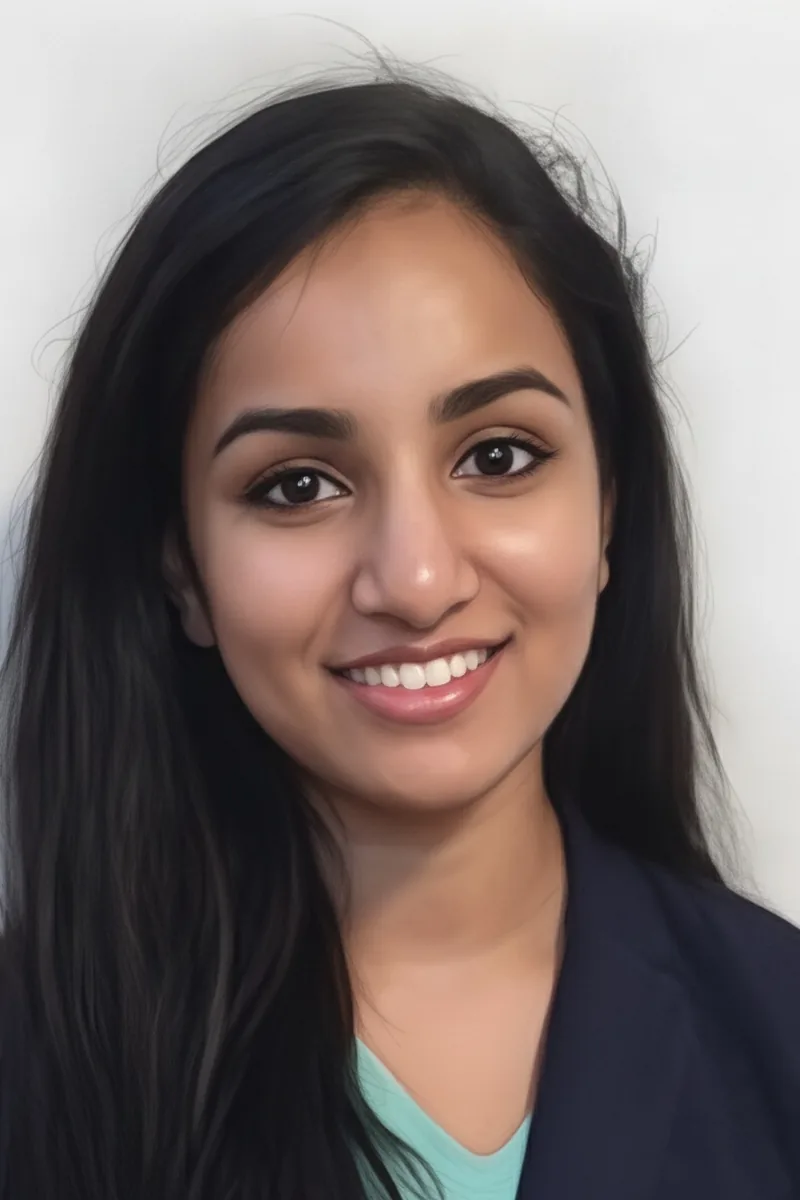
IB Analysis and Approaches demands comfort with proof-based thinking and abstract concepts like complex numbers, differential equations, and the intricacies of Paper 3's exploration-style problems. Kinjal completed the full IB programme herself and pairs that firsthand experience with a strong math background from her biology degree at Texas A&M. Rated 5.0 by students, she knows how to break down the syllabus so that connections between topics — like how calculus underpins probability distributions — actually click.

IB Math: Analysis and Approaches demands comfort with proof-based reasoning, calculus, and statistics all in one course — plus the pressure of IB-style exam questions that test conceptual depth. Mackenzie's own IB background and her breadth across subjects from trigonometry through AP Calculus BC mean she can address the full SL/HL syllabus, including sequences, differential equations, and probability distributions. She also knows the IB assessment style well enough to coach students on how examiners award marks.
IB Analysis and Approaches demands comfort with proof-style reasoning and multi-step problems that blend calculus, algebra, and trigonometry in a single question. Carter's interdisciplinary training at Brown — spanning applied math, economics, and philosophy — maps naturally onto the kind of analytical thinking this course rewards. He's particularly effective at unpacking Paper 1 non-calculator questions where conceptual clarity matters most.
IB Analysis and Approaches rewards students who can move fluidly between proof-based reasoning and applied problem-solving, especially in the calculus and statistics units. Steven's PhD-level engineering background means he's comfortable with both the rigor the IB expects and the real-world modeling questions that distinguish HL from SL. He carries a 4.9 student rating.
IB Analysis and Approaches moves fast through proof-based reasoning, differential calculus, and probability distributions — and the exam rewards conceptual depth over rote calculation. Mingee's science degree required exactly this kind of mathematical fluency, and she knows how to unpack the long-form problems the IB loves to throw at students. She holds a 5.0 client rating.
IB Analysis and Approaches leans heavily on proof-style reasoning and abstract topics like complex numbers, sequences, and differential equations. Theresa's biomedical engineering degree at Rice covers much of this same territory, giving her a working fluency with the Higher Level content that goes well beyond exam prep.
IB Analysis and Approaches demands fluency across calculus, proof, and mathematical reasoning at a level that catches many students off guard. As a Brown engineering student who scored a 1520 SAT, Roni brings both the rigorous math background and the exam strategy awareness needed to tackle HL-level integration techniques, optimization problems, and the internal assessment with confidence.
IB Analysis and Approaches leans heavily on proof-style reasoning and abstract problem solving, especially at Higher Level where topics like complex numbers, differential equations, and formal proof by induction appear. Logan's physics degree means he's comfortable with the rigorous mathematical thinking the course demands. He also understands IB assessment structure — the difference between what Paper 1 expects without a calculator and what Paper 2 rewards with one.
IB Analysis and Approaches leans heavily on proof-style reasoning and formal calculus — areas Yuanxin covers daily as a certified math teacher who also tutors competition math and multivariable calculus. She unpacks topics like limits, derivatives of composite functions, and the binomial theorem with the rigor the HL exams demand, while keeping the internal assessment process manageable.
IB Analysis and Approaches leans heavily on proof-based reasoning and formal calculus, which is exactly the terrain Ellyn covers as a college mathematics instructor. She digs into the trickier HL content like complex numbers, differential equations, and series convergence with the rigor the exam demands. Her 5.0 rating speaks to how clearly she breaks down that rigor for students.
IB Analysis and Approaches demands comfort with both proof-based reasoning and applied problem-solving across calculus, algebra, and statistics. Omar's computer science background at UT Austin gives him a natural edge with the course's emphasis on mathematical modeling and algorithmic thinking, especially in Paper 3's extended problems where structured logic is everything.
IB Analysis and Approaches demands comfort with proof-style reasoning and multi-step problems that blend calculus, trigonometry, and statistics in a single question. Ehigbor's science-heavy premed training gave her daily practice with exactly that kind of applied mathematical thinking. She tackles both SL and HL content, including the exploration (IA), where choosing a viable research question is half the battle.
IB Math: Analysis and Approaches rewards students who can connect concepts across units — linking derivatives to optimization, or tying sequences back to function behavior. Tolu's economics degree from Stanford required exactly this kind of cross-topic mathematical thinking, and he brings that perspective to both the HL and SL curricula. He's particularly strong on the exploration (IA) component, where clear reasoning matters as much as correct answers.
IB Math AA's internal assessment alone can make or break a final score, and Miguel treats the exploration paper as a chance to connect calculus or statistics to something a student genuinely cares about. His computer science and English double major means he can coach both the mathematical rigor and the clear written communication the IB rubric demands. Rated 4.9 by students.
IB Analysis and Approaches blends proof-style reasoning with heavy computation, and the HL paper especially punishes students who rely on memorized procedures without understanding why they work. Hazem's engineering background at the University of Toronto means he regularly applies the calculus, vectors, and probability that dominate the IB syllabus, so he can unpack exam questions from first principles rather than formula sheets.
IB Math: Analysis and Approaches blends pure math rigor with applied problem-solving in a way that can feel relentless — especially once sequences, calculus, and proof-based questions start stacking up. Josh tackles the course by anchoring each new topic to its underlying logic, so students build intuition alongside technique. He's comfortable across the full math spectrum the IB syllabus demands.
IB Analysis and Approaches leans heavily on proof-style thinking, from trigonometric identities to the formal definition of continuity. As someone who earned a 33 ACT and thrived in a rigorous academic environment, Alexandra brings structured reasoning to each topic and walks students through the kind of multi-step logic IB examiners reward on Paper 1 and Paper 2.
I'm Jay! I'm currently going to college at the University of Texas at Austin. I am majoring in fine arts and I am also in the pre-medical program. Even though I'm not done with college, I have already published papers in the field of epigenetics since my freshmen year of college. Even though I consider myself to have an expertise in languages, I decided to teach areas in the field of natural sciences because those are the subjects that I am most passionate about.
I'm a Junior at Pomona College, an elite liberal arts institution in California with a 7% acceptance rate. I am double majoring in Math and Computer Science. I primarily tutor Math, Physics and English, as these are subjects I've tutored in the past and believe I am most qualified to teach. I've always had a lot of fun teaching strategic and critical analysis, through intriguing puzzles and game-like math problems. I believe I am very personable, and love to meet new people.
IB Math AA demands both computational fluency and the kind of proof-based reasoning that trips up students used to plug-and-chug methods. Sarvesh's curiosity about where formulas come from — a habit he developed exploring math and science concepts outside the classroom — maps directly onto the way IB examiners expect students to justify their work on Paper 1 and Paper 2.
IB Math AA demands more than just getting the right answer — the program expects students to connect calculus concepts to proof-based reasoning and apply them in unfamiliar contexts. Carolyn's premed coursework at Rice, which leans heavily on applied mathematics, gives her a practical lens for breaking down topics like derivatives, integration, and series. Rated 5.0 by students, she knows firsthand how to navigate the IA process and the pressure of IB-level exams.
I am a recent graduate of Williams College. I have a B.A. in Mathematics and American Studies and am enrolled in a Masters program in math at the New Mexico State University. At Williams, I served as a peer tutor at the Math and Science Resource Center for Calculus I, Calculus II, and Calculus III. I have also worked as a personal tutor for students in community college, high school, and middle school. I believe that learning math should be a collaborative process.
IB Analysis and Approaches demands comfort with both proof-based reasoning and calculator-heavy problem solving, often in the same paper. Alonso's mathematics degree — with coursework spanning calculus, statistics, and linear algebra — maps directly onto the breadth of the HL and SL syllabi. He digs into the trickier topics like optimization, probability distributions, and series convergence that tend to separate 6s from 7s.
IB Analysis and Approaches leans heavily on pure mathematical reasoning — proof by induction, complex numbers, and the rigorous side of calculus that standard courses often skip. Terry digs into the "why" behind each theorem and technique, which is exactly what IB examiners reward in Paper 1 and Paper 2 long-response questions. He also walks students through the internal assessment process, from choosing a viable topic to writing a mathematically sound exploration.
IB Analysis and Approaches leans heavily on proof-based reasoning and abstract concepts — series convergence, differential equations, and the calculus of complex functions — territory Timothy covers daily as a tenured university math professor. His years as an AP Calculus exam reader also sharpened his eye for the precise justification IB examiners expect in paper responses. Rated 5.0 by students.
IB Analysis and Approaches blends pure math rigor with applied problem-solving — from differential calculus and series convergence to the statistics and probability options that many students underestimate. Bahaeddine's PhD in Statistics and bachelor's in Mathematics mean he can tackle both the calculus-heavy and data-analysis strands with equal depth. His years teaching at the college level translate into clear explanations of proof-based questions and the internal assessment's mathematical exploration.
IB Analysis and Approaches leans heavily on proof, calculus, and algebraic rigor — especially at Higher Level, where topics like complex numbers and differential equations demand deep conceptual fluency. Jing's 99th-percentile GMAT quant performance reflects the kind of precise mathematical reasoning this course requires, and she structures sessions around the long-form problem style IB exams actually use.
IB Analysis and Approaches leans heavily on proof-style reasoning and formal calculus — topics that reward deep understanding over formula memorization. Carmen teaches across the full IB math lineup, so she knows exactly where AA diverges from Applications and Interpretation and can tailor sessions to the specific paper formats and internal assessment expectations. She's especially sharp on the connections between functions, derivatives, and their graphical interpretations that Paper 2 loves to test.
IB Analysis and Approaches leans heavily on proof-style reasoning and formal calculus, which can blindside students used to plug-and-chug math. Yan breaks down topics like differential calculus and sequences and series by tying each theorem to a visual or real-world anchor. Her Master's in Curriculum and Instruction also means she understands how to structure study around IB's internal assessment requirements.
IB Math: Analysis and Approaches demands comfort with proof-style reasoning and multi-step problems that blend calculus, algebra, and statistics in a single question. Allison's physics background gives her fluency with the kind of mathematical modeling the IB curriculum emphasizes, and her eight years of tutoring experience mean she knows how to pace students through both SL and HL content without letting anything slip through the cracks.
Having gone through the IB program herself and earned top marks in mathematics, Zofia knows exactly how Analysis and Approaches is structured — from the internal assessment expectations to the way Paper 2 weaves calculus and statistics into multi-part problems. She tackles proof-based questions and mathematical modeling with the rigor Brown's math program reinforced.
IB Analysis and Approaches demands comfort with proof-style reasoning and multi-step problem solving that goes well beyond standard coursework. Stephen's experience across abstract and applied math lets him walk students through the program's trickier territory, from differential calculus to probability distributions, while keeping the IB's emphasis on mathematical communication front and center.
IB Math AA covers a demanding range of topics — from sequences and series to differential equations and complex proof-based problems — that rewards deep conceptual understanding over rote calculation. Michelle is completing a mathematics education degree at Bethel University and brings fluency across calculus, trigonometry, and multivariable concepts that map directly onto both the SL and HL syllabi. Her training in how students actually learn math means she can unpack abstract ideas like convergence tests or optimization in ways that click.
IB Analysis and Approaches covers a demanding range — from proof by induction and complex numbers in HL to the integration techniques and differential equations that trip up even strong math students. David holds a mathematics degree from Vanderbilt and has applied advanced quantitative methods professionally as an actuary, so the IA's expectation of mathematical exploration and real-world application is territory he knows well.
I am currently a graduate student in Chemical Engineering at the University of Delaware. I am working on using magnetic and flow fields to create advanced materials by directing the self-assembly process of nanoparticles . I have tutored students in Chemistry, Physics and Math all throughout undergraduate and graduate work. I truly enjoy breaking material down into its core components that allows the students to understand complicated information.
Testimonials
Because the right IB Mathematics: Analysis and Approaches tutor makes all the difference.
Average Session Rating – Based on 3.4M Learner Ratings
Nearby IB Mathematics: Analysis and Approaches Tutors
Other Plano Tutors
Related Math Tutors in Plano
Frequently Asked Questions
Varsity Tutors matches Plano students with expert IB Mathematics: Analysis and Approaches tutors for 1-on-1 instruction. We pair each student with a tutor based on their specific needs, learning style, and goals.
Whether you need homework help, exam prep, or want to get ahead, our IB Mathematics: Analysis and Approaches tutors are ready to help.
Common challenges include gaps from earlier material, difficulty with specific concepts, and trouble applying learning to new problems. These issues can snowball quickly in IB Mathematics: Analysis and Approaches.
A tutor identifies where you're stuck, fills in gaps, and provides targeted practice. The 1-on-1 format means you get help exactly where you need it.
Tutors work with your student's actual coursework—homework assignments, class notes, and upcoming tests. This keeps tutoring directly relevant to what's happening in the classroom.
When you share information about your student's school and curriculum, we can match you with a tutor who has relevant experience.
All tutors complete background checks, credential verification, and teaching evaluation. Many of our IB Mathematics: Analysis and Approaches tutors hold advanced degrees or have years of teaching experience.
You can review tutor profiles to find someone with the right background for your student's level and needs.
Many students see improved grades within a few weeks, along with better understanding of IB Mathematics: Analysis and Approaches concepts and more confidence tackling challenging material.
Tutors track progress and adjust their approach to ensure continued improvement.
Most students benefit from 1-2 sessions per week. More frequent sessions help if your student is significantly behind or has an important exam coming up.
Your tutor can recommend a schedule based on your student's specific situation and goals.
Tutoring is purchased in packages of hours, with rates varying by tutor experience. Varsity Tutors offers several options to fit different budgets and needs.
You can discuss pricing during your consultation to find what works best.
Your tutor will assess where your student is, discuss goals, and start working on priority areas. Most students bring current homework or upcoming test material to focus on.
By the end, you'll have a clear sense of how the tutor can help and a plan for moving forward.
Let’s find your perfect tutor
Answer a few quick questions. We’ll recommend the right plan and match you with a top 5% tutor.